The Beauty Filter Trap
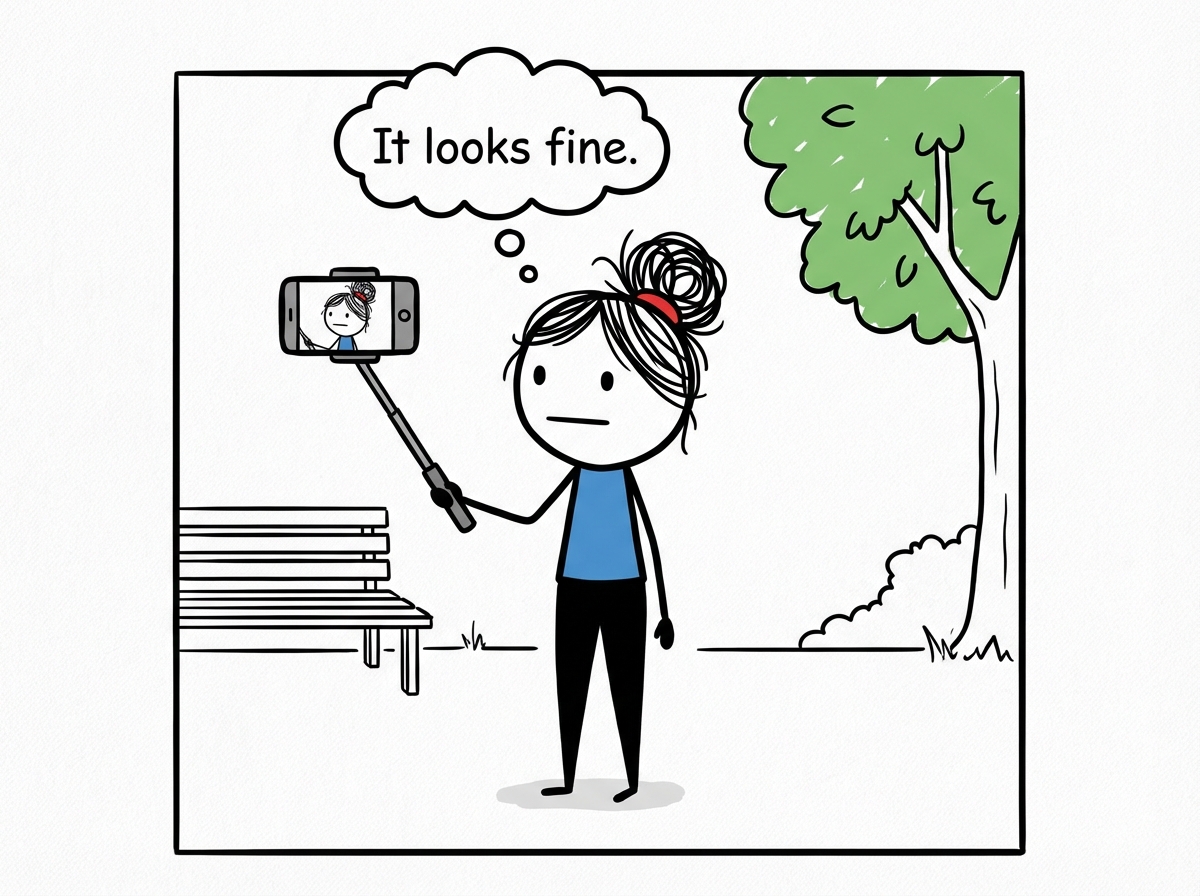
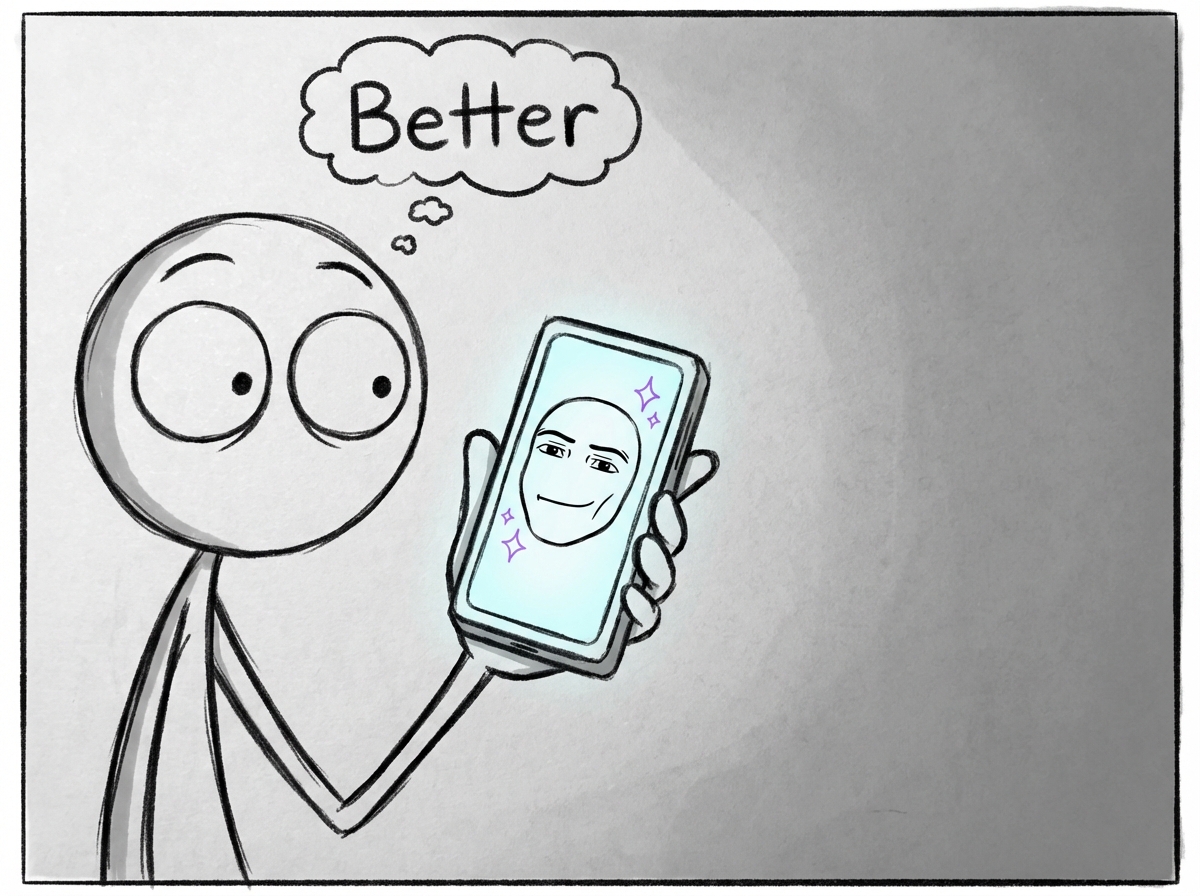
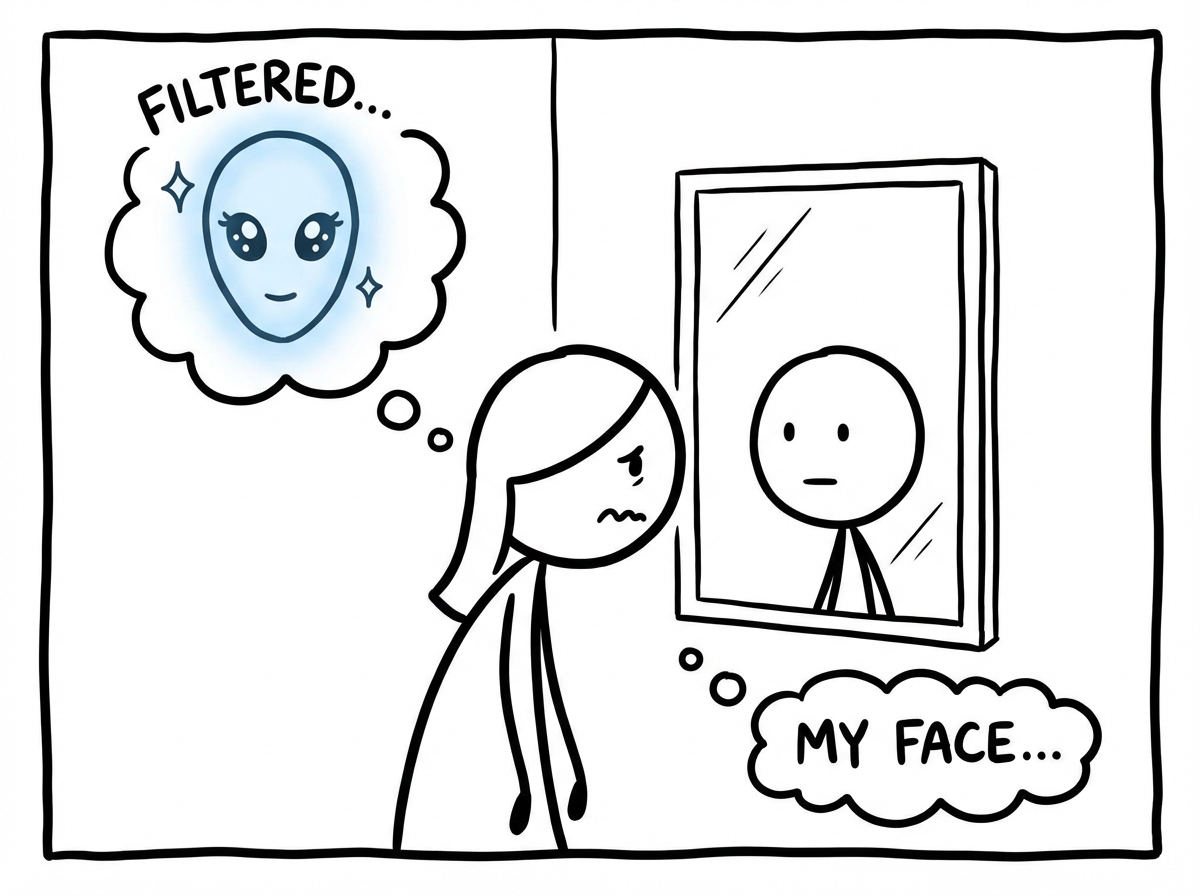
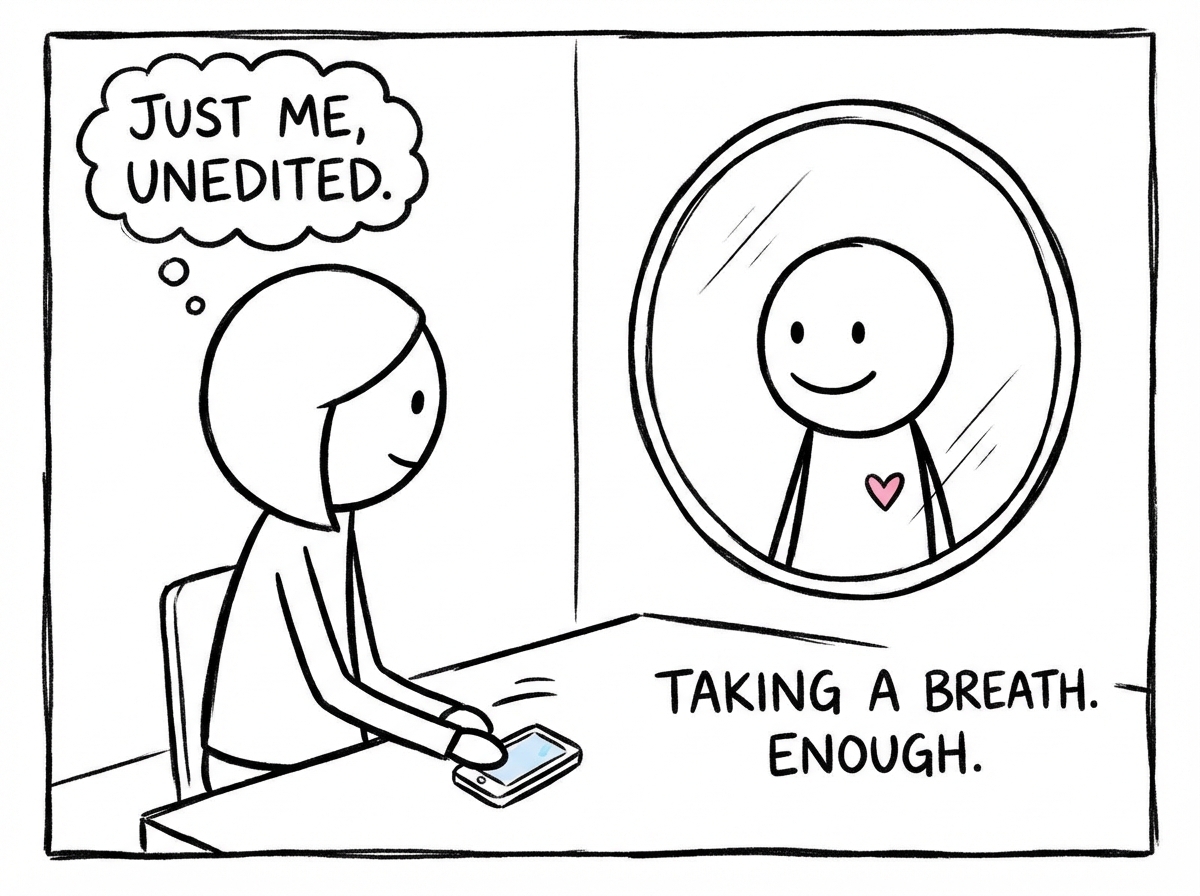
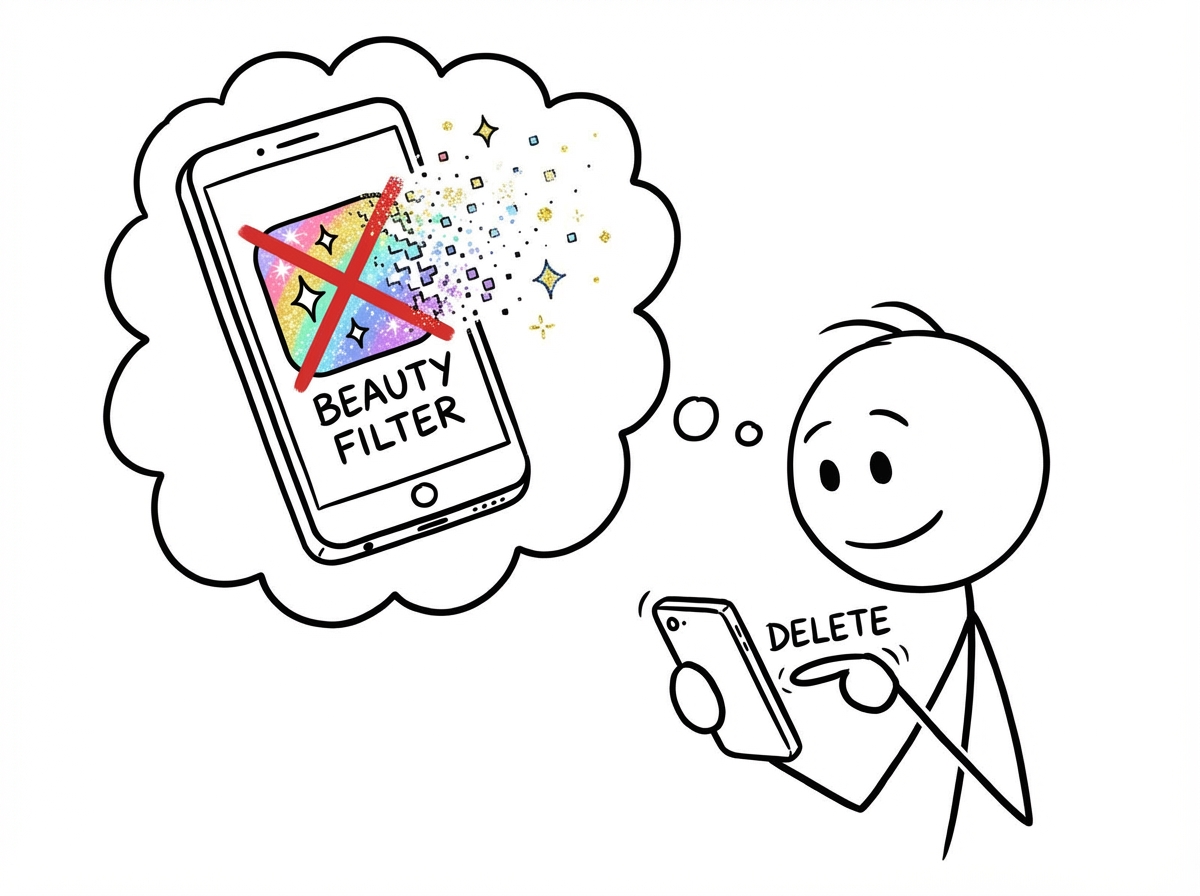
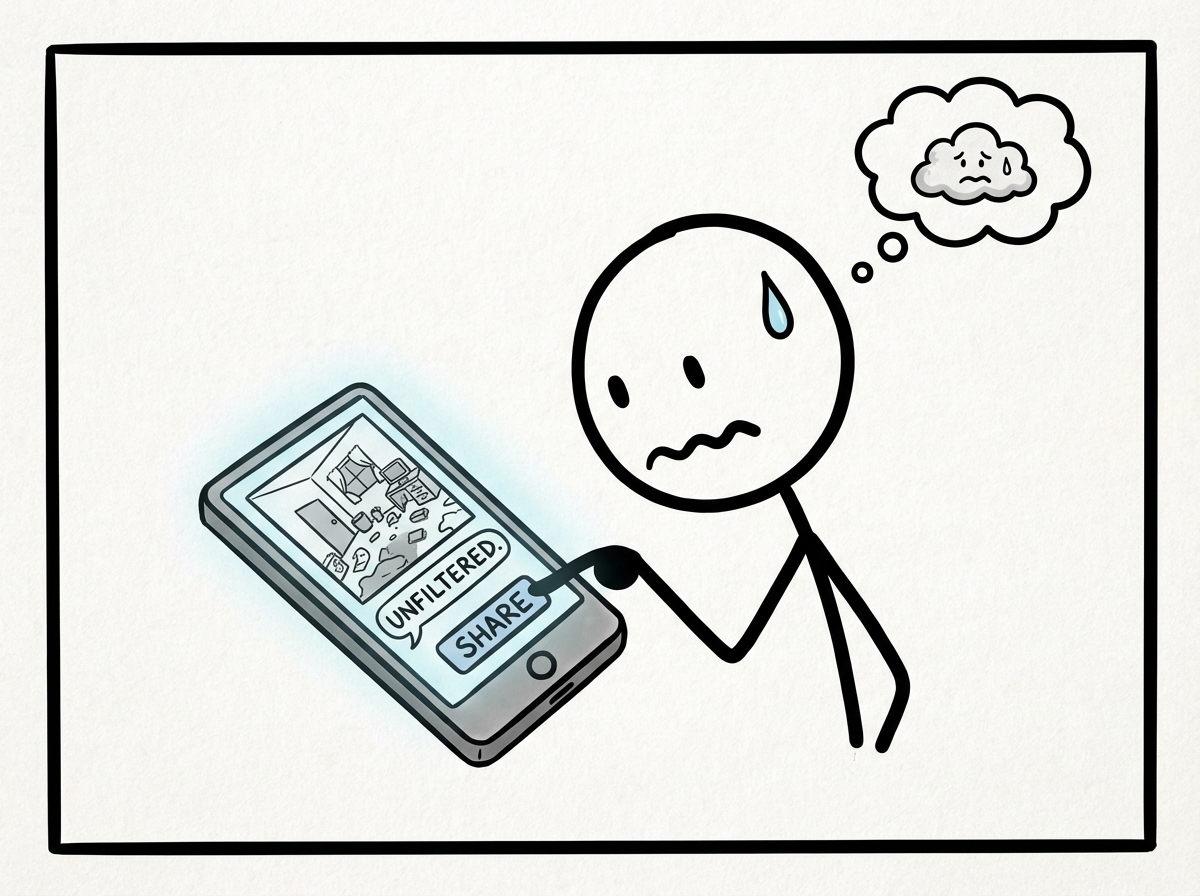
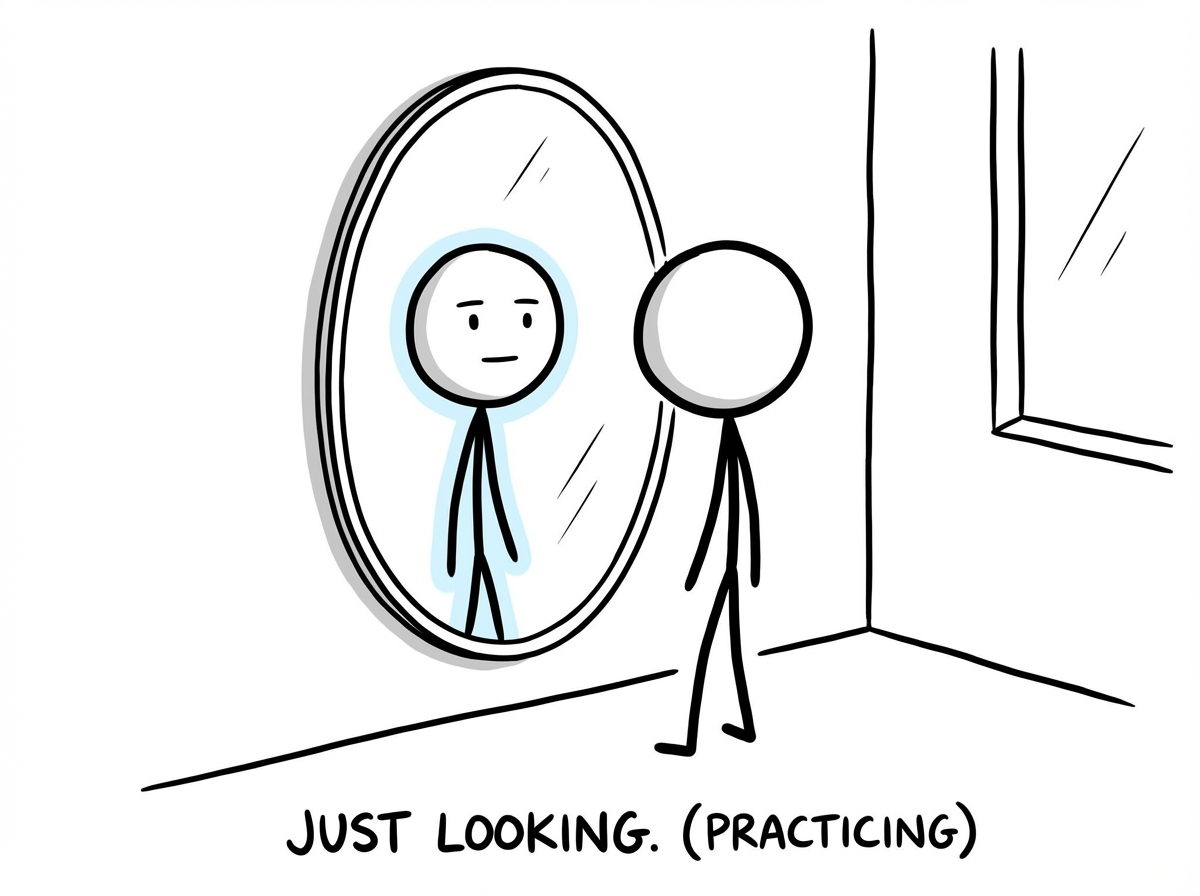
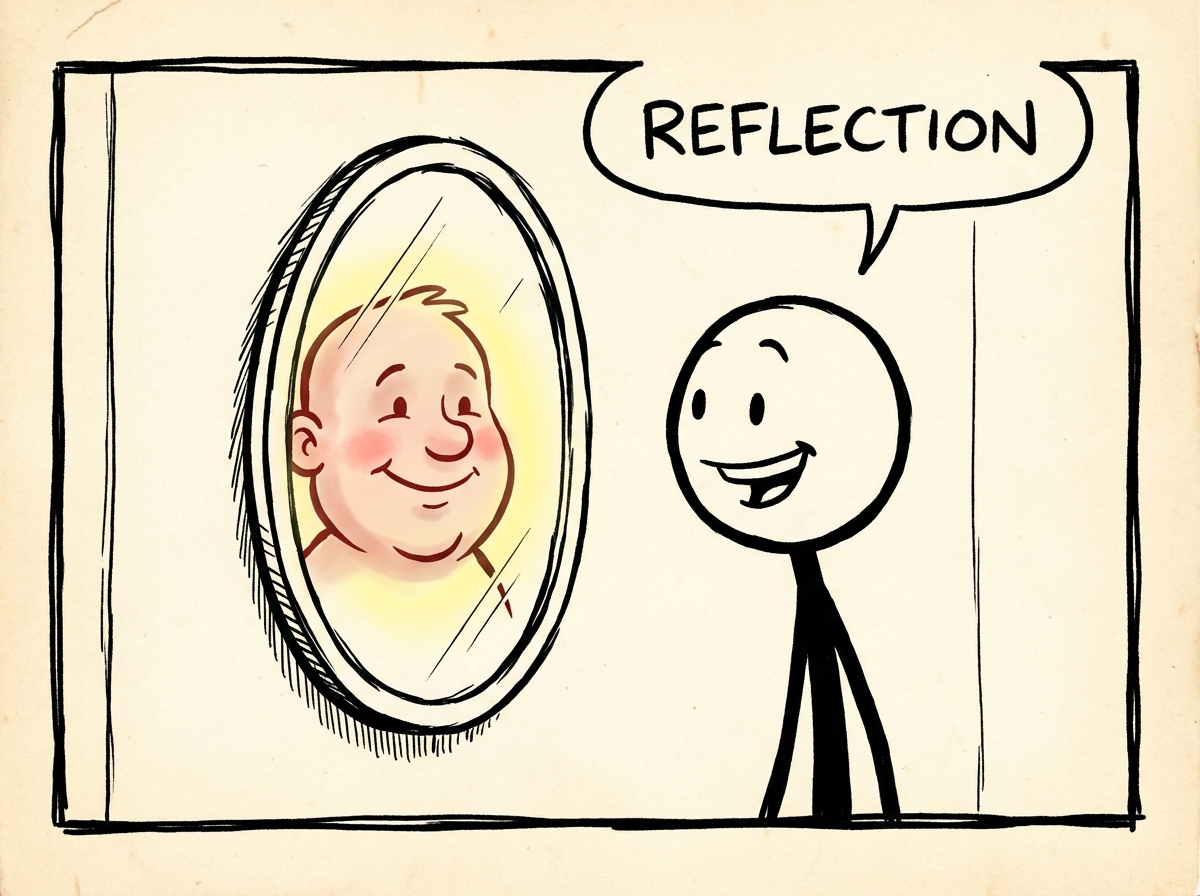
A woman takes a selfie, applies a filter that smooths and reshapes her face, then looks in the real mirror and feels disappointed by her actual reflection -- until she practices seeing what is real instead of what is 'better.'
Explanation
You take a selfie. It looks fine -- normal, human, you. Then you apply the filter. Skin smooth. Jaw sharper. Eyes bigger. Nose narrower. You look at the filtered version and something shifts: this one is better. Not different -- better. And in that moment, a quiet transaction takes place. Your real face becomes the before photo. The filtered version becomes what you are supposed to look like. Researchers at City University of London found that regular use of beauty filters is associated with increased facial dissatisfaction and a desire for cosmetic procedures -- not because people forget the filter is fake, but because repeated exposure to the enhanced version recalibrates what 'normal' looks like. This is a phenomenon psychologists are calling 'Snapchat dysmorphia' -- a term coined by Dr. Tijion Esho to describe patients who bring filtered selfies to cosmetic surgeons and ask to look like their edited photos. The filter does not just change how you look in a picture. It changes how you see yourself in the mirror. Your brain starts to treat the filtered face as the baseline and the real face as the flaw. This is especially damaging for women, who already face relentless cultural pressure to meet narrow beauty standards. The filter does not ease that pressure -- it intensifies it by creating an impossible reference point that is literally not real. Reclaiming your relationship with your own face requires deliberate exposure to unfiltered reality. Spend time looking at your reflection without editing it. Post unfiltered photos -- not as a performance of bravery, but as a practice of accuracy. The discomfort you feel when you see your real face is not a sign that something is wrong with your face. It is a sign that the filter has trained your brain to reject reality. That training can be reversed, but only if you stop reinforcing it.
Key Takeaway
The filter did not show you a better version of yourself. It taught you to reject the real one.