The Beauty Filter Trap
A woman takes a selfie, applies a filter that smooths and reshapes her face, then looks in the real mirror and feels disappointed by her actual reflection -- until she practices seeing what is real instead of what is 'better.'

The filter that promised to make you beautiful taught you that you were not.
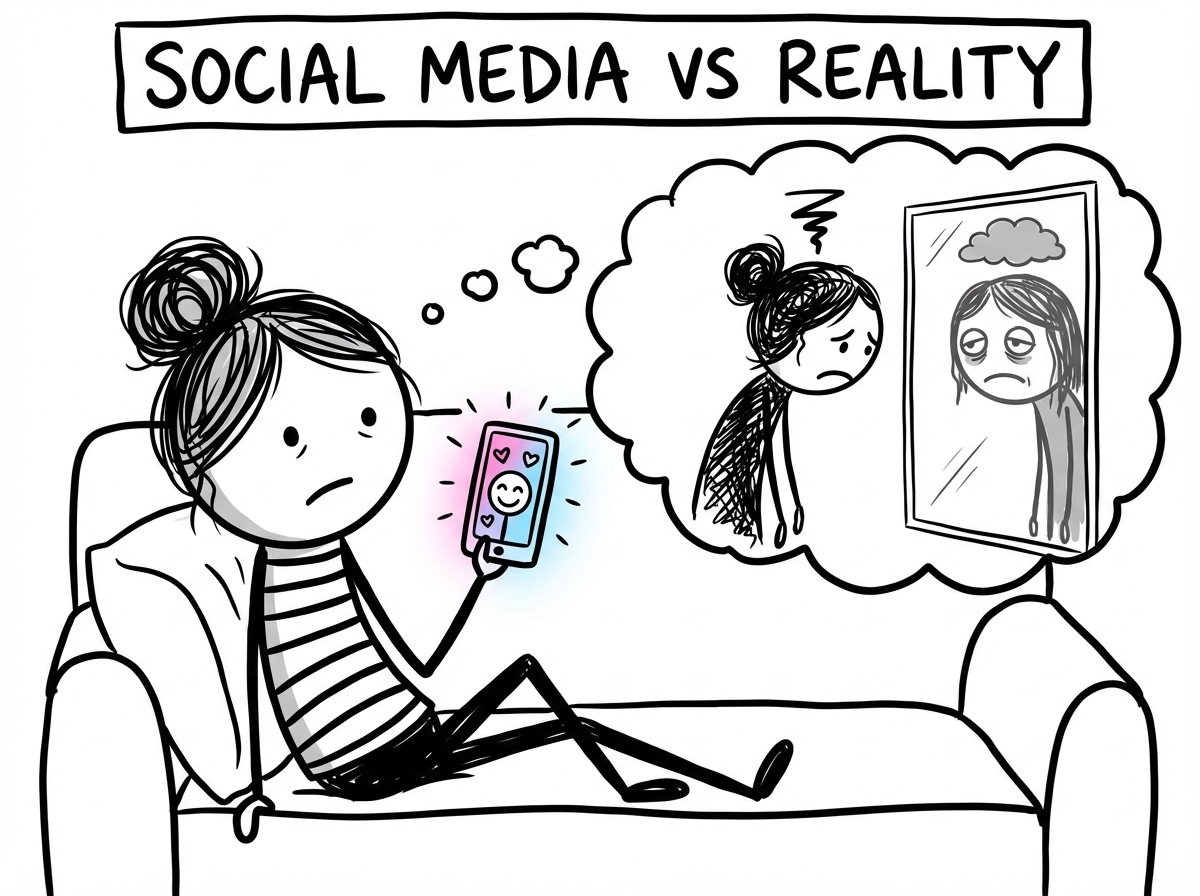
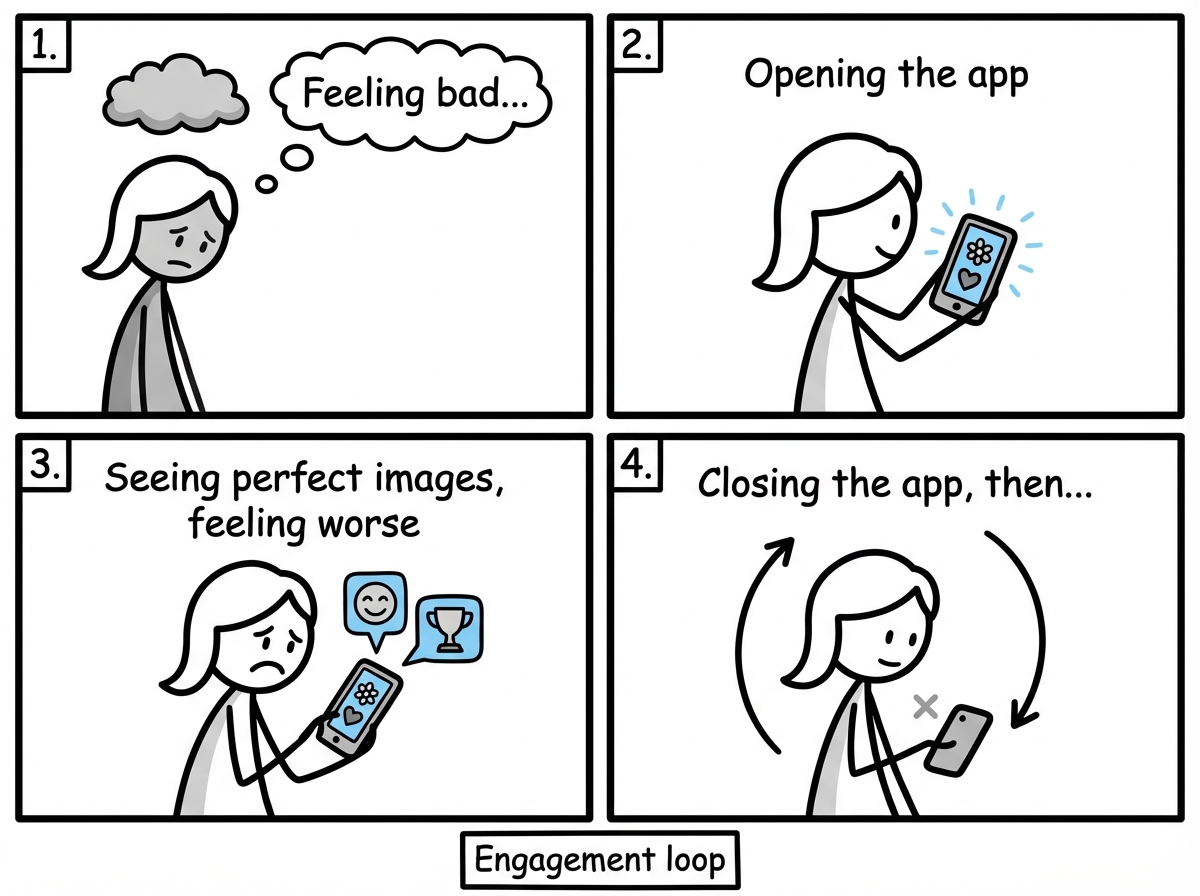
In 2021, leaked internal research from Facebook -- now Meta -- confirmed what many women already felt: Instagram made body image worse for one in three teenage girls, and the company knew it. But the damage extends far beyond adolescence. Social media creates a visual environment where women are constantly confronted with algorithmically curated images of faces and bodies that have been filtered, edited, and optimized for engagement. Objectification theory, developed by Barbara Fredrickson and Tomi-Ann Roberts, describes how living in a culture that reduces women to their appearance leads to self-objectification -- a chronic monitoring of how you look from the outside rather than how you feel from the inside. Social media has industrialized this process. Beauty filters that slim your nose, enlarge your eyes, and smooth your skin teach your brain that your unfiltered face is the "before" photo -- the problem to be solved. Research has found that even brief exposure to filtered selfies increases facial dissatisfaction and desire for cosmetic procedures. For mothers, there is an additional layer: the curated performance of motherhood, where every lunchbox is aesthetic, every nursery is designed, and every postpartum body bounces back on schedule. The comparison is relentless and the standard is fictional, yet the shame it produces feels entirely personal. Women are also disproportionately targeted by wellness influencers promoting unregulated supplements, restrictive diets, and pseudoscientific health advice that often worsens the anxiety it promises to cure. The platform profits from your insecurity because insecurity drives engagement -- you click, you compare, you buy, you come back. Understanding this machinery does not make you immune to it, but it does help you stop blaming yourself for a reaction that was engineered.
The platform profits from your insecurity because insecurity drives engagement -- stop blaming yourself for a reaction that was engineered.
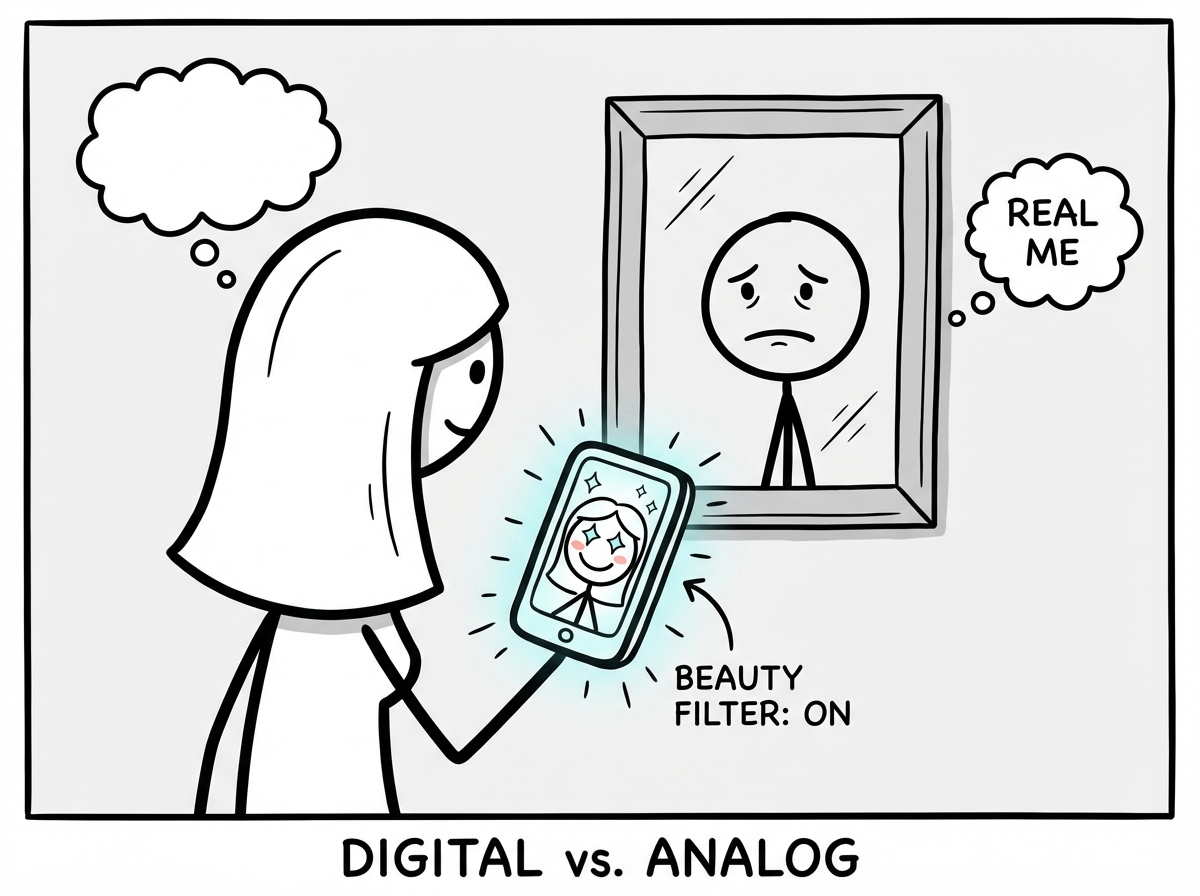
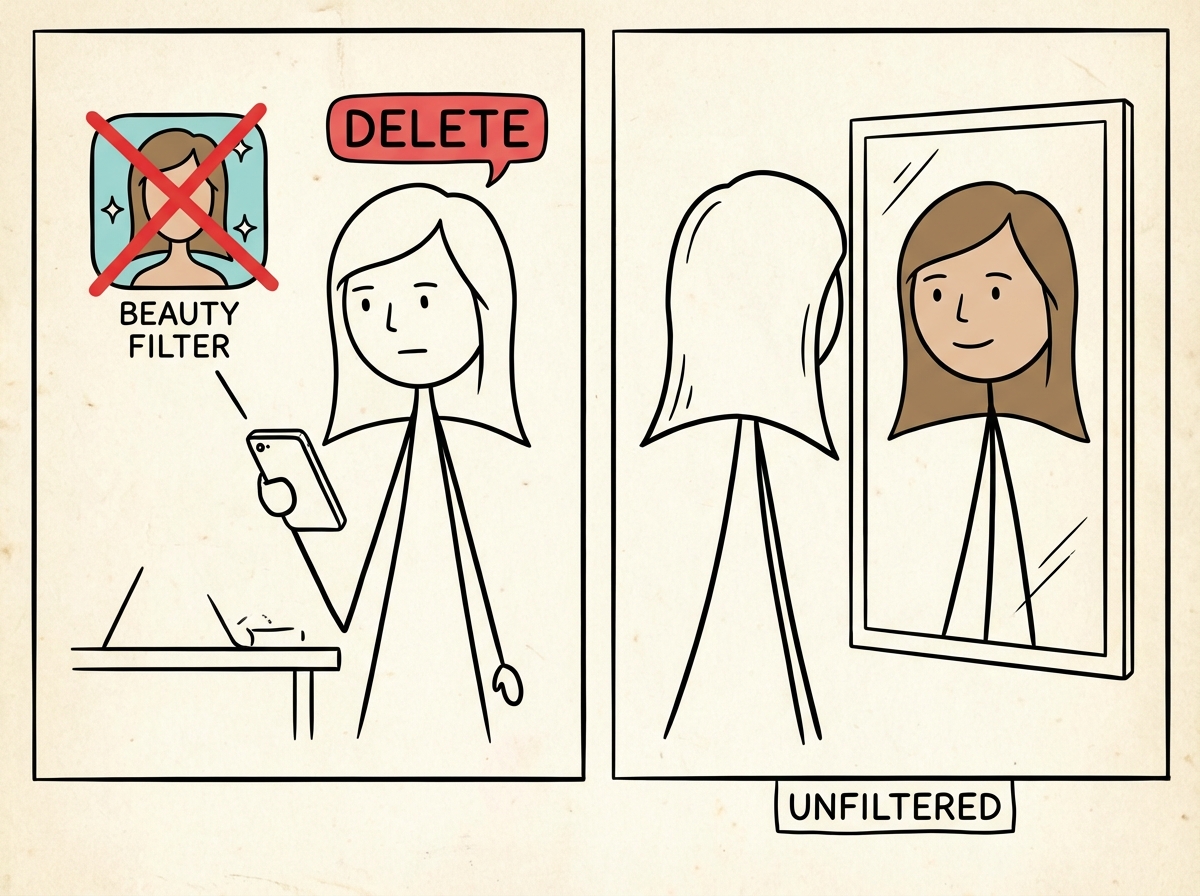
A woman takes a selfie, applies a filter that smooths and reshapes her face, then looks in the real mirror and feels disappointed by her actual reflection -- until she practices seeing what is real instead of what is 'better.'
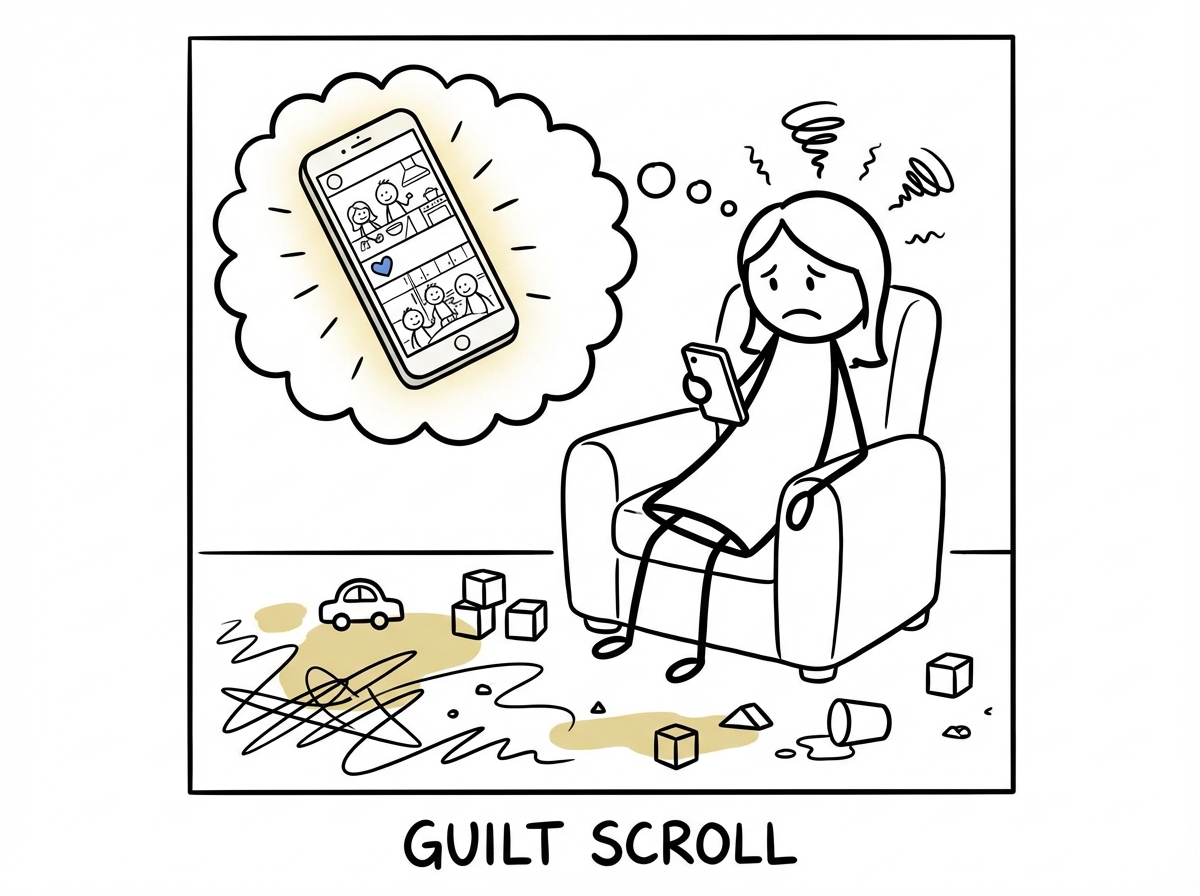
A mom in a messy kitchen scrolls through curated motherhood content, concludes she is failing, then closes the app and realizes the mess is the real thing.