
The Family Script
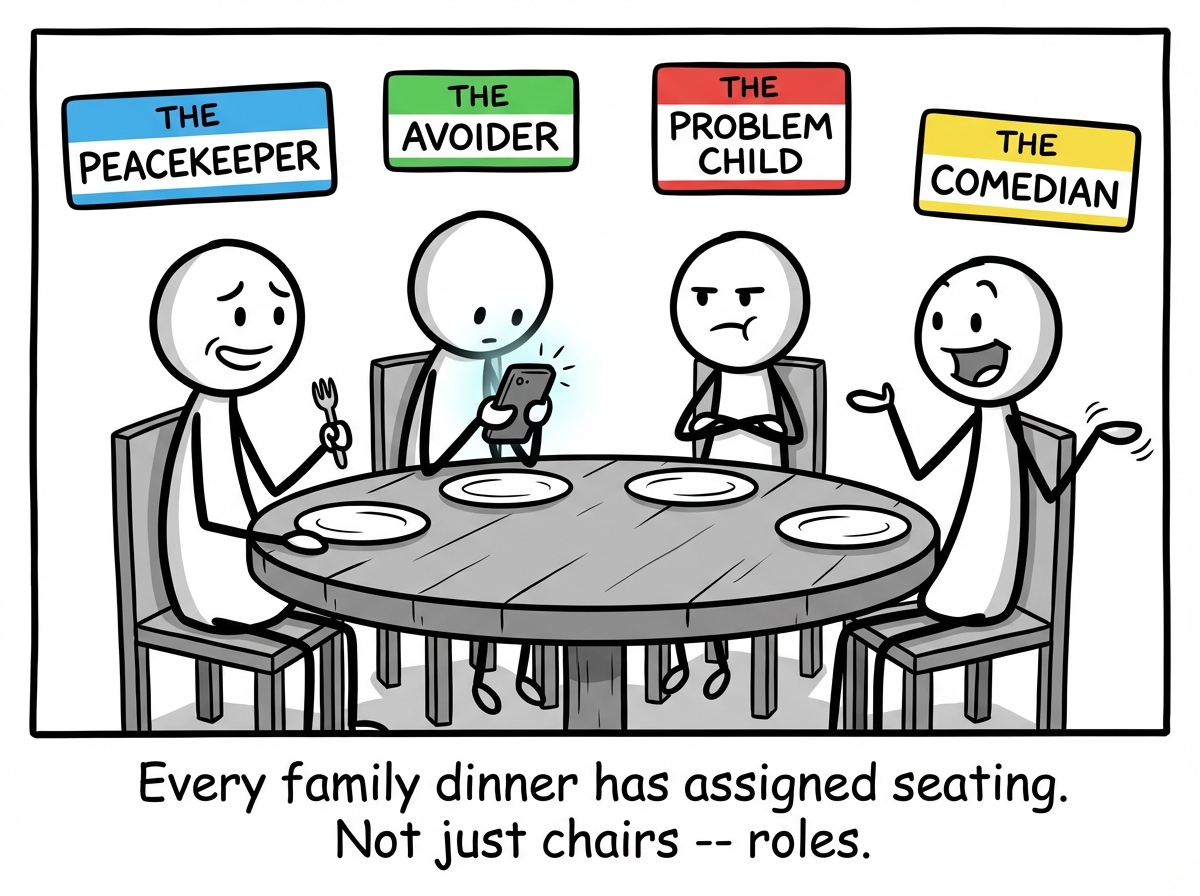
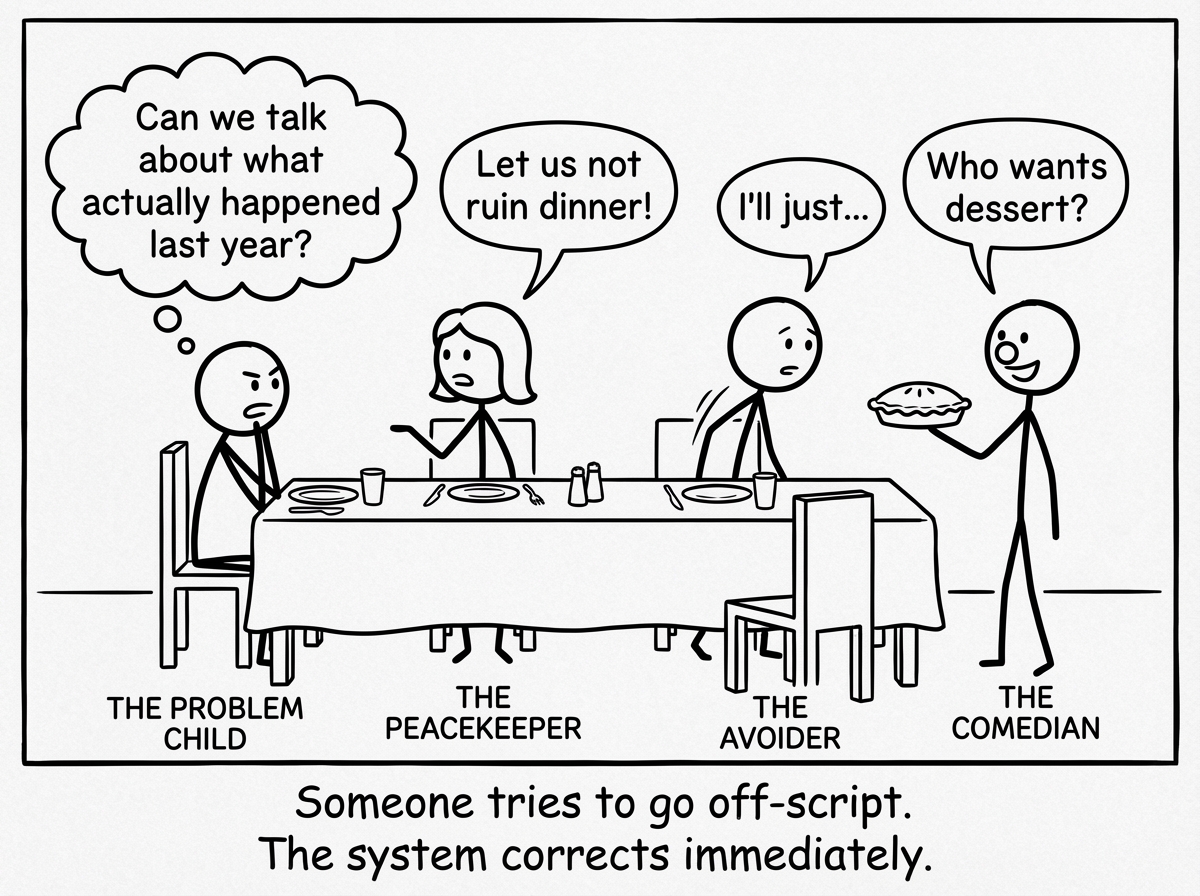
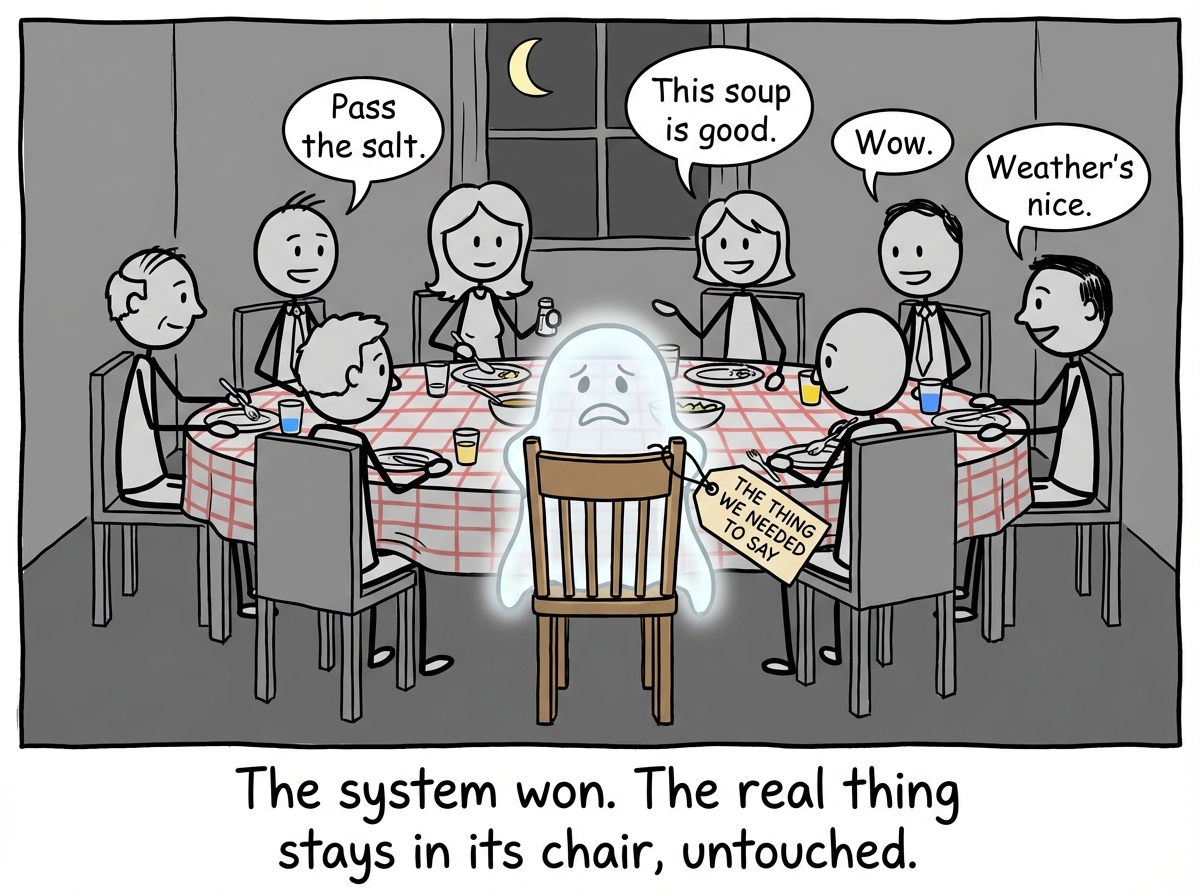

A family dinner reveals the invisible roles each member plays -- the peacekeeper, the avoider, the problem child, the comedian -- and what happens when someone tries to go off-script.
Explanation
Virginia Satir observed that families under stress develop rigid communication roles. Each member learns a part that serves the system: the peacekeeper prevents conflict, the avoider removes themselves, the identified problem draws focus away from the real issue, and the comedian deflects tension with humor. These roles are not chosen -- they are assigned by the family's emotional needs and reinforced over thousands of interactions. When someone tries to break the pattern -- say, by bringing up a real feeling at dinner -- the system pushes back. The peacekeeper redirects, the avoider leaves, the comedian cracks a joke. The moment passes. The real thing remains unsaid. The most painful part is that these roles follow you out of the family and into every relationship you enter. The person who learned to be the peacekeeper at home becomes the peacekeeper at work, in friendships, in romance -- soothing everyone else's feelings while never expressing their own.
Key Takeaway
You did not choose your role in the family script. But you are still playing it in every relationship unless you learn to notice the cue and choose a different line.