
The Thing We Don't Talk About
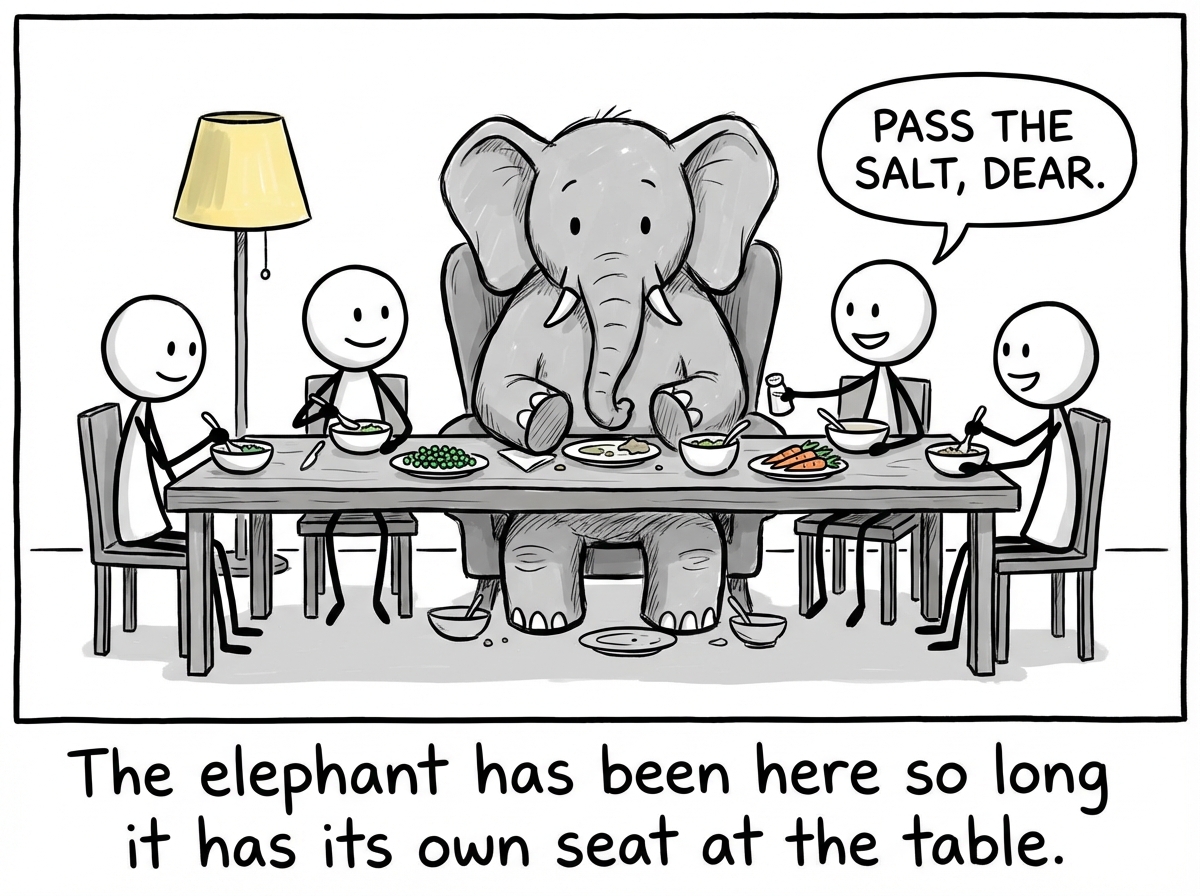
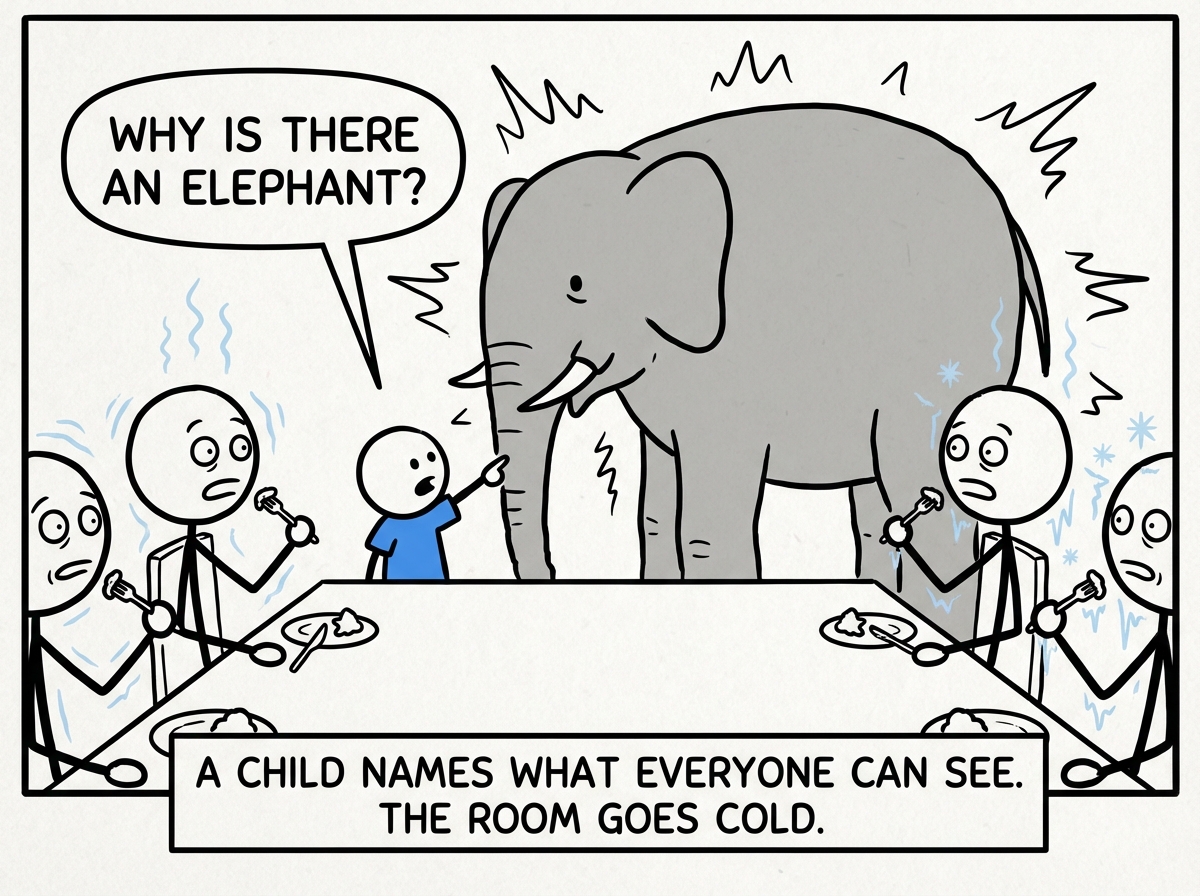
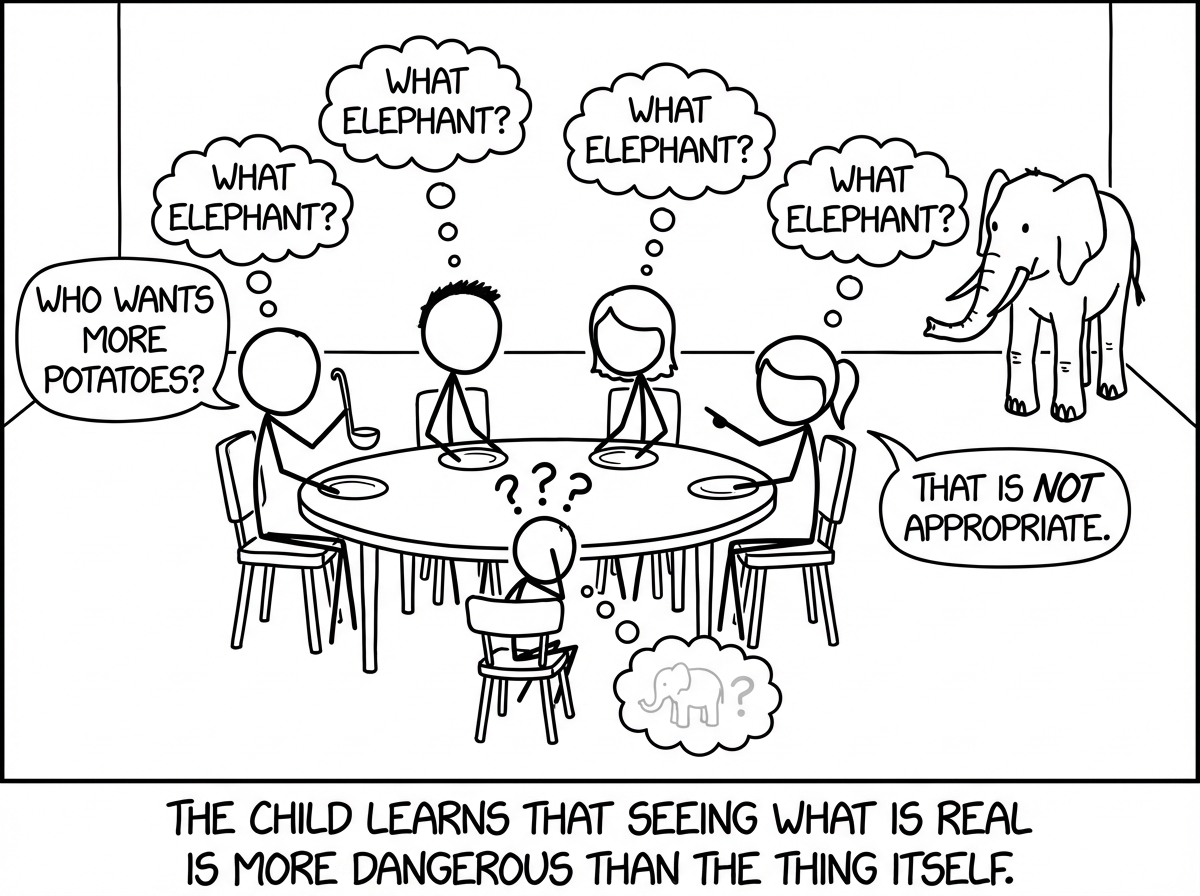
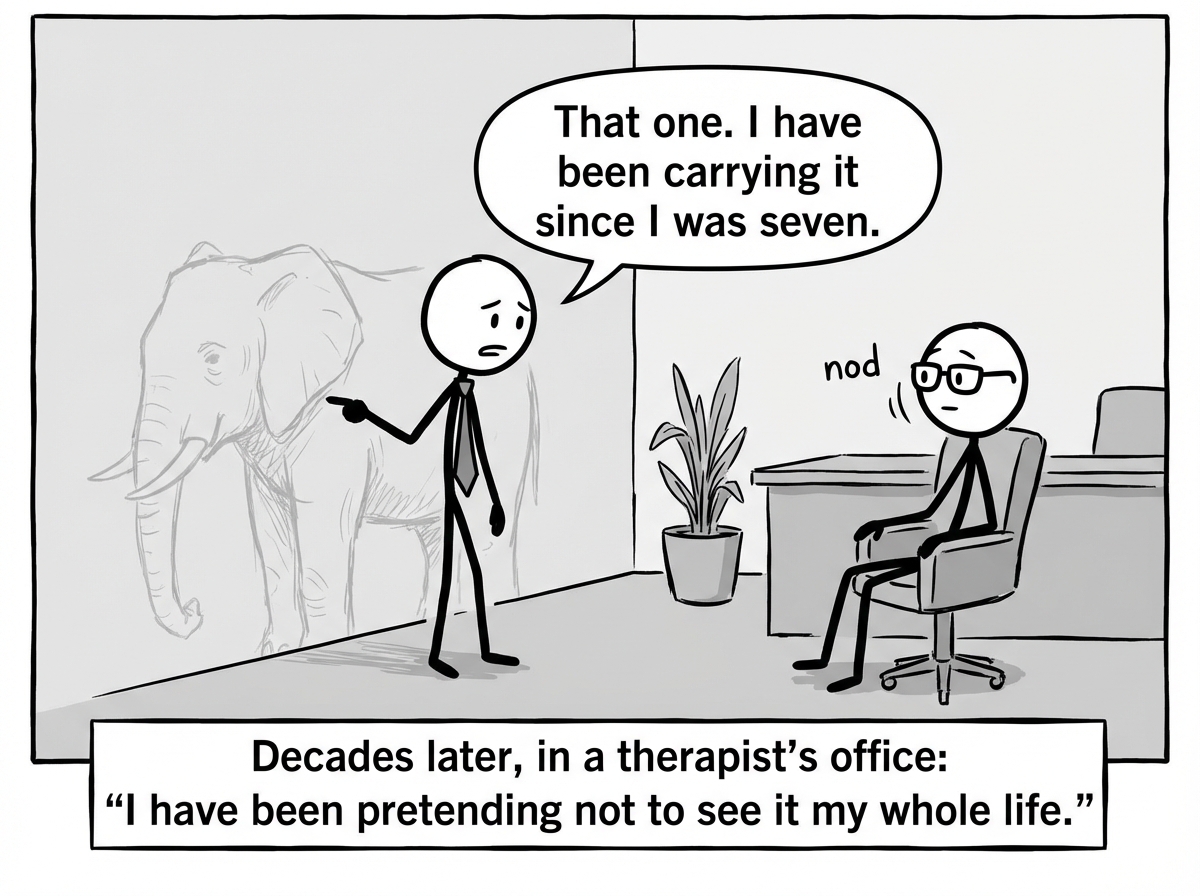
A family gathers around a giant elephant in the room that everyone pretends does not exist -- until a child points at it and every adult panics.
Explanation
Murray Bowen's family systems theory describes how families manage anxiety through avoidance. The 'elephant in the room' -- the addiction, the affair, the mental illness, the abuse -- is not invisible. Everyone sees it. Everyone has adapted to it. But the unspoken rule says: we do not name it. Children in these systems learn that some realities are too dangerous to acknowledge. They learn to override their own perception -- 'Maybe it is not that bad' -- which is the beginning of self-gaslighting. When a child does name the elephant, the system's response is immediate and unified: denial, redirection, or punishment. The message is clear: seeing what is real is more threatening to this family than the thing itself. The lasting impact is that these children grow up unable to trust their own perceptions, afraid to name uncomfortable truths, and prone to staying in situations they know are wrong because staying silent feels safer than speaking up.
Key Takeaway
In some families, naming what is real is treated as a greater threat than the thing itself. The first act of healing is learning to trust what you see.