The Family Script
A family dinner reveals the invisible roles each member plays -- the peacekeeper, the avoider, the problem child, the comedian -- and what happens when someone tries to go off-script.

The unspoken rules your family taught you about what can be said, what must be avoided, and who gets to speak.
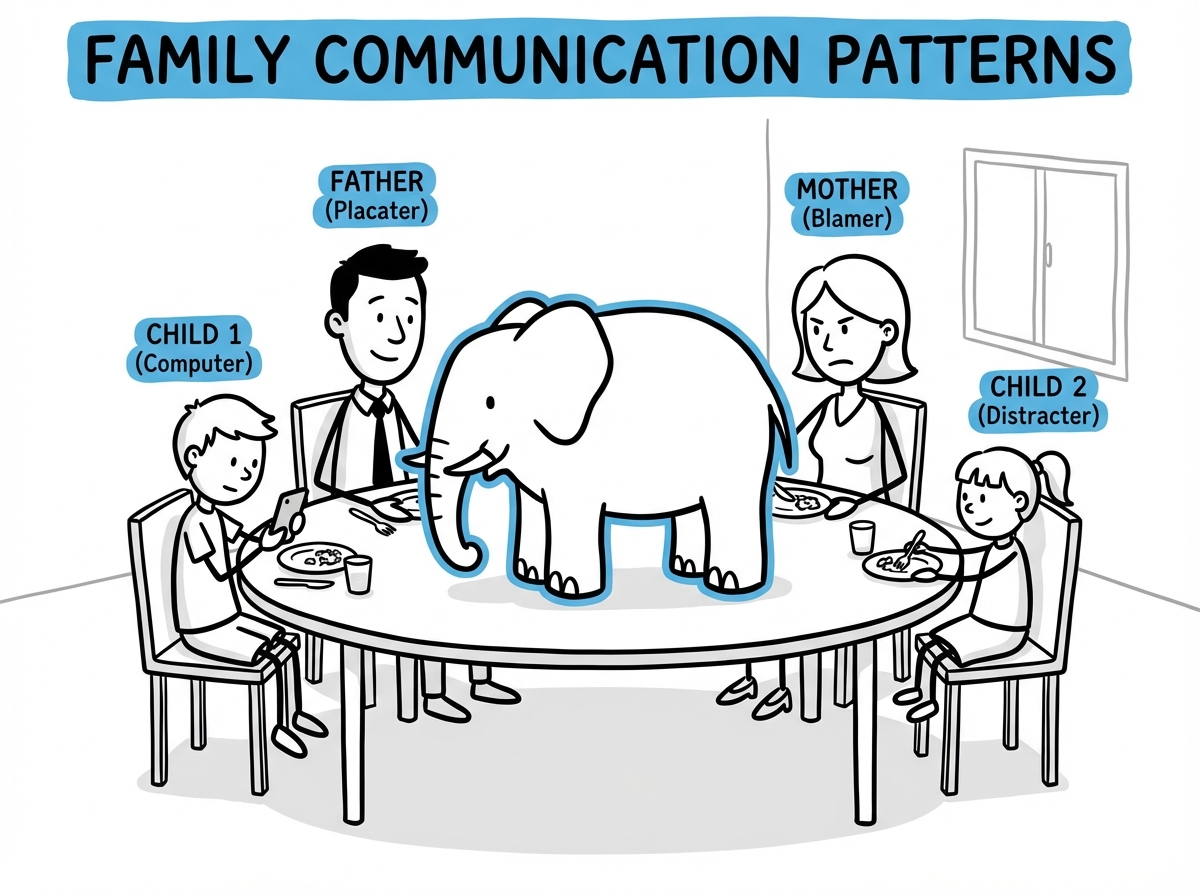
Every family has a communication operating system -- a set of unwritten rules about what topics are safe, what emotions are allowed, who gets to be heard, and what must never be named. Virginia Satir, the pioneer of family therapy, identified four communication stances people adopt under stress: placating (agreeing to keep the peace), blaming (attacking to feel in control), computing (intellectualizing to avoid feeling), and distracting (deflecting with humor or chaos). Most people learn one of these stances in childhood and carry it into every relationship they enter. Family systems theory, developed by Murray Bowen, shows that families function as emotional units where anxiety is passed through communication channels like electricity through wiring. When the system is stressed, families tend toward predictable patterns: triangulation (pulling a third person into a conflict between two), identified patient dynamics (one member carries the symptoms for the whole family), and emotional cutoff (severing contact instead of having difficult conversations). The hardest part is that these patterns feel normal because they are the only communication you have ever known. The family that never discusses money, grief, sex, or conflict is not maintaining privacy -- it is maintaining avoidance. And that avoidance becomes the inheritance you carry into your own relationships, repeating rules you never consciously agreed to.
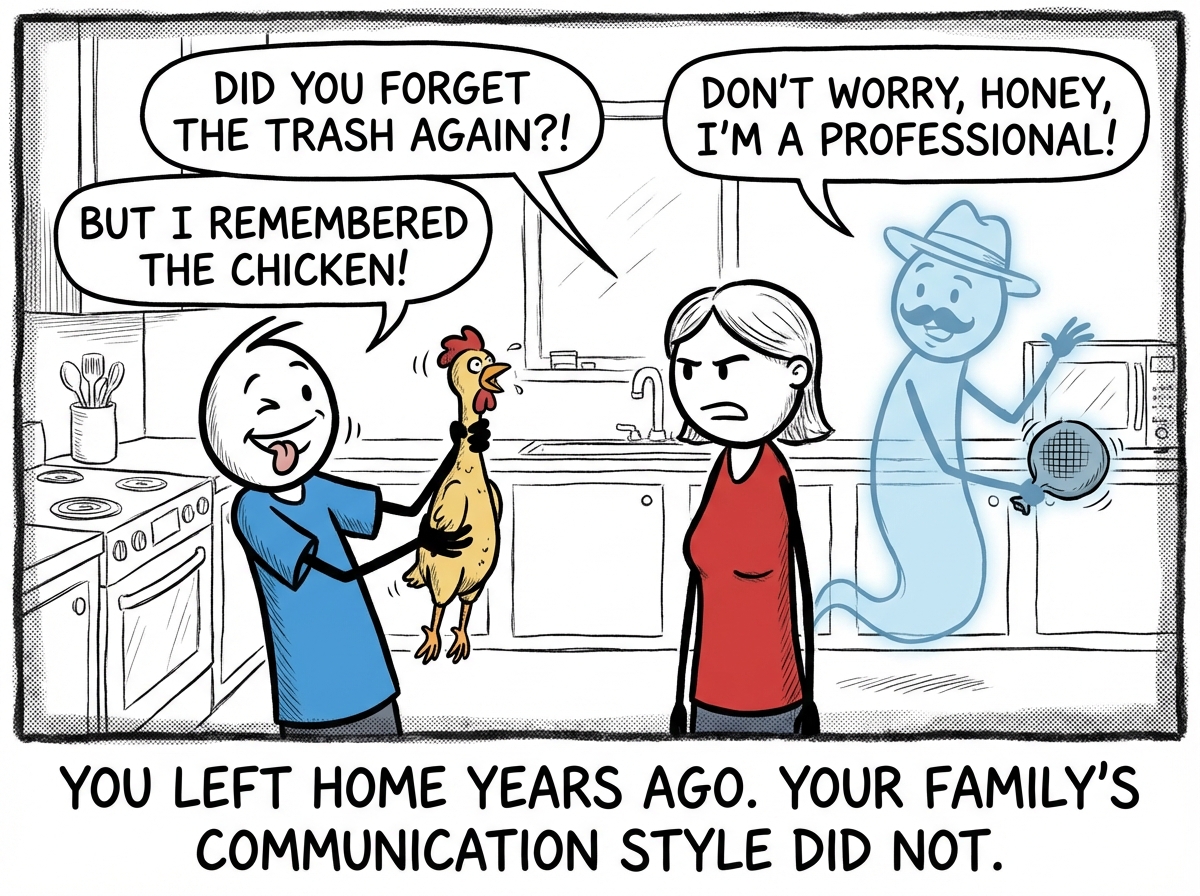
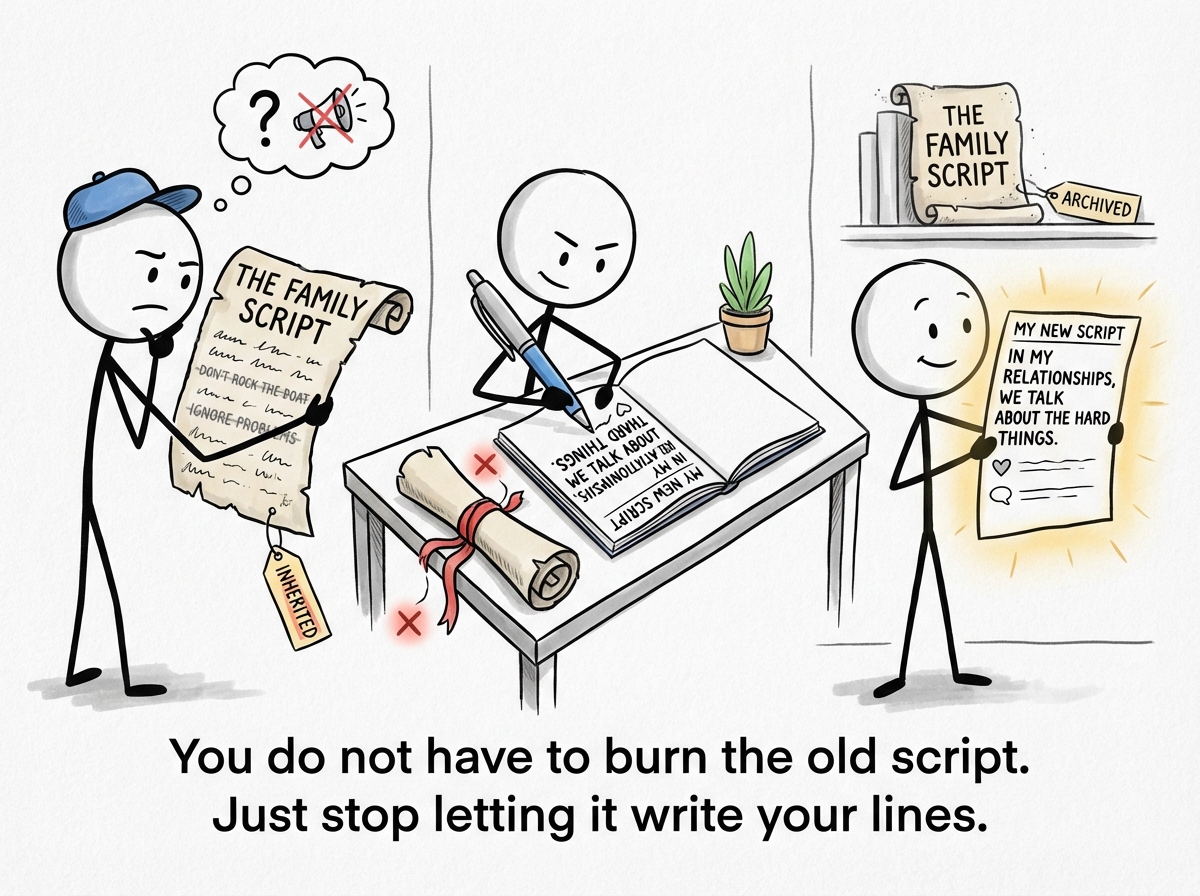
The way your family communicated was not neutral. It was a training program -- and the first step to changing the pattern is realizing you are still following the script.
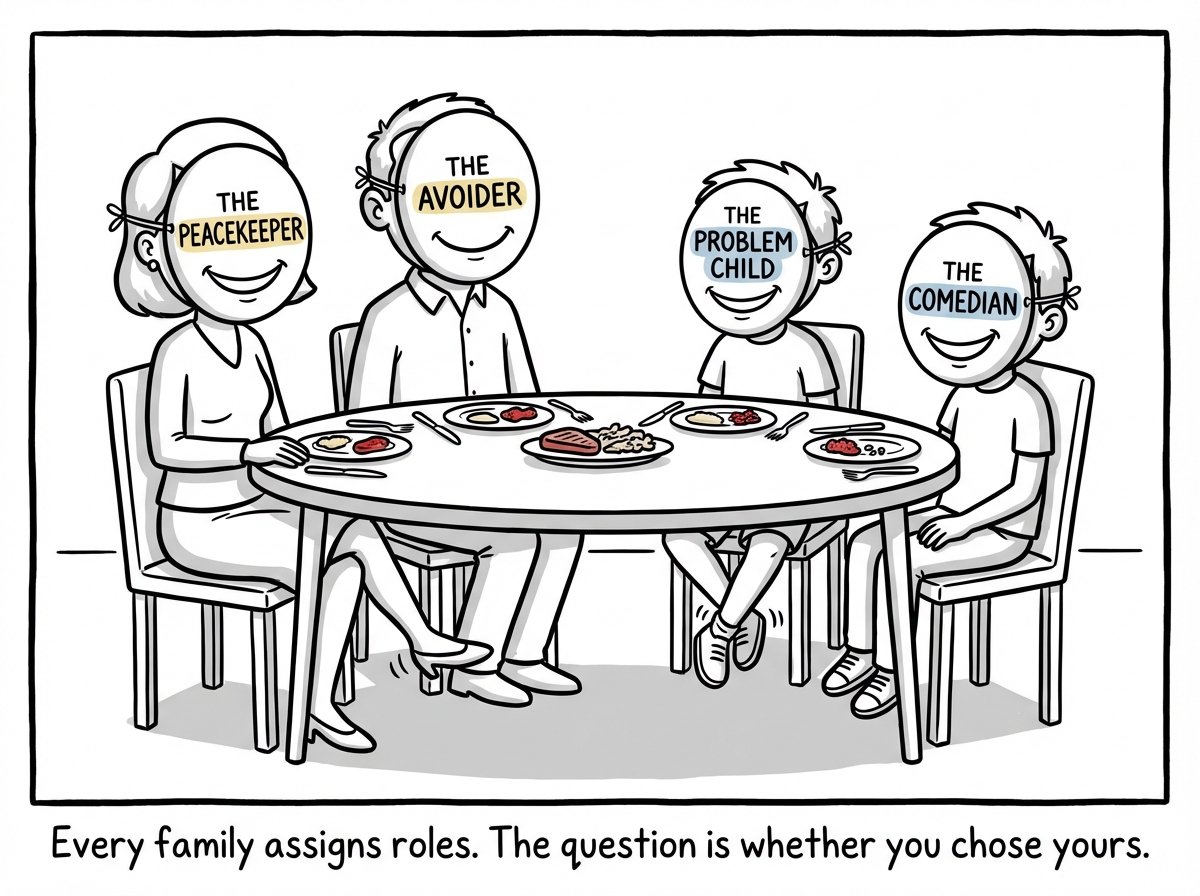
A family dinner reveals the invisible roles each member plays -- the peacekeeper, the avoider, the problem child, the comedian -- and what happens when someone tries to go off-script.
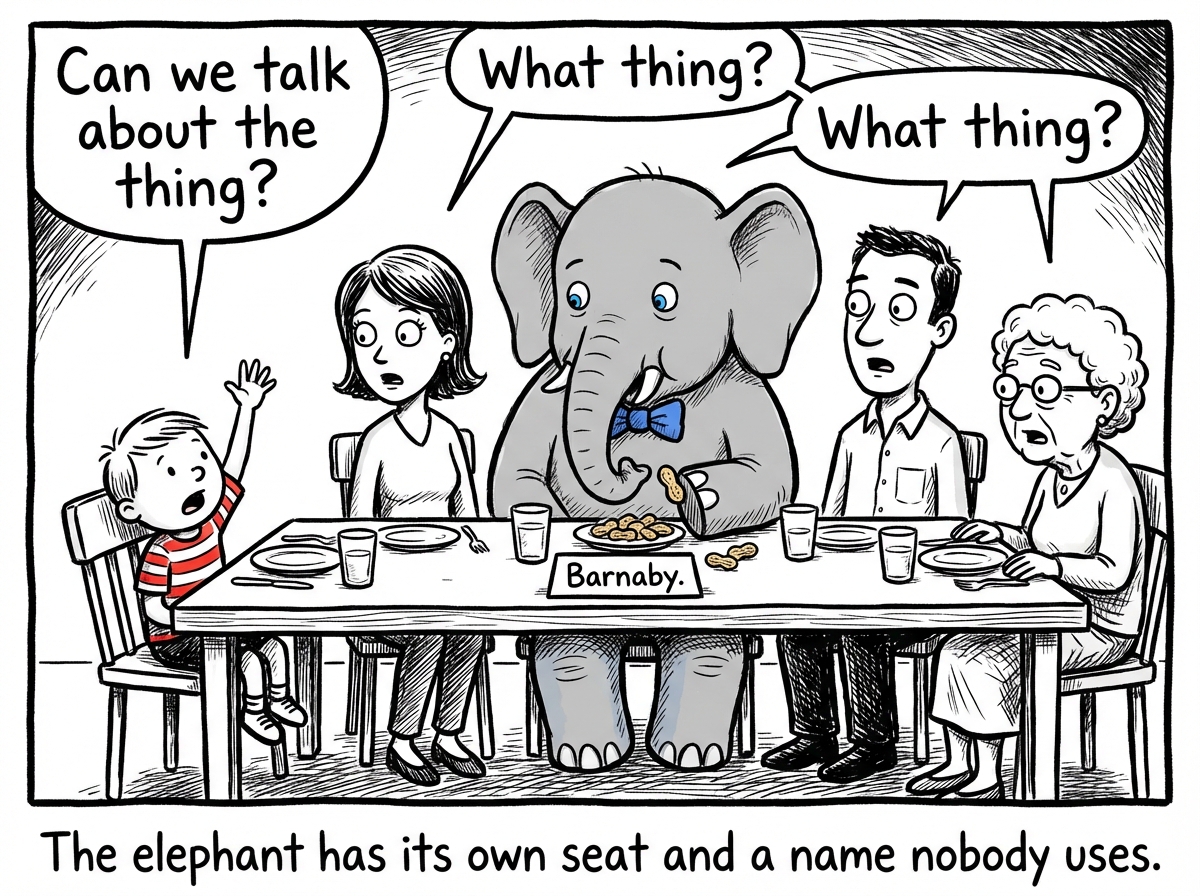
A family gathers around a giant elephant in the room that everyone pretends does not exist -- until a child points at it and every adult panics.