
The Feelings Minimizer
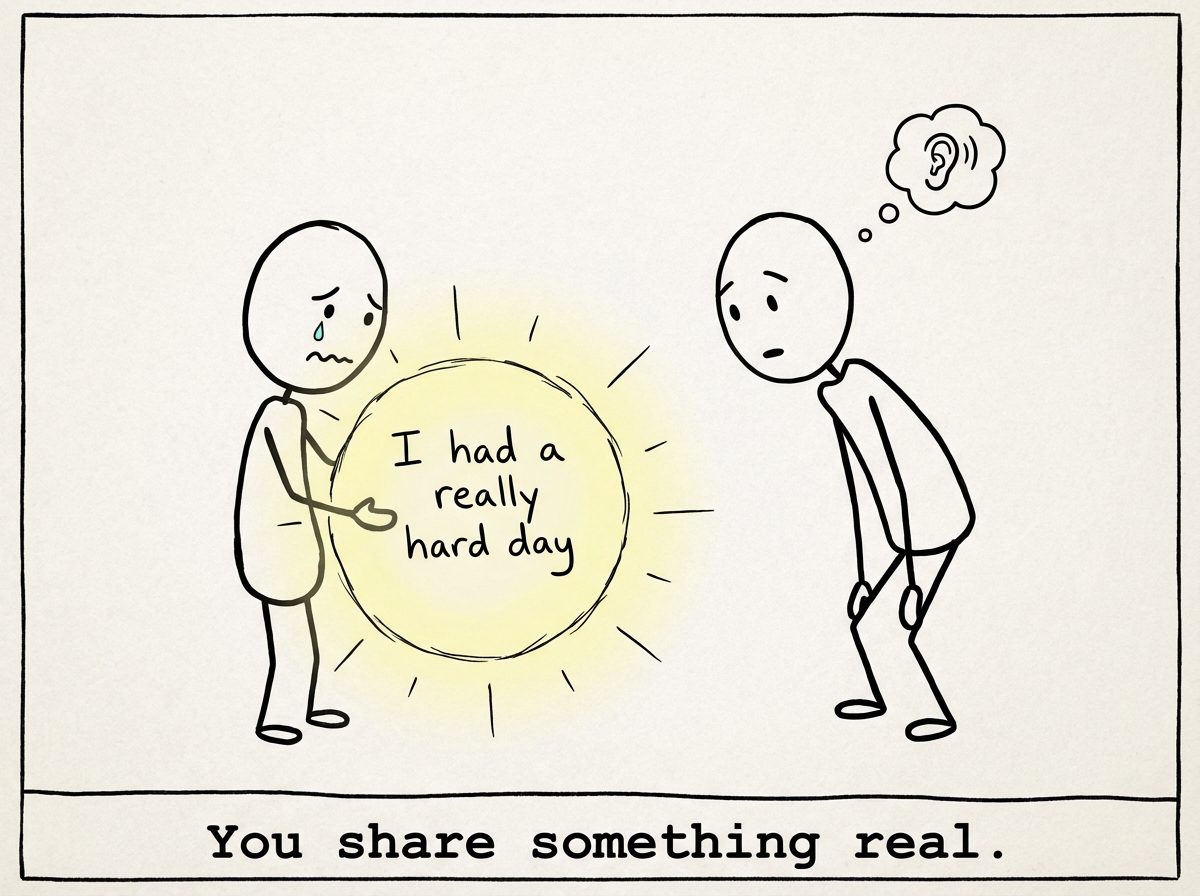
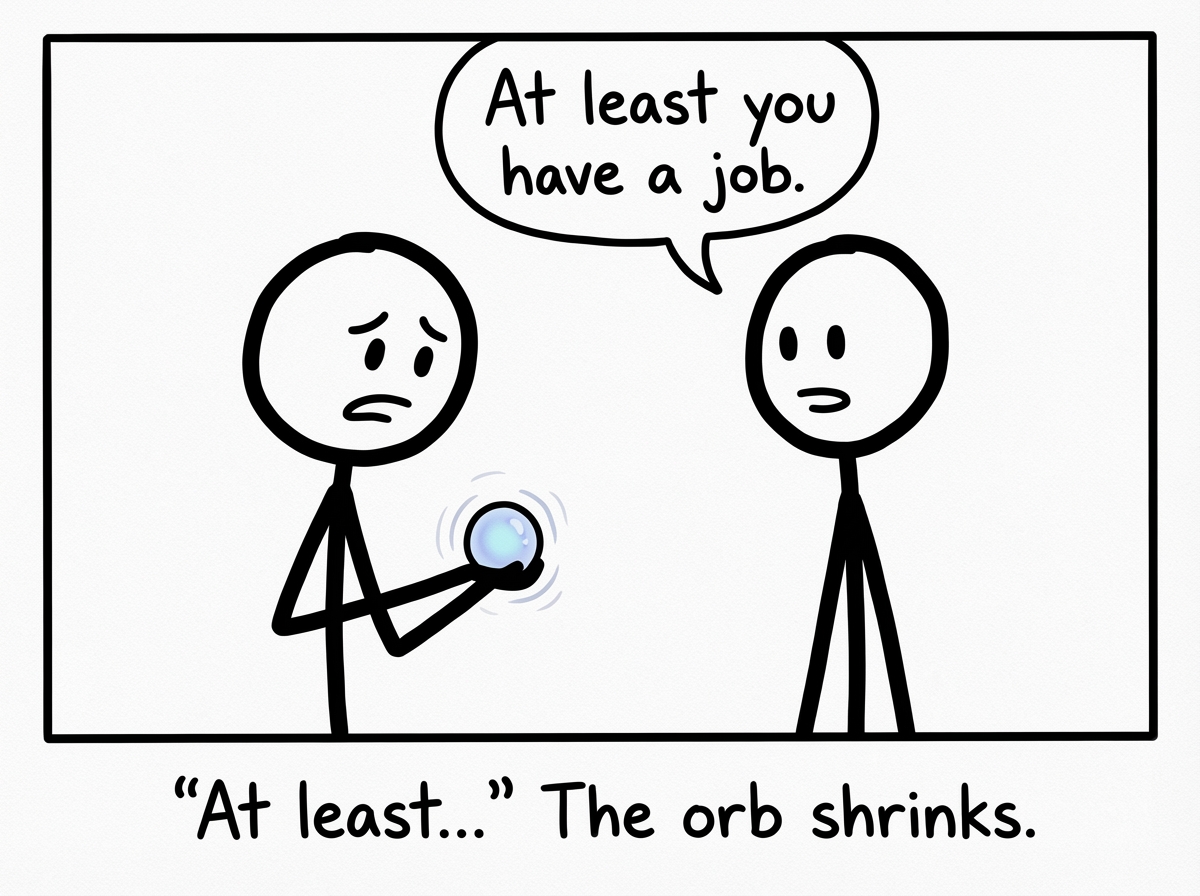
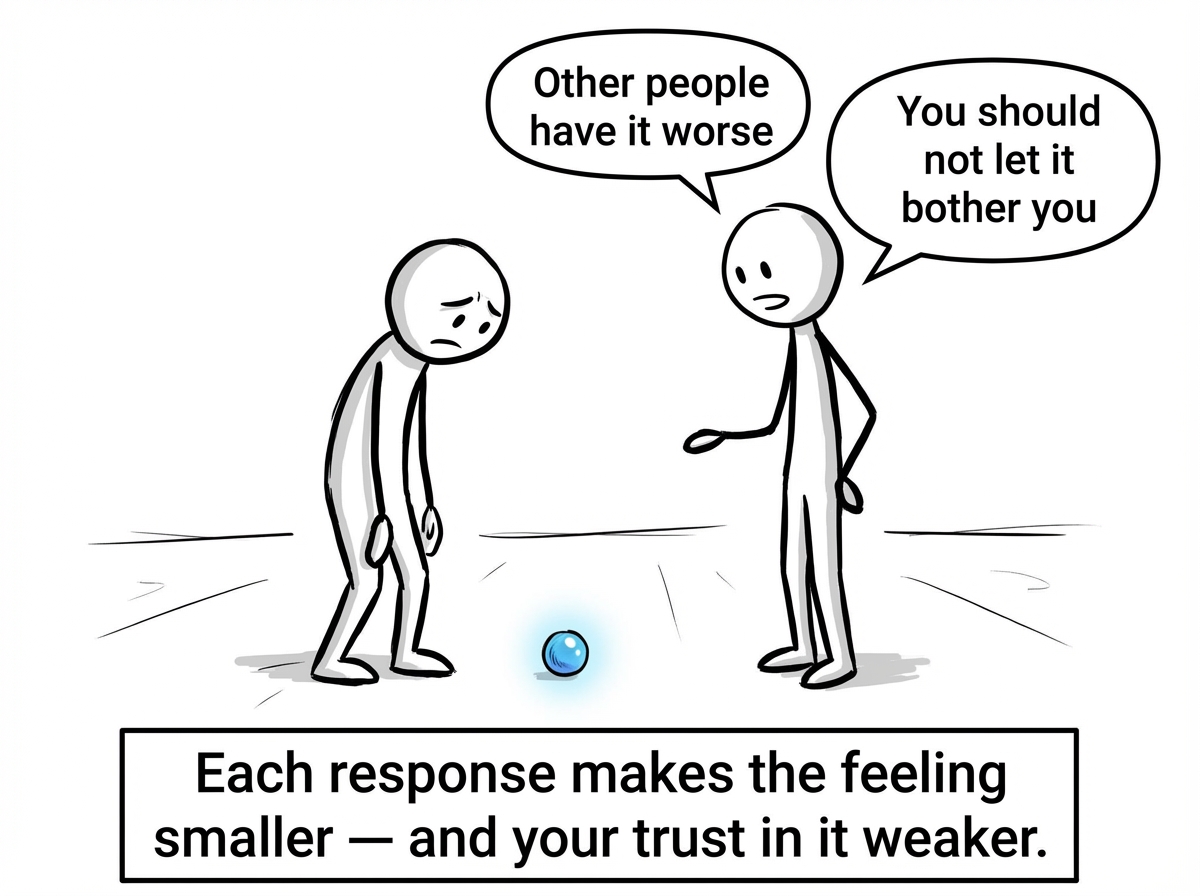
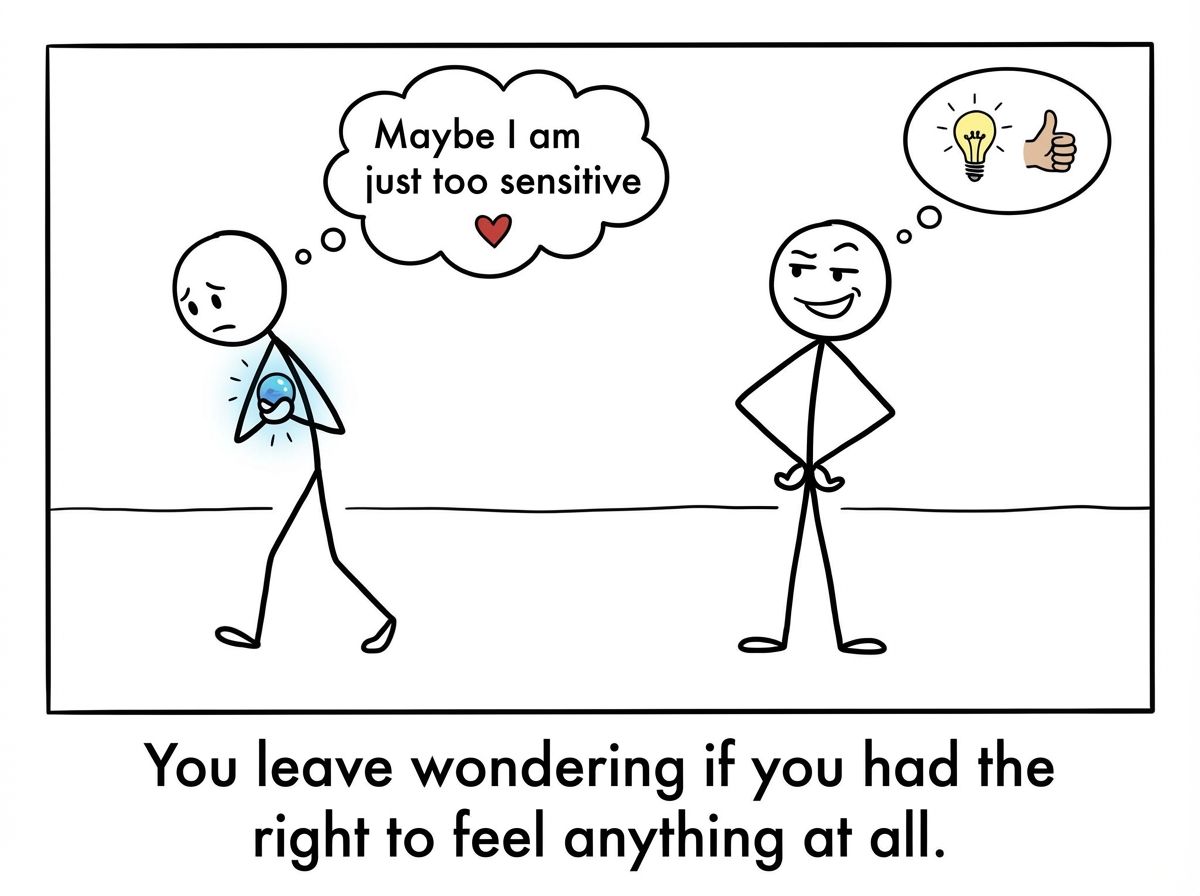
A person shares a genuine emotion only to have it systematically shrunk by well-meaning but invalidating responses like 'at least' and 'you should not feel that way.'
Explanation
You come home after a genuinely hard day. You try to share how you feel. And the person you are talking to, often with good intentions, starts shrinking your emotions. 'At least you have a job.' 'Other people have it worse.' 'You should not let it bother you.' 'Just think positive.' Each response is a tiny message that says: what you feel is wrong, too much, or not important enough to take seriously. Emotional invalidation is one of the most common and least recognized forms of relational harm. It does not require cruelty or bad intentions. Many people invalidate because they are uncomfortable with emotions, were raised in environments where feelings were dismissed, or genuinely believe they are helping by putting things in perspective. But the impact is cumulative and corrosive. Over time, you stop trusting your own emotional responses. You start pre-editing your feelings before sharing them: 'I know this is silly, but...' or 'I probably should not feel this way, but...' You learn to question whether your emotions are even valid before allowing yourself to have them. Validation is not agreement. You do not have to think someone's reaction is proportional or rational to validate it. Validation simply means communicating: 'Your feeling makes sense given your experience.' That is often all someone needs -- not a solution, not perspective, not a comparison. Just the experience of being heard without being corrected.
Key Takeaway
Validation is not agreeing that someone is right -- it is acknowledging that what they feel is real.
A stick figure sharing a feeling while the listener catches themselves about to say 'at least,' stopping mid-word with a hand over mouth
The listener instead saying 'That sounds really hard. Tell me more' while the feeling orb in the speaker's hands stays full-sized
The speaker visibly relaxing, the orb glowing warm and steady, as they feel genuinely heard for the first time
Both figures in conversation, the listener not fixing anything, just being there, and the speaker looking lighter