The First and Last Screen
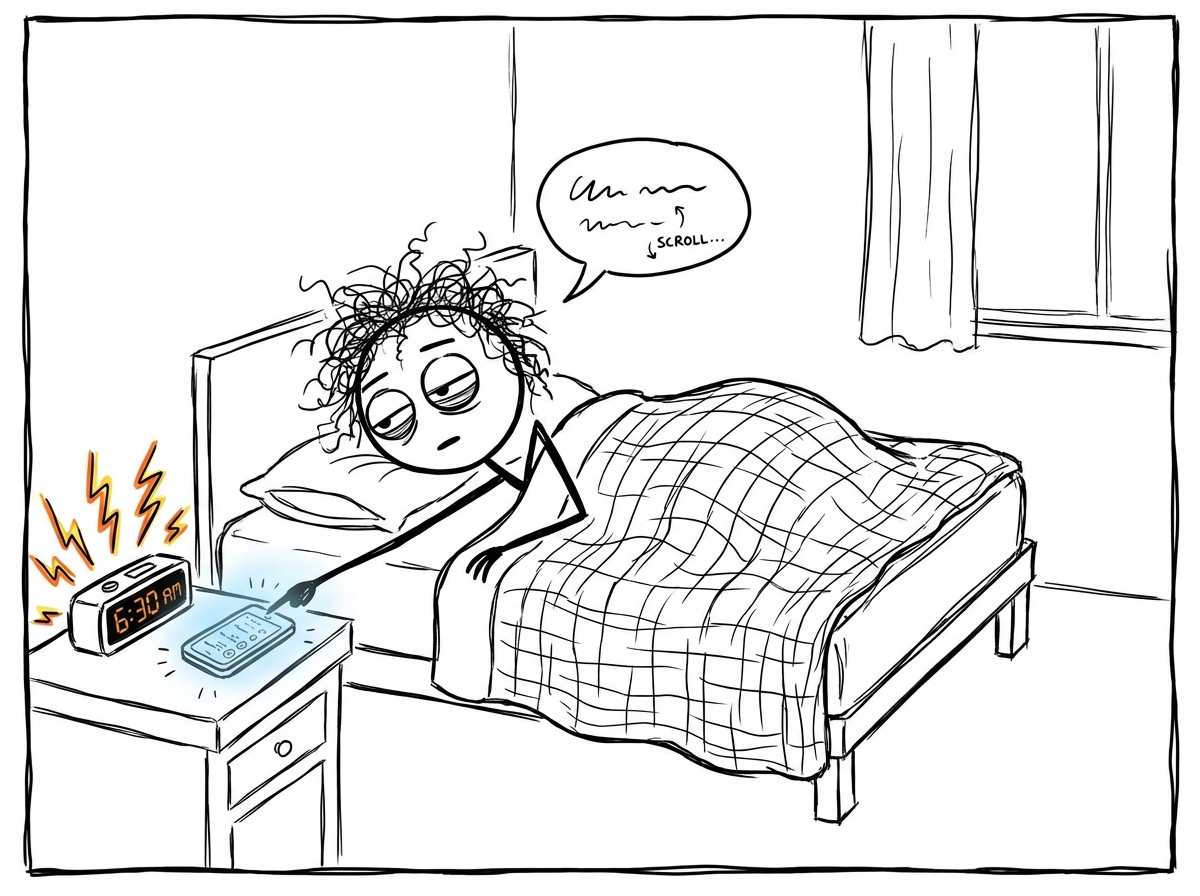
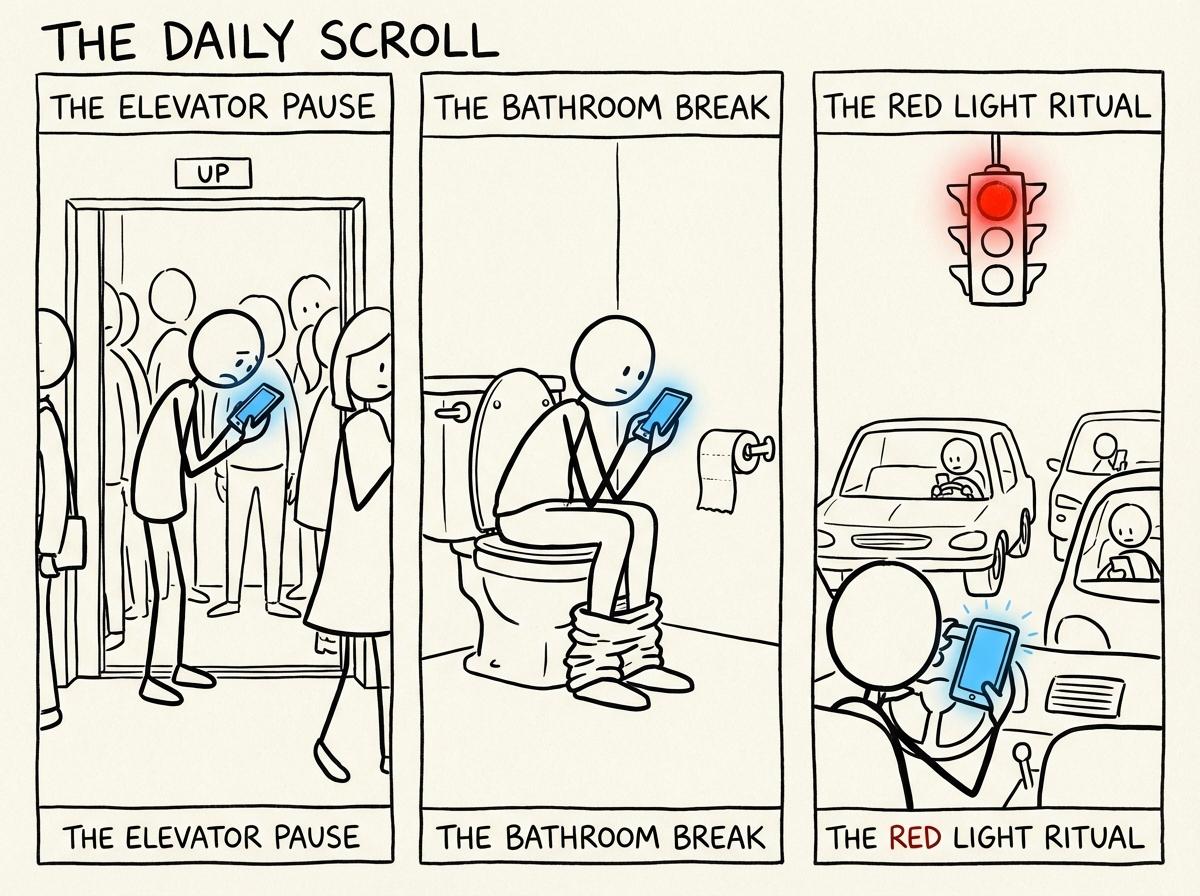
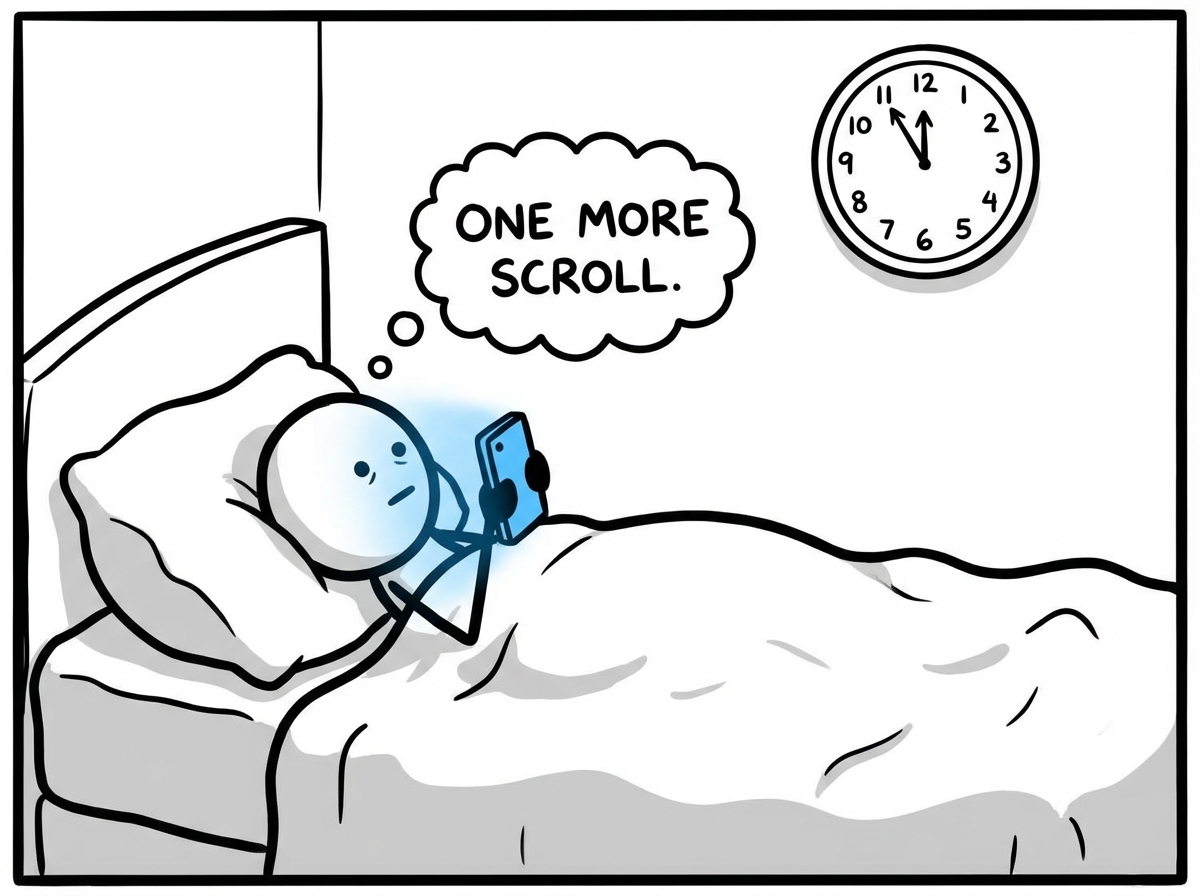
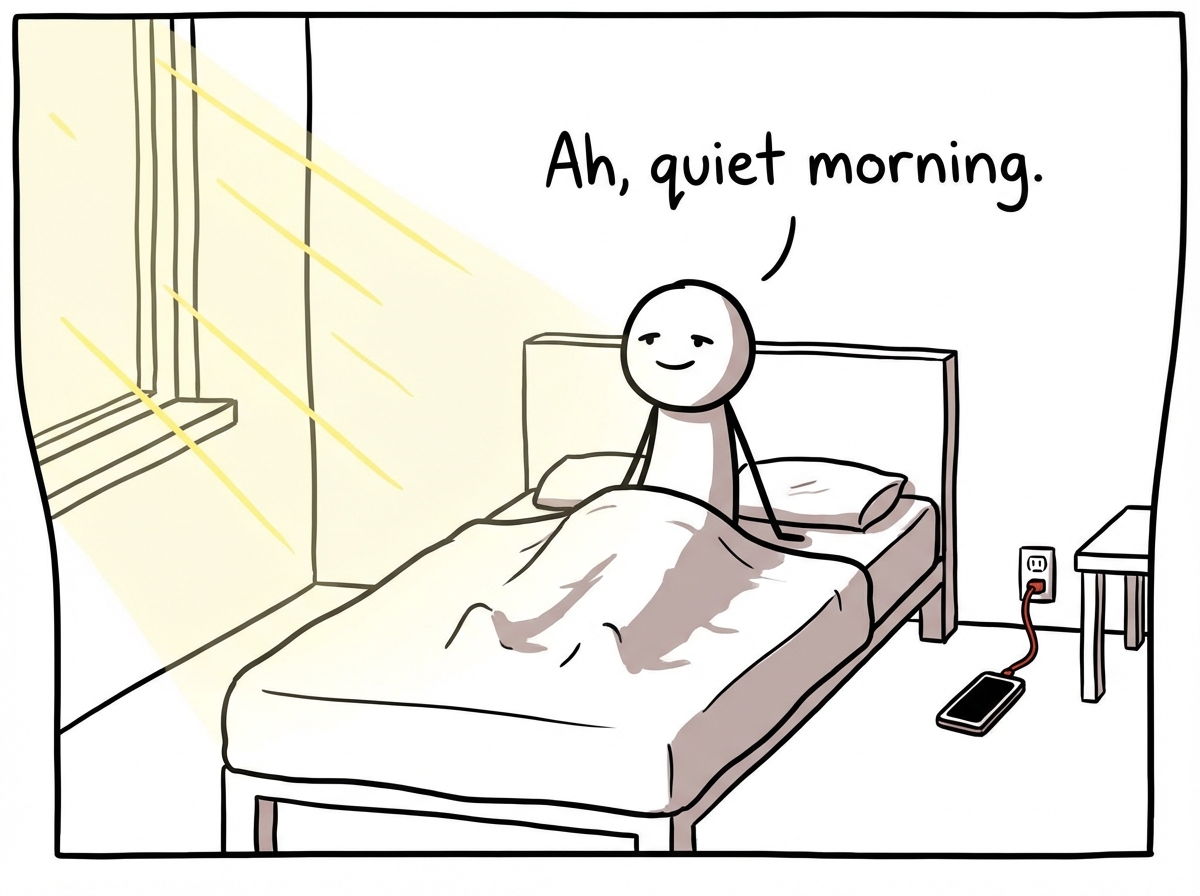
A person realizes their phone is the first thing they reach for every morning and the last thing they see every night, bookending their days with someone else's content instead of their own thoughts.
Explanation
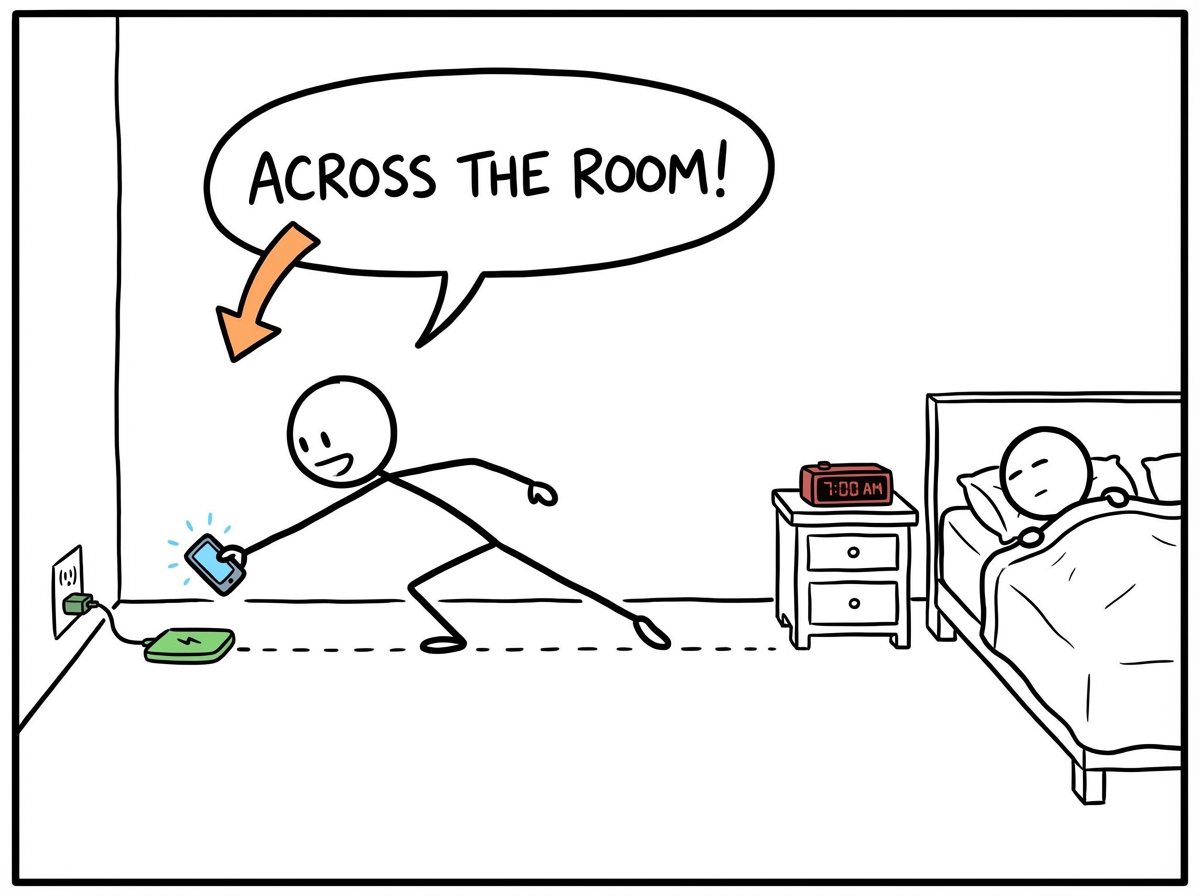
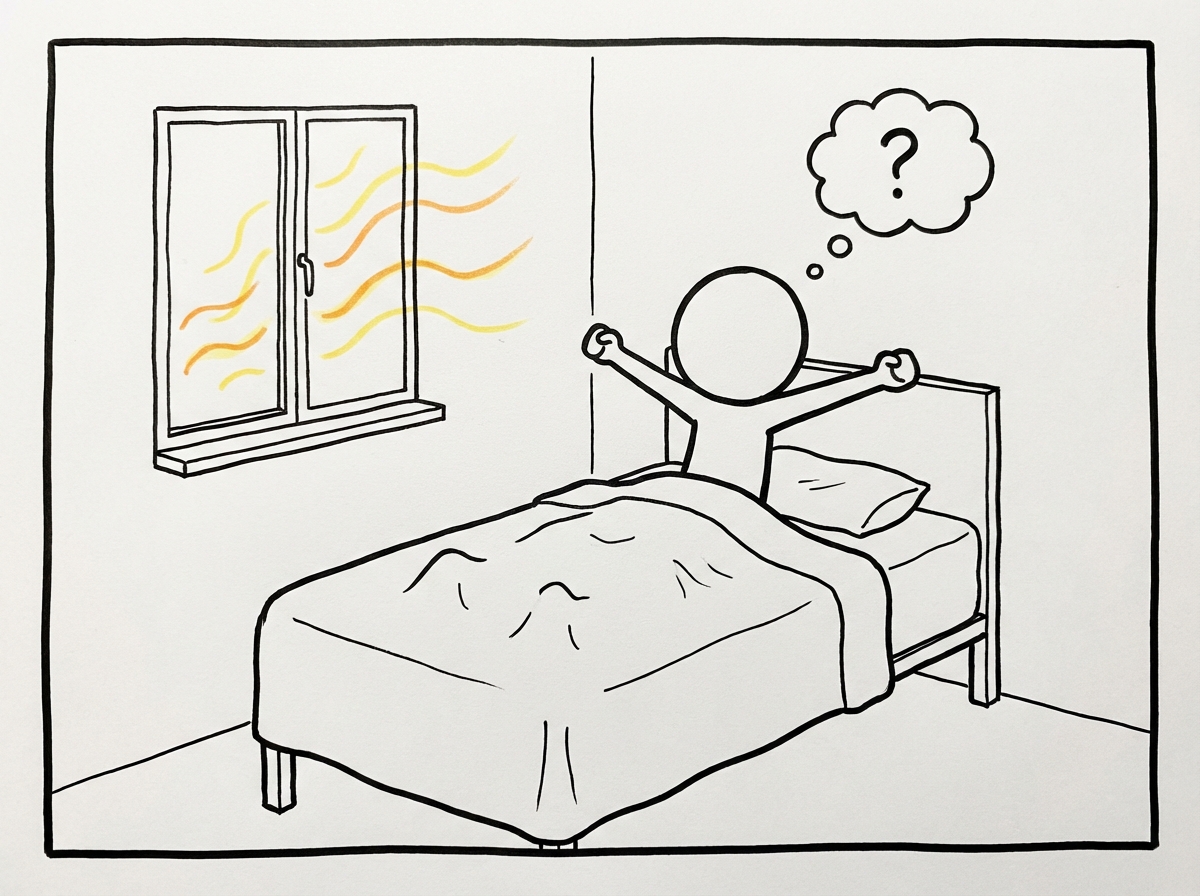
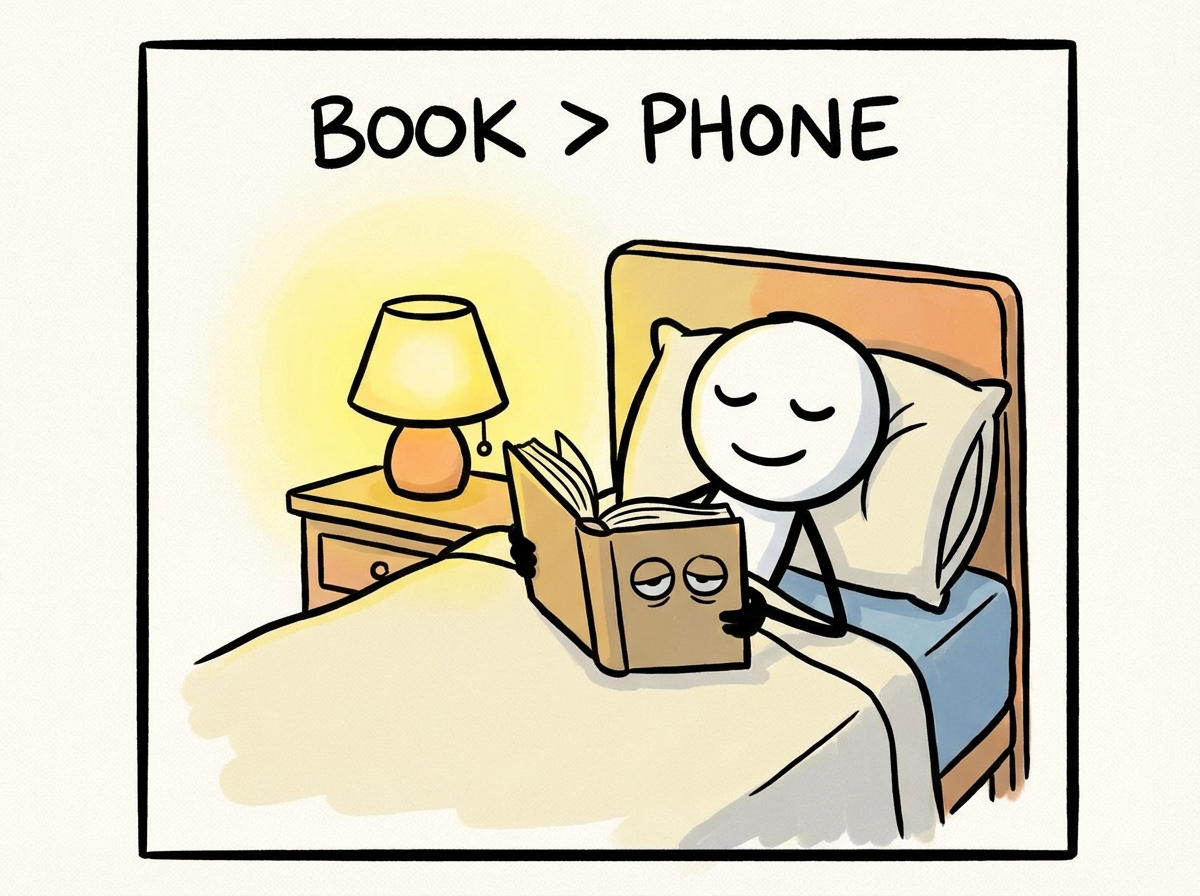
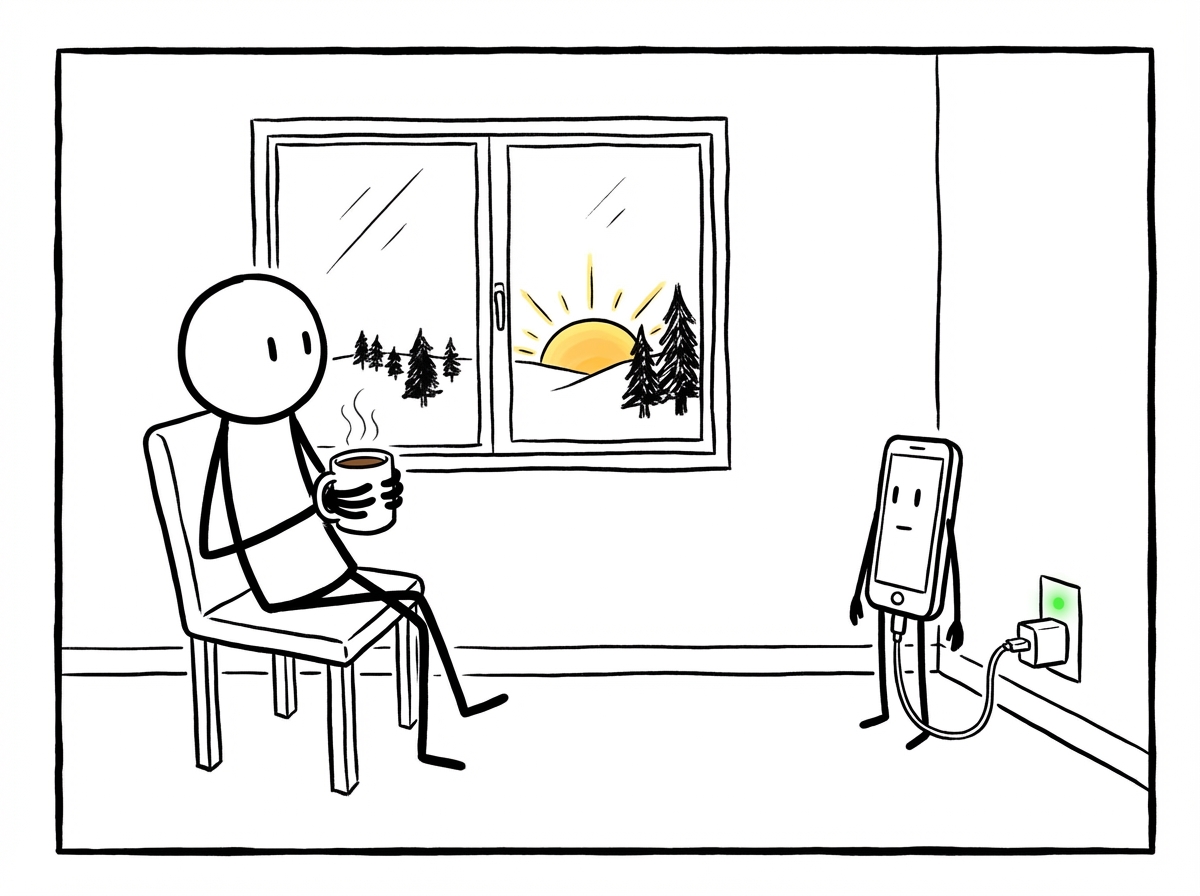
Your alarm goes off. Before your eyes are fully open, your hand is already moving -- not toward the snooze button, but toward the infinite scroll. You are consuming other people's thoughts, outrage, and curated breakfasts before you have had a single original thought of your own. Research on morning phone use shows that checking your phone in the first ten minutes of waking sets your brain into a reactive mode for the rest of the day. Instead of deciding what matters to you, you are immediately responding to what matters to everyone else. Your morning is hijacked before your feet hit the floor. The evening version is arguably worse. You tell yourself one more scroll, and an hour evaporates. The blue light suppresses melatonin production, delaying sleep onset by an average of 30 to 60 minutes according to sleep research. But the real damage is not just physiological -- it is psychological. You are ending your day marinating in comparison, outrage, or passive consumption instead of reflection, gratitude, or genuine rest. Your brain never gets a clean transition into sleep because it is still processing a firehose of stimuli right up until the moment you close your eyes. Reclaiming the bookends of your day is one of the highest-leverage changes you can make. Put your phone across the room before bed. Buy a cheap alarm clock. When you wake up, let your first ten minutes belong to you -- your thoughts, your body, your silence. It will feel strange at first, maybe even uncomfortable. That discomfort is the sound of a habit losing its grip.
Key Takeaway
Your phone has claimed the first and last moments of your day -- reclaiming those bookends is one of the simplest and most powerful changes you can make.