The Green-Eyed Accountant
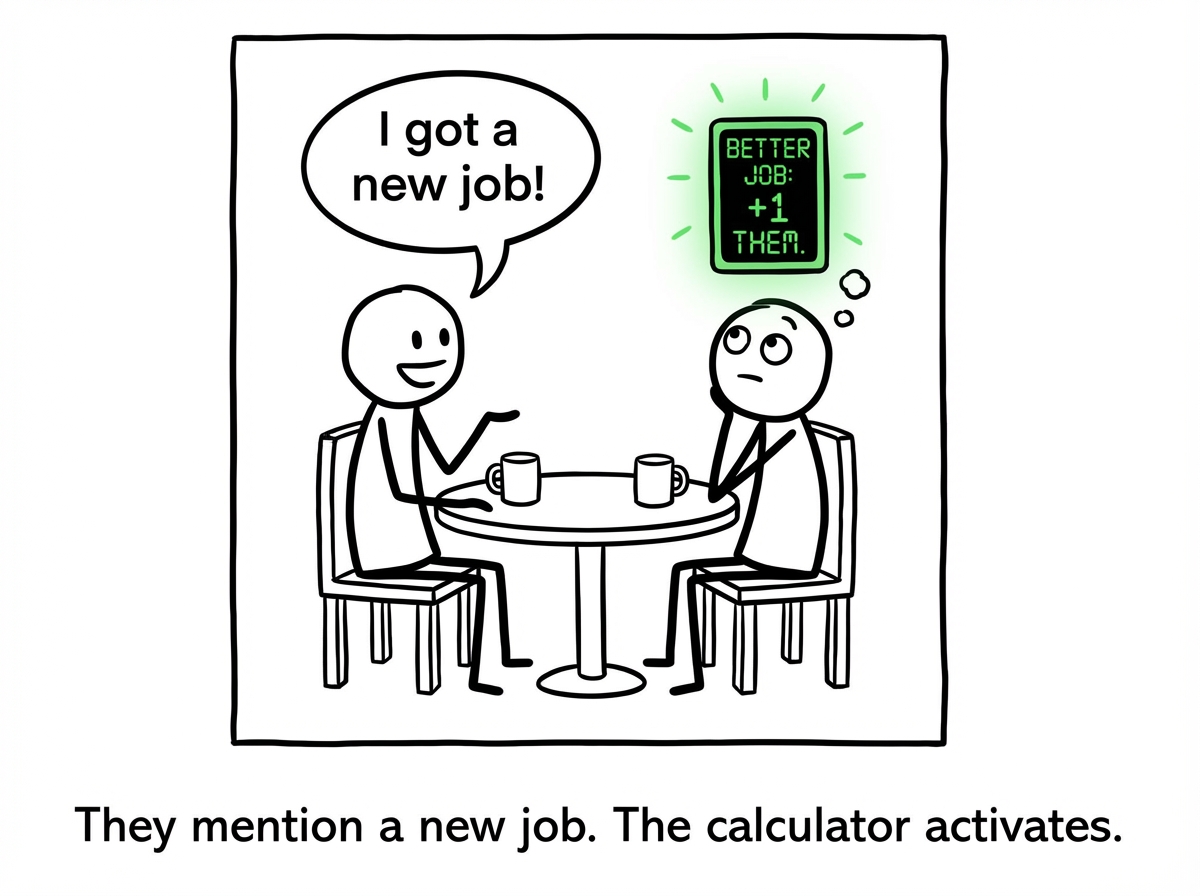
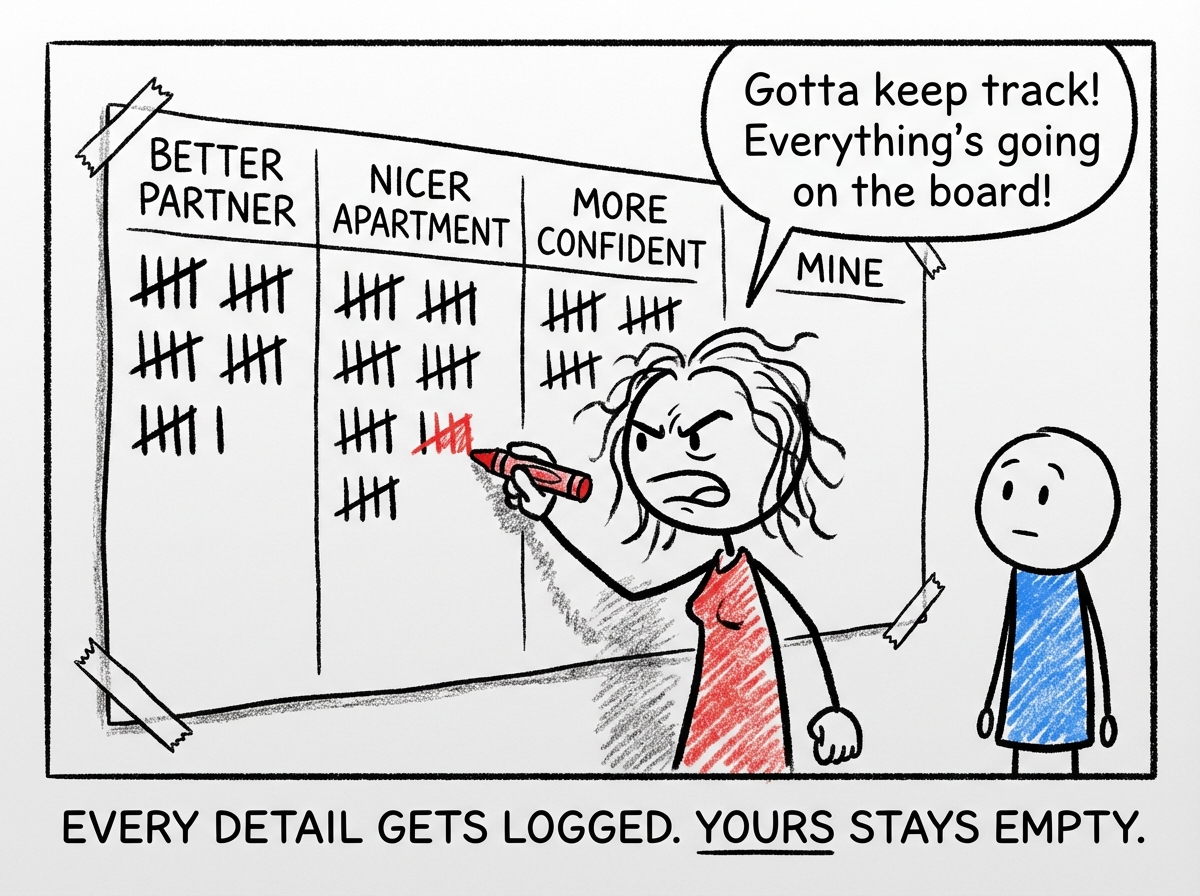
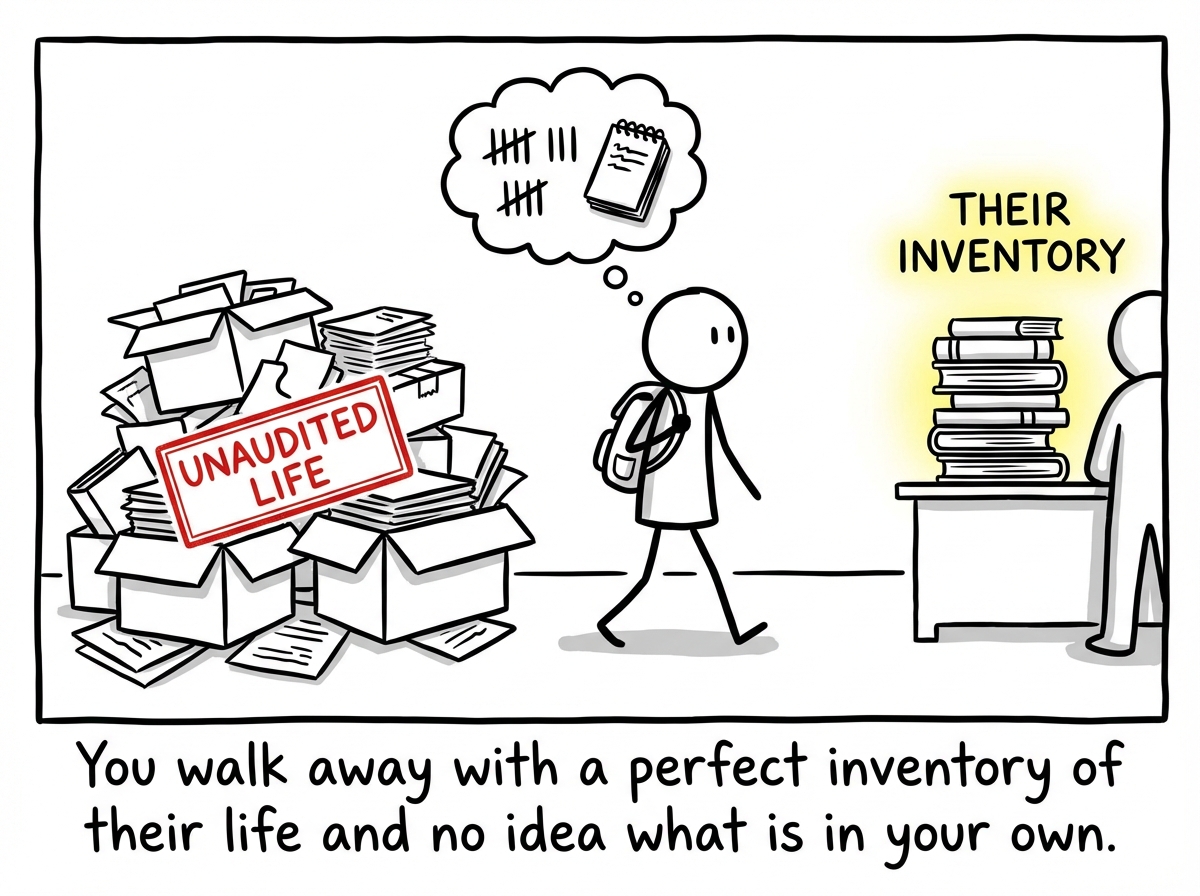
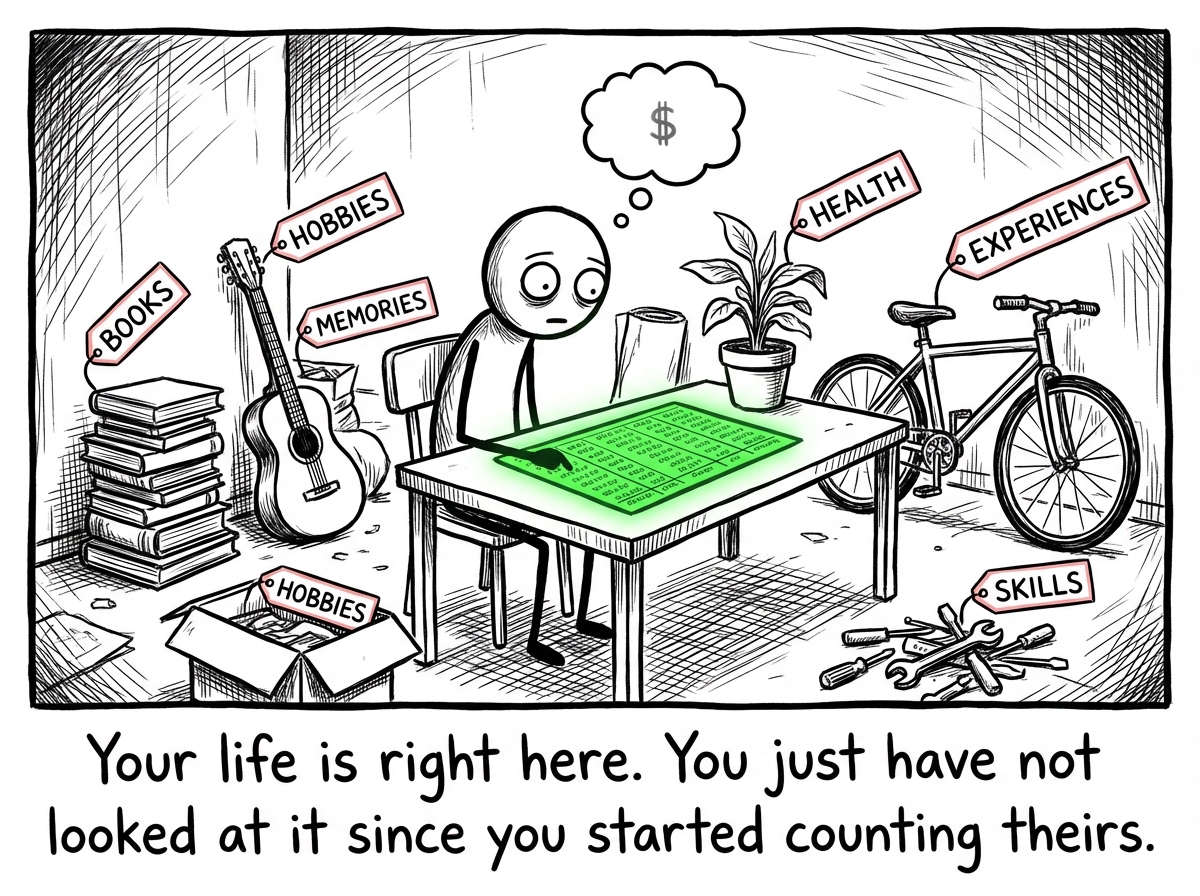
A person mentally tallies everything someone else has -- their job, their partner, their confidence -- while their own assets go completely unaudited.
Explanation
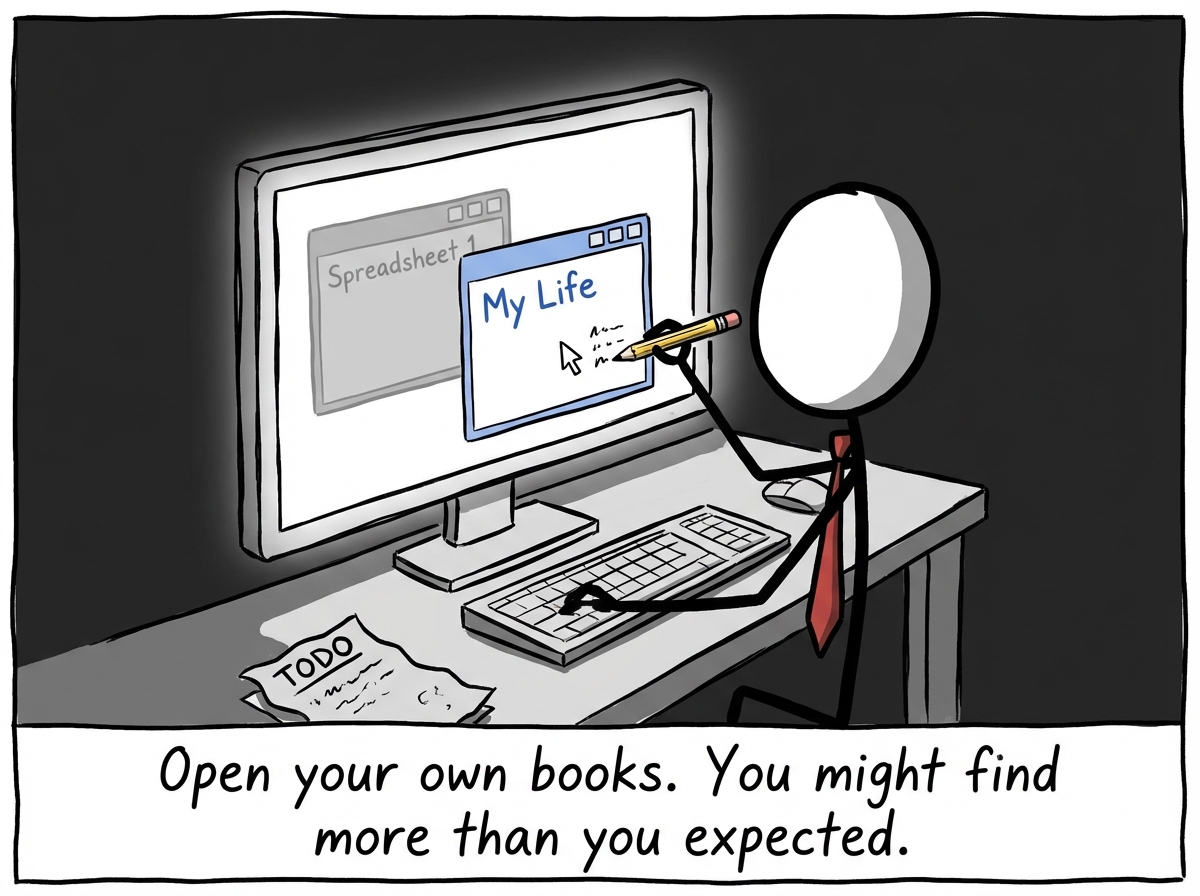
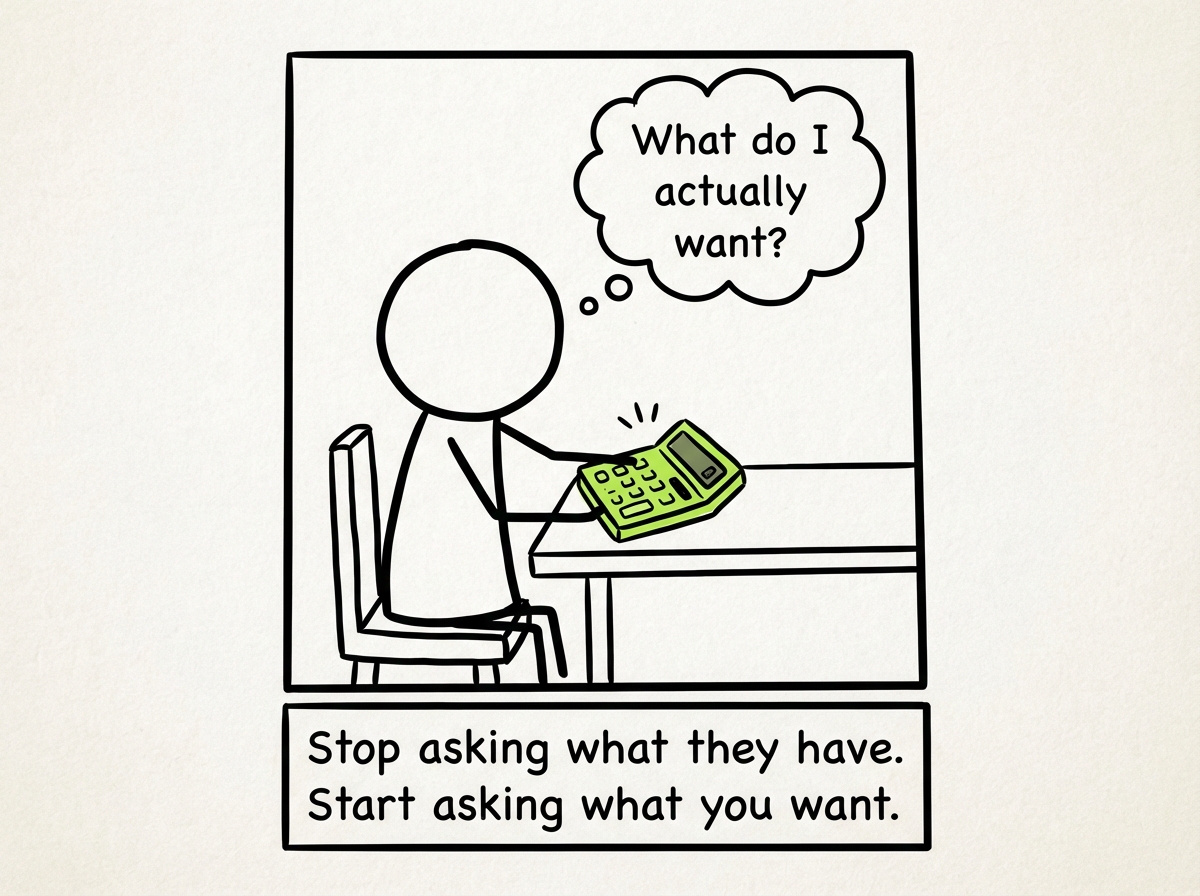
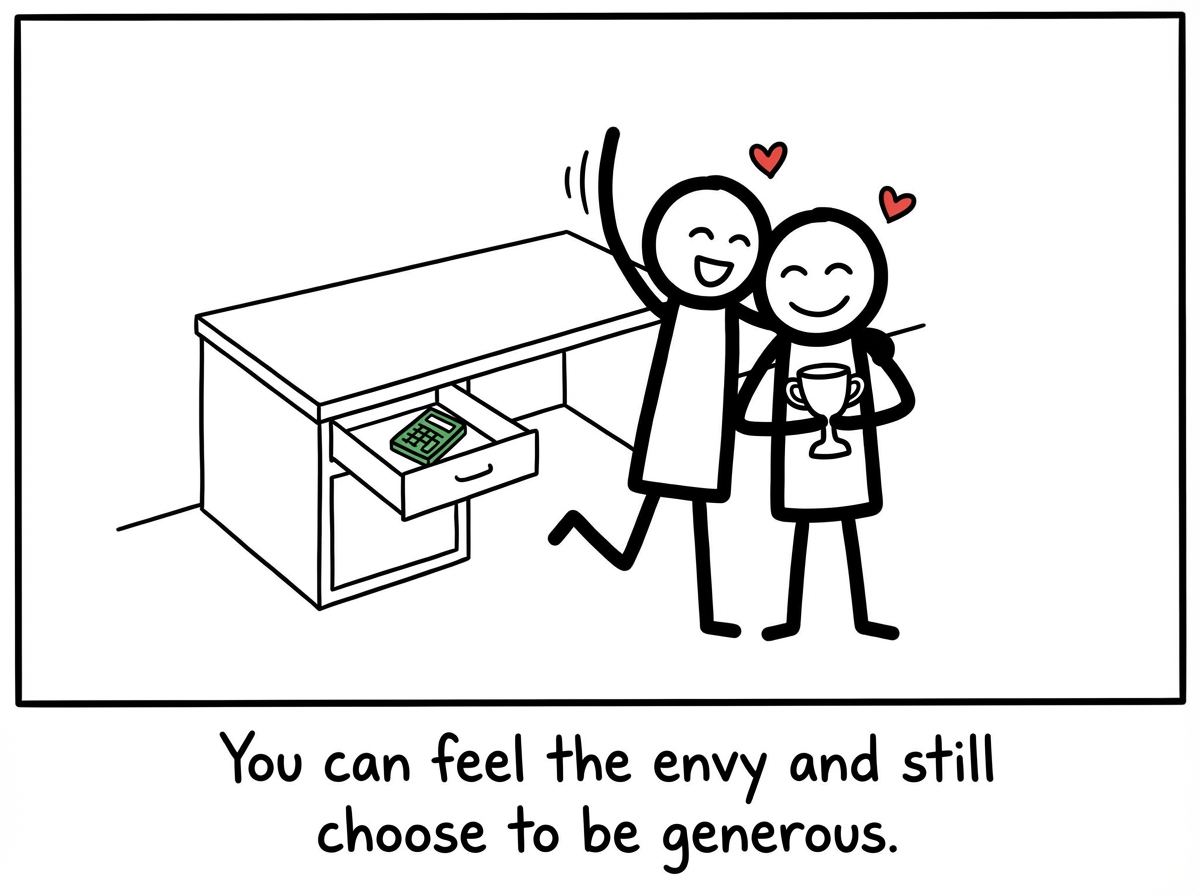
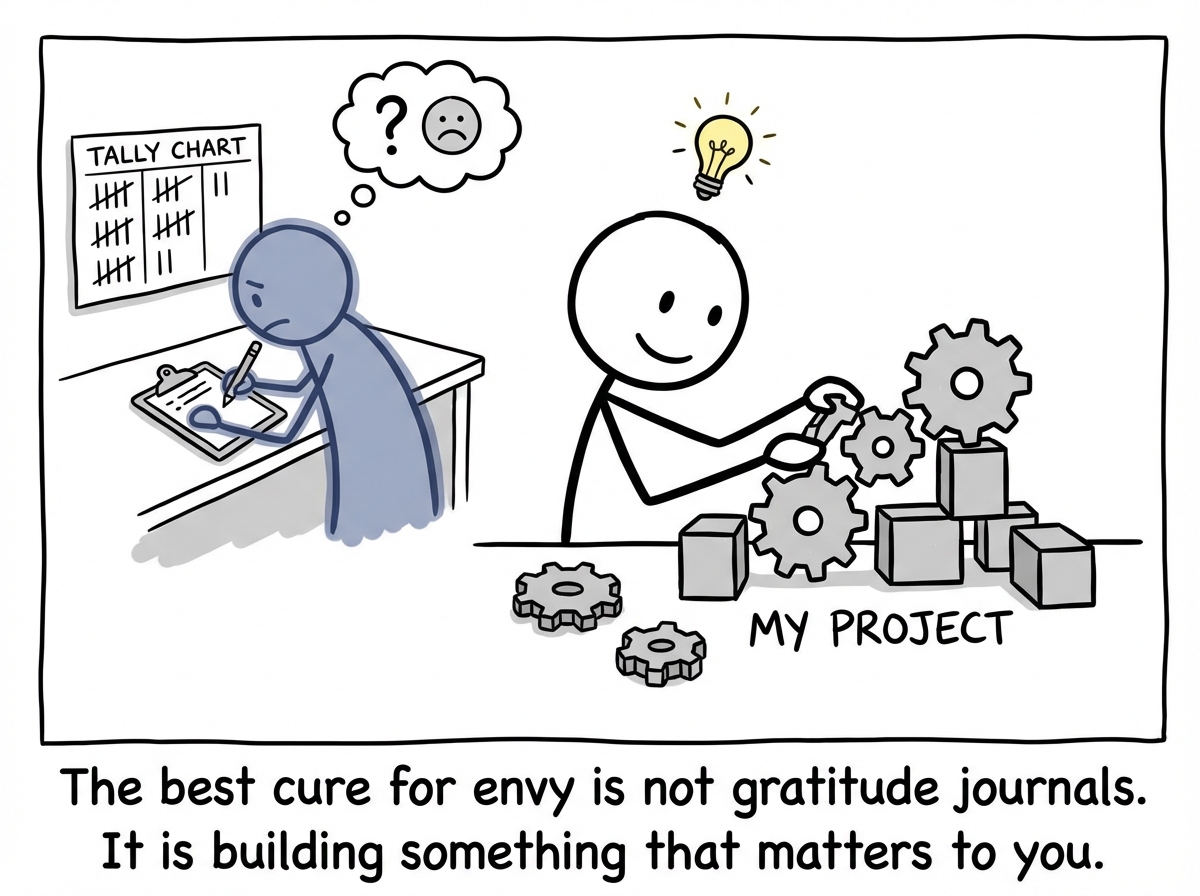
You run into an old friend and within five minutes, an internal audit has begun. They have a better job. Their partner is more attractive. They seem confident in a way you have never managed. They mentioned a vacation. They look healthy. They are doing well, and every data point gets logged in a mental spreadsheet that only has one purpose: to prove that they have more than you. This is the green-eyed accountant -- the part of your brain that computes envy with the precision of a spreadsheet and the fairness of a rigged election. It only counts what others have. It never audits what you have. Their wins are magnified; your wins are dismissed as luck, timing, or not good enough. The accounting is meticulous in one direction and blind in the other. Research on social comparison theory, originally proposed by Leon Festinger, shows that humans have a fundamental drive to evaluate themselves by comparing to others. The problem is not the comparison itself -- it is the asymmetry. Studies by Thomas Mussweiler show that upward social comparisons (comparing to people who are doing better) consistently produce negative self-evaluations, while downward comparisons produce positive ones. The green-eyed accountant only does upward math. The cruelest aspect is that envy's accounting actually worsens your objective situation. Research by Duffy and Shaw shows that envy in workplace relationships reduces cooperation, increases sabotage behavior, and damages the performance of both the envious person and the envied one. You are not just feeling bad -- the feeling is making your life actively worse. Closing the spreadsheet does not mean denying others their success. It means opening a second file: one that audits your own life with the same attention you give to theirs.
Key Takeaway
You have been auditing their life with forensic precision while leaving your own books completely unopened. The imbalance is the problem, not their success.