The Green-Eyed Accountant
A person mentally tallies everything someone else has -- their job, their partner, their confidence -- while their own assets go completely unaudited.

Wanting what someone else has -- and letting that wanting corrode how you see yourself, them, and everything you already have.
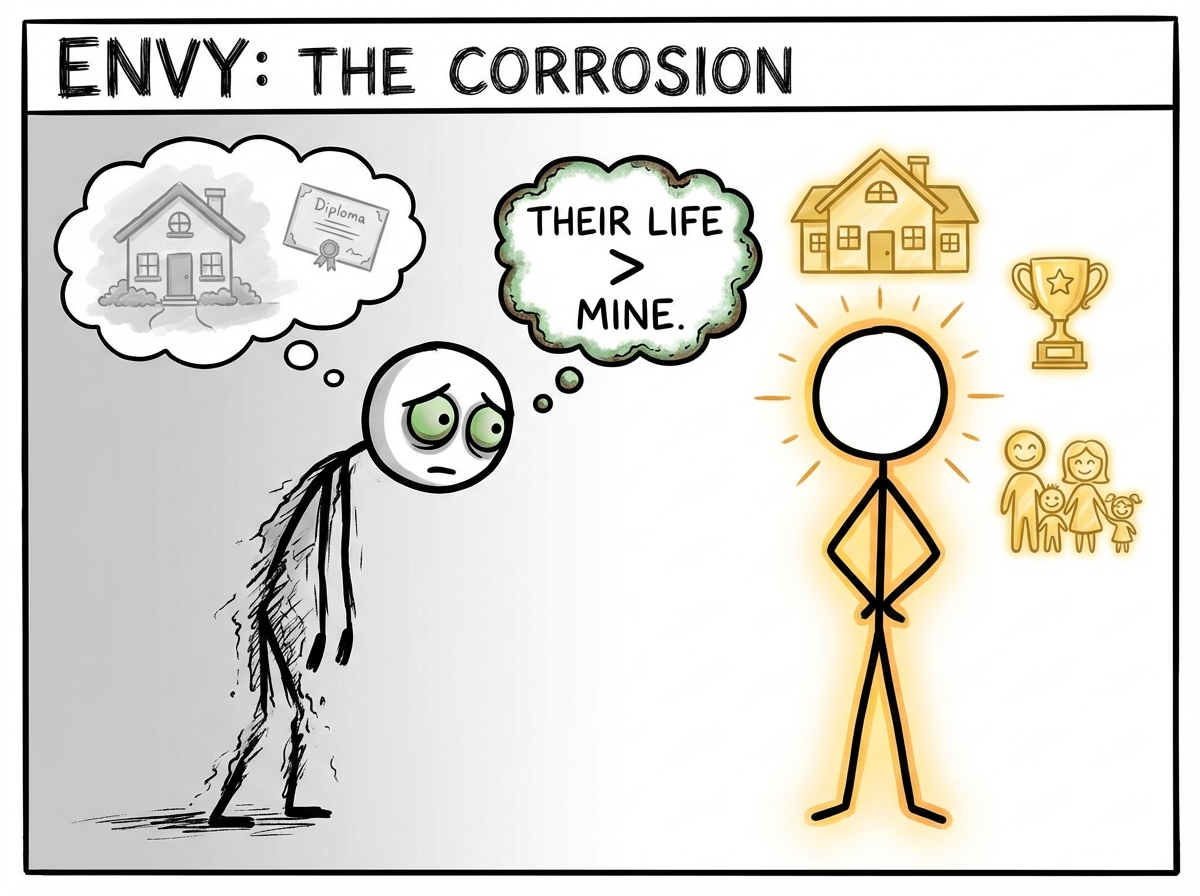
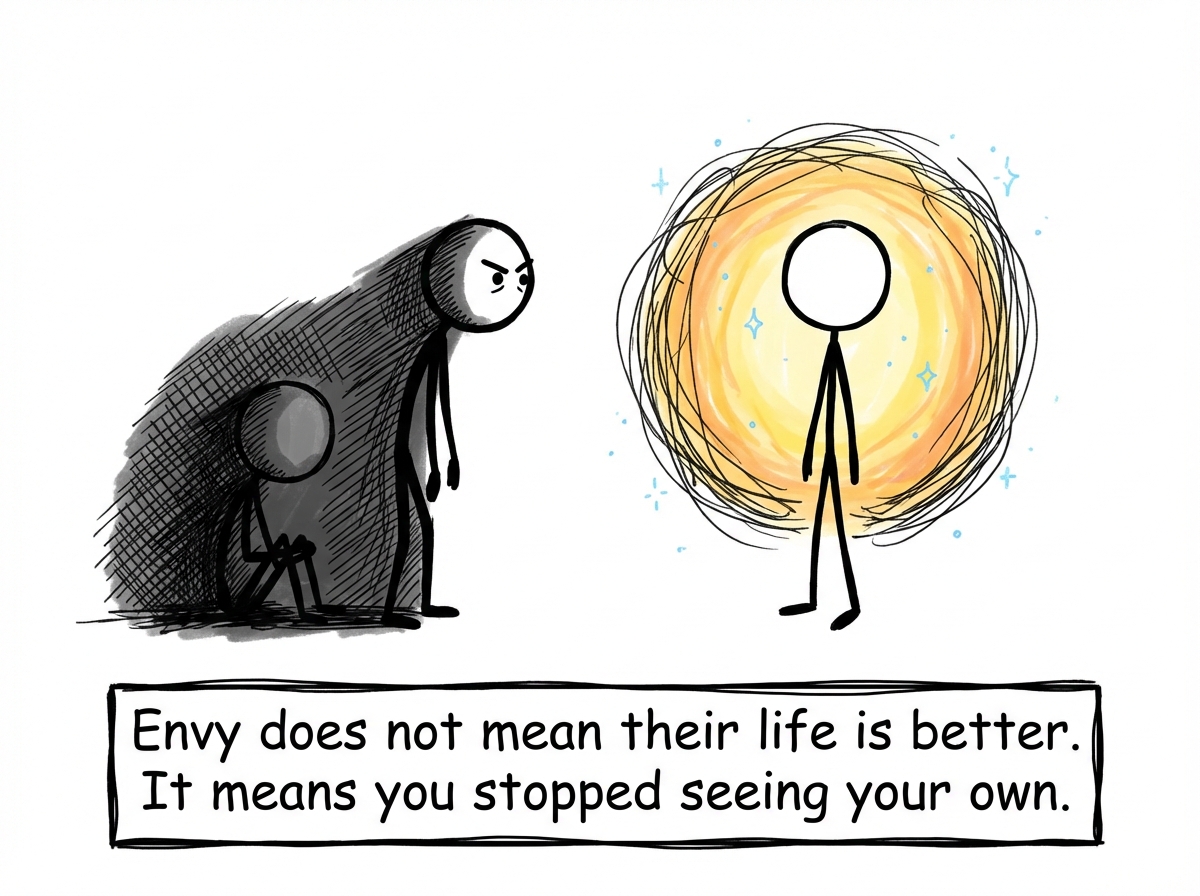
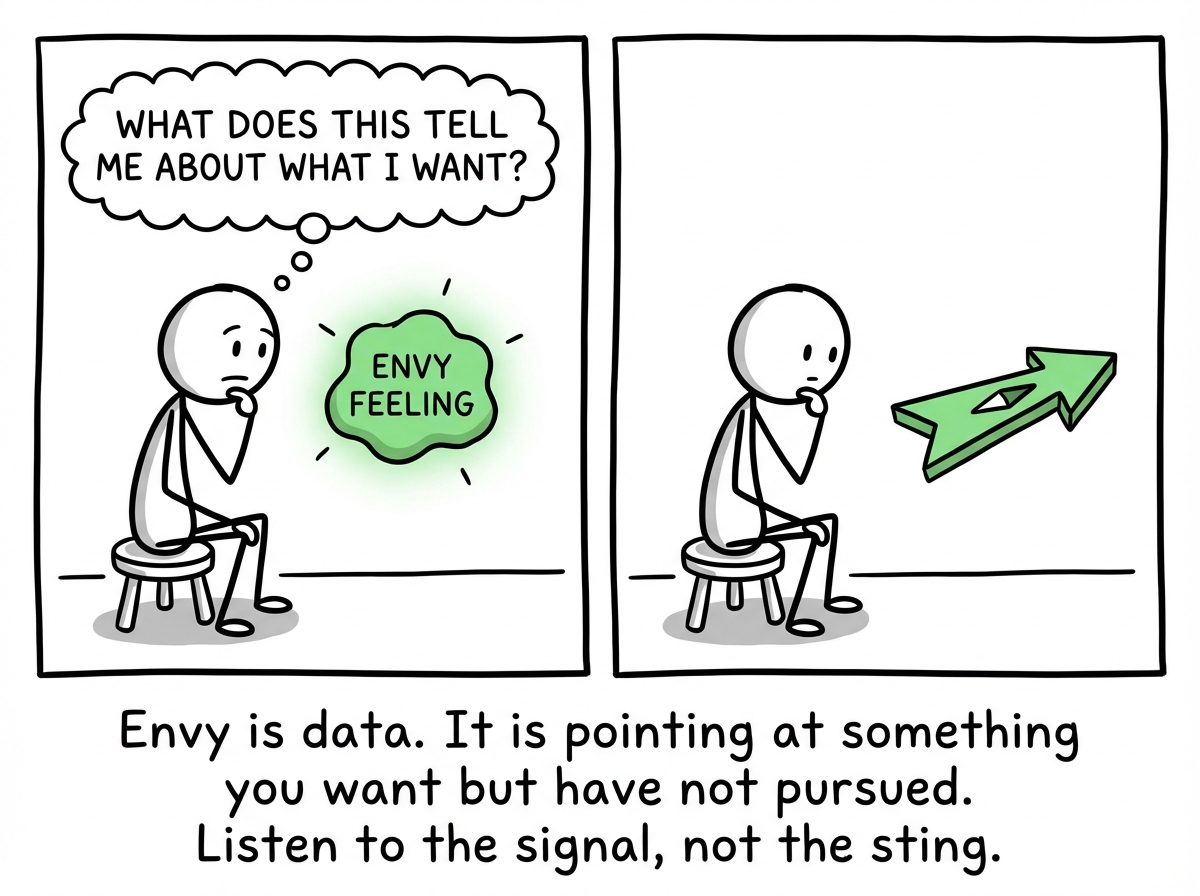
Envy is not the same as jealousy. Jealousy is the fear of losing something you have. Envy is the pain of wanting something someone else has -- their success, their body, their relationship, their ease. Aristotle defined envy as pain at the good fortune of others, and modern psychology has confirmed that it operates as a social comparison emotion with deep evolutionary roots. Envy is not just wanting more. It is wanting more because someone else has it. Researchers distinguish between benign envy (which motivates self-improvement) and malicious envy (which motivates tearing the other person down). Both stem from the same root: the perception that someone else's advantage reveals your own deficiency. What makes envy so corrosive is that it reframes your entire life through the lens of what is missing. You stop seeing your own accomplishments, your own relationships, your own progress -- because the comparison has hijacked the narrative. Social media has weaponized this dynamic, creating an environment where you are exposed to curated highlight reels hundreds of times a day, each one a potential trigger for the feeling that you are falling behind. The philosopher Kierkegaard wrote that comparison is the thief of joy, and the psychology supports this -- studies by Sarah Hill and David Buss show that upward social comparison reliably decreases life satisfaction regardless of objective circumstances. The work of healing envy is not about suppressing the feeling. It is about learning to notice it, understand what it is really telling you about your own unmet needs, and redirecting that energy from resentment toward action.
Envy is not proof that they have too much. It is a signal that something in your own life needs attention -- and that signal gets lost when you aim it at someone else.
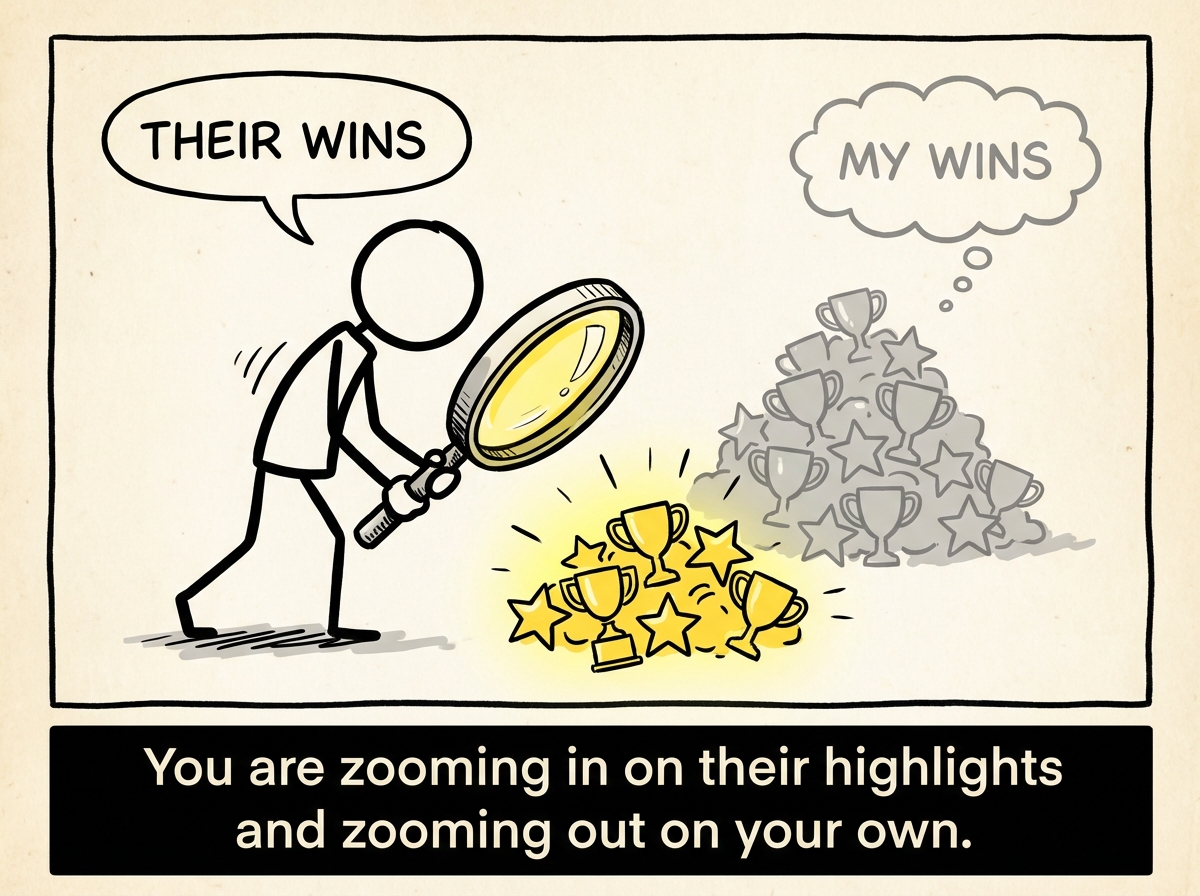
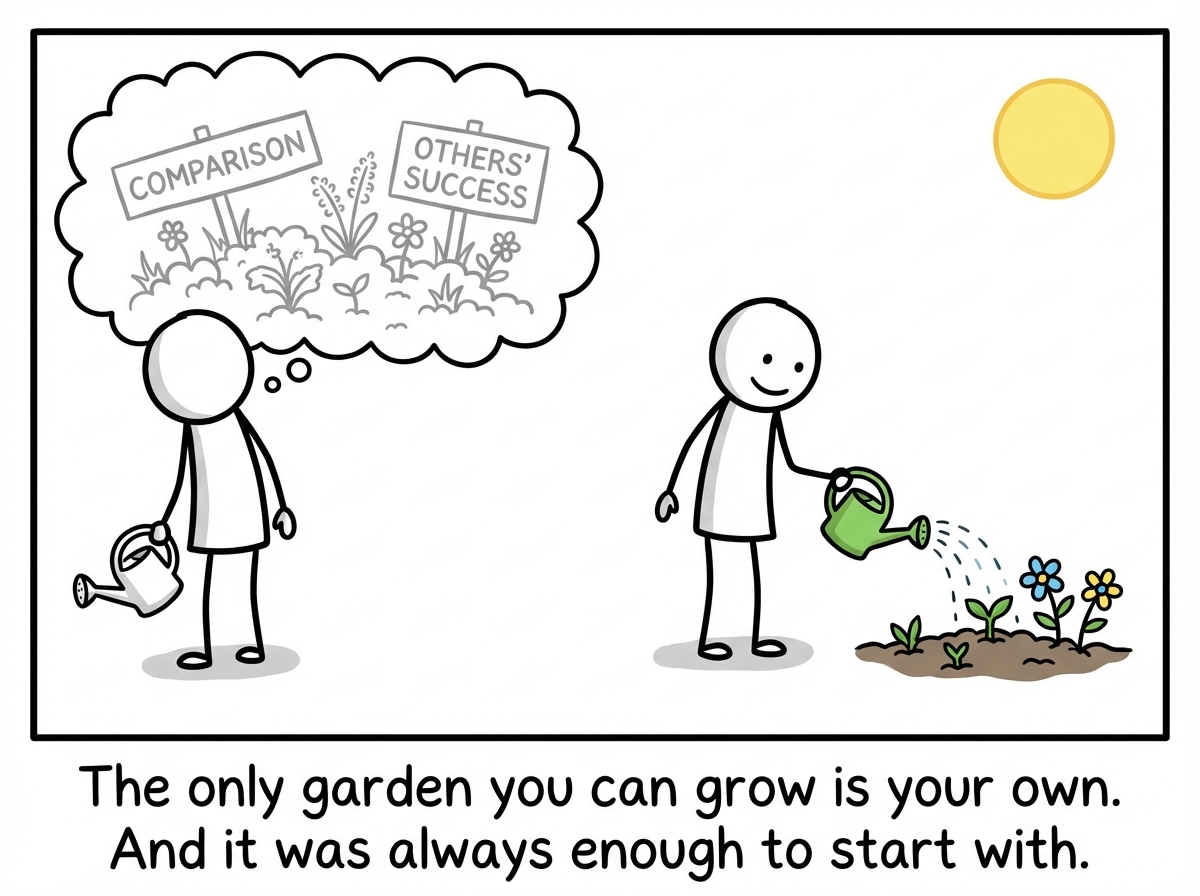
A person mentally tallies everything someone else has -- their job, their partner, their confidence -- while their own assets go completely unaudited.
A person scrolls through someone else's curated life highlights and feels their own life shrink with every swipe -- not because their life got smaller, but because the comparison made it invisible.