The Popcorn Spectator
A person watches someone else's life unravel with hidden satisfaction while performing concern -- eating popcorn at the theater of someone else's downfall.

The guilty pleasure of watching someone else fail -- and what that secret satisfaction reveals about your own unmet needs.
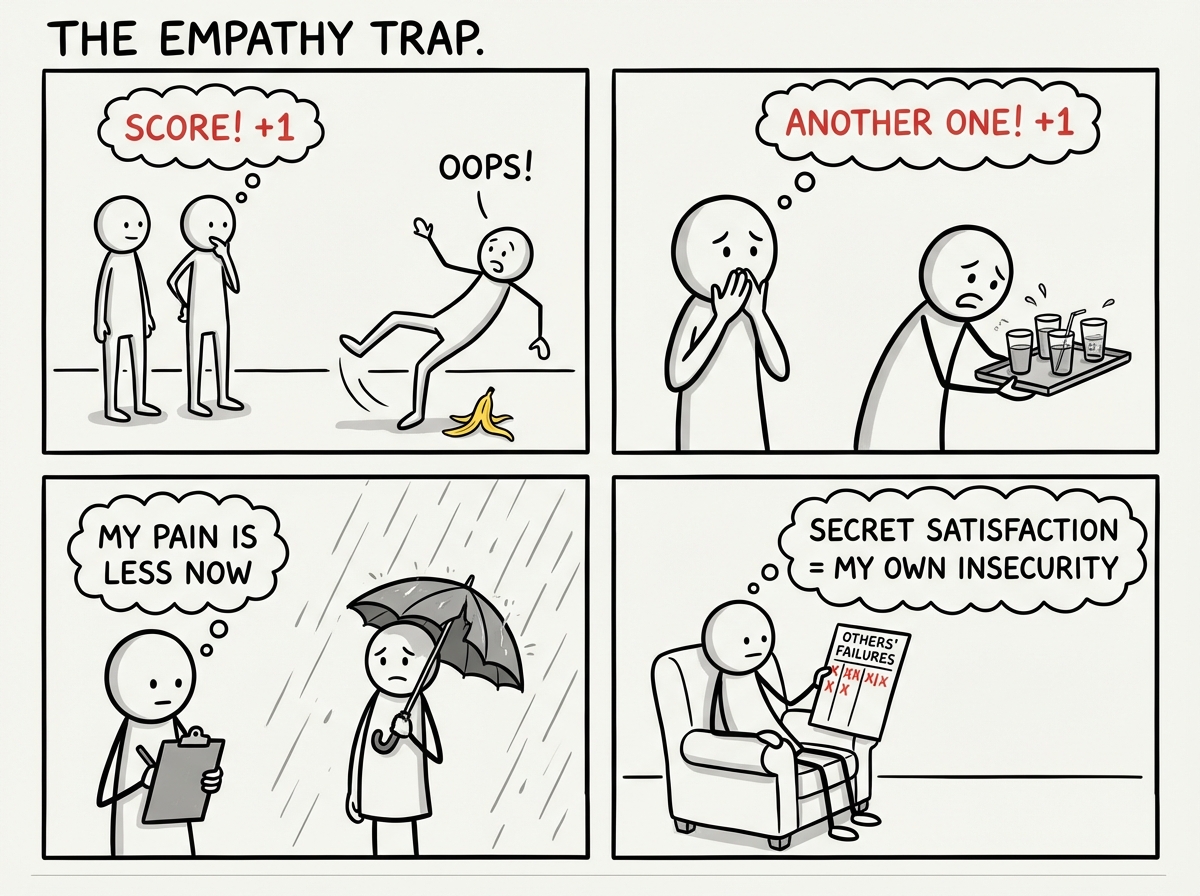
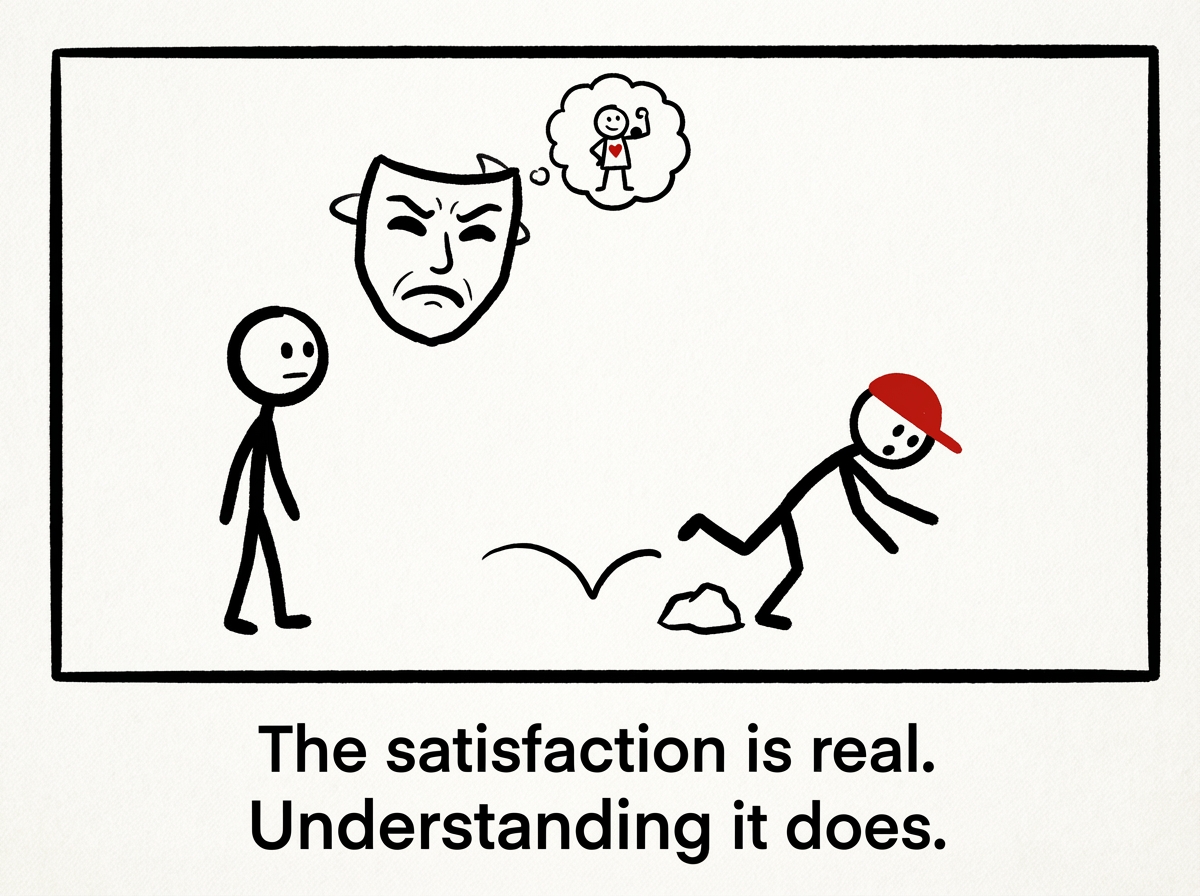
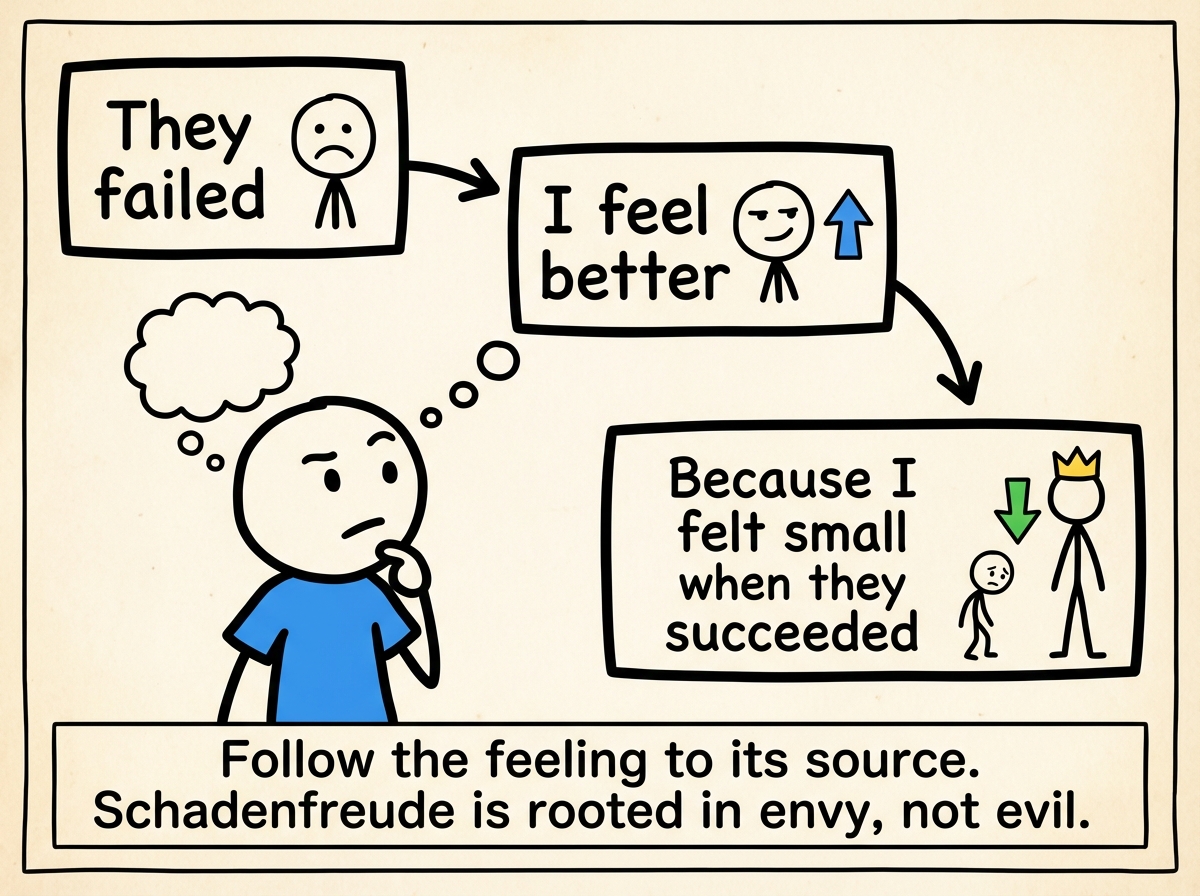
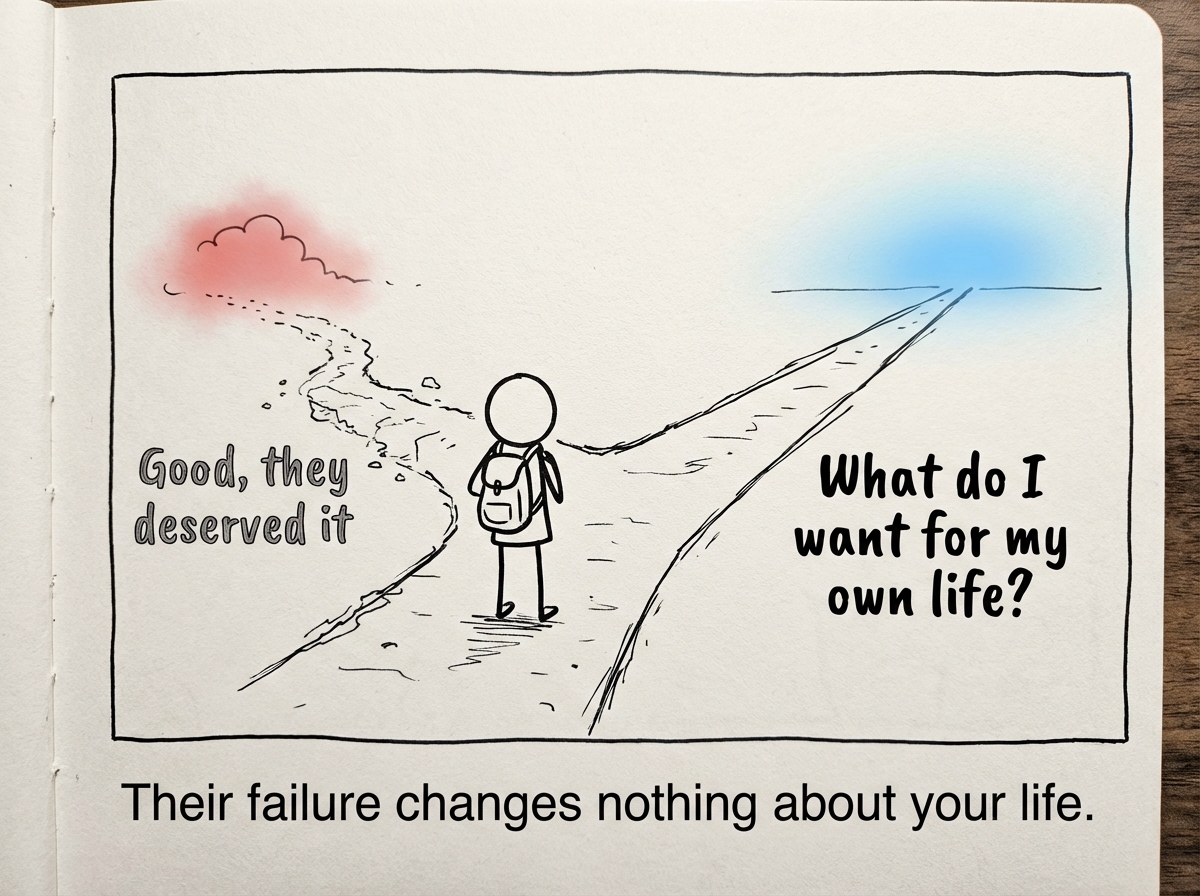
Schadenfreude -- the German word for pleasure derived from another person's misfortune -- is one of the most universal and most denied human emotions. You see a rival stumble, a show-off get humbled, or an overachiever finally fail, and something inside you lights up. You know you should not enjoy it. You would never admit it. But the satisfaction is undeniable. Psychologist Richard Smith, one of the leading researchers on schadenfreude, identifies three primary drivers: a sense of injustice being corrected (they had it coming), a boost to self-evaluation (their failure makes me feel better by comparison), and in-group rivalry (they are not on my team). All three drivers share a common thread: schadenfreude is not really about the other person. It is about you -- specifically, about the parts of you that feel threatened, diminished, or inadequate in comparison. Research by Takahashi and colleagues using fMRI has shown that schadenfreude activates the ventral striatum -- the same reward circuitry involved in eating, sex, and winning money. It is neurologically pleasurable to watch someone fall, especially someone you envy. This makes evolutionary sense: in status-based social hierarchies, another's loss is your relative gain. The problem is that schadenfreude offers junk-food satisfaction. It relieves the sting of envy momentarily without addressing the underlying deficiency you feel. It is a painkiller, not a cure. Recognizing schadenfreude in yourself is not a moral failing -- it is a diagnostic tool. When you catch yourself savoring someone's downfall, the productive question is not 'What is wrong with me?' but 'What is this telling me about what I feel is missing in my own life?'
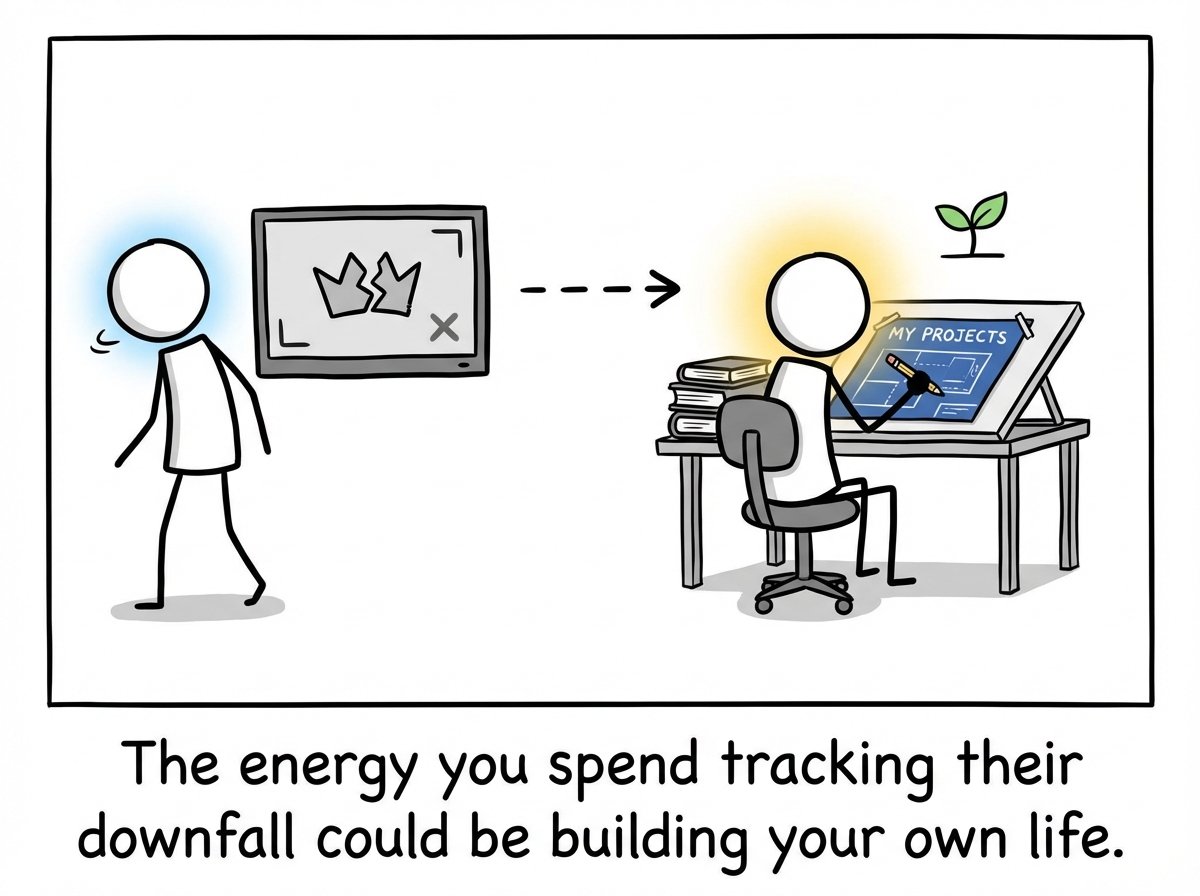
Schadenfreude is not about their failure. It is about the part of you that felt small when they were winning -- and the relief of not having to feel that way, even for a moment.
A person watches someone else's life unravel with hidden satisfaction while performing concern -- eating popcorn at the theater of someone else's downfall.
A person keeps a hidden scoreboard tracking the failures and setbacks of people they envy -- each stumble delivering a brief, guilty hit of satisfaction that never lasts.