
The Human Blue Screen
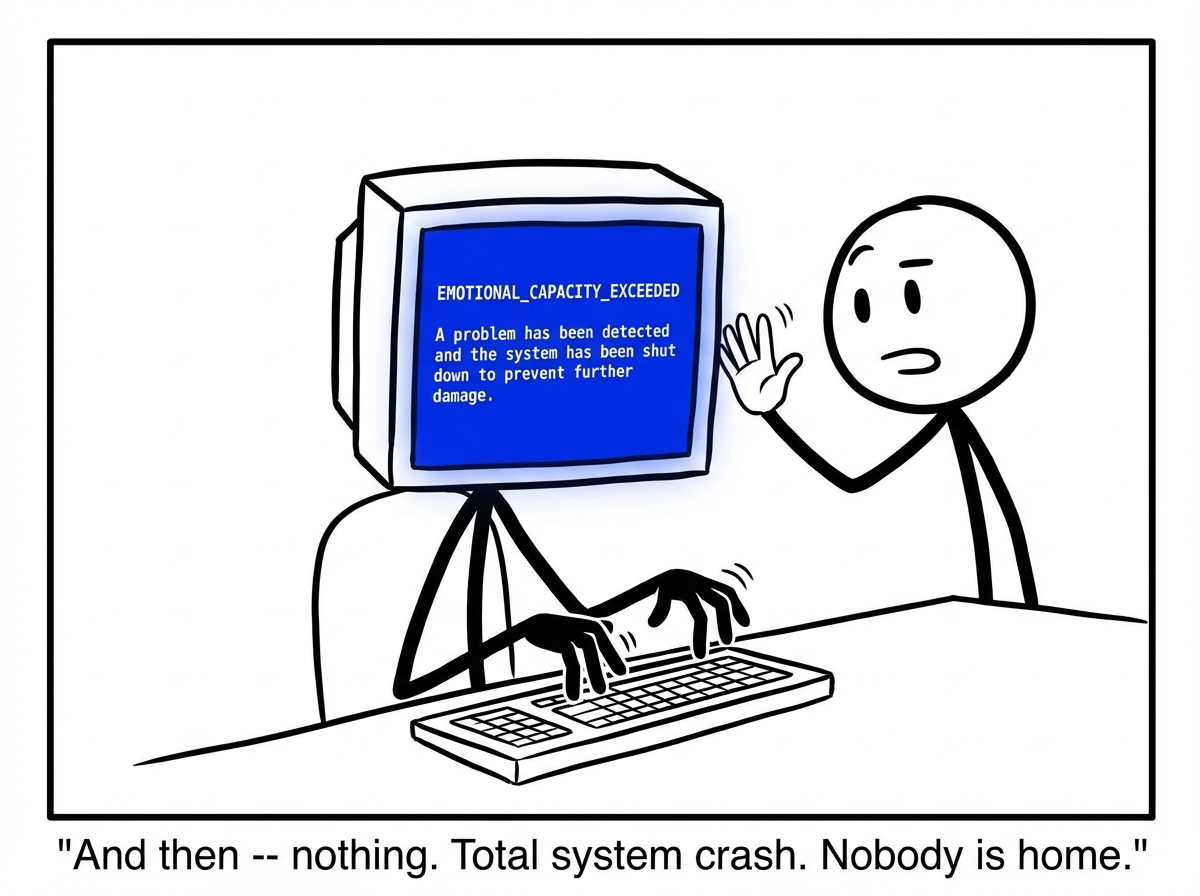
A person who has completely frozen mid-task, displaying a human version of the computer blue screen of death.
Explanation
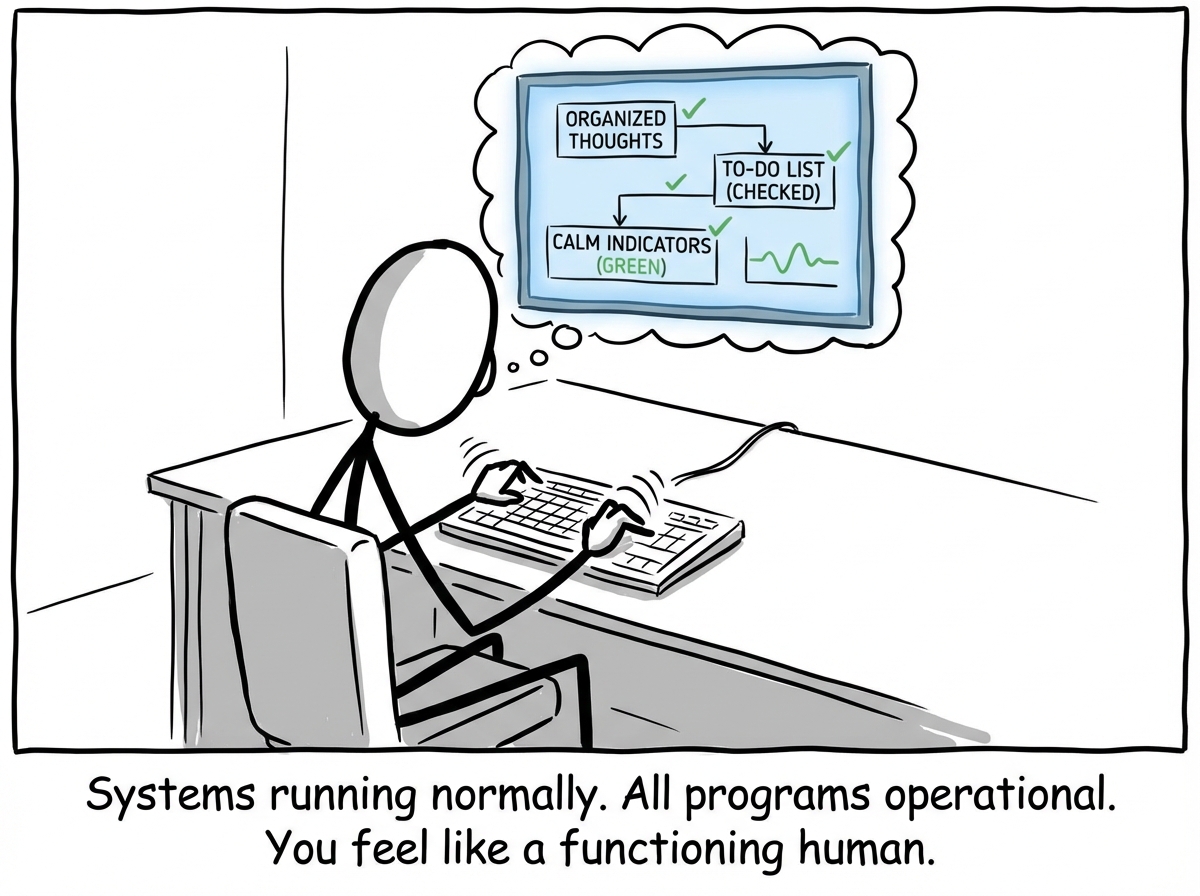
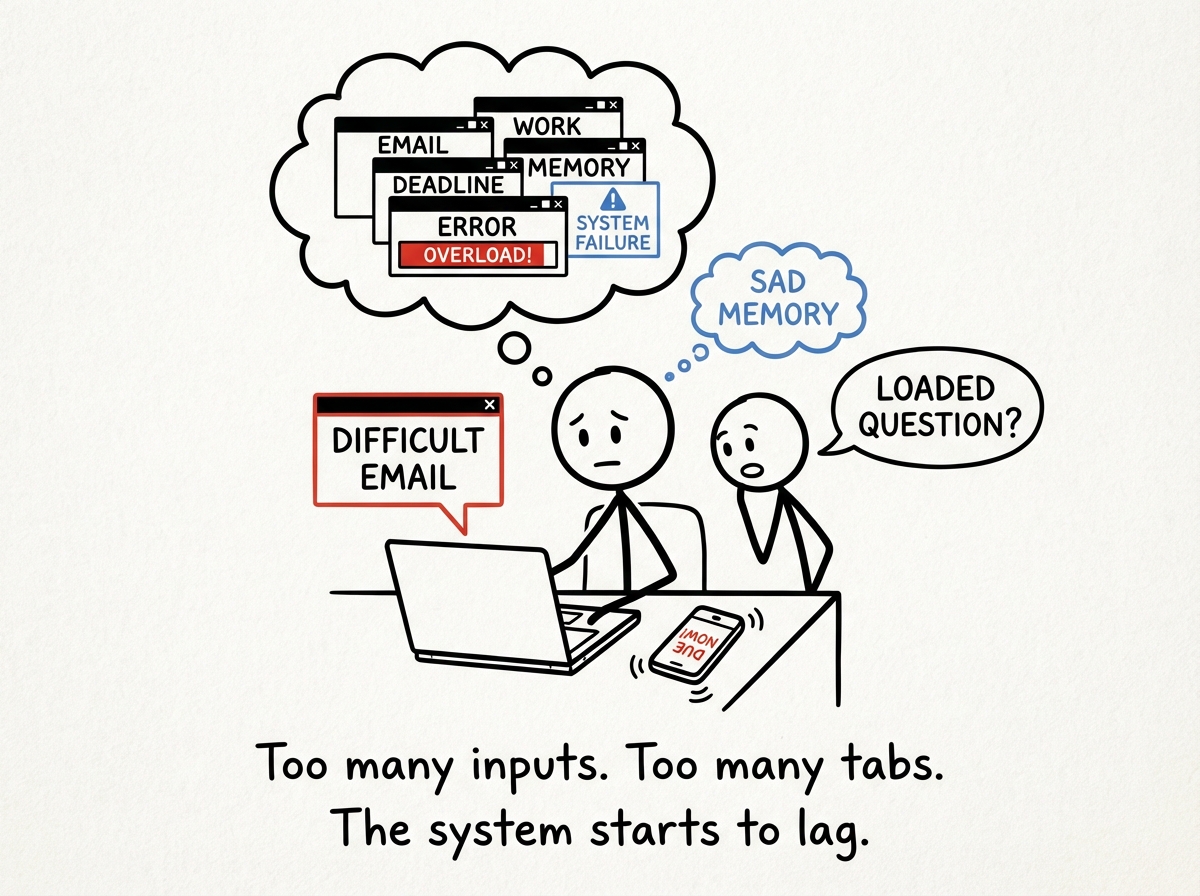
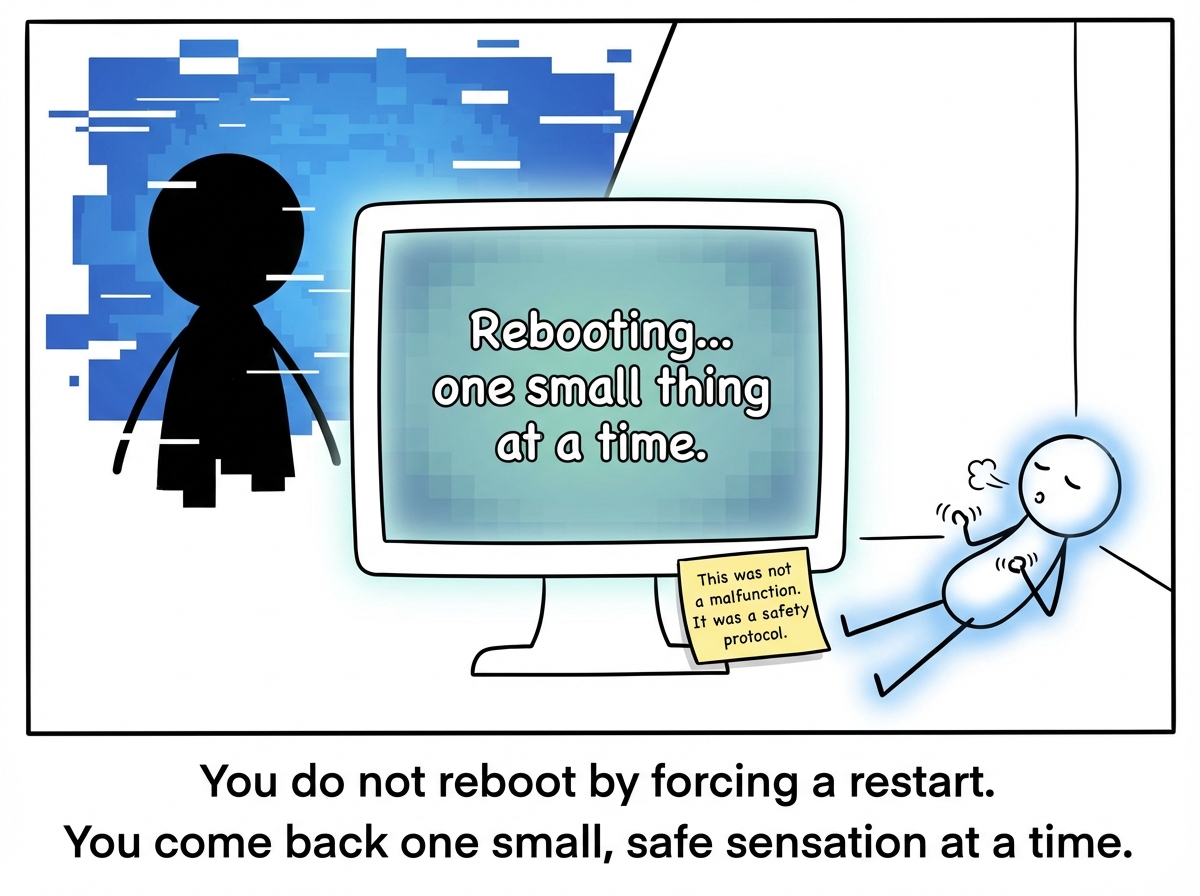
You are in the middle of something -- an important email, a difficult conversation, a decision that needs to be made -- and suddenly, nothing. Your brain goes blank. Your body stops cooperating. You stare at the screen or the person or the wall and you cannot think, cannot move, cannot respond. It is not that you do not want to act. It is that the entire operating system has crashed. You are displaying the human equivalent of the blue screen of death, and no amount of clicking is going to bring you back online. Later, you will feel ashamed. You will call yourself lazy, or broken, or dramatic. But in that moment, you were none of those things. You were frozen. The freeze response is one of the oldest survival mechanisms in the mammalian nervous system. Stephen Porges' Polyvagal Theory describes it as dorsal vagal shutdown -- the most primitive branch of the autonomic nervous system taking over when the brain calculates that fighting and fleeing are both impossible. It is not a choice. It is an automatic, involuntary response to perceived overwhelm. Peter Levine's research on trauma shows that freeze states often originate from experiences where action was futile -- where you learned, implicitly, that nothing you did would change the outcome. The nervous system stored that lesson, and now it replays it whenever the emotional load exceeds capacity. Coming out of freeze is not about forcing yourself to snap out of it -- that approach typically deepens the shutdown. Recovery happens through gentle reactivation: small movements, grounding in sensory experience, orienting to the present environment, and compassionate self-talk that replaces 'what is wrong with me' with 'my nervous system is trying to protect me.' The blue screen is not a malfunction. It is an emergency protocol. And like any emergency protocol, it can be reset -- not with force, but with patience and safety.
Key Takeaway
Freezing is not failure -- it is your nervous system's emergency shutdown when it calculates that no other option will keep you safe.
A stick figure frozen at their desk, recognizing the blue screen, a gentle thought bubble reading 'Freeze. This is a freeze response. I am not broken.'
A stick figure slowly wiggling one finger, then pressing their feet into the floor, the blue screen flickering with signs of life.
A stick figure standing up and touching the wall, feeling its texture, looking around the room, the screen rebooting to a calm startup mode.
A stick figure back at the desk, doing one small task, a sticky note reading 'Gentle reboot -- one thing at a time,' the system running at low power.