
The Internal Commentator
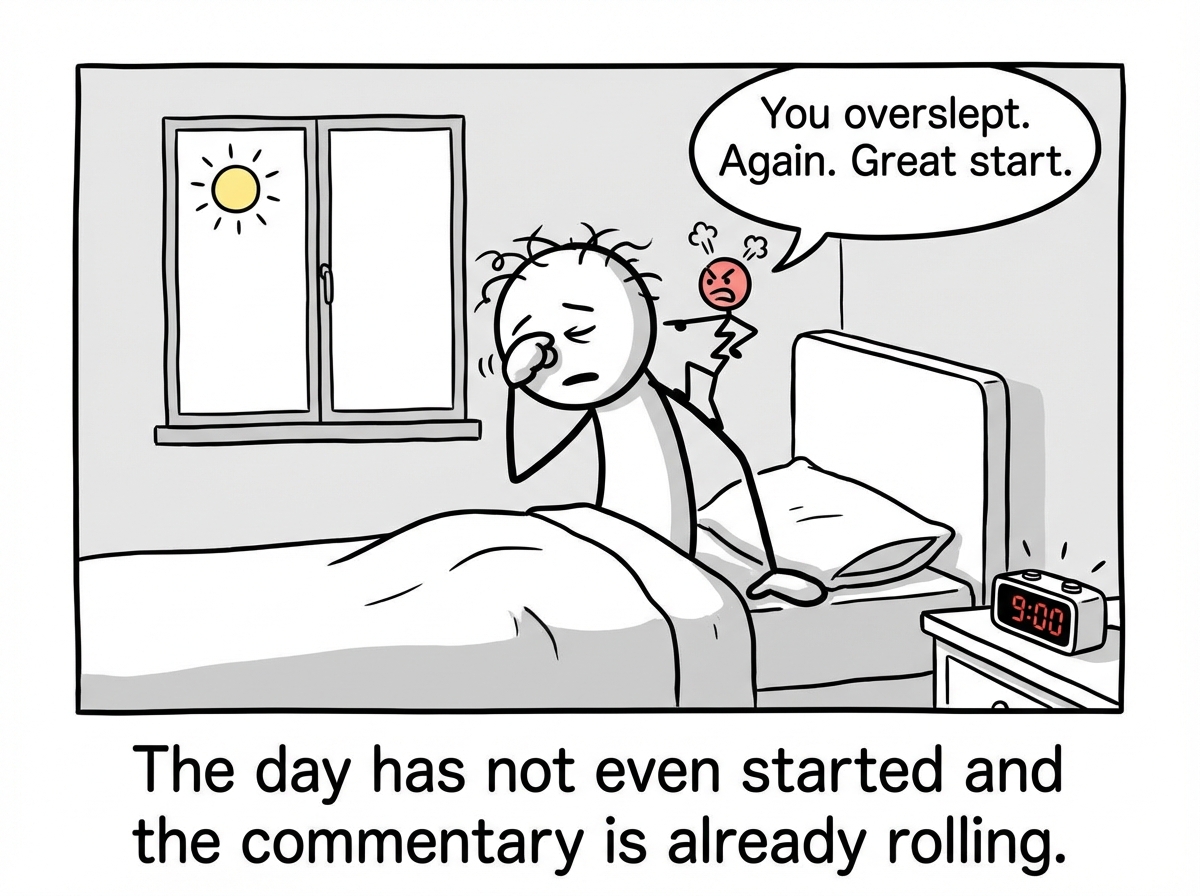
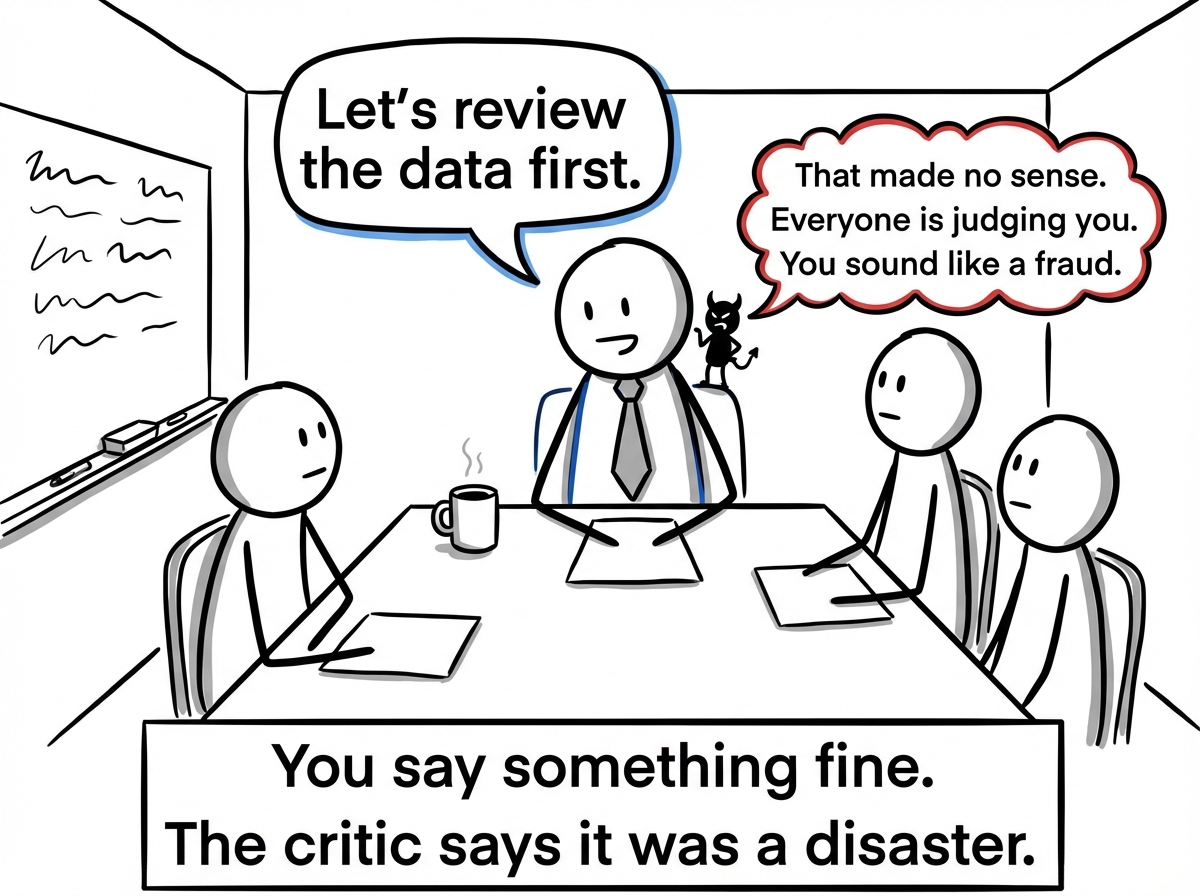
The stick figure trying to relax on the couch in the evening. The commentator is pointing at a to-do list saying 'You are wasting time. You did not do enough today. Other people your age are further ahead.'
The stick figure lying in bed exhausted. The commentator is still going, now reviewing the entire day: 'Remember that thing you said at lunch? Everyone noticed. Also you are behind on everything. Also you are fundamentally not enough.' The stick figure looks defeated
A person goes through their day with a harsh internal commentator providing real-time criticism of everything they do, say, and feel -- a voice far crueler than any external critic.
Explanation
Imagine if someone followed you around all day narrating your life in the harshest possible terms. 'That was a stupid thing to say.' 'Everyone noticed you stumble.' 'You are falling behind.' 'Who do you think you are?' You would never tolerate that from another person. But when the voice comes from inside your own head, you accept it as truth. The inner critic is one of the most common and least recognized sources of suffering. It disguises itself as motivation ('I am just pushing you to be better'), realism ('I am just being honest'), or protection ('If I criticize you first, no one else can hurt you'). But its real effect is to keep you small, anxious, and perpetually convinced that you are not enough. The inner critic does not help you improve. It helps you feel terrible about trying. For most people, the inner critic developed in childhood. If being imperfect led to punishment, ridicule, or withdrawal of love, your brain created an internal enforcer -- a voice that would catch your mistakes before anyone else could. It was a survival strategy. The problem is that this voice never updated its methods. It still uses shame, comparison, and harsh judgment, even though you are no longer a child trying to stay safe. Working with the inner critic does not mean silencing it completely. It means learning to hear it as one voice among many -- not the voice of truth, but the voice of an old fear that has not learned it is safe to relax.
Key Takeaway
The inner critic is not the voice of truth -- it is the voice of an old fear that never learned you are safe now.
A stick figure hearing the commentator say 'You are falling behind' and responding calmly: 'Thank you for trying to protect me, but I do not need that right now'
The stick figure turning down the volume knob on the commentator, not silencing it completely, just making it quieter
The stick figure speaking to themselves in a different voice: 'That meeting was hard and you handled it' while the commentator listens from a distance
The stick figure going about their day with the commentator much smaller and quieter on their shoulder, a warmer inner voice now leading