The Net Worth Mirror
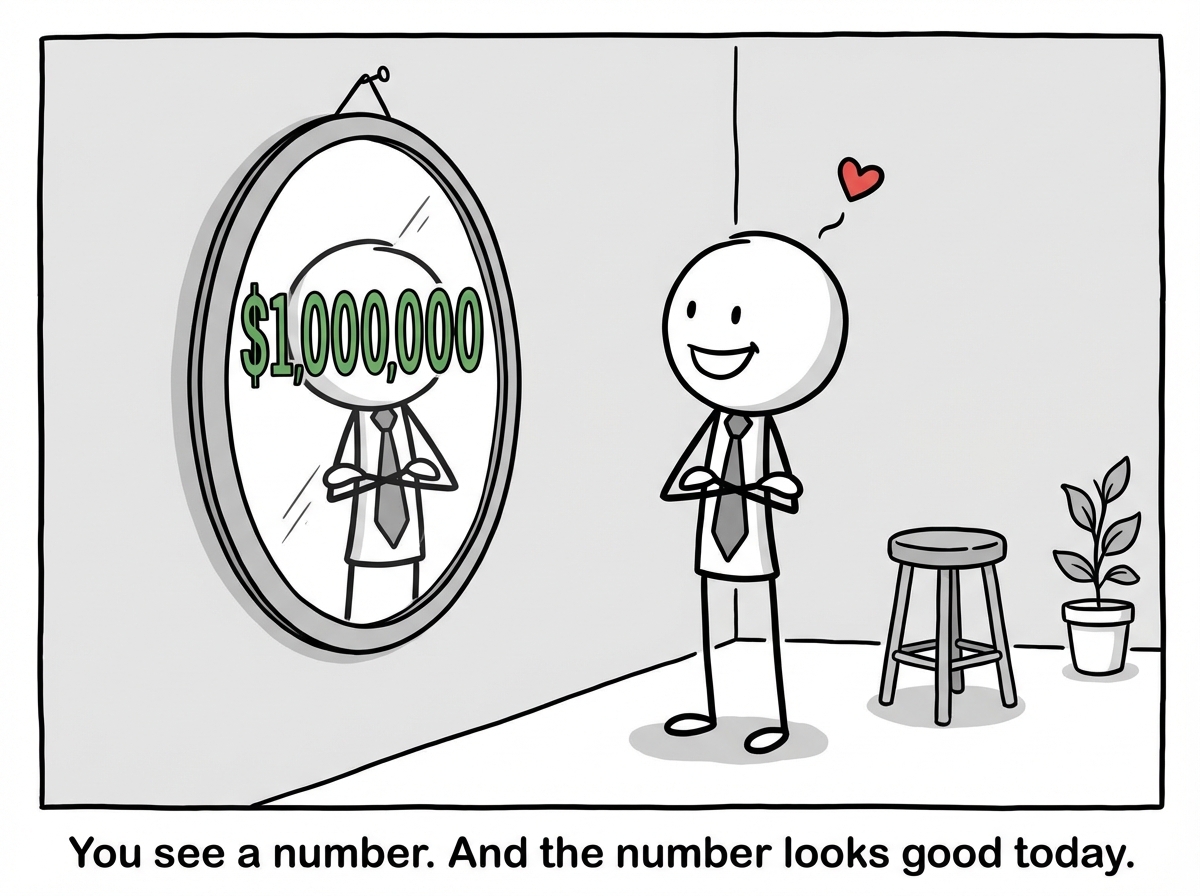
A person looks in the mirror and sees their bank account balance instead of their face -- measuring their worth as a human by their worth on paper.
Explanation
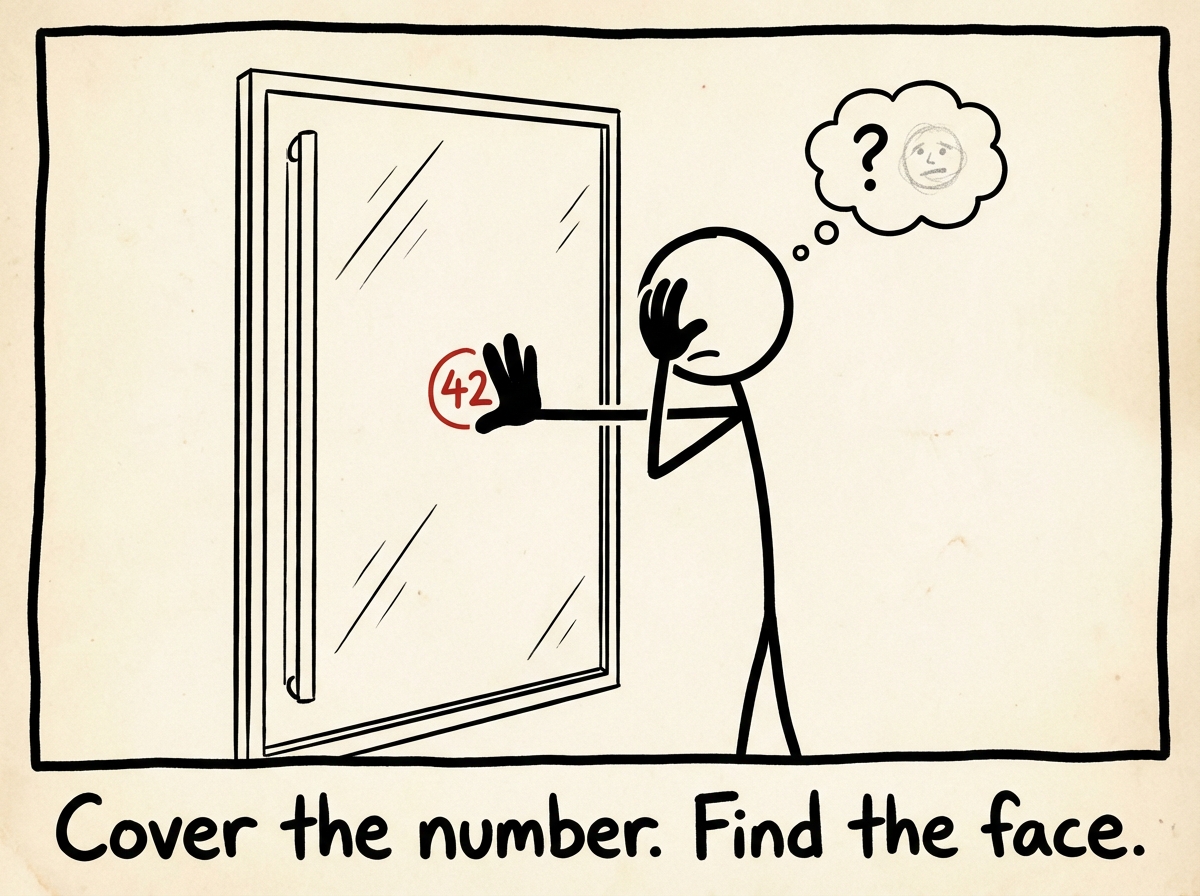
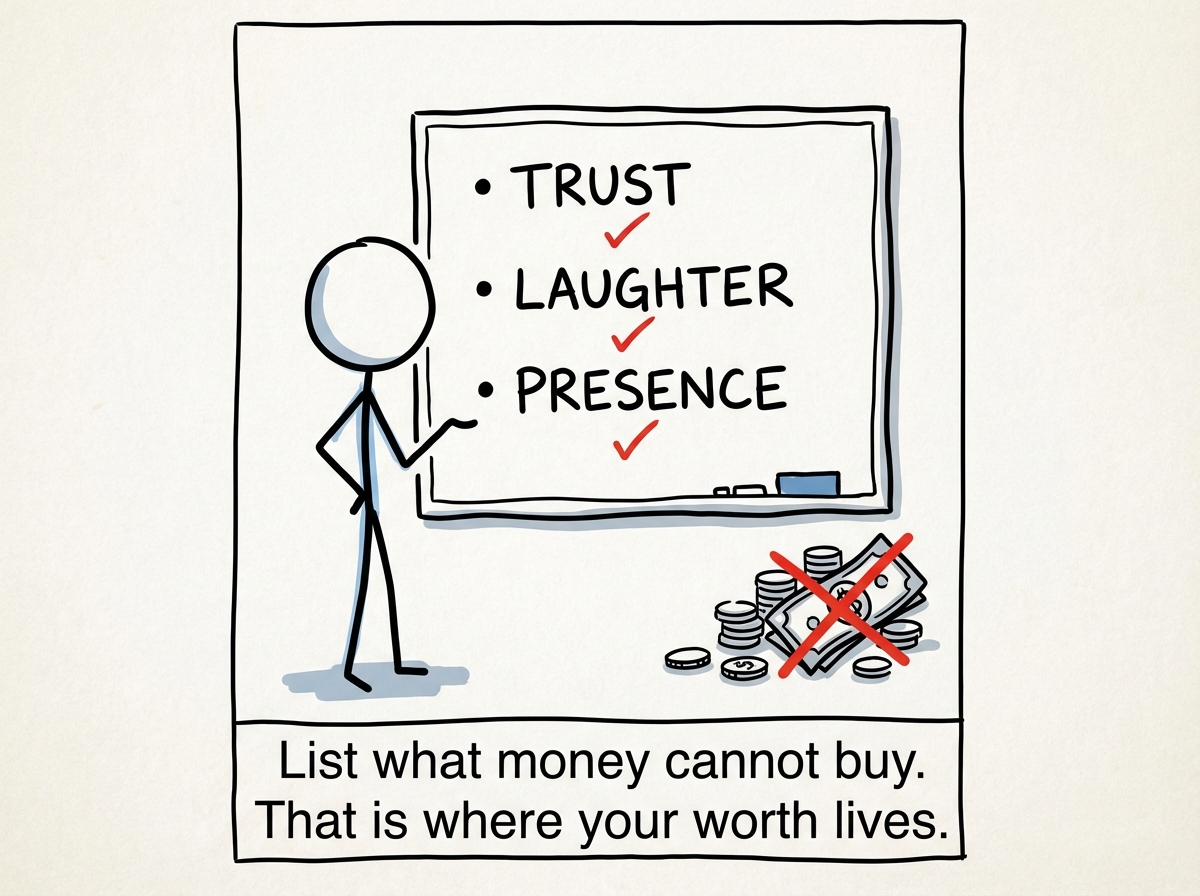
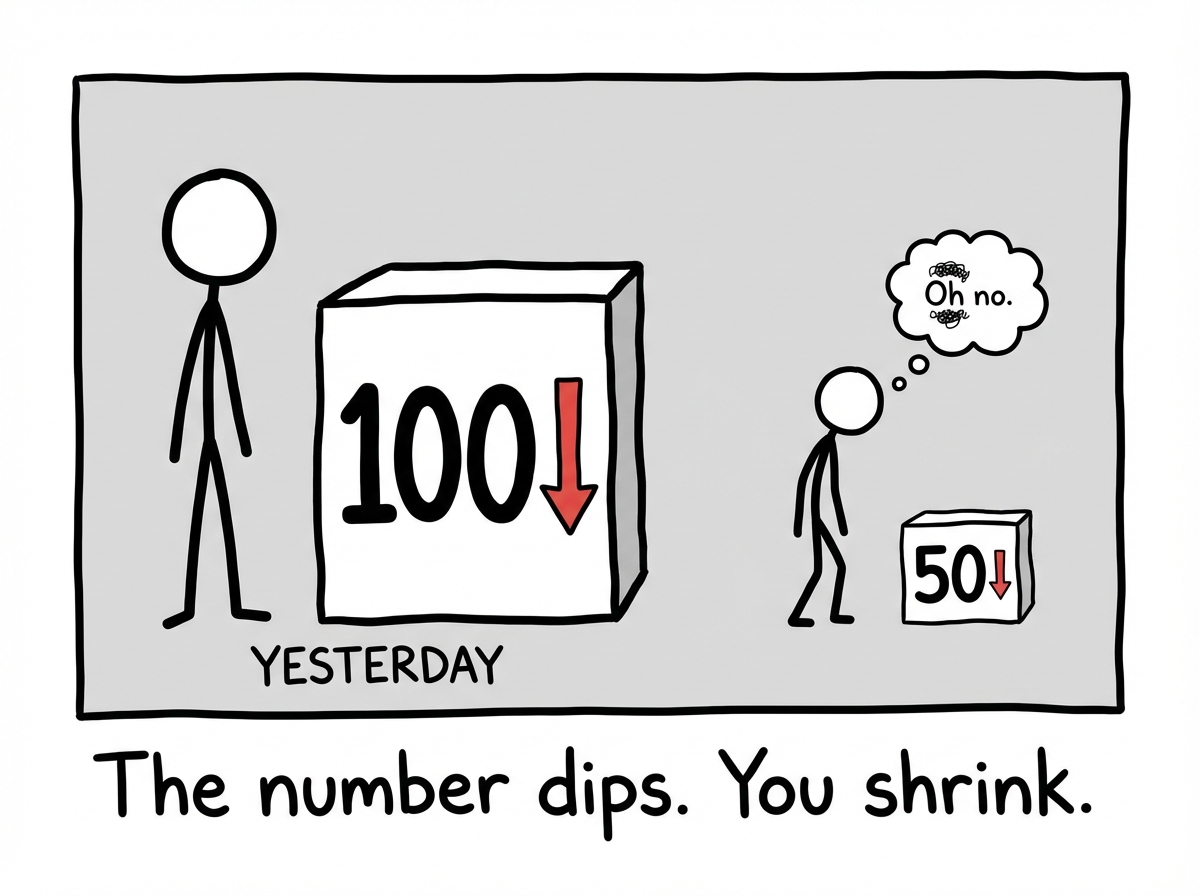
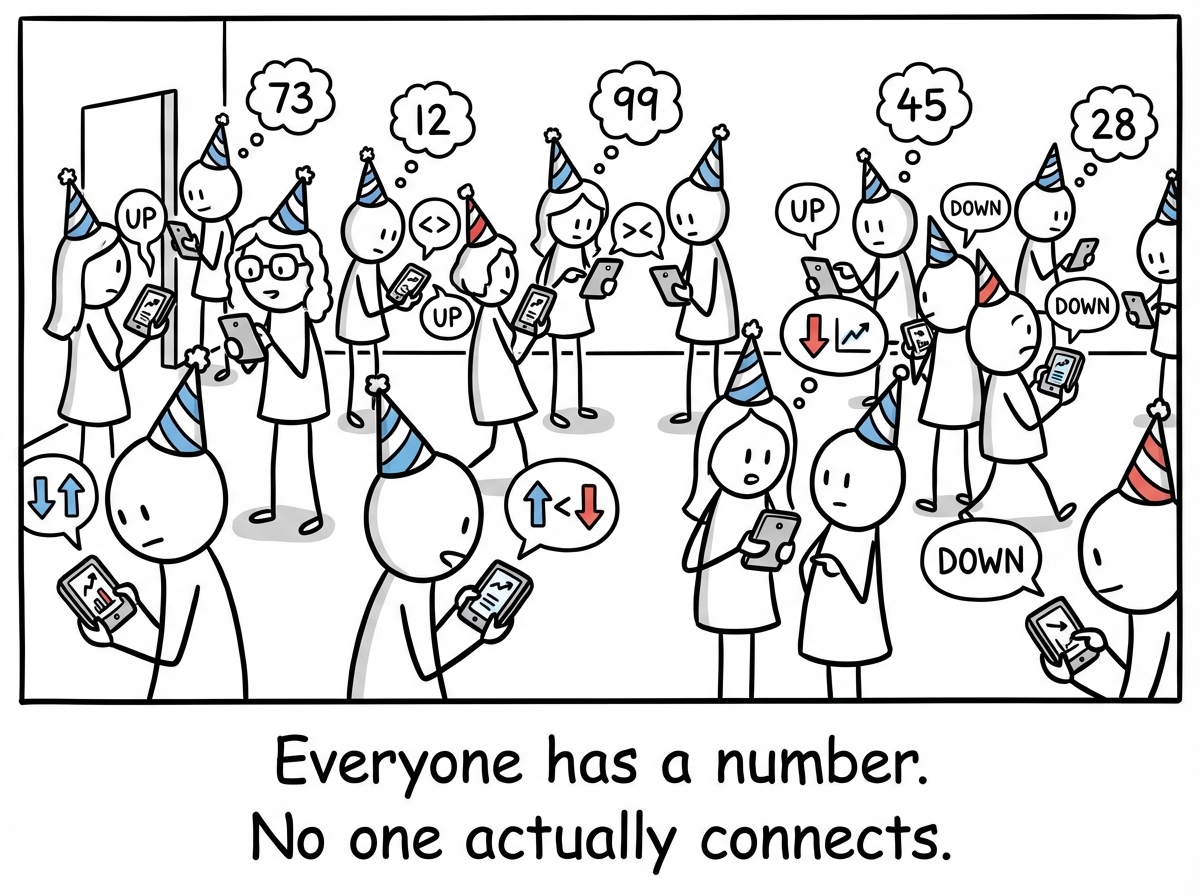
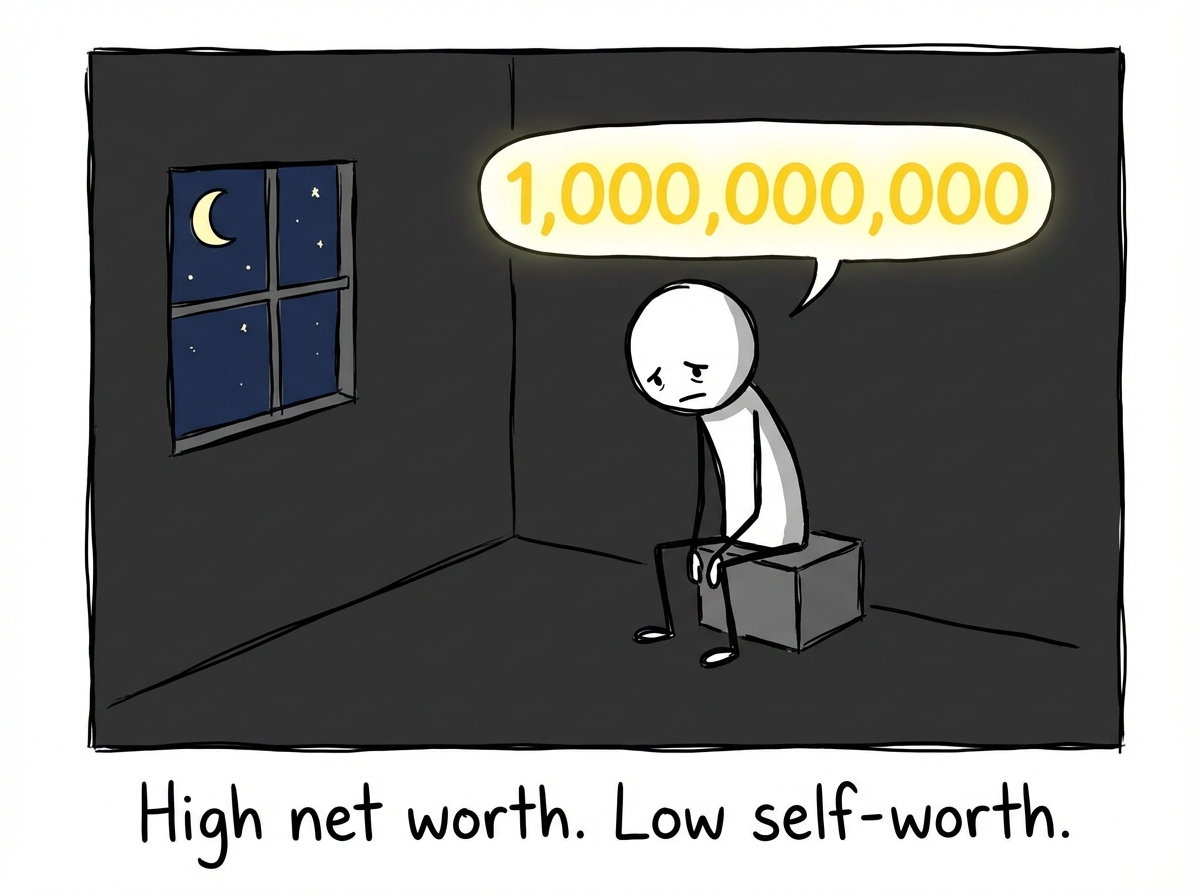
You look in the mirror and what you see is not your face. It is a number. Your salary. Your net worth. Your credit score. The mirror has been replaced by a financial statement, and the person staring back is valued precisely -- not in character, kindness, or meaning, but in dollars. When the number goes up, you feel bigger. When it goes down, you shrink. Your humanity has been converted to currency. This is status anxiety at its most intimate: the internalization of the belief that your value as a person is equivalent to your economic value. Sociologist Pierre Bourdieu called this the conflation of economic and symbolic capital -- the process by which a culture teaches people to translate financial status into personal worth. In market-driven societies, this translation is so thorough that people genuinely experience a salary cut as a diminishment of self. Research by Tim Kasser on materialistic values consistently shows that people who measure their worth by financial metrics report lower life satisfaction, more anxiety, more depression, and worse relationship quality -- even when controlling for actual income. The problem is not money. The problem is using money as an identity metric. When your self-worth is indexed to your net worth, you are as volatile as the market. The mirror was supposed to show you a person. Instead, it shows you a balance sheet. The work is not about making more money or pretending money does not matter. It is about learning to look in the mirror and see a human being -- complex, irreducible, and worth more than any number can capture.
Key Takeaway
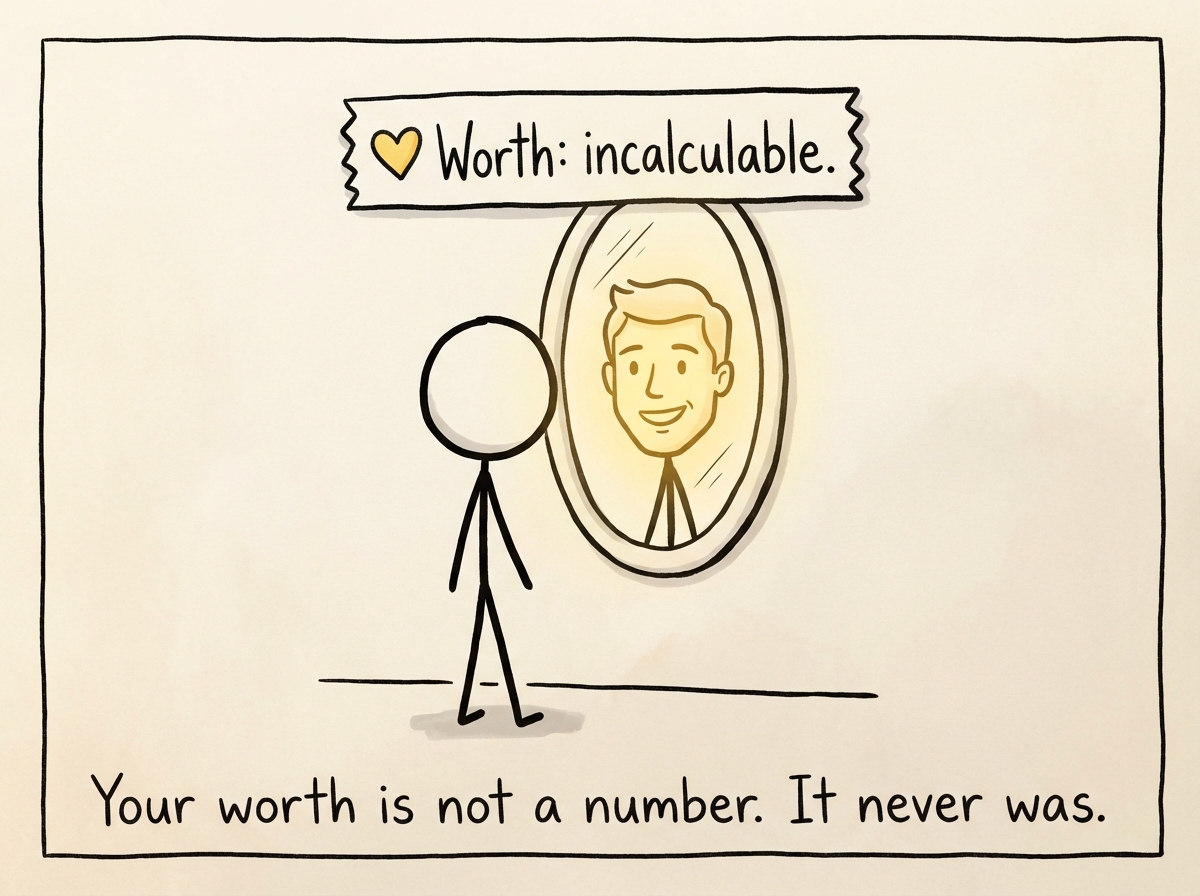
When you look in the mirror and see a number, you have confused your net worth with your self-worth. One can be calculated. The other cannot.