The Lifestyle Treadmill
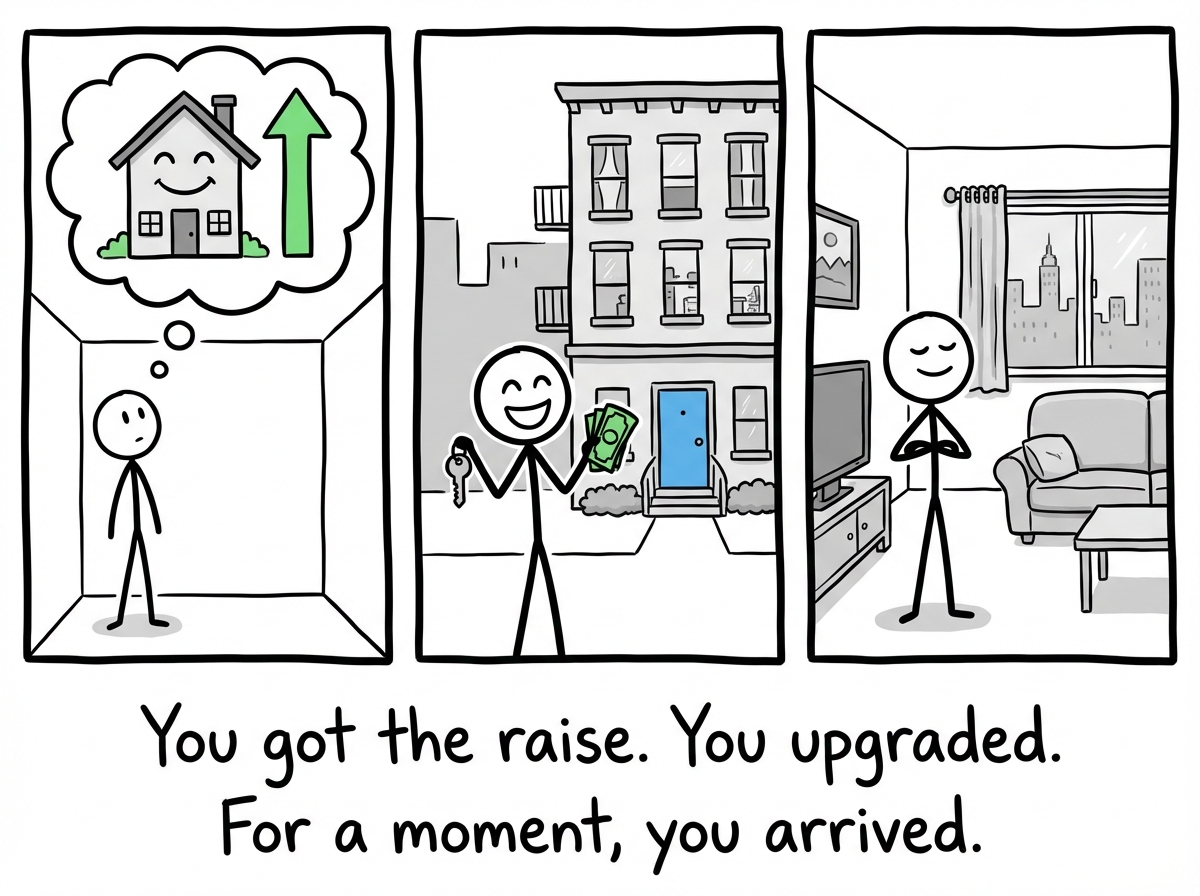
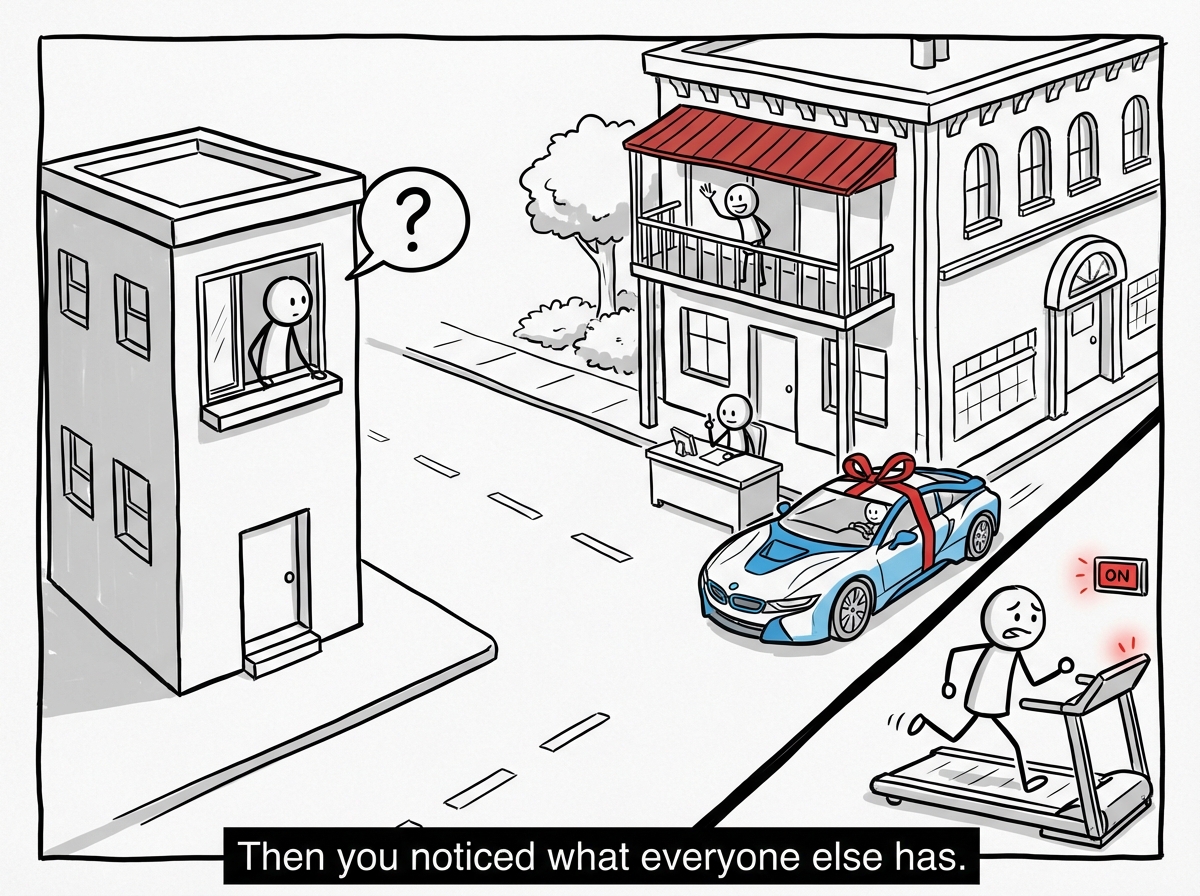
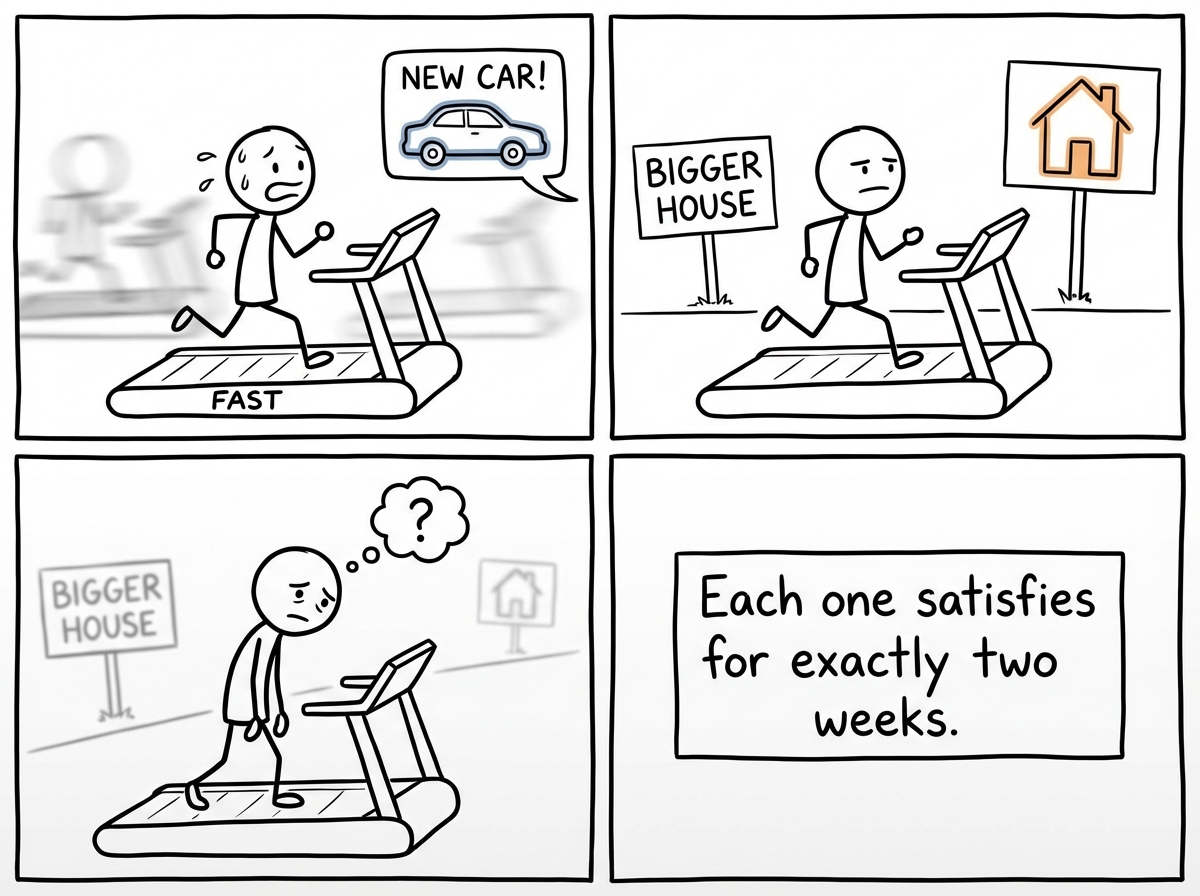
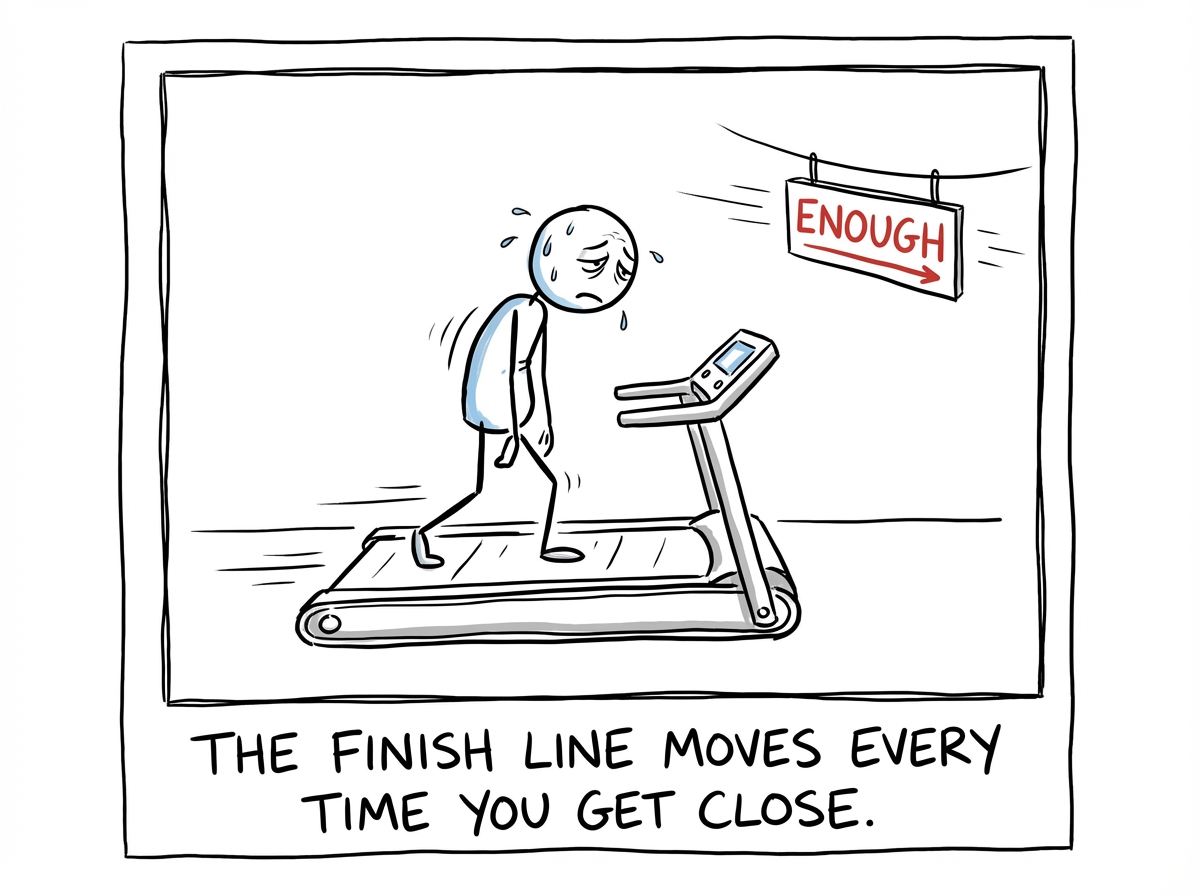
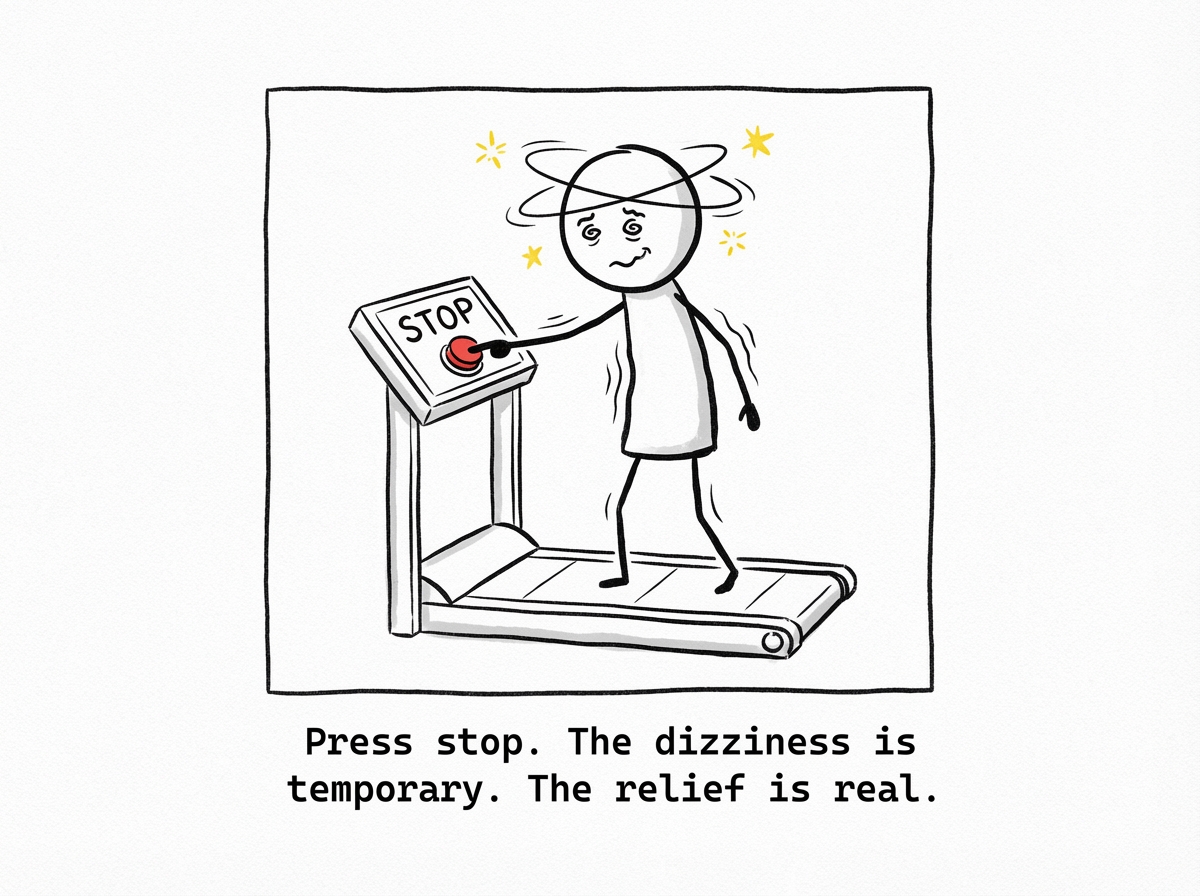
A person runs faster and faster on a treadmill of lifestyle upgrades -- bigger house, nicer car, better vacations -- but never arrives anywhere because the scenery keeps changing to match.
Explanation
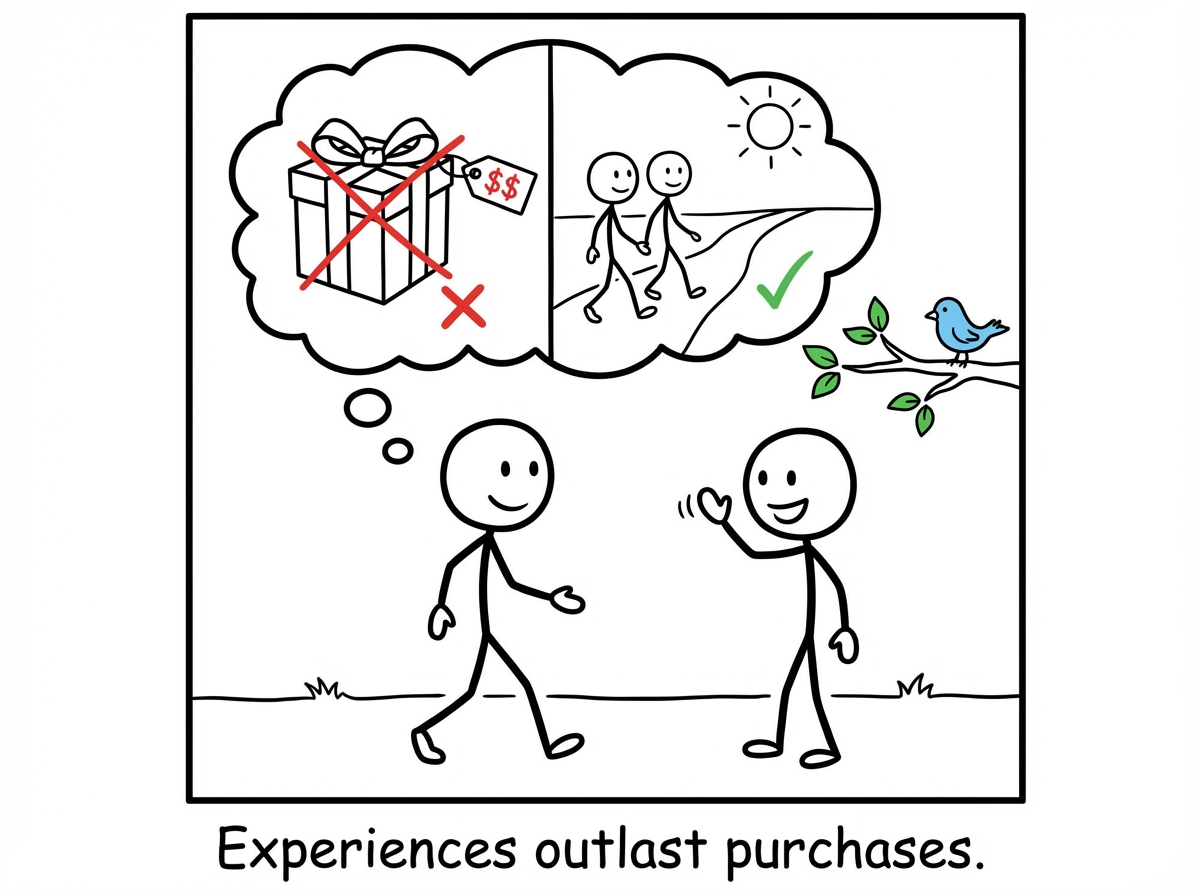
You got the raise. For about two weeks, it felt like enough. Then you noticed your coworker's car. Then your neighbor's kitchen renovation. Then a friend's vacation photos. And suddenly the raise that was supposed to make you comfortable just recalibrated what comfortable means. You are running again. This is the hedonic treadmill applied to lifestyle: the well-documented psychological phenomenon where improvements in material circumstances produce temporary satisfaction followed by adaptation and a return to baseline. Economists call it lifestyle inflation. Psychologists call it hedonic adaptation. The experience is the same: you earn more, spend more, want more, and end up in the exact same emotional place, only now with higher expenses and higher expectations. Research by Brickman and Campbell first described this pattern in the 1970s, and decades of subsequent research have confirmed it. Lottery winners return to baseline happiness within months. Salary increases produce diminishing emotional returns. Material upgrades deliver a spike of pleasure that fades so predictably you could set a clock by it. The treadmill does not care how fast you run -- it adjusts its speed to match. What makes the lifestyle treadmill particularly cruel is that it disguises itself as progress. Each upgrade feels like forward movement. But you are not going anywhere. You are running in place with increasingly expensive shoes. The exit is not running faster. It is stepping off and asking what actually makes you feel alive -- because the answer is almost never a newer version of something you already have.
Key Takeaway
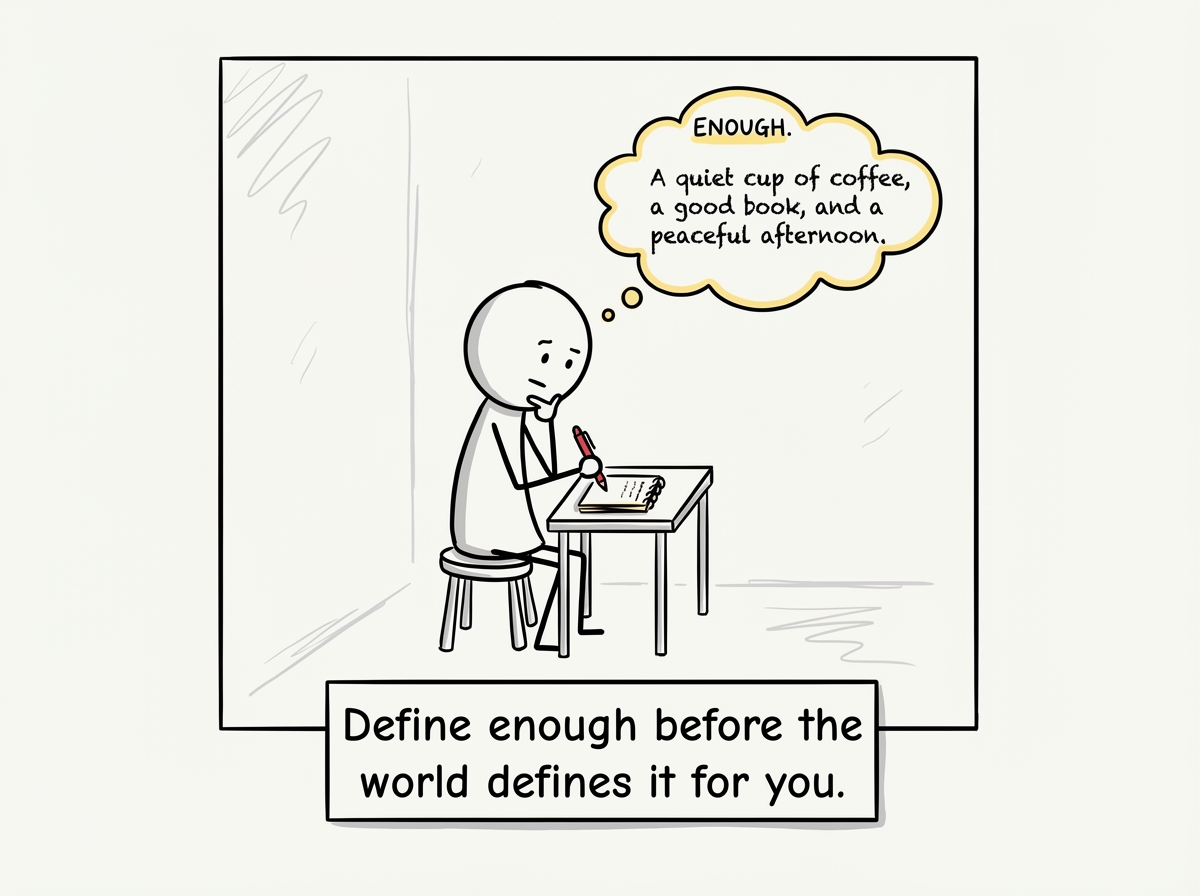
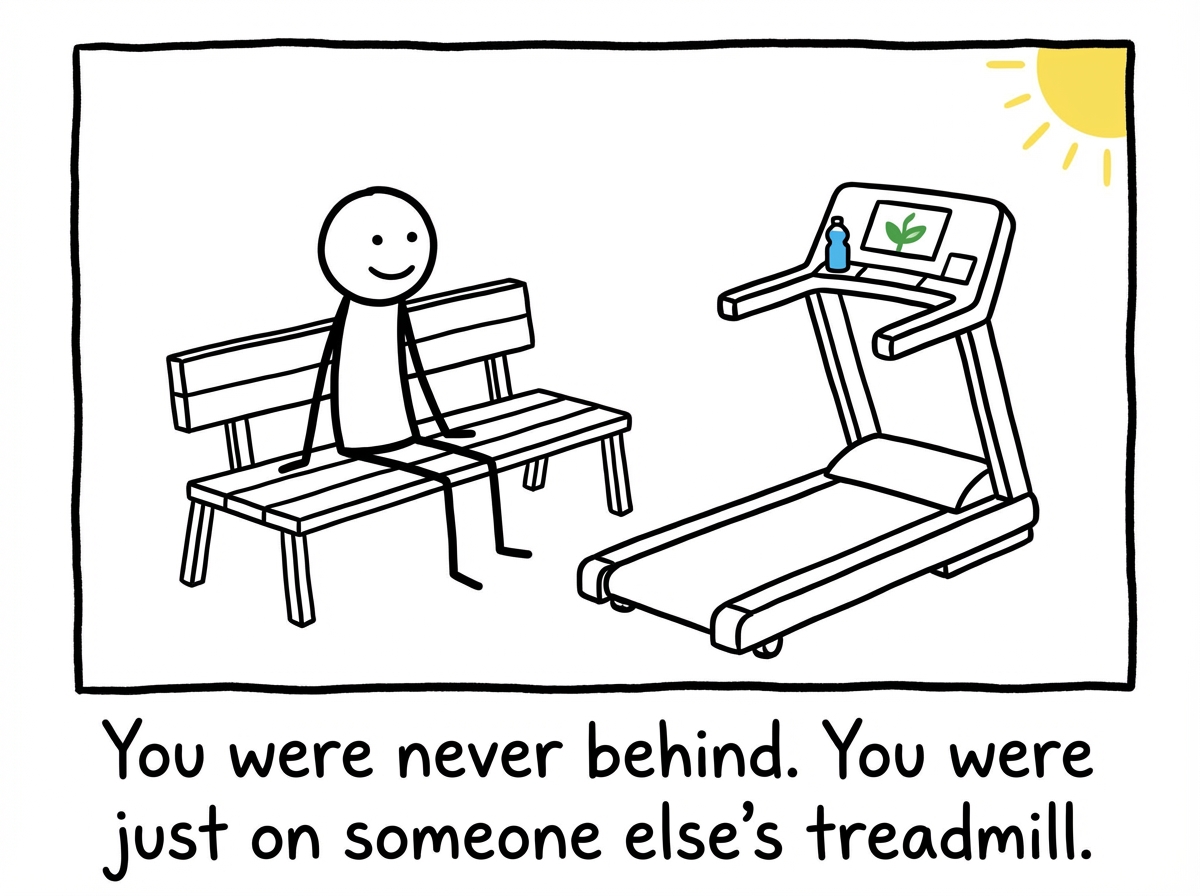
The treadmill does not have a finish line. It speeds up every time you level up. The only way to win is to step off and define enough for yourself.