The One-Sided Scoreboard
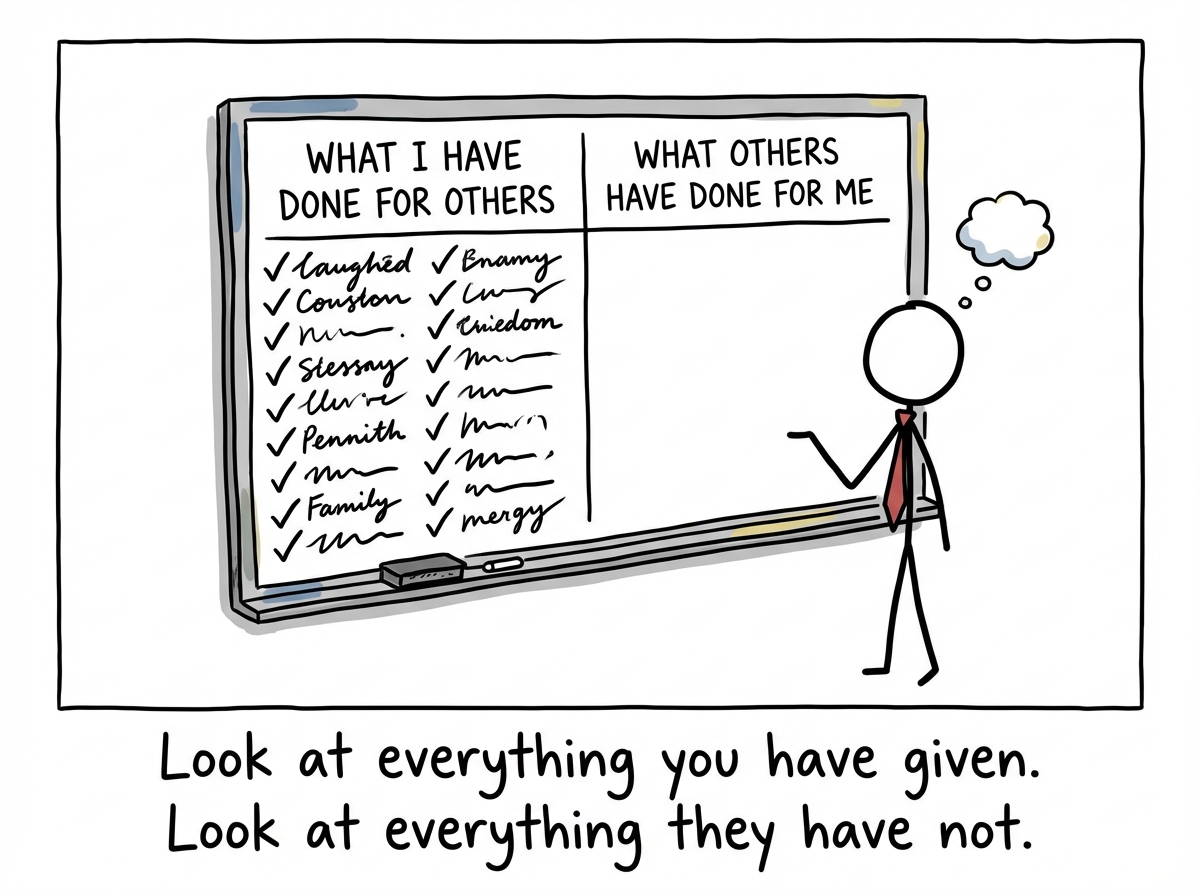
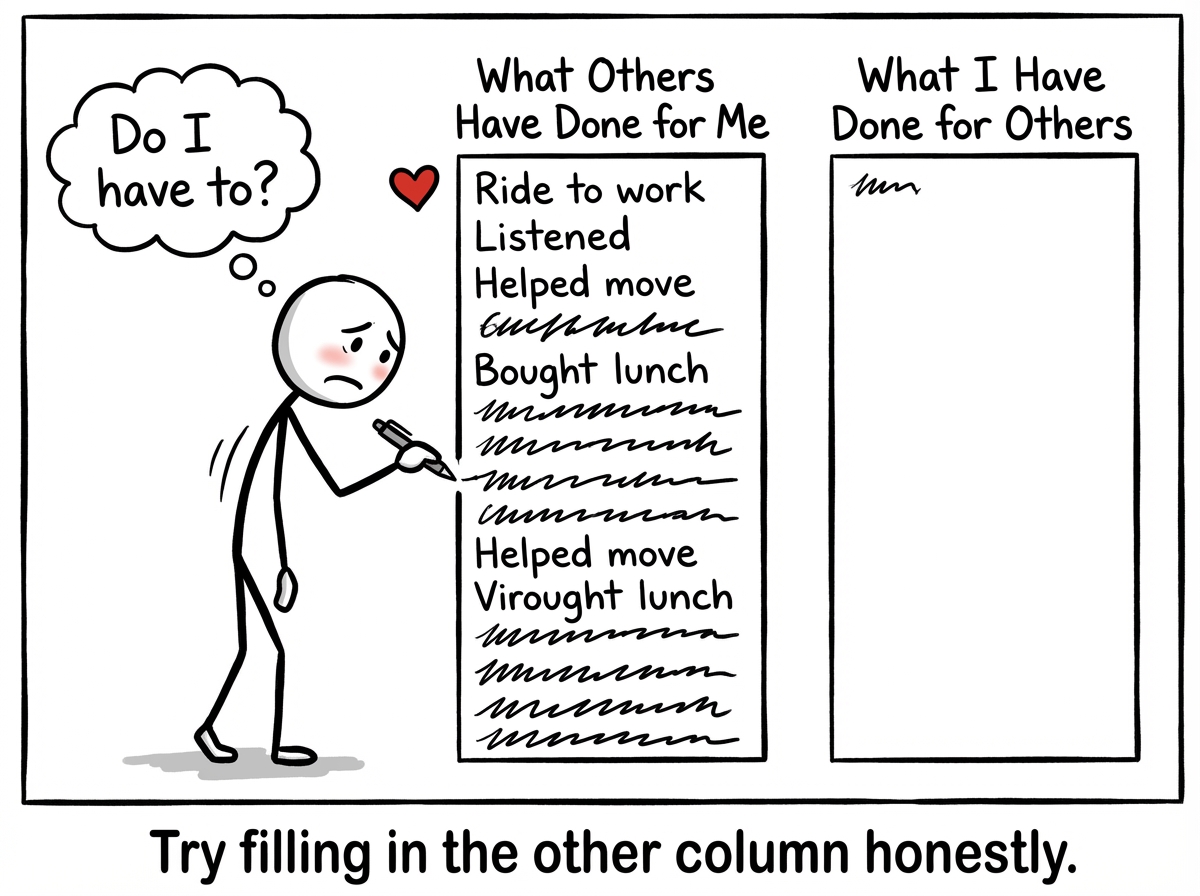
A person keeps meticulous track of everything others owe them while conveniently forgetting everything they owe others -- a scoreboard where only one column gets updated.
Explanation
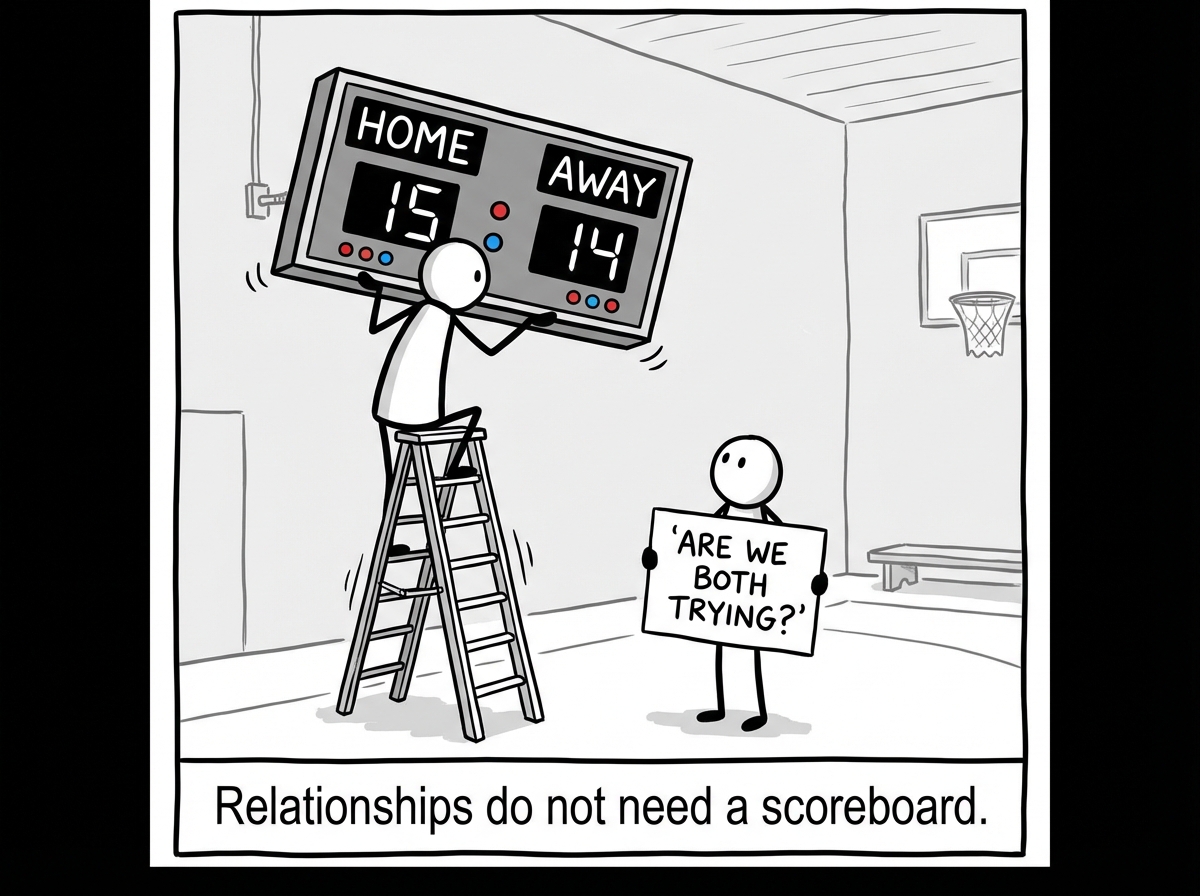
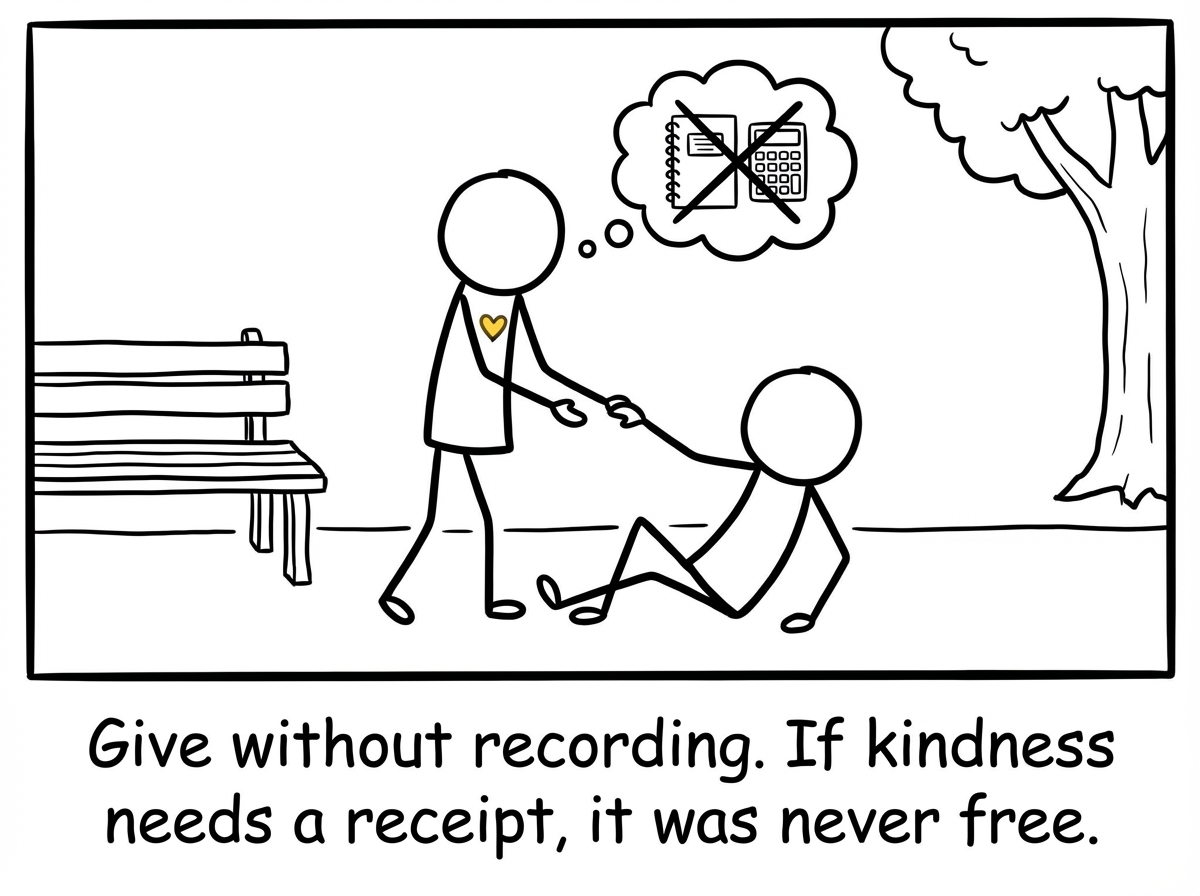
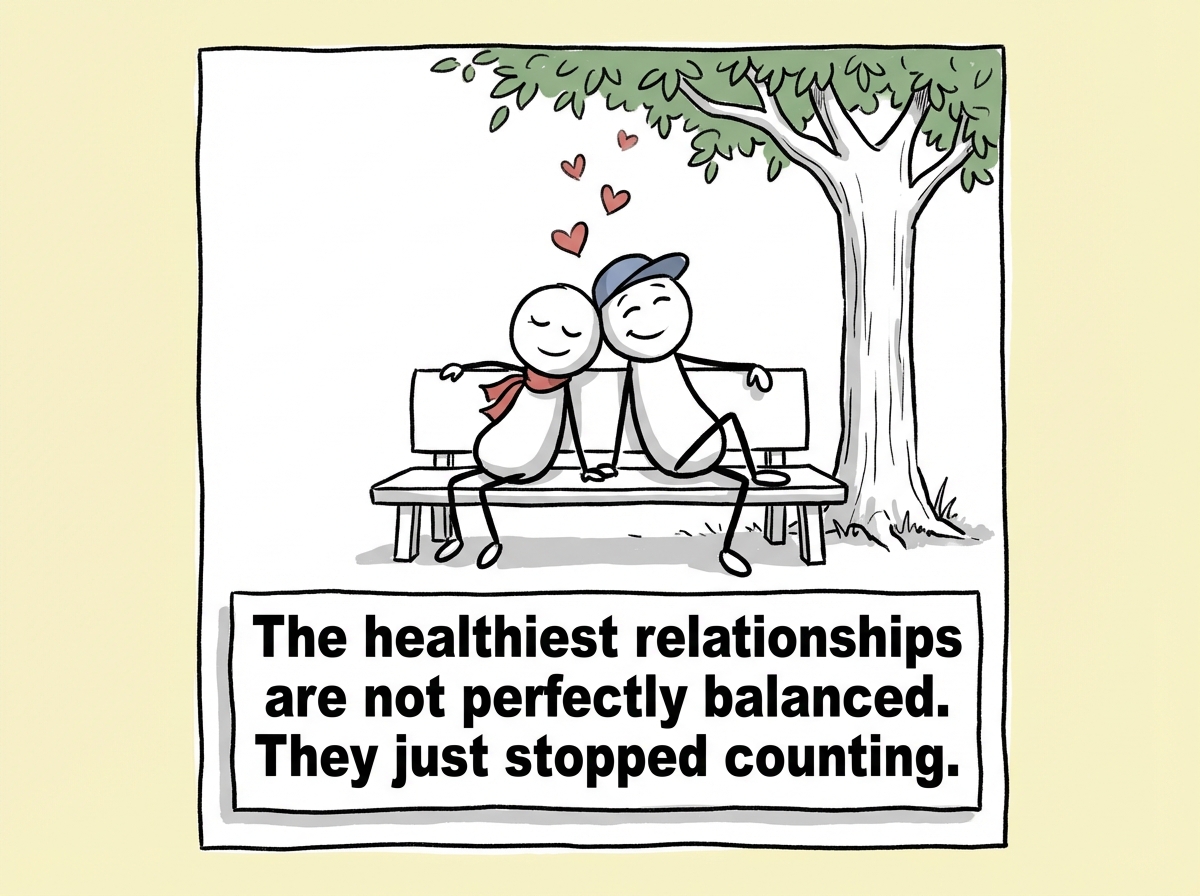
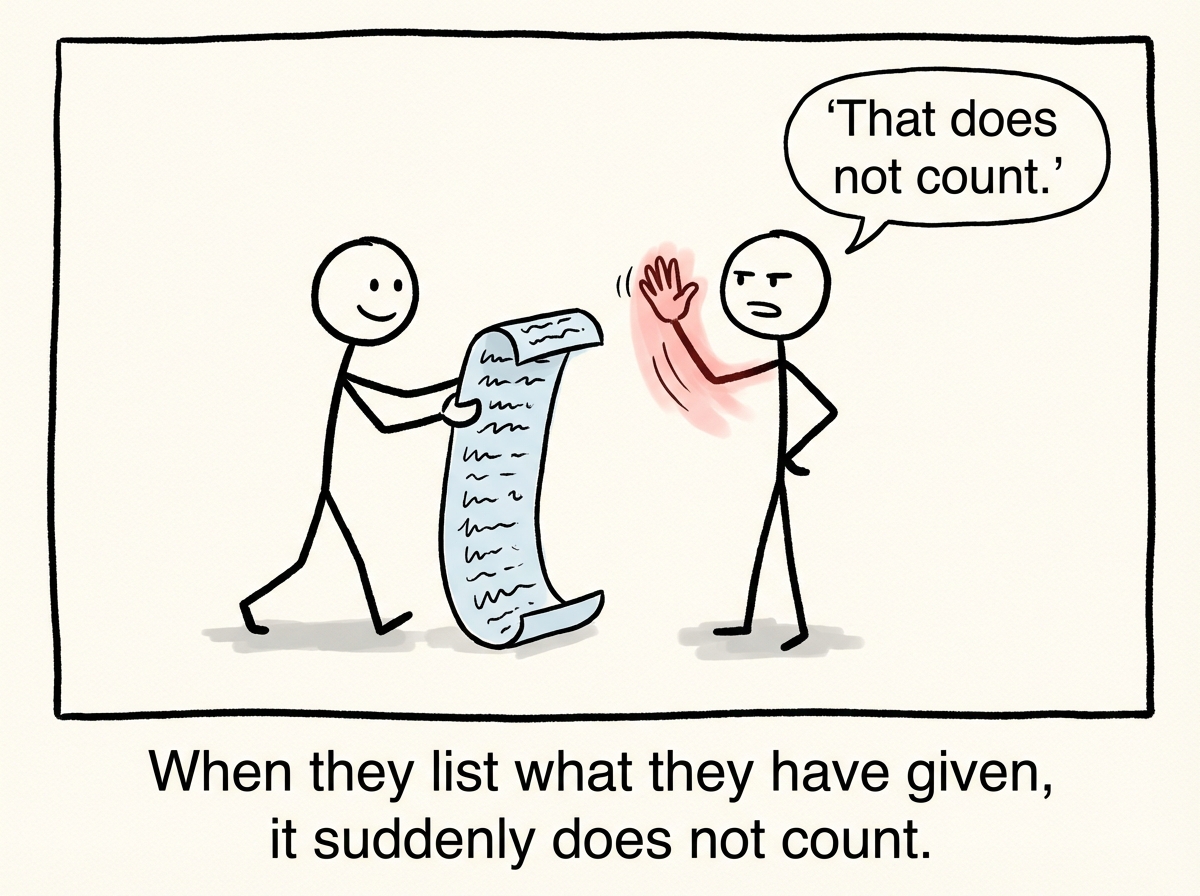
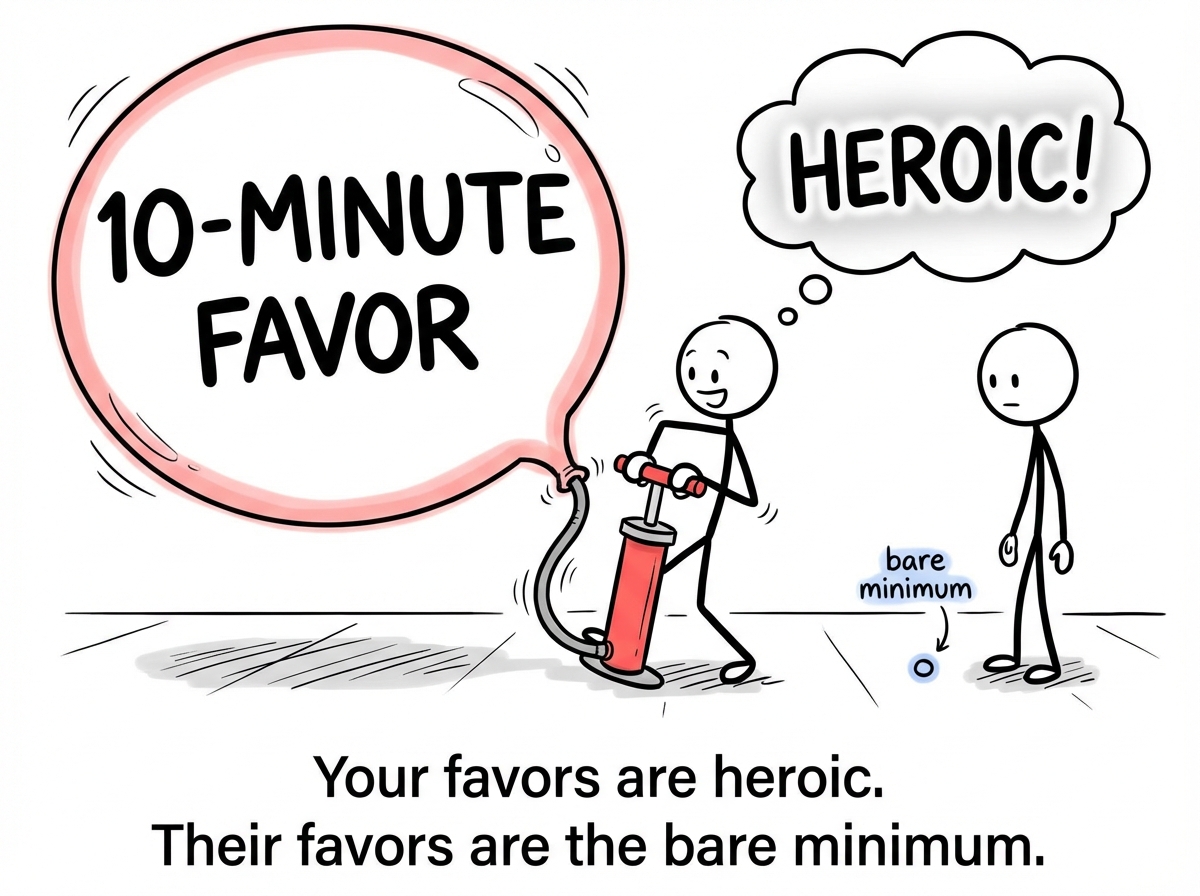
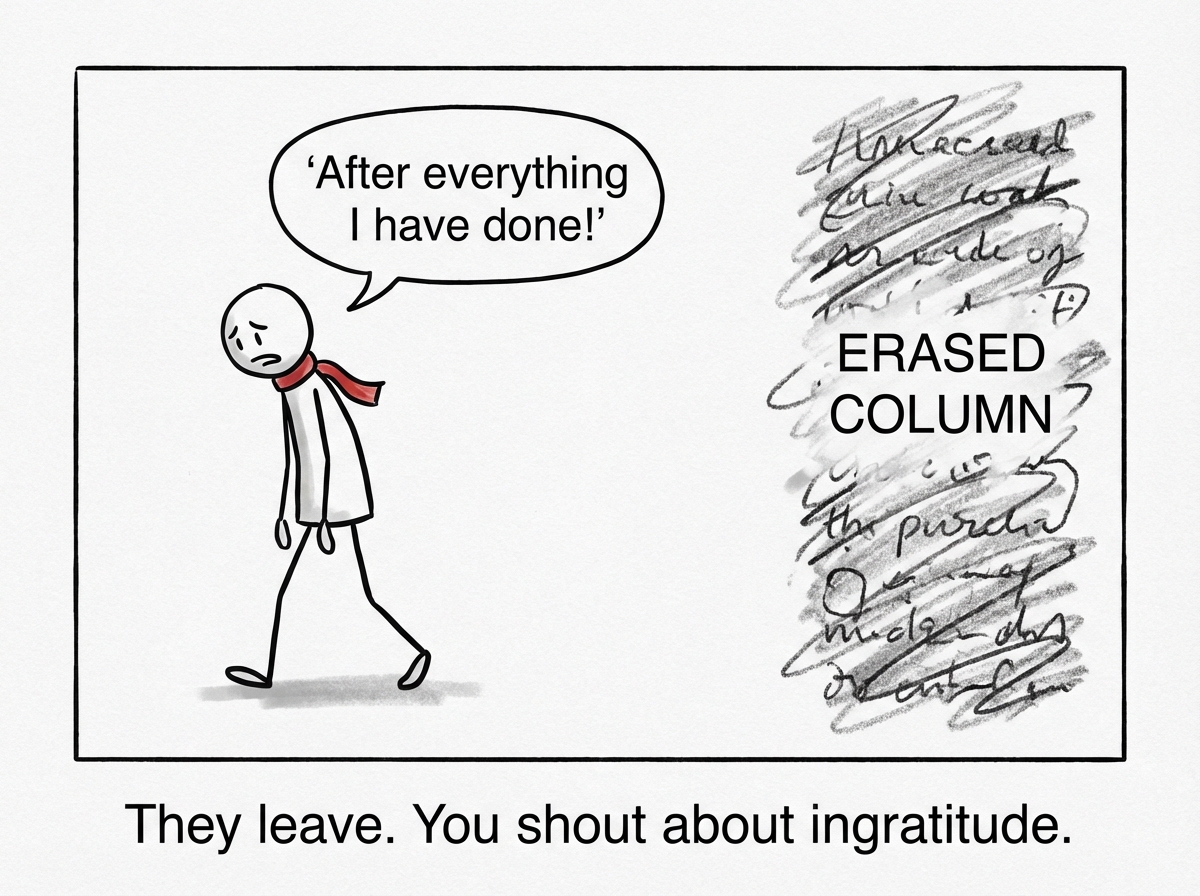
You remember every favor you have done. Every time you went out of your way. Every sacrifice, every compromise, every inconvenience you absorbed for someone else. The list is long, detailed, and mentally updated in real time. But the other column -- the one tracking what others have done for you -- is strangely empty. Not because people have not given. But because entitlement has a selective memory. The one-sided scoreboard is one of the most recognizable patterns of psychological entitlement in relationships. Research on communal vs. exchange orientation by Margaret Clark and Judson Mills shows that healthy relationships operate on a communal basis -- people give without tracking, trusting that reciprocity will balance itself over time. Entitled individuals, however, operate on an exchange basis with a rigged calculator: their contributions are inflated, others' contributions are minimized, and the ledger always shows the world in debt to them. This pattern is not always conscious. Entitled people genuinely believe they give more than they receive. The cognitive distortion operates at the level of attention and memory: their own efforts are vivid, emotionally charged, and easy to recall, while others' efforts are routine, expected, and quickly forgotten. The scoreboard feels like objective truth from the inside. From the outside, it looks like a person who takes endlessly while performing the role of the generous martyr. Dismantling the scoreboard starts with a radical act of honesty: asking the people in your life what they feel they have given you -- and actually listening to the answer.
Key Takeaway
When the scoreboard only counts in your favor, it is not fairness. It is a rigged game that guarantees you are always the victim and never the problem.