The Success Theater
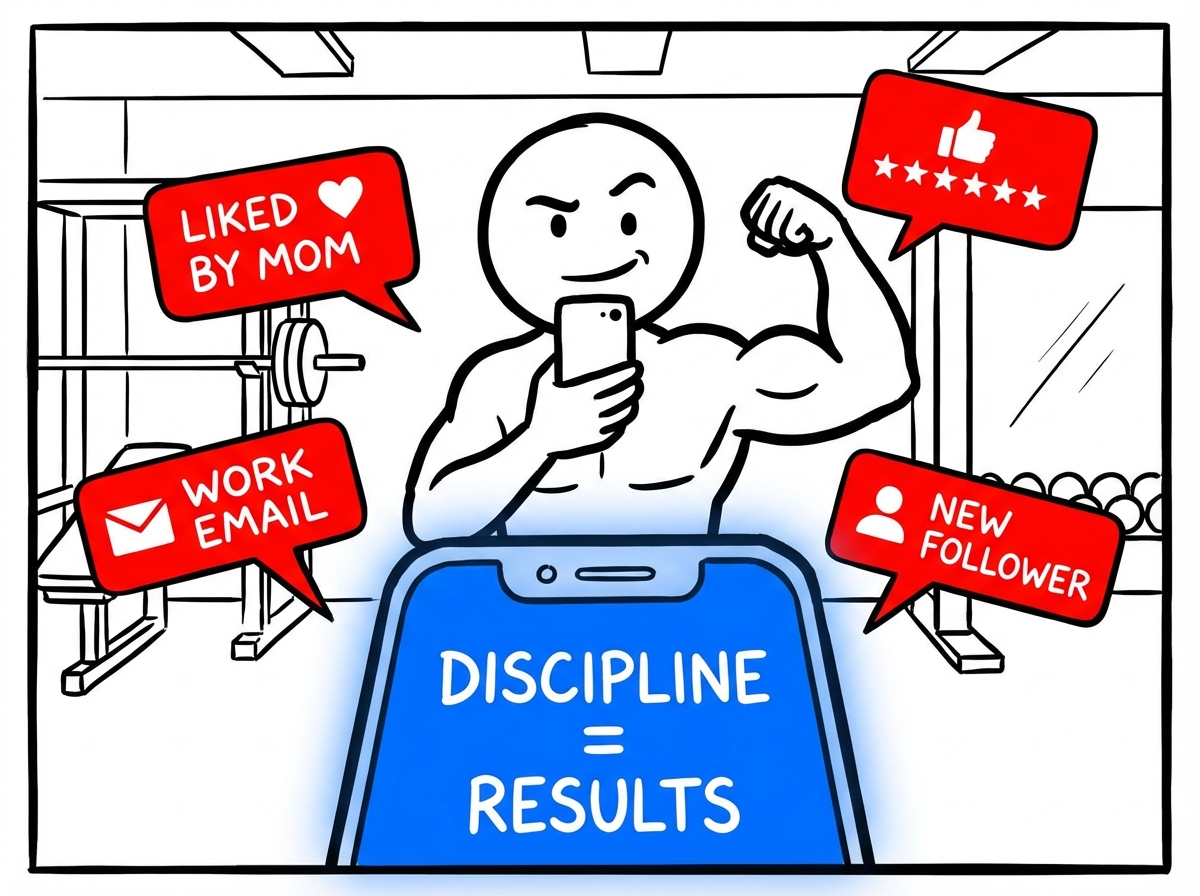
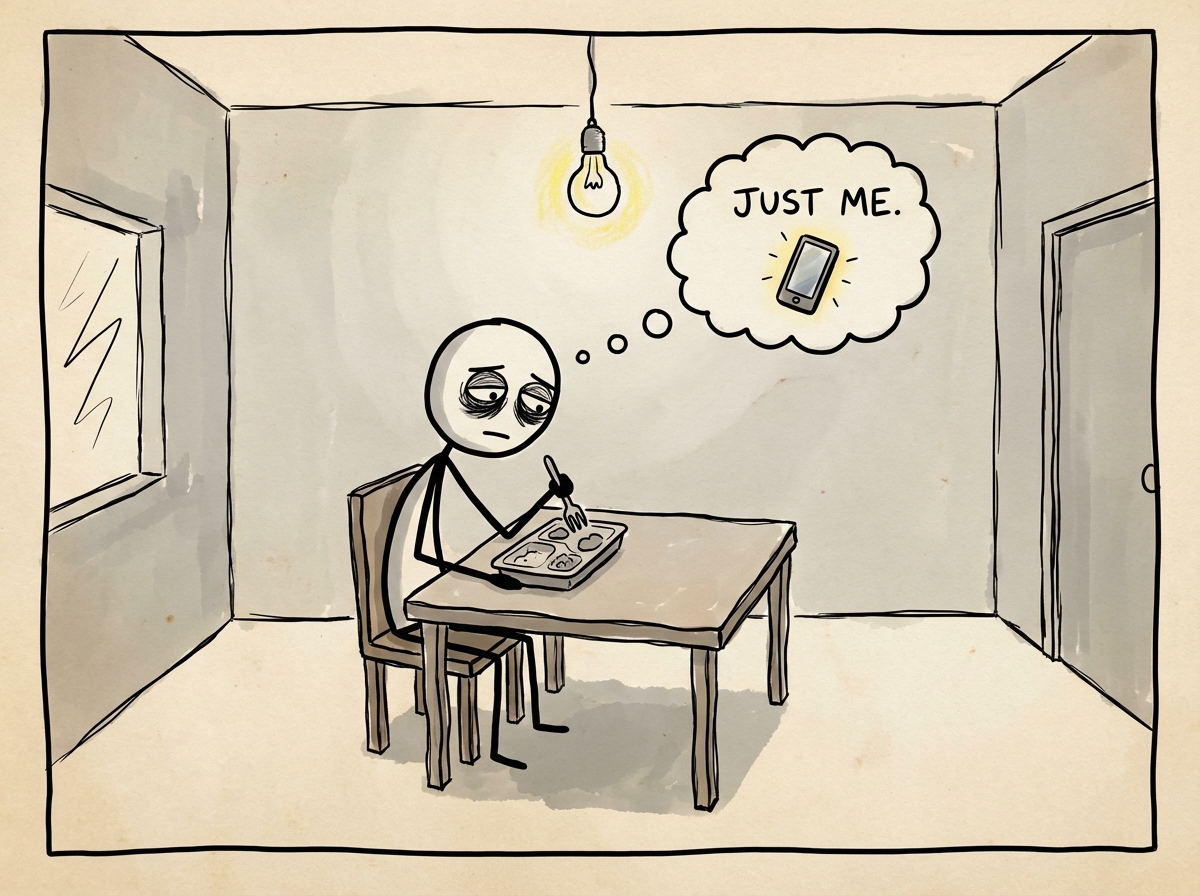
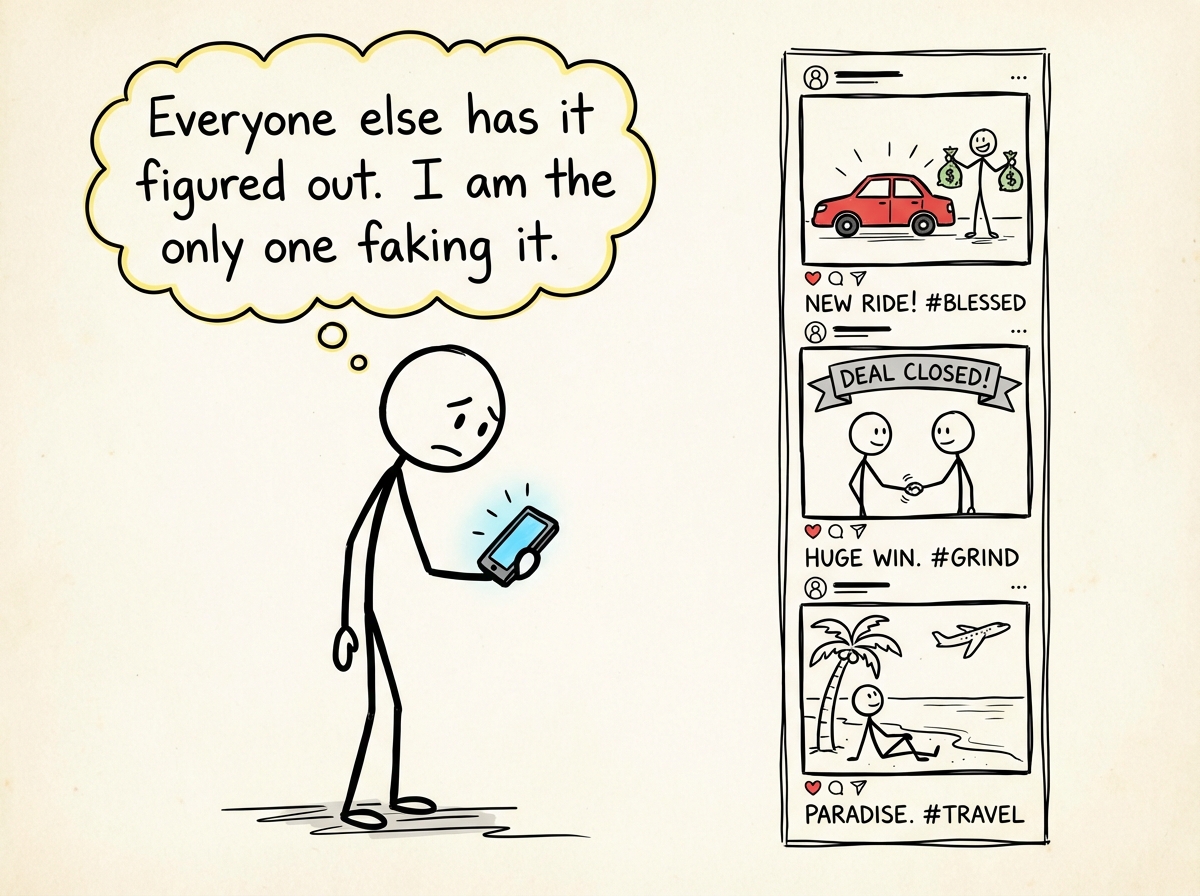
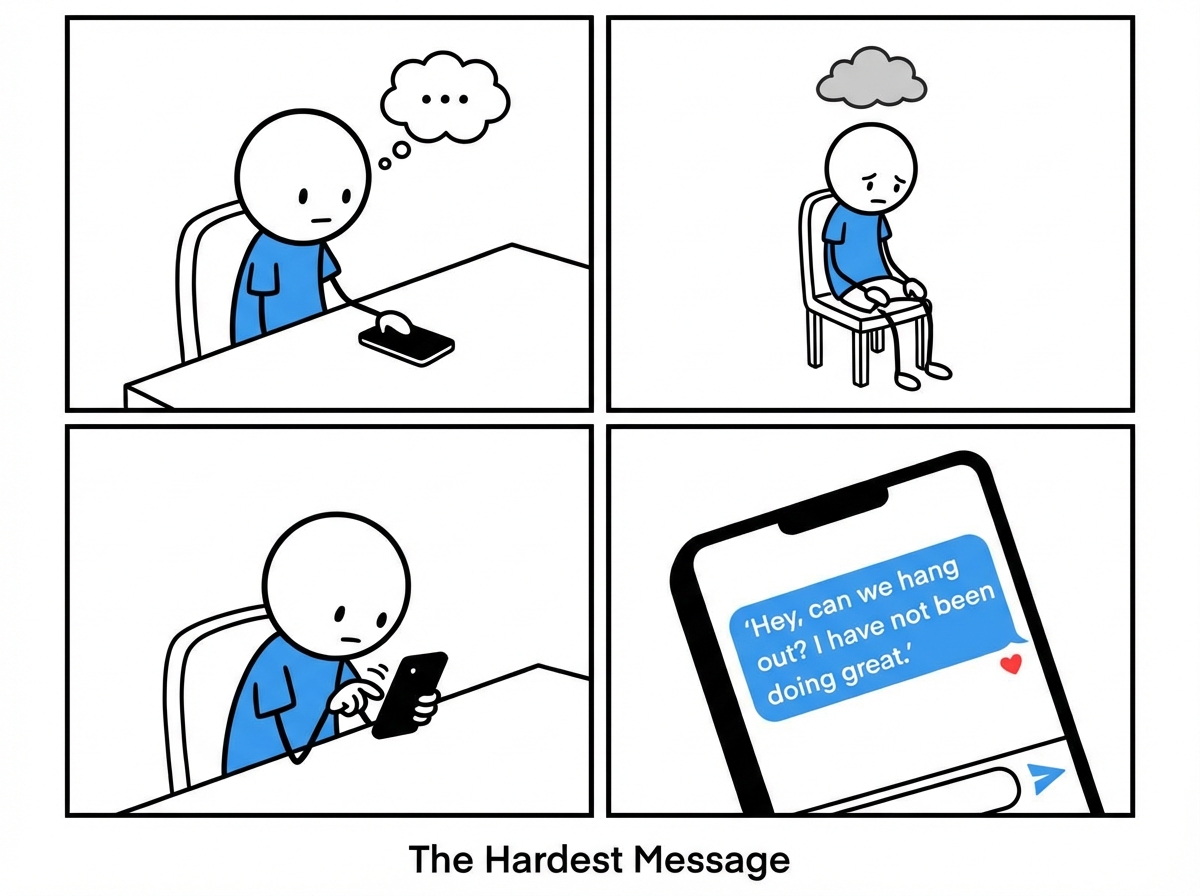
A man performs success online -- gym selfies and hustle quotes -- while struggling privately with exhaustion and loneliness, until he drops the performance and reaches out to a friend.
Explanation
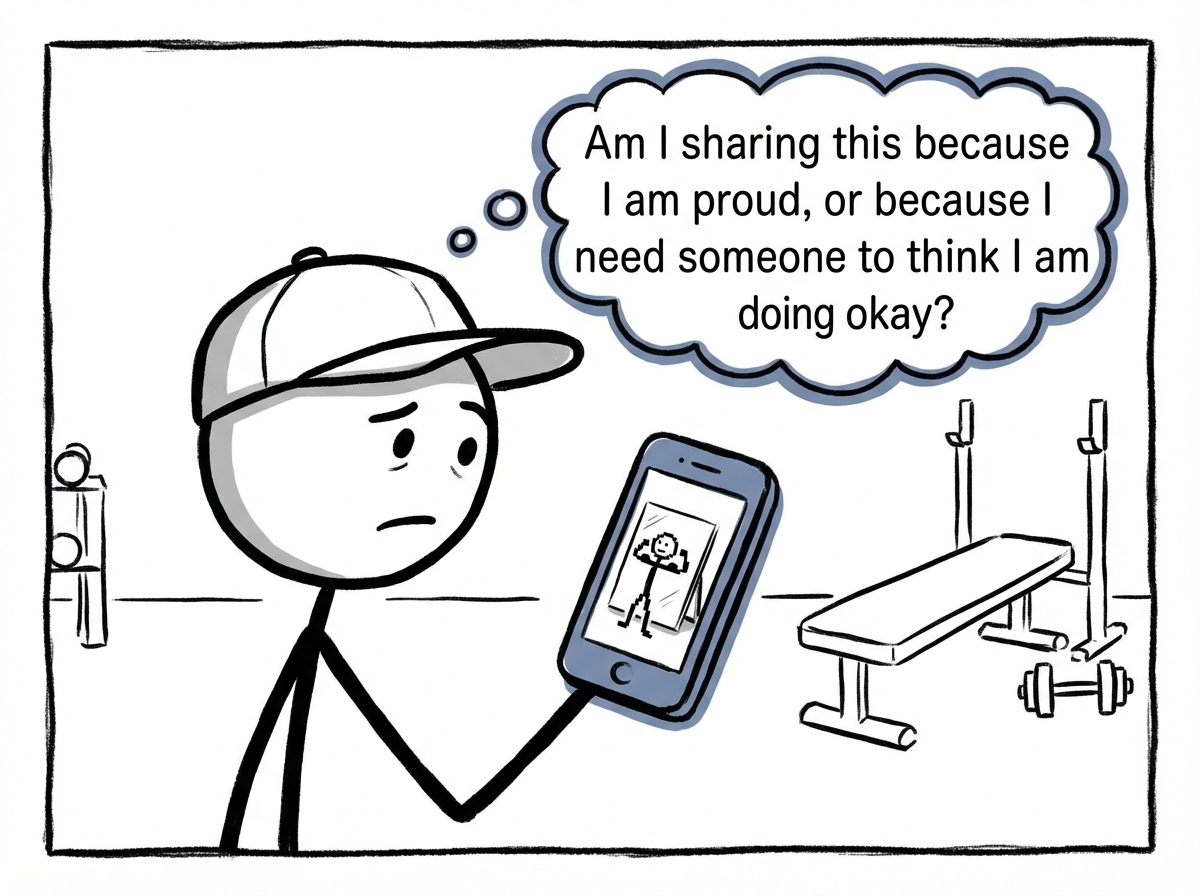
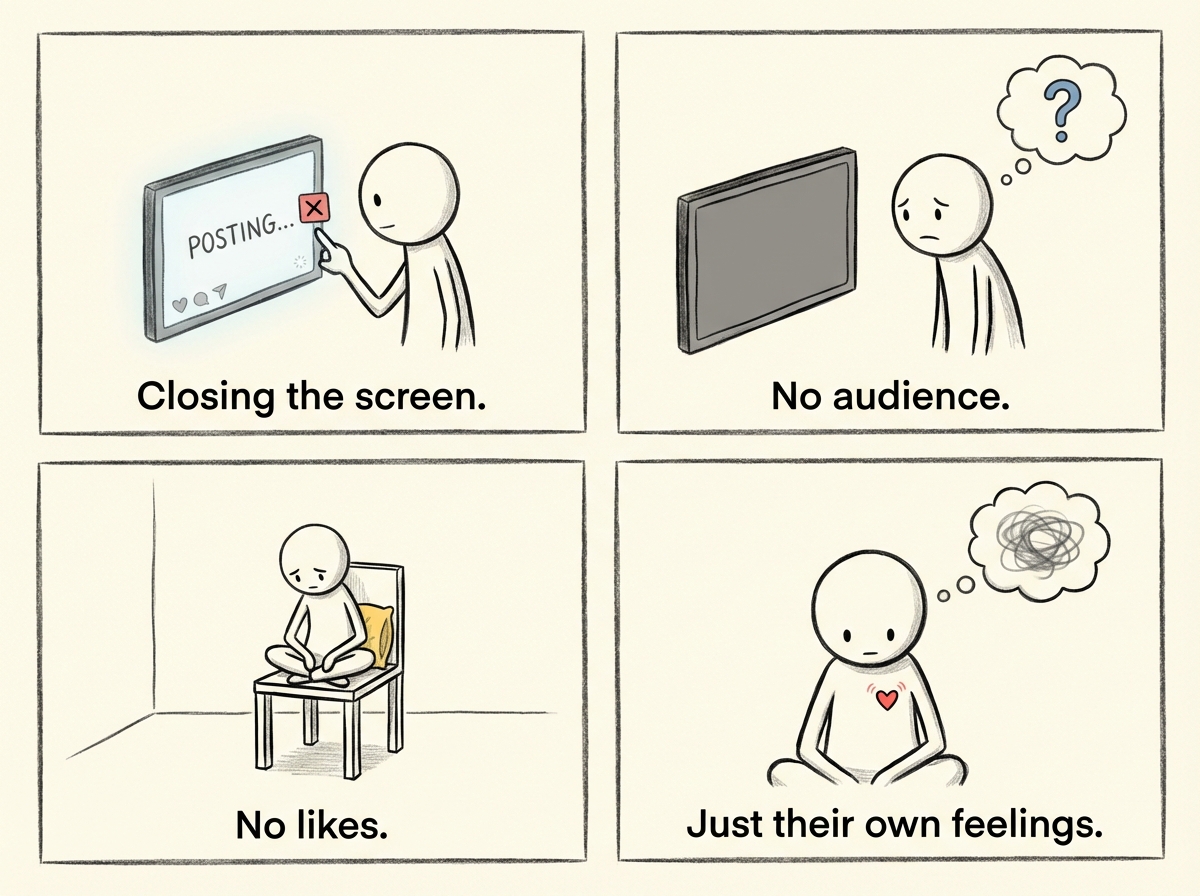
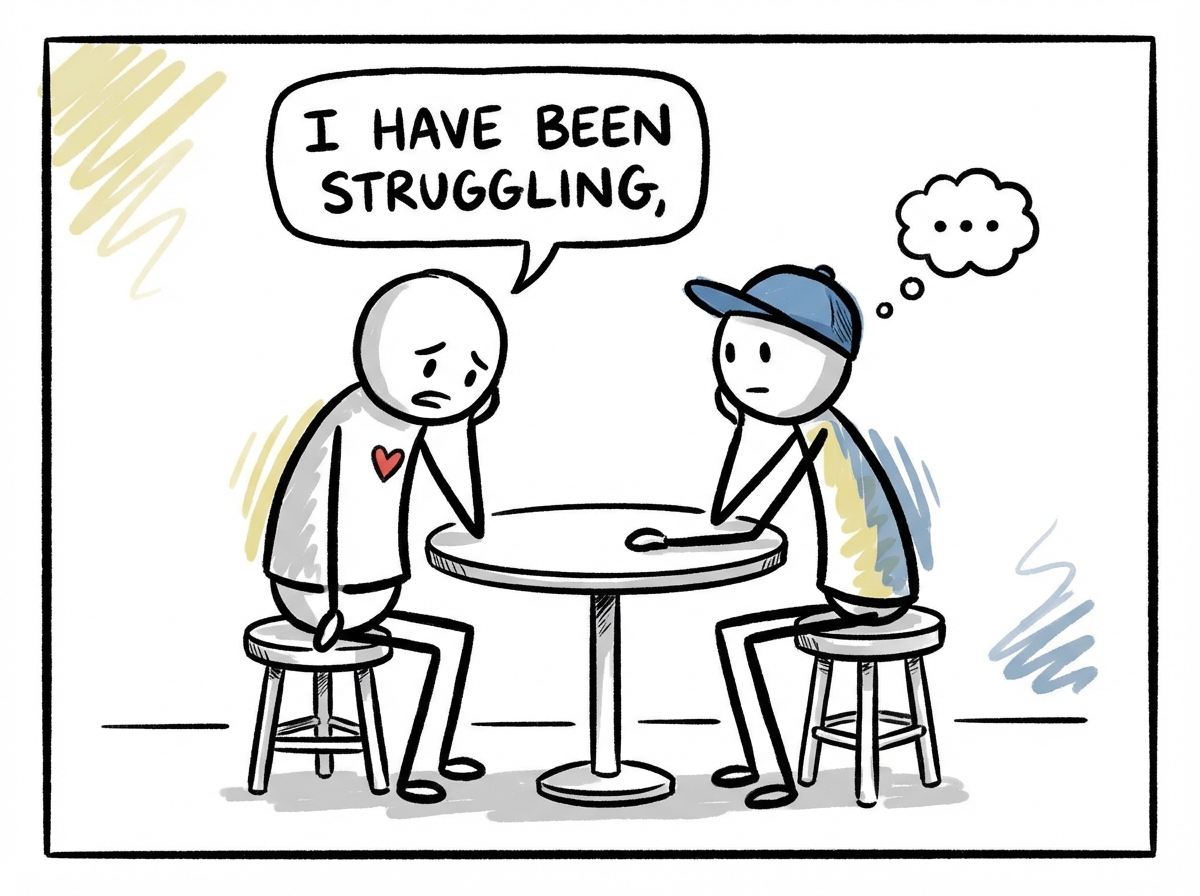
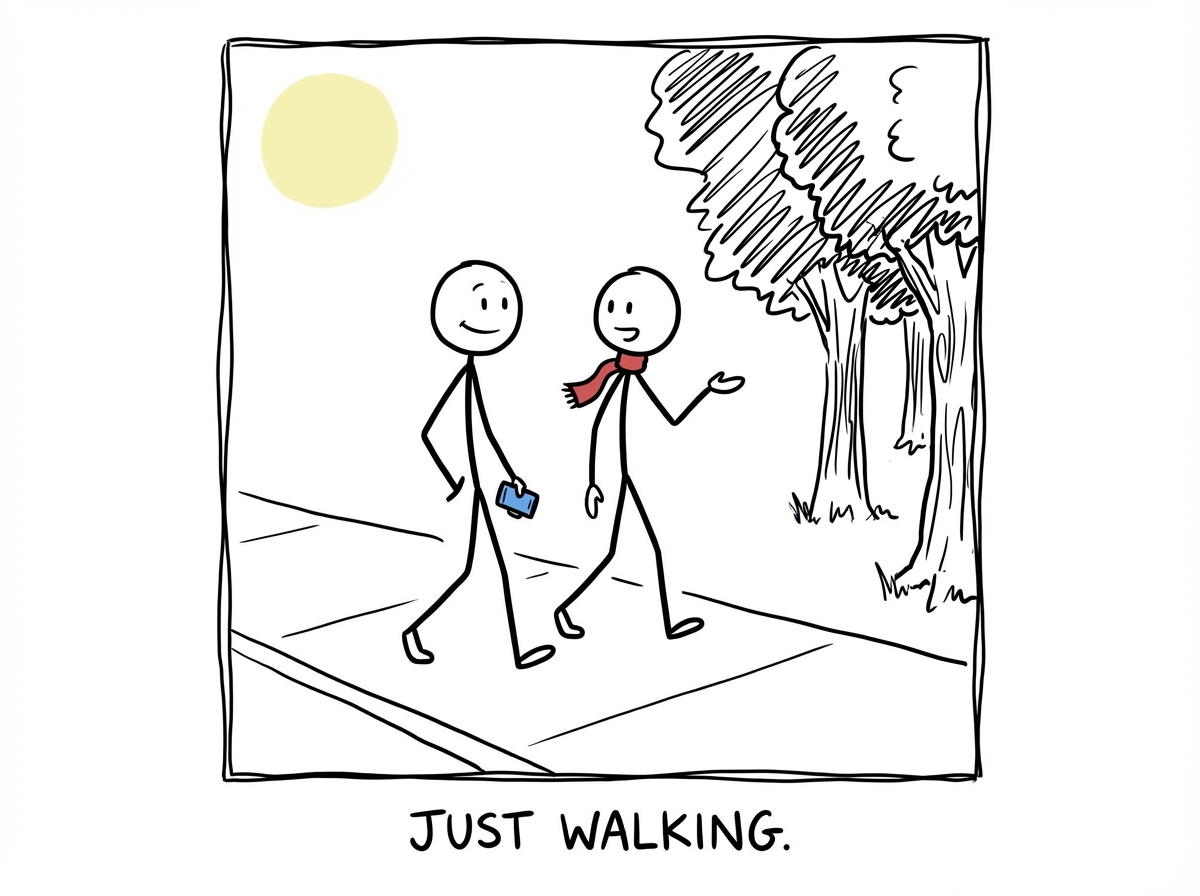
The photo looks great. Good lighting, gym pump, motivational caption about discipline and grinding. The likes come in. But behind the phone, the picture is different: an empty apartment, a meal eaten alone, a tiredness that has nothing to do with the workout. This is success theater -- the performance of achievement for an audience that will never see what it costs. For men, this performance is especially entrenched because masculine norms discourage vulnerability and reward displays of strength, wealth, and independence. A 2018 study by Wong and colleagues in the Journal of Counseling Psychology found that conformity to masculine norms -- particularly self-reliance and emotional control -- was significantly associated with negative mental health outcomes and reduced willingness to seek help. Social media amplifies this. Platforms reward the performance of success and punish the admission of struggle. When you scroll and see other men posting luxury cars, business wins, and six-pack photos, your brain does not register that these are curated performances too. It registers them as proof that everyone else has it together and you are the only one faking it. This is a form of pluralistic ignorance -- everyone privately doubts themselves while publicly performing confidence, and the result is a collective delusion where no one believes anyone else is struggling. Men are especially vulnerable to this because the cultural script says a man who admits weakness is failing at being a man. The exit from success theater is not more performance -- it is a single moment of honesty. It might be texting a friend and saying 'I am not doing great.' It might be skipping the gym selfie and sitting with how you actually feel. The first act of vulnerability is always the hardest because everything in the culture says it is a sign of weakness. But the research is clear: Brene Brown's work on vulnerability shows that it is not weakness but the birthplace of connection, belonging, and authenticity. The performance keeps you safe and alone. The honesty is what lets someone in.
Key Takeaway
The performance keeps you safe and alone. One honest admission is what lets someone in.