The Therapy-Speak Shield
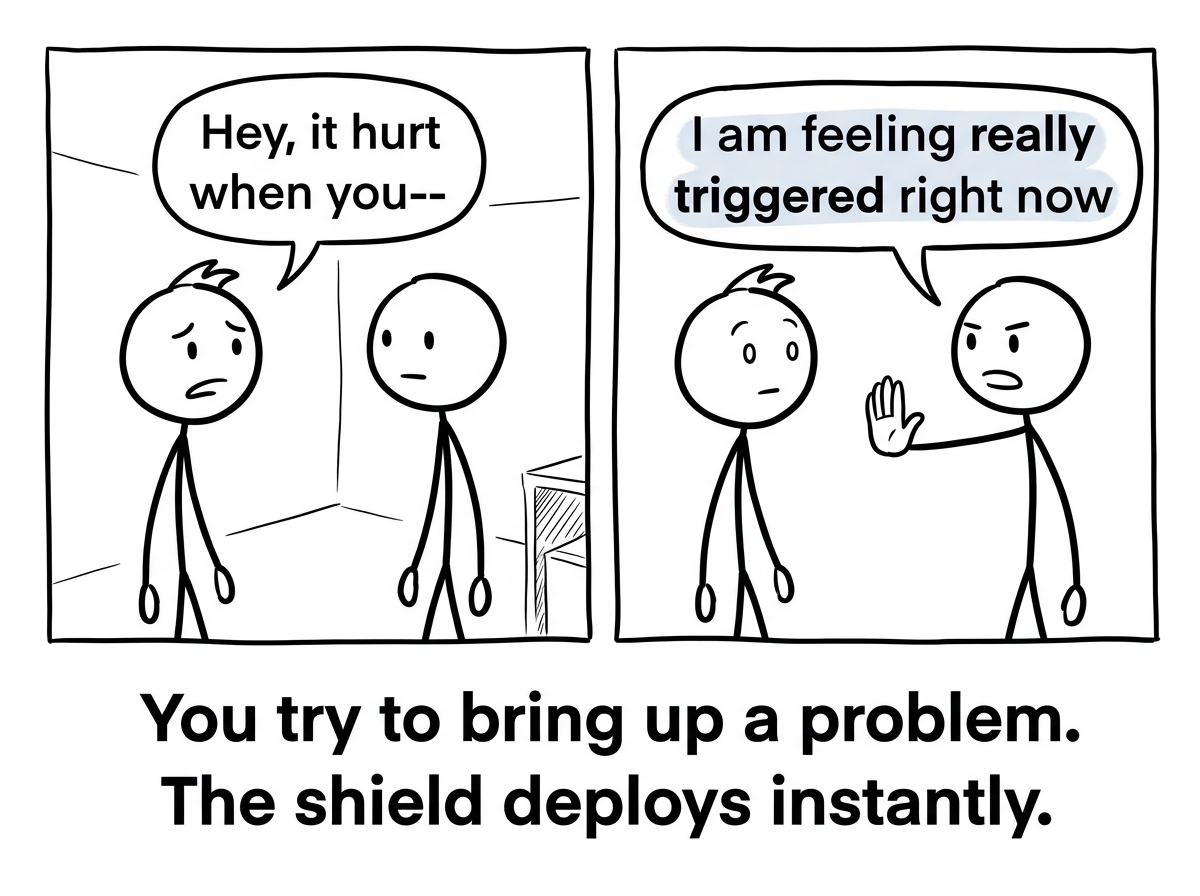
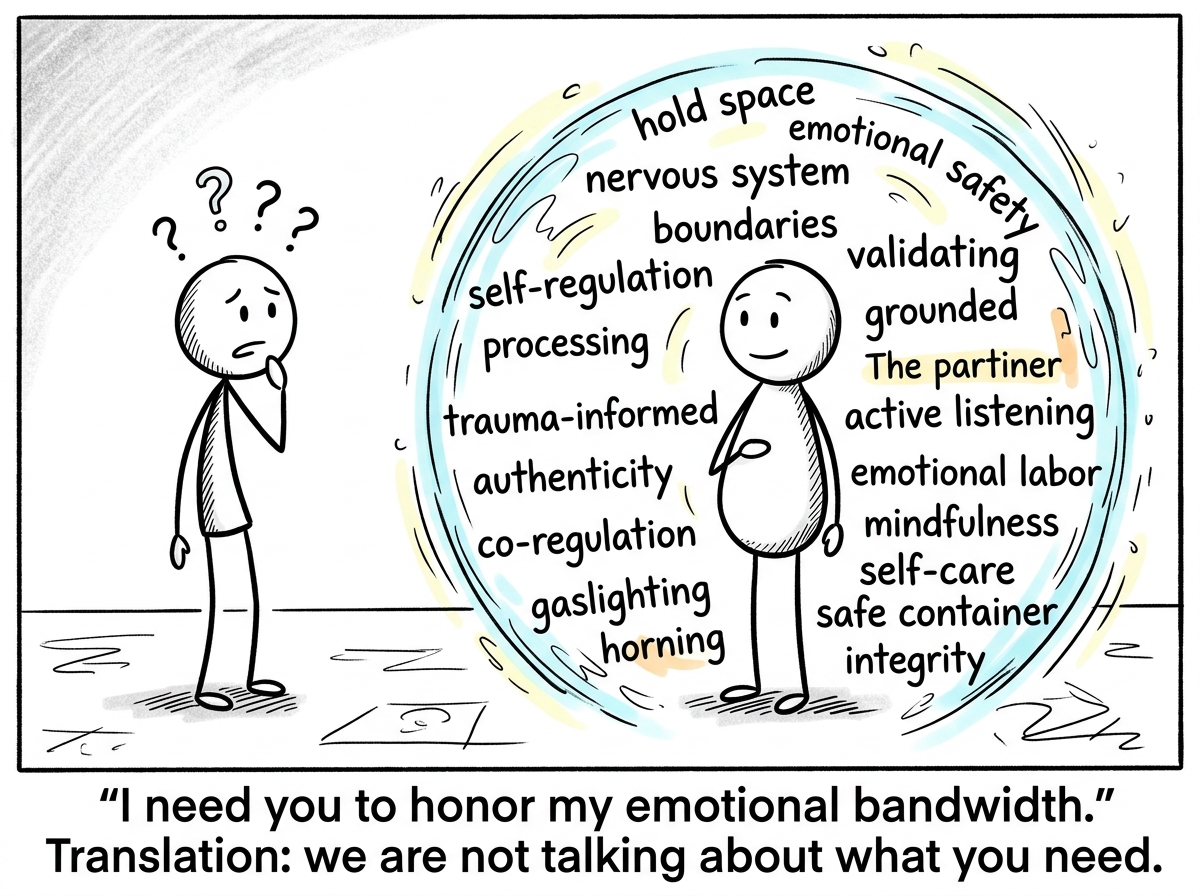
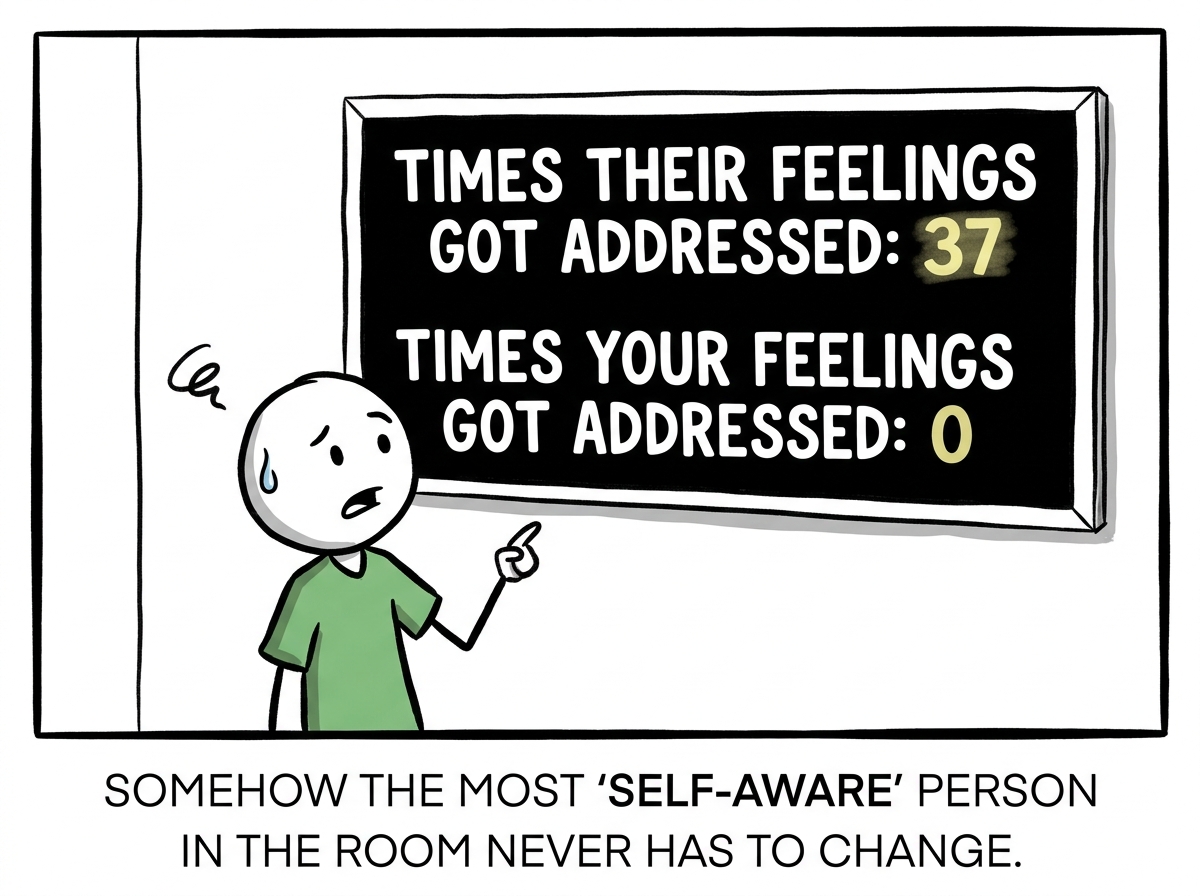
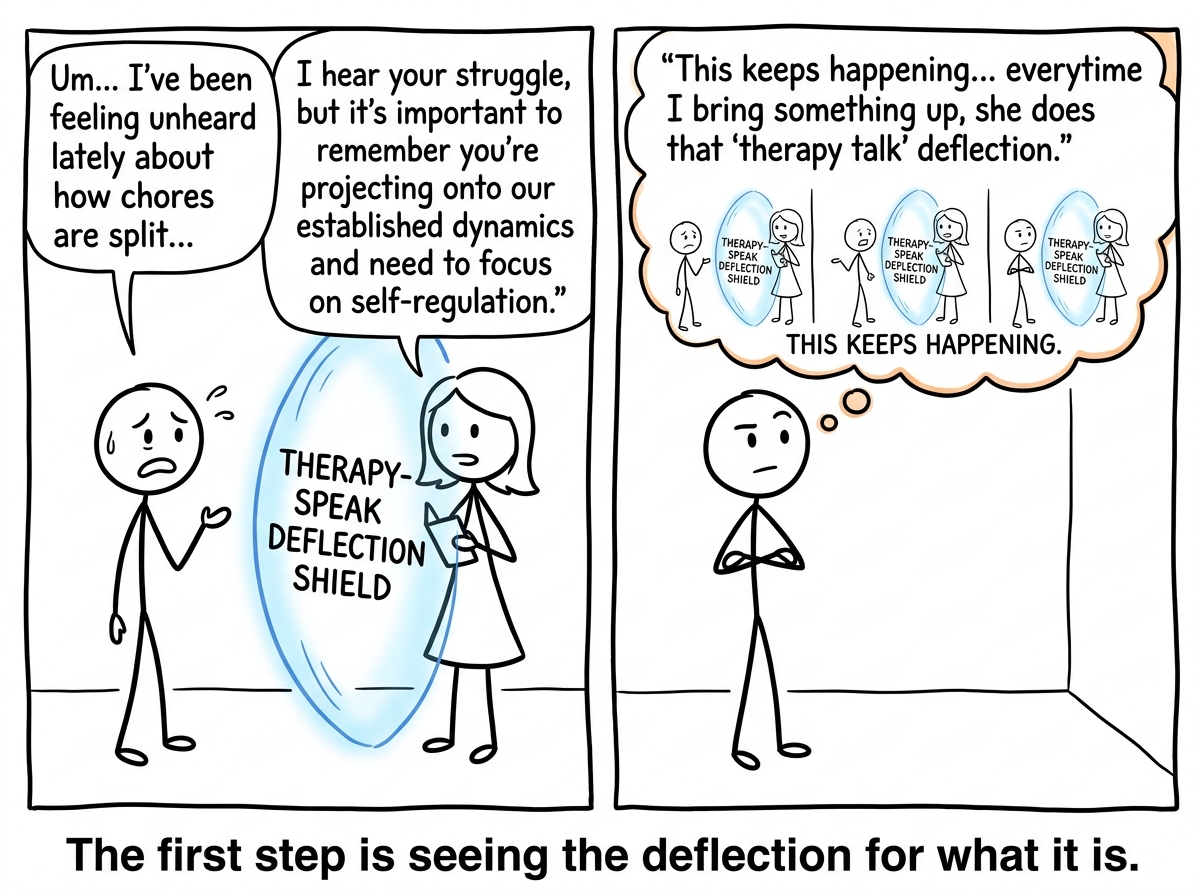
Someone uses perfectly crafted therapy language to deflect accountability, turning every confrontation into a lecture about how their partner is not honoring their emotional needs.
Explanation
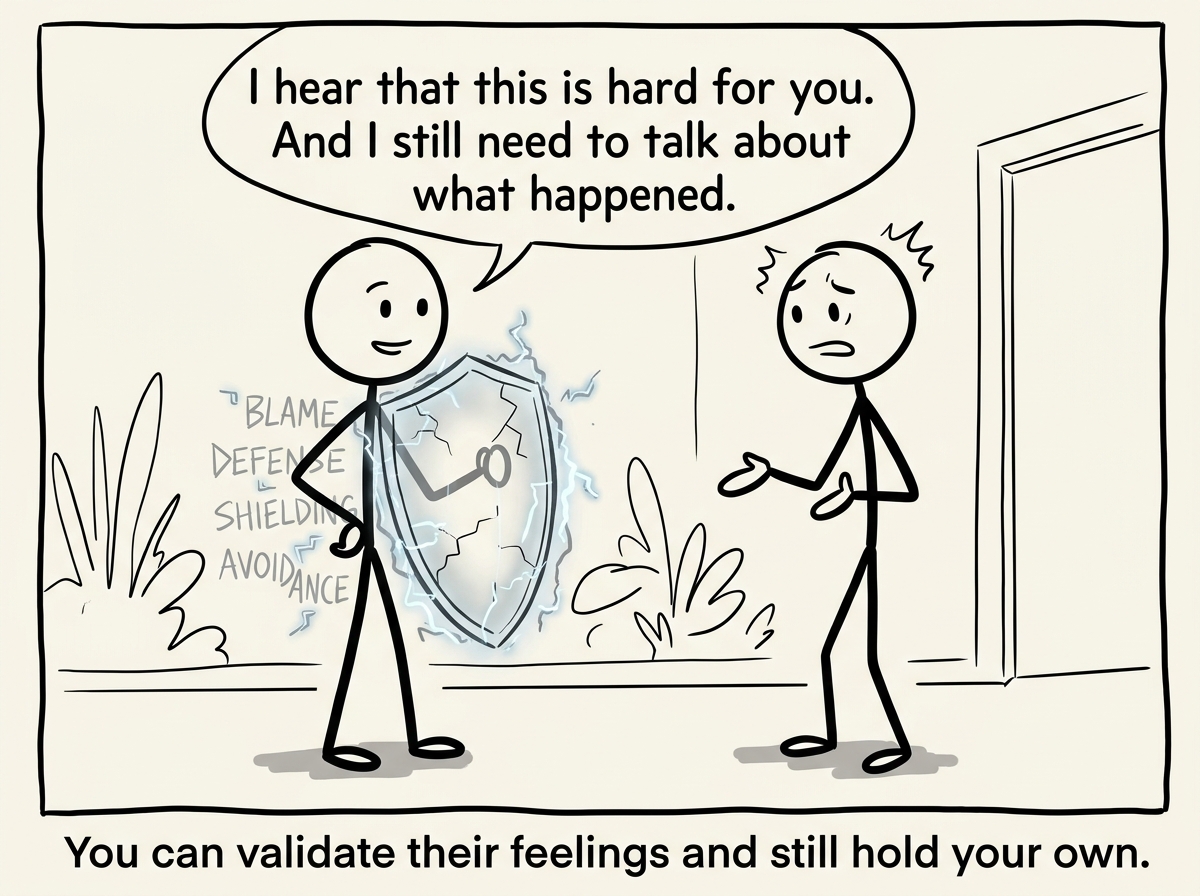
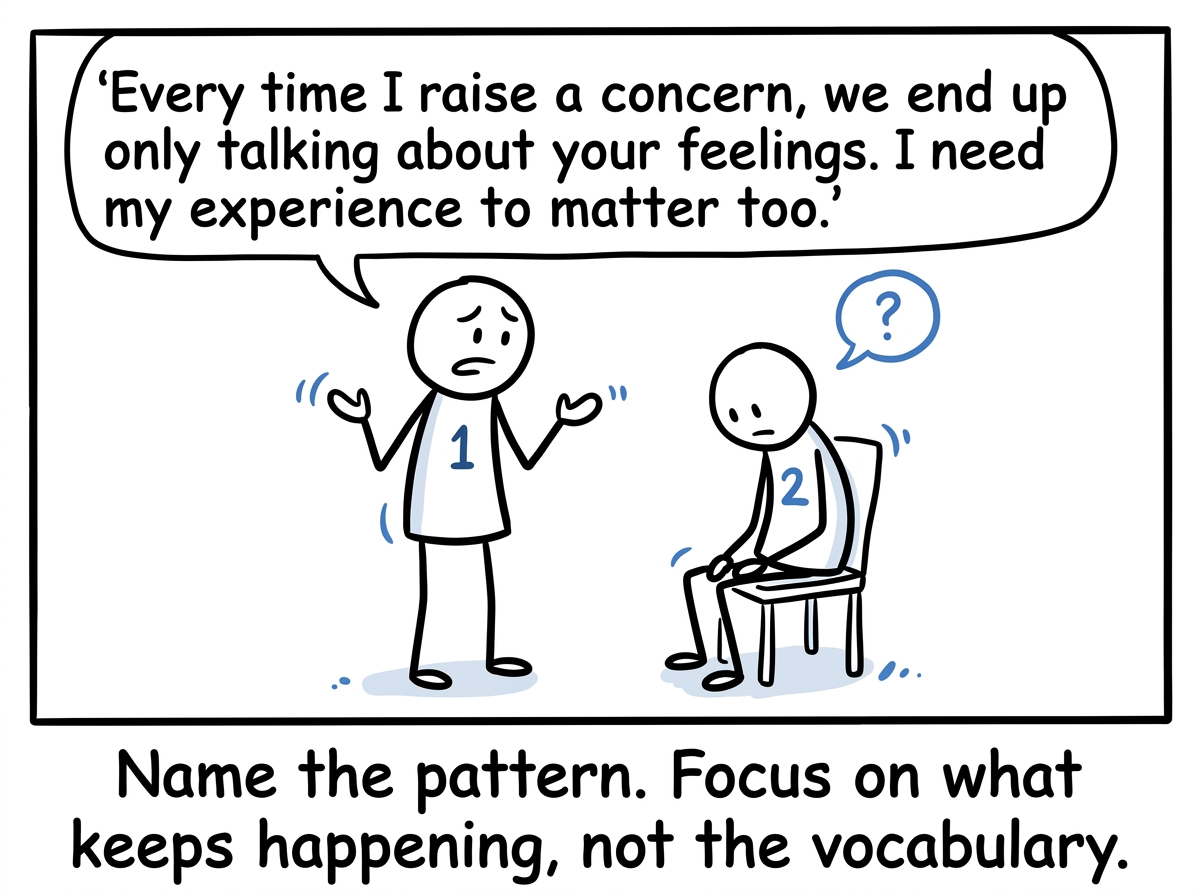
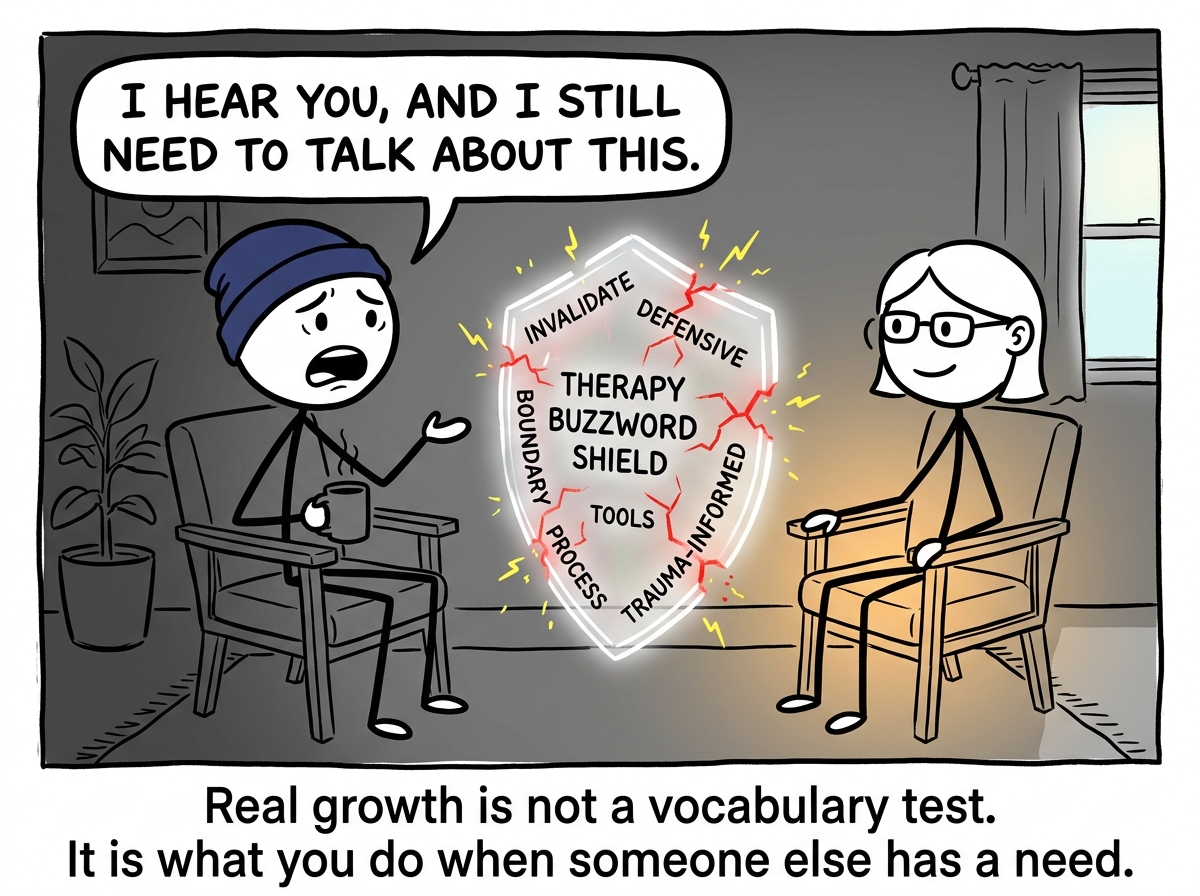
You try to bring up something that bothered you. Before you finish your sentence, they interrupt with 'I am feeling really triggered right now and I need you to hold space for my experience.' You pause, confused. You were the one who was hurt. But now you are being asked to validate their feelings about your feelings. Every time you try to address a problem, they deploy a wall of therapeutic language -- 'boundaries,' 'emotional safety,' 'nervous system regulation' -- and suddenly the conversation is about their wounds, never yours. Therapy-speak has given people a powerful vocabulary for understanding their inner world. But in the wrong hands, this language becomes a sophisticated deflection tool. The person has learned that framing everything in therapeutic terms makes them sound self-aware and makes you sound aggressive for pushing back. They are not actually doing therapeutic work -- they are using the aesthetic of therapy to avoid accountability. Real therapy teaches you to hold your feelings AND someone else's. Weaponized therapy-speak only makes room for one person's experience. The way to cut through this is to focus on behavior, not language. It does not matter how eloquently someone describes their emotional state if they consistently avoid addressing the original issue. You can validate their feelings and still return to the conversation: 'I hear that this is hard for you, and I still need to talk about what happened.' If that sentence is always treated as an attack, the problem is not your delivery.
Key Takeaway
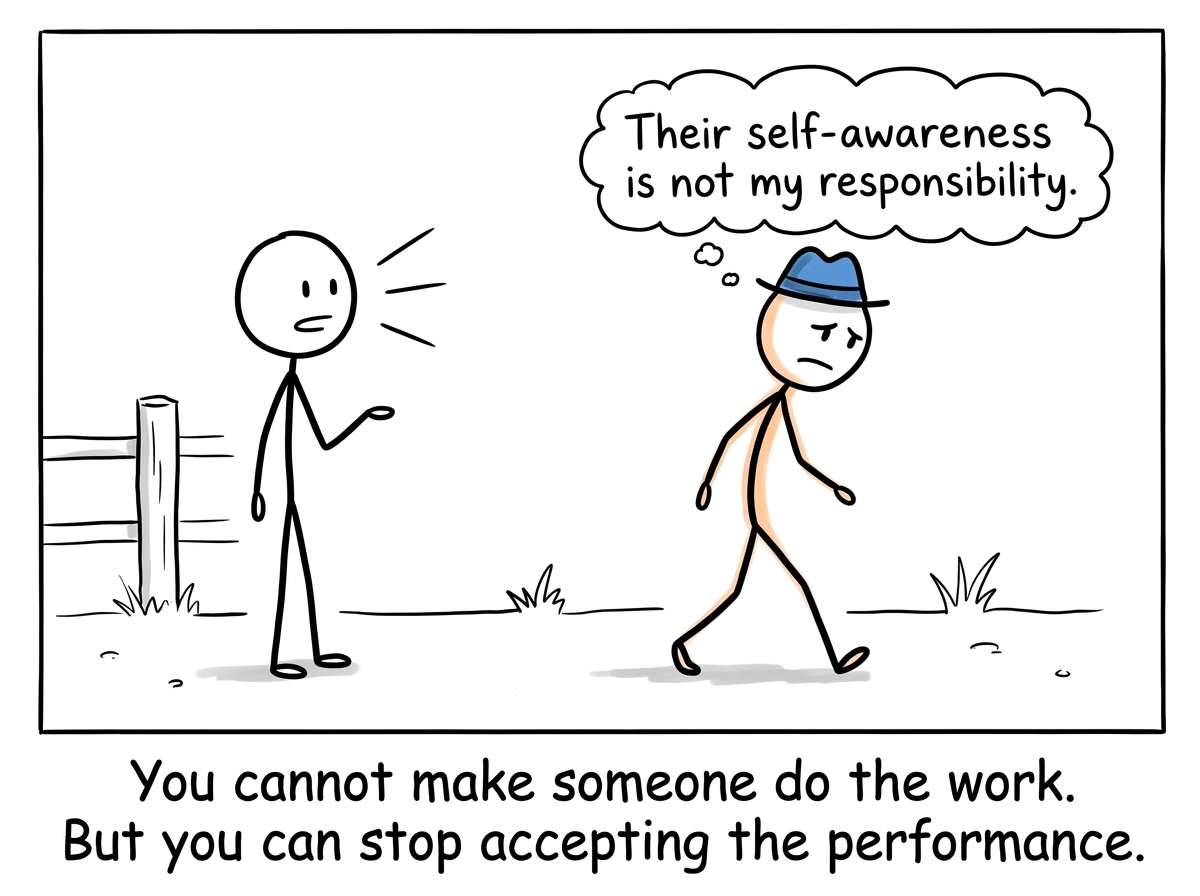
Knowing the vocabulary of healing is not the same as doing the work.