The Swallowed Sentence
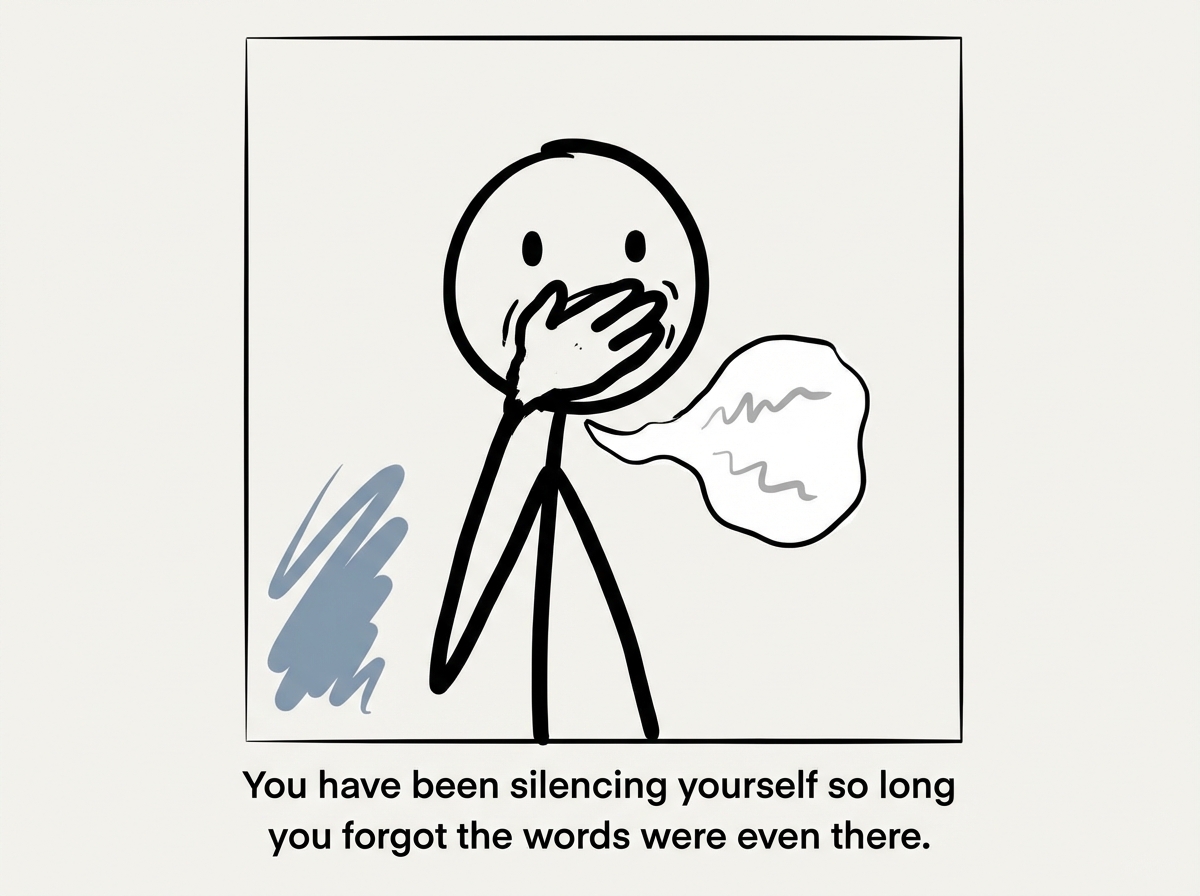
A person has something important to say but swallows it every time -- until the unspoken words start piling up inside them like a physical weight.

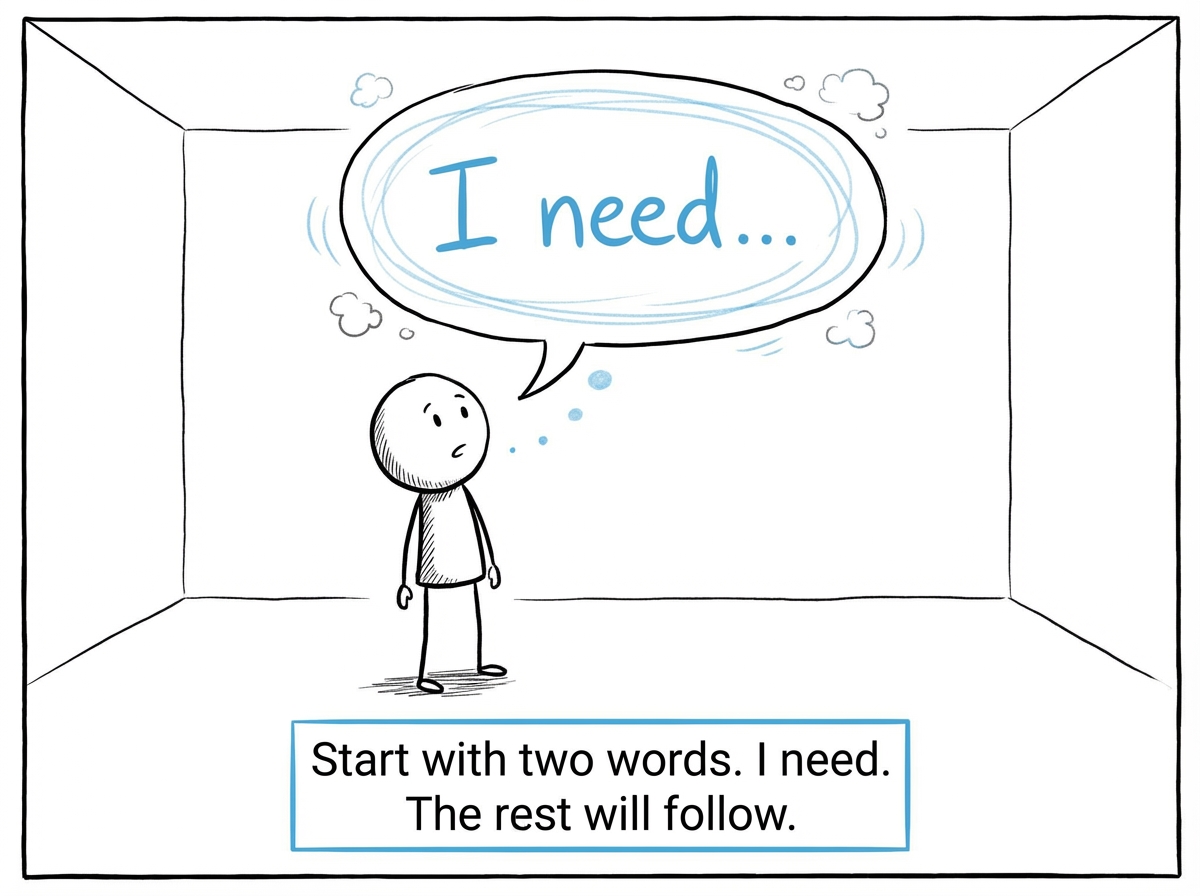
The ability to say what you need without becoming someone you are not.
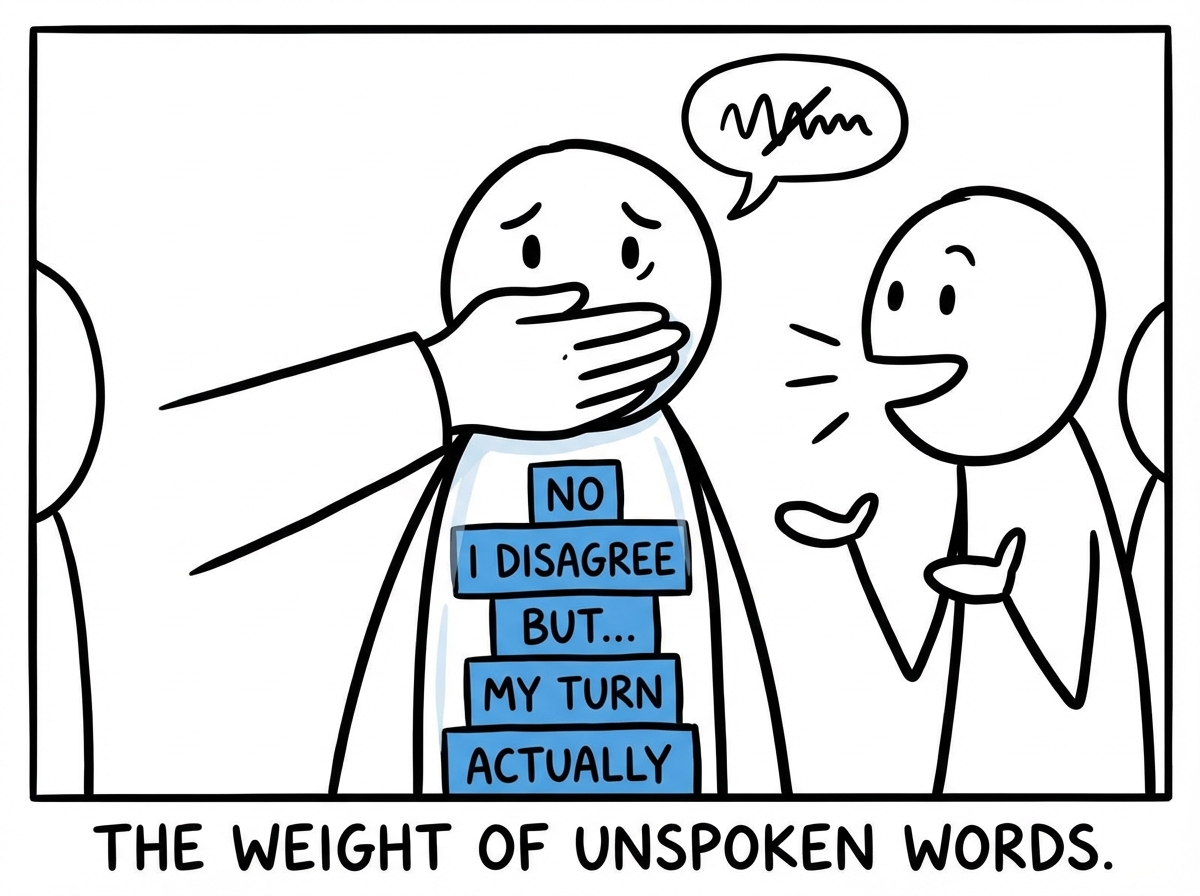
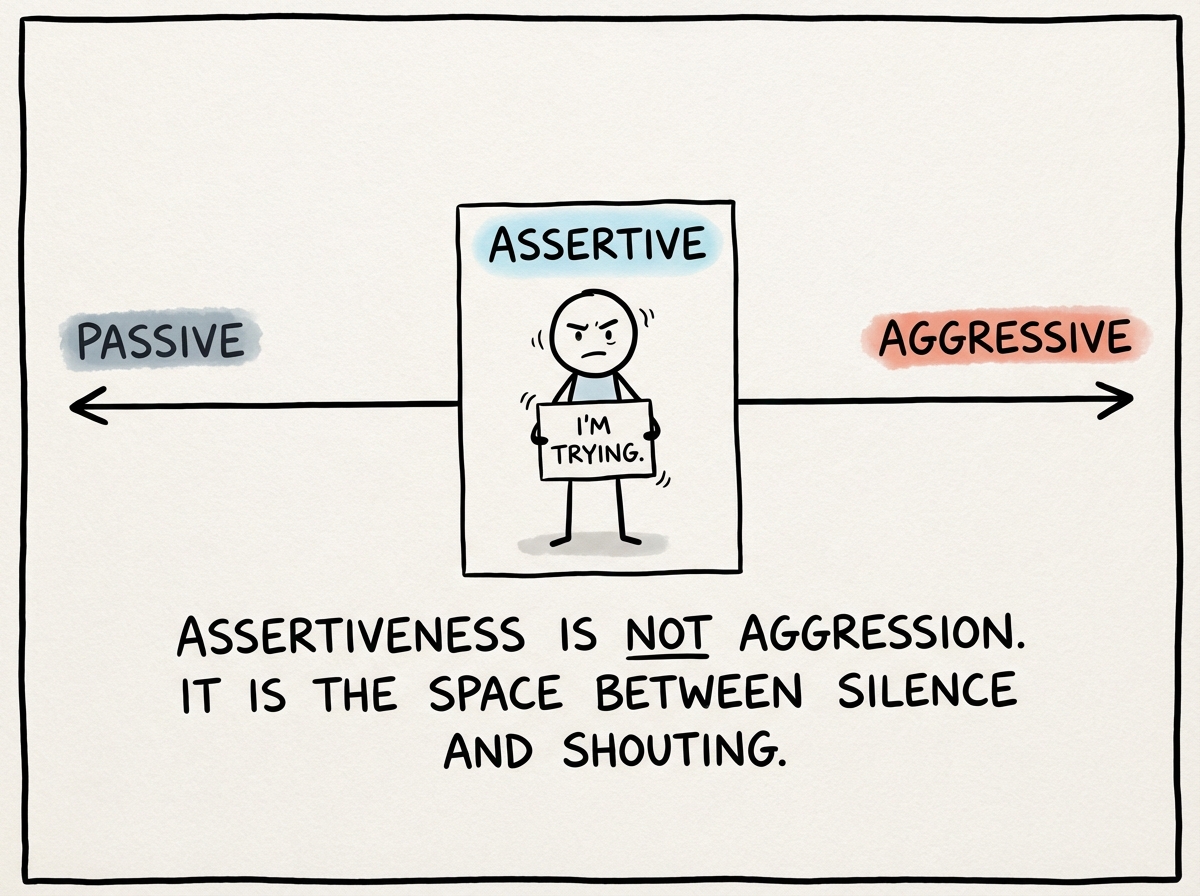
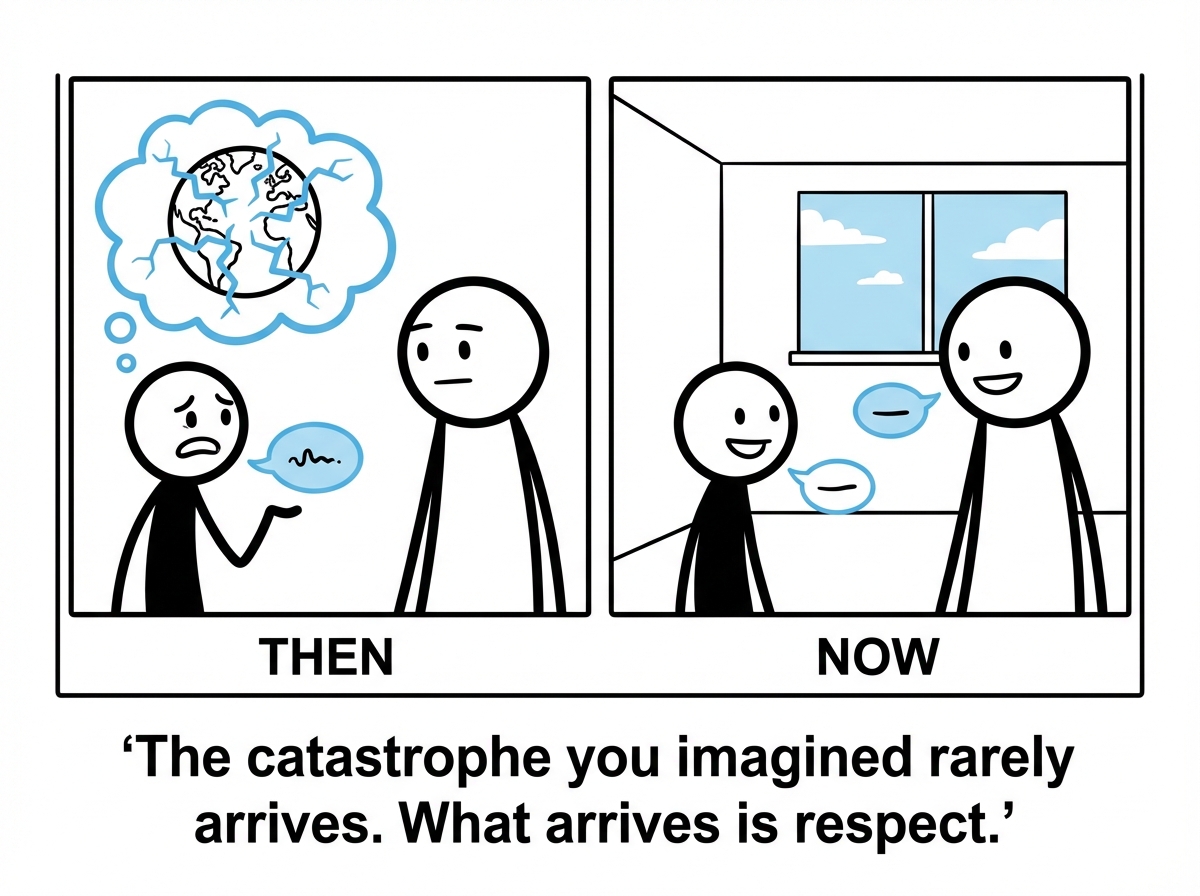
Assertiveness lives in a narrow band between passivity and aggression, and most people have been trained to avoid it. If you grew up in an environment where speaking up meant conflict, where having needs meant being selfish, or where directness was punished, you learned that the safest communication style is silence, accommodation, or hinting and hoping someone figures it out. The result is a life spent swallowing sentences. You say yes when you mean no. You laugh off things that hurt. You hint at what you need instead of stating it. You build resentment toward people who never learned to read your mind -- which is everyone. Assertiveness is not about being aggressive, dominant, or blunt. It is the ability to express your thoughts, feelings, and needs directly and respectfully, while honoring the other person's right to do the same. It is the middle path. The reason assertiveness feels so dangerous is that it requires two things most unassertive people struggle with: believing your needs matter, and tolerating the discomfort of someone else's reaction. If your self-worth is shaky, asking for what you need feels presumptuous. If conflict terrifies you, the possibility of pushback feels unsurvivable. Building assertiveness is not a communication skill. It is a self-worth project. You cannot speak up for someone you do not believe deserves to be heard.
Assertiveness is not a volume problem. It is a self-worth problem. You cannot speak up for someone you do not believe deserves to be heard.