The Swallowed Sentence
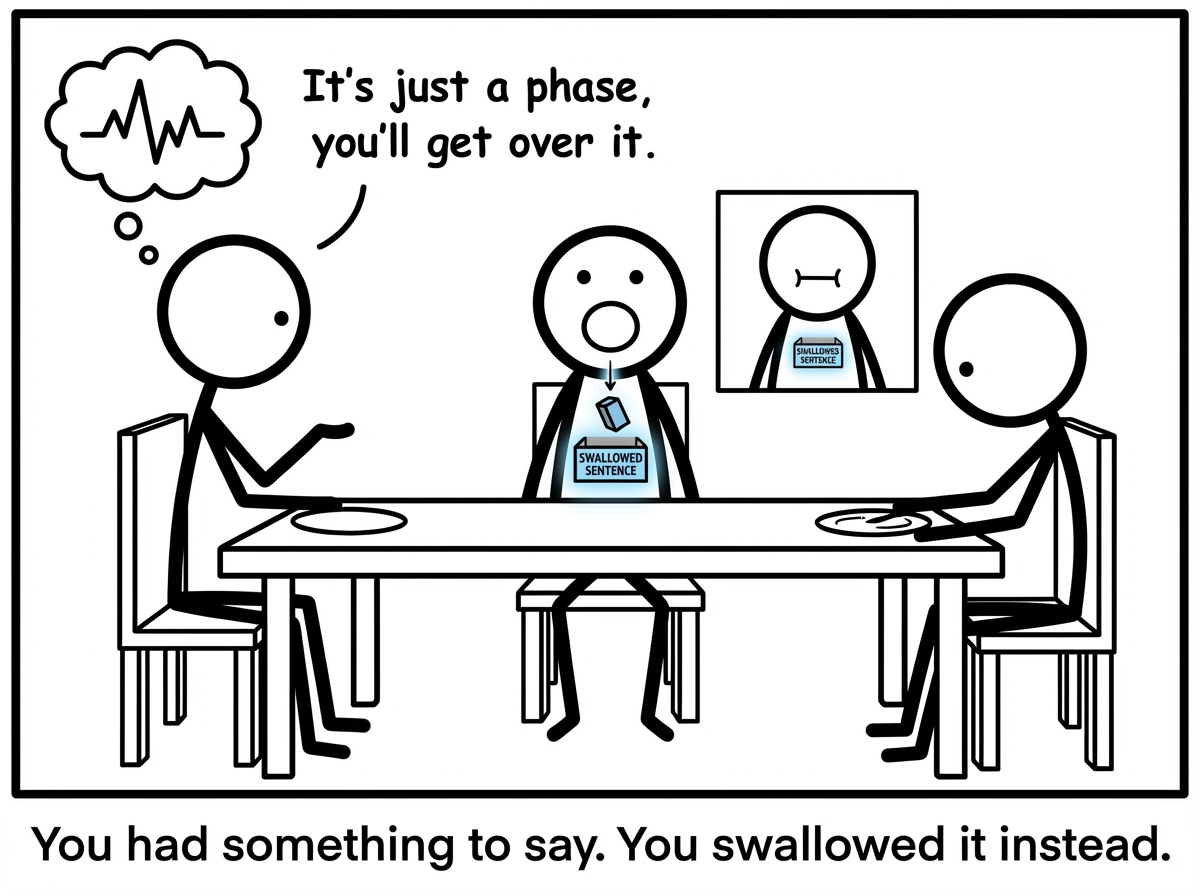

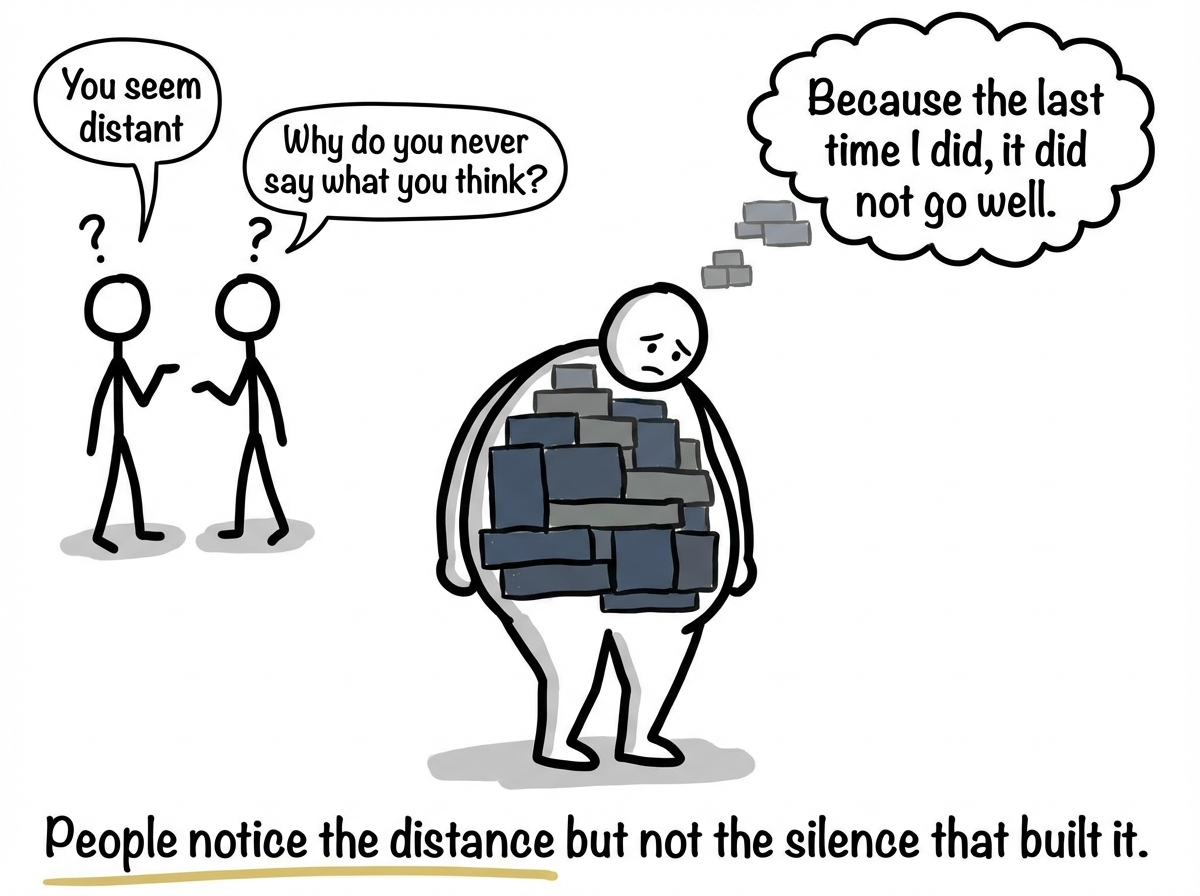
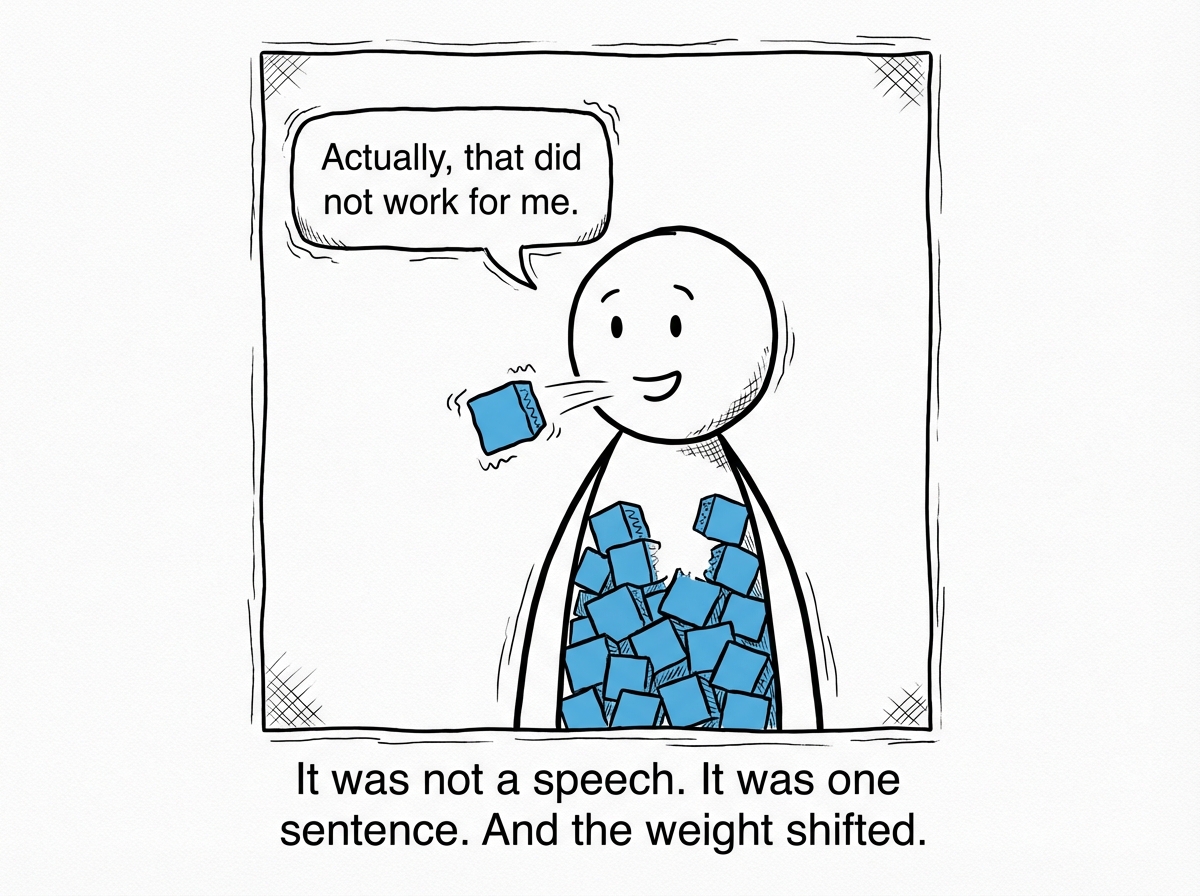
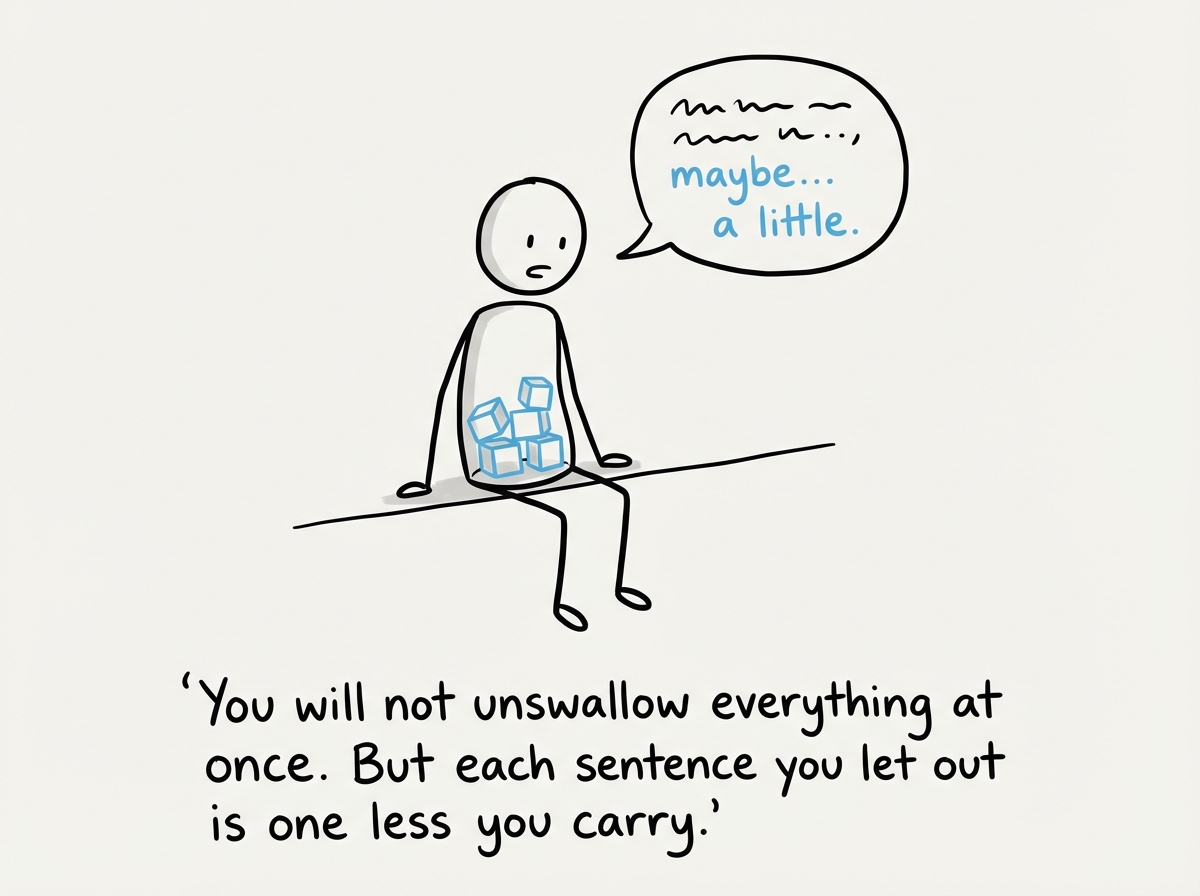
A person has something important to say but swallows it every time -- until the unspoken words start piling up inside them like a physical weight.
Explanation
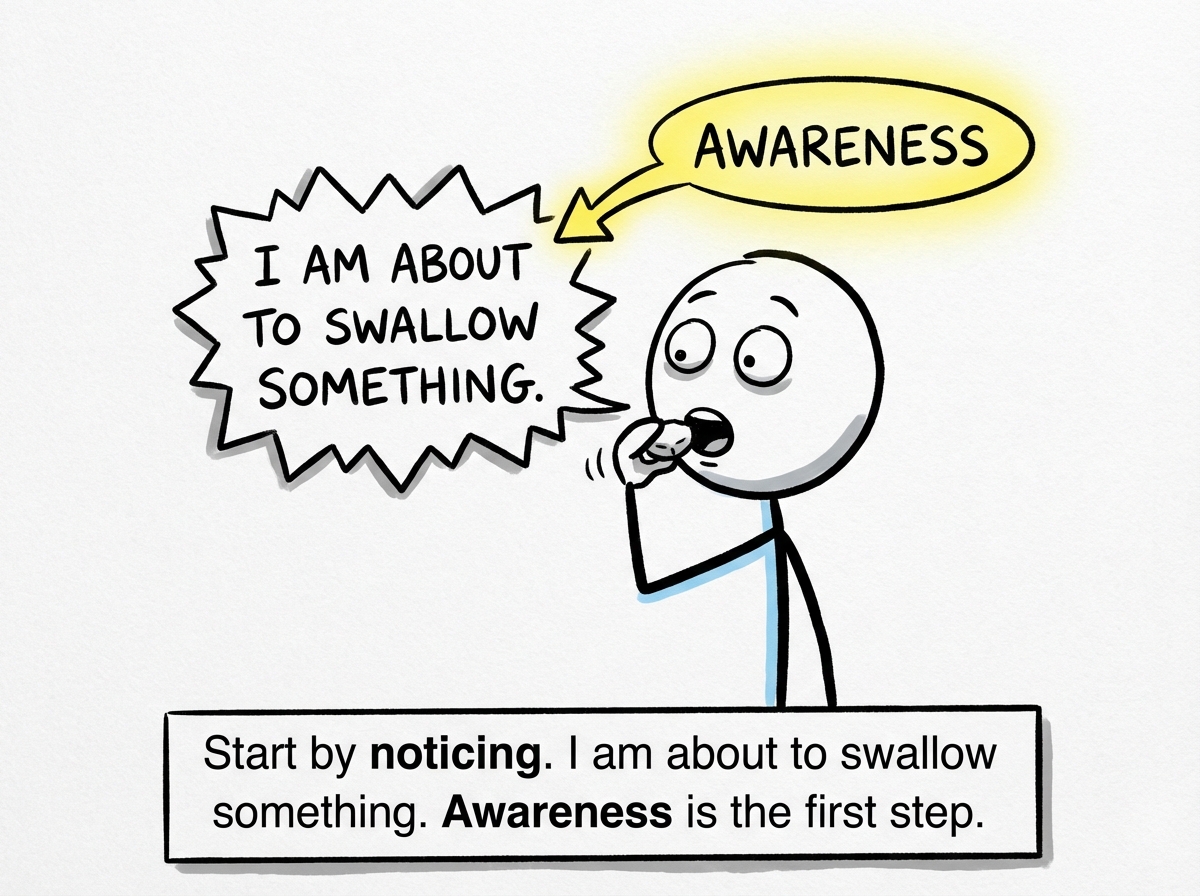
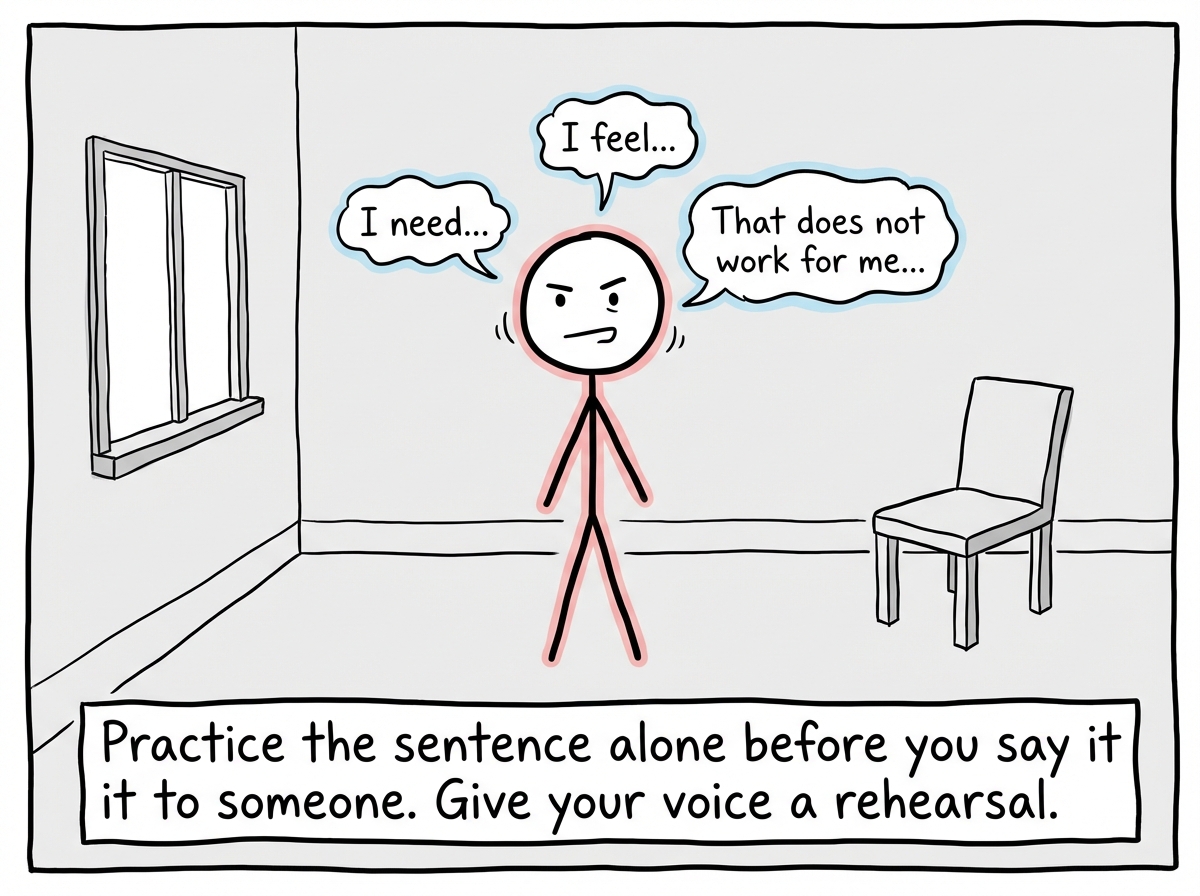
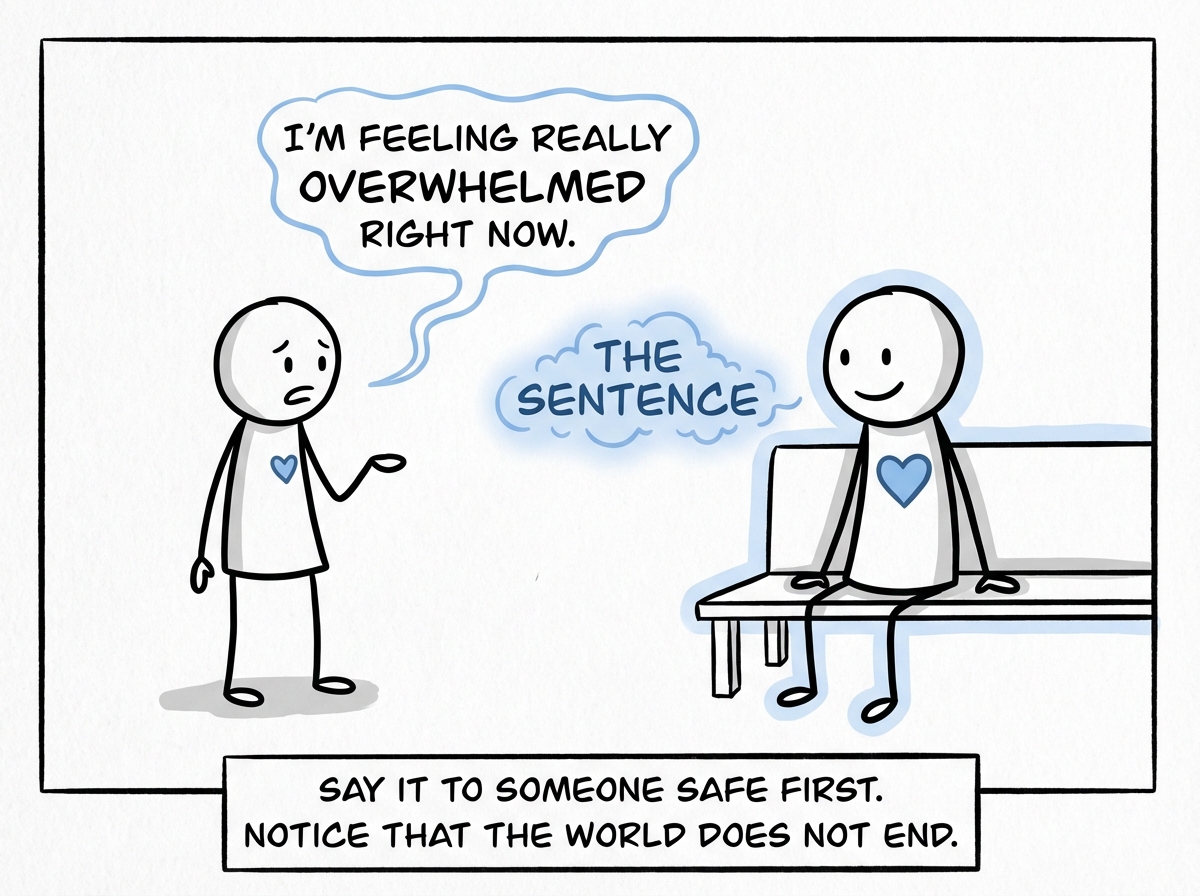
Every time you swallow a sentence -- the boundary you needed to set, the opinion you wanted to share, the 'no' that should have been said -- it does not disappear. It goes somewhere. It becomes resentment, anxiety, passive aggression, or a vague sense of being invisible in your own life. The swallowed sentence is the basic unit of lost assertiveness. One is manageable. A lifetime of them is suffocating. People who struggle with assertiveness do not lack opinions or needs. They lack the internal permission to voice them. Somewhere they learned that their words cause problems, that their needs are burdens, that speaking up leads to conflict they cannot survive. So they develop workarounds. They hint instead of state. They agree instead of disagree. They apologize for existing. They say 'I do not mind' when they do mind, 'it is fine' when it is not fine, and 'whatever you want' when they want something very specific. The irony is that swallowing sentences does not avoid conflict. It delays it. The resentment builds. The relationship erodes. And eventually, the person who never speaks up either explodes or disappears -- both of which feel like proof that speaking up was always the wrong choice. Assertiveness starts with one unswallowed sentence. Not a confrontation. Not a monologue. Just one honest statement: 'I need,' 'I feel,' 'I disagree,' or 'that does not work for me.' The world rarely ends when you say it.
Key Takeaway
Every sentence you swallow becomes weight you carry. Assertiveness starts with letting one honest sentence out.