The Feedback Sandwich
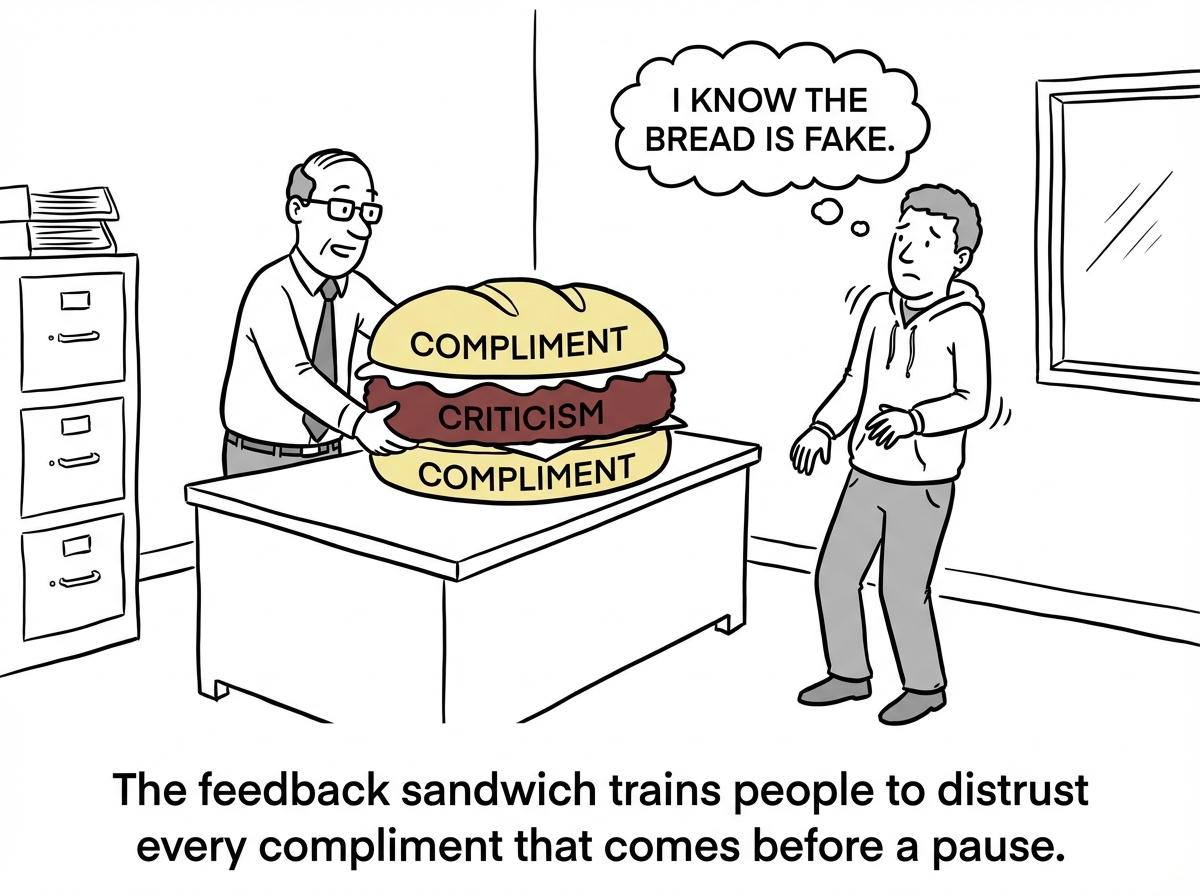
A manager assembles the classic feedback sandwich -- compliment, criticism, compliment -- not realizing that the technique has trained their team to distrust every piece of praise.

Why feedback feels like a threat, and how to make it feel like an investment instead.
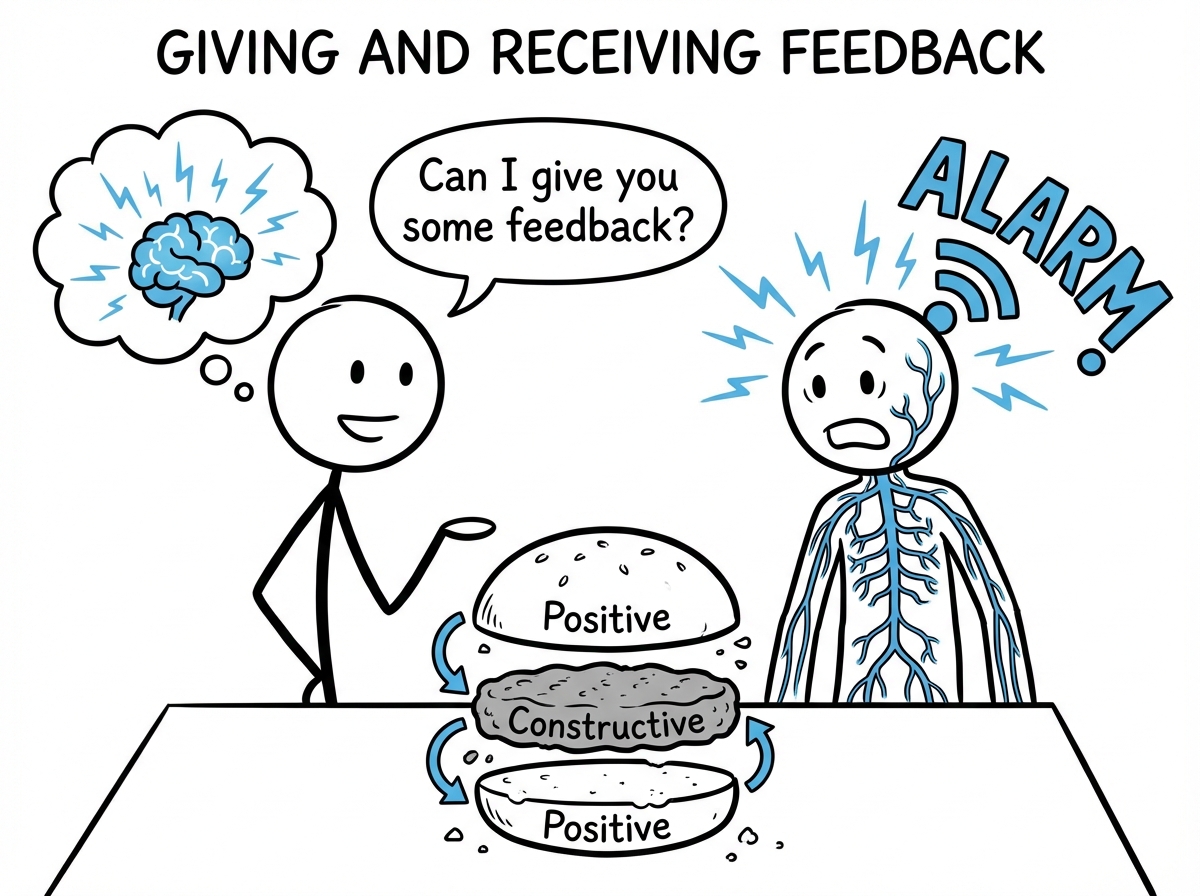
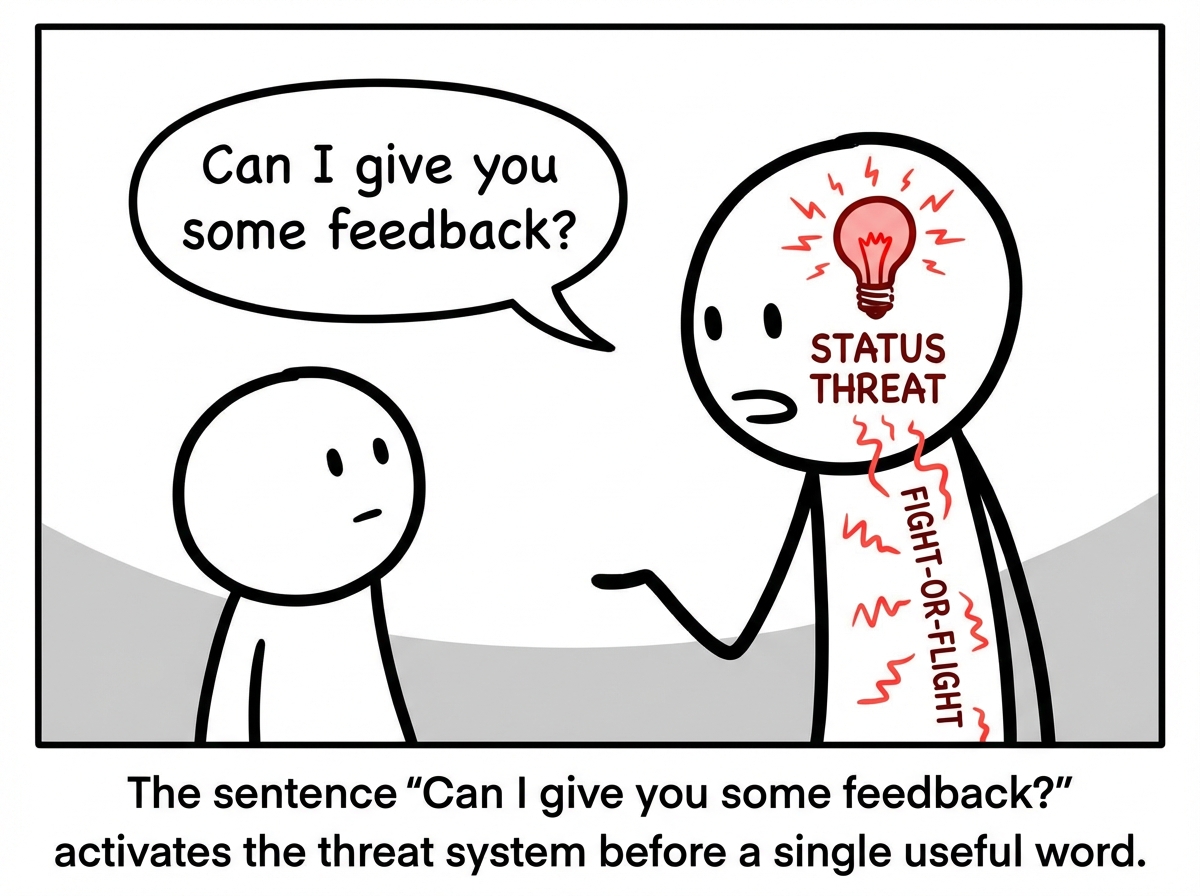
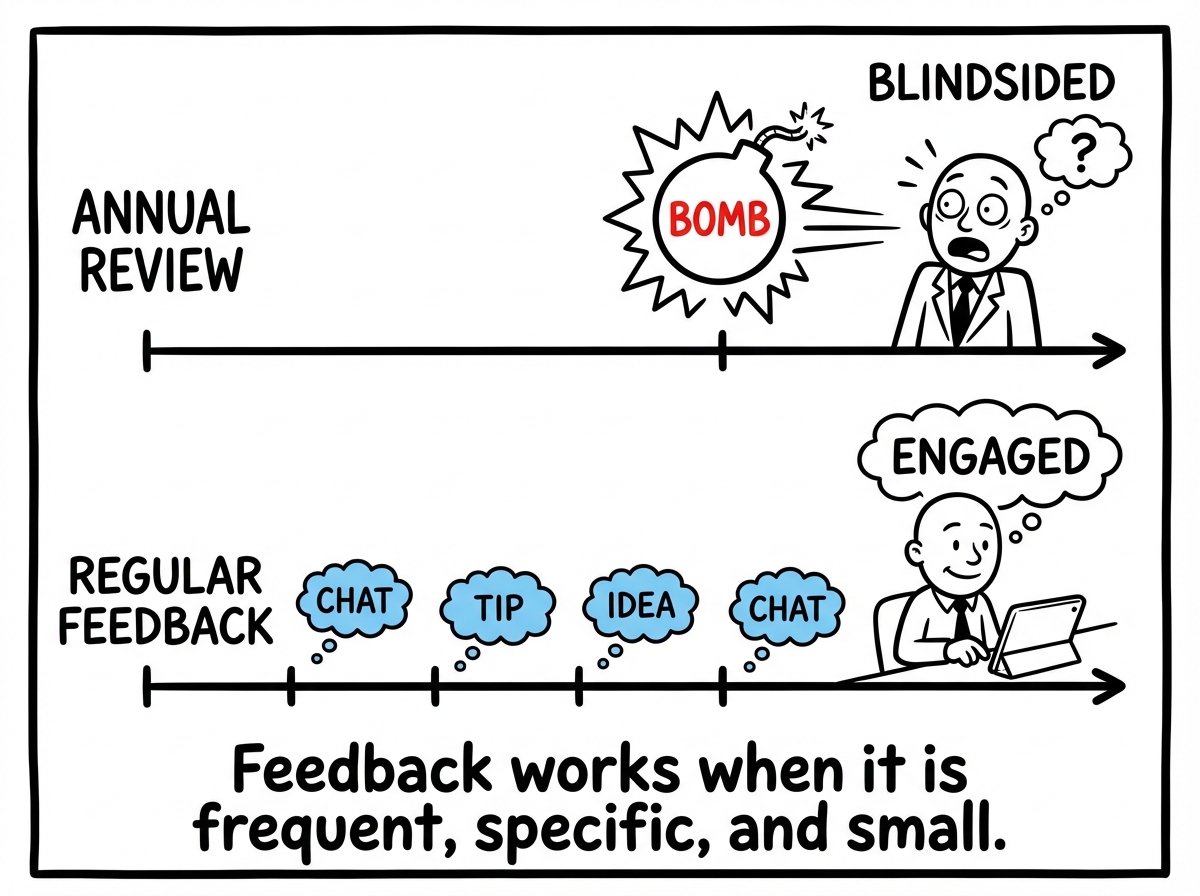
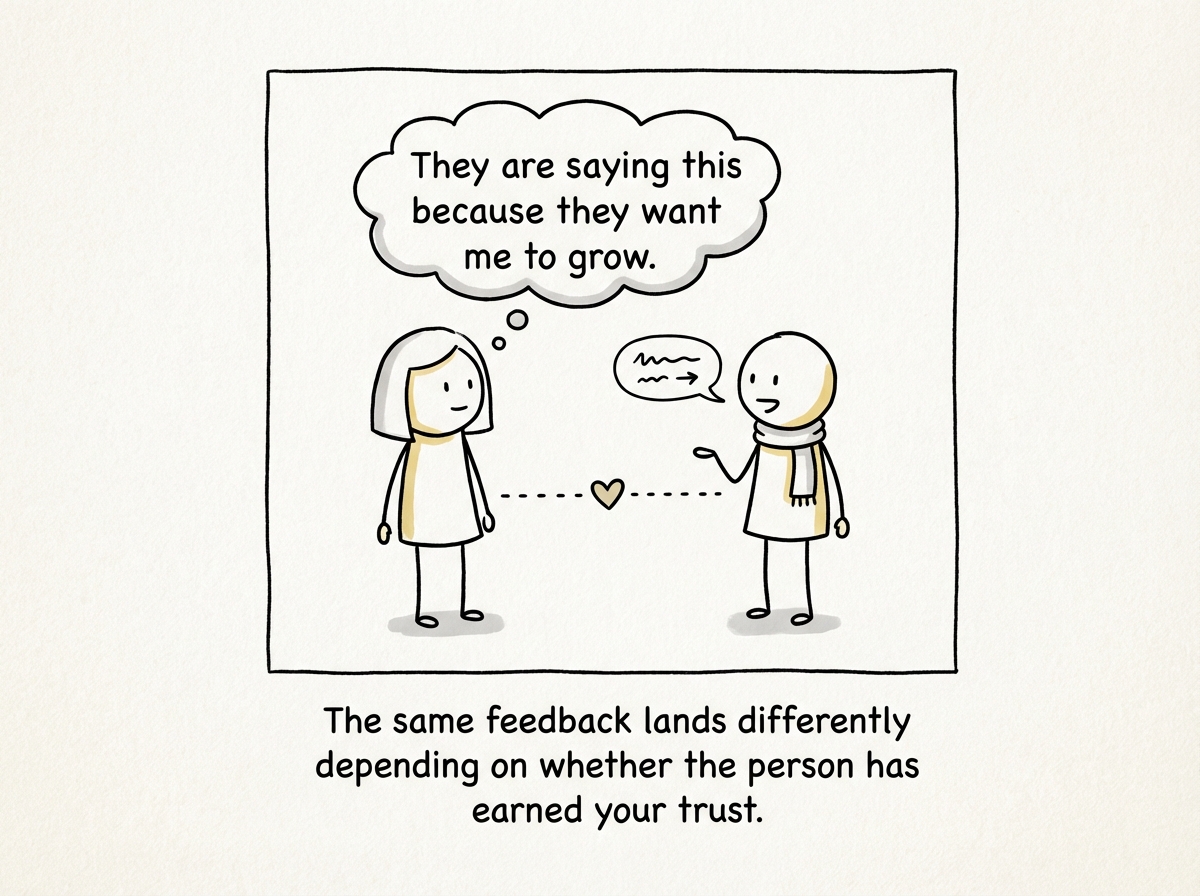
Feedback should be the simplest thing in the world: tell someone what they are doing well and what they could do better. But the human nervous system does not experience feedback as information. It experiences it as evaluation -- and evaluation activates the same threat-detection circuits that evolved to keep you alive in genuinely dangerous situations. Neuroscientist Kevin Ochsner's research shows that people accept feedback only about 30 percent of the time, and even when they intellectually agree with it, the emotional response often overrides the rational one. The SCARF model, developed by David Rock, explains why: feedback can threaten your sense of Status (am I being judged?), Certainty (what does this mean for my future?), Autonomy (am I being controlled?), Relatedness (do they still like me?), and Fairness (is this even accurate?). On the giving side, most people default to one of two extremes: avoiding feedback entirely (because they fear conflict or want to be liked) or delivering it so bluntly that the receiver shuts down. The feedback sandwich -- positive, negative, positive -- has been debunked by researchers like Sheila Heen and Douglas Stone, who found that it trains people to distrust compliments and brace for the hidden critique. Effective feedback is specific, timely, behavior-focused, and delivered in the context of a relationship where the person already feels seen and valued. Without that foundation, even perfectly worded feedback lands on a defensive nervous system.
Your brain treats feedback as a threat because it evolved to protect your status in the group. The antidote is not thicker skin -- it is a relationship where feedback feels like investment, not judgment.