The Hamster Wheel of Numbing
A person running on a hamster wheel with three stations: FEEL, NUMB, SHAME, repeat -- unable to find the exit.

The loop of numb to cope, then shame for numbing, then numb the shame.
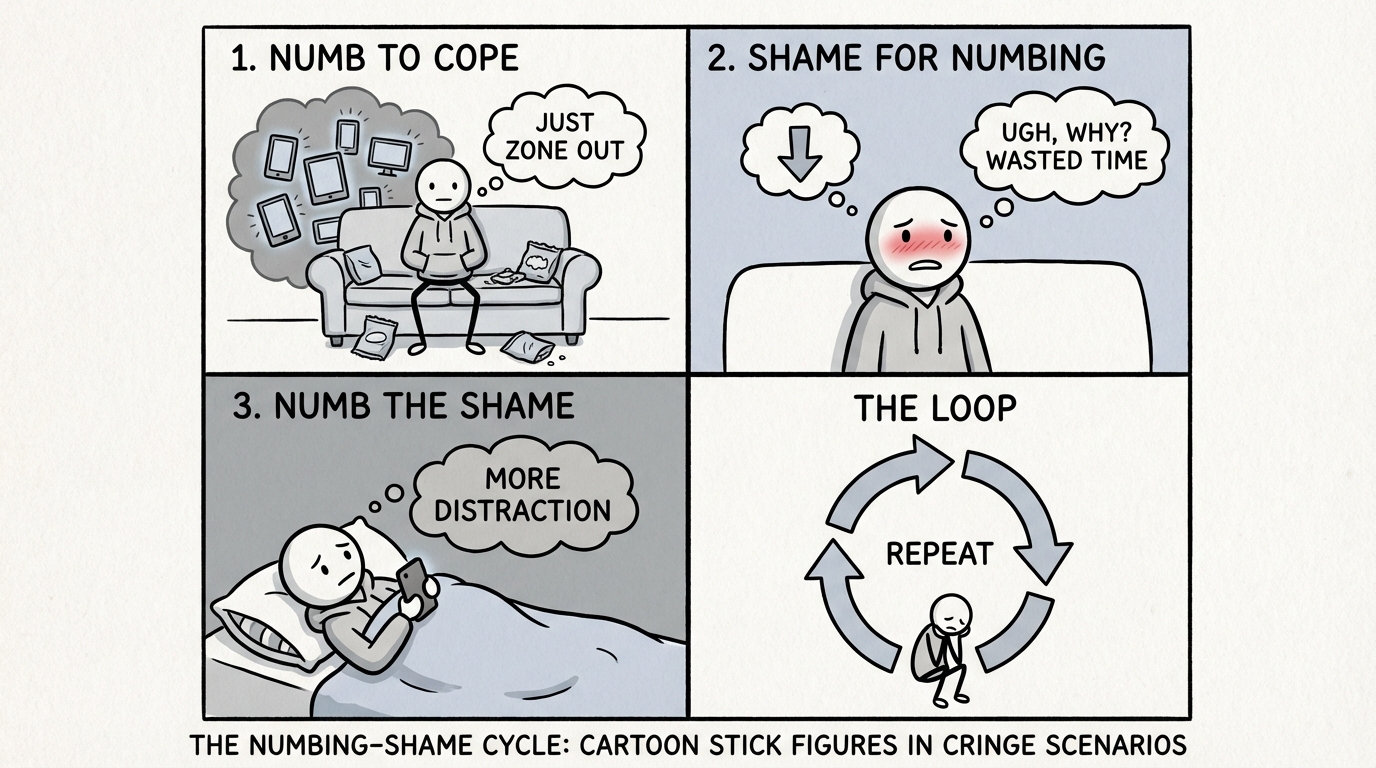
The numbing-shame cycle is one of the most insidious loops in human psychology. It works like this: you feel something painful -- anxiety, loneliness, grief, inadequacy -- and you reach for something to make it stop. Maybe it is food, alcohol, your phone, work, shopping, or another person. For a moment, the numbing works. The sharp edge of the feeling dulls. But then a new feeling arrives: shame. Shame for numbing. Shame for not being stronger, more disciplined, more together. And because shame is one of the most unbearable human emotions, you do the only thing you know how to do -- you numb again. And the cycle repeats. Researcher Brené Brown has called shame the most primitive human emotion, one that whispers 'you are not enough' and drives us toward disconnection. When shame becomes the consequence of your coping, and coping becomes the response to your shame, you end up trapped in a self-reinforcing loop with no obvious exit. The key to breaking the cycle is not willpower, and it is not quitting the numbing behavior through sheer determination -- that approach usually just adds more shame when you inevitably slip. The exit is compassion. Specifically, self-compassion. As Kristin Neff's research has shown, self-compassion interrupts shame in a way that discipline and self-criticism cannot. When you can meet your numbing with curiosity instead of contempt -- asking 'what was I feeling that was so unbearable?' instead of 'what is wrong with me?' -- the cycle begins to lose its grip. You do not numb because you are weak. You numb because you were in pain and did the best you could.
The exit from the numbing-shame cycle is not discipline -- it is meeting your own pain with compassion instead of contempt.
A stick figure on the hamster wheel of numbing, suddenly looking down and noticing the wheel for the first time, eyes widening with recognition
The stick figure stepping off the wheel and sitting with the shame, a kind inner voice saying 'You were in pain and you did the best you could'
The stick figure reaching out to a trusted friend or therapist, breaking the isolation that shame demands, looking vulnerable but brave
The stick figure sitting with a difficult feeling without reaching for the numbing tool, uncomfortable but intact, the cycle broken