The Same Fight, Different Tuesday
A couple has the same argument three different times about three different topics before realizing that the real fight underneath has nothing to do with dishes, texting, or dinner plans.

Why you keep having the same fight -- and what the fight is really about.
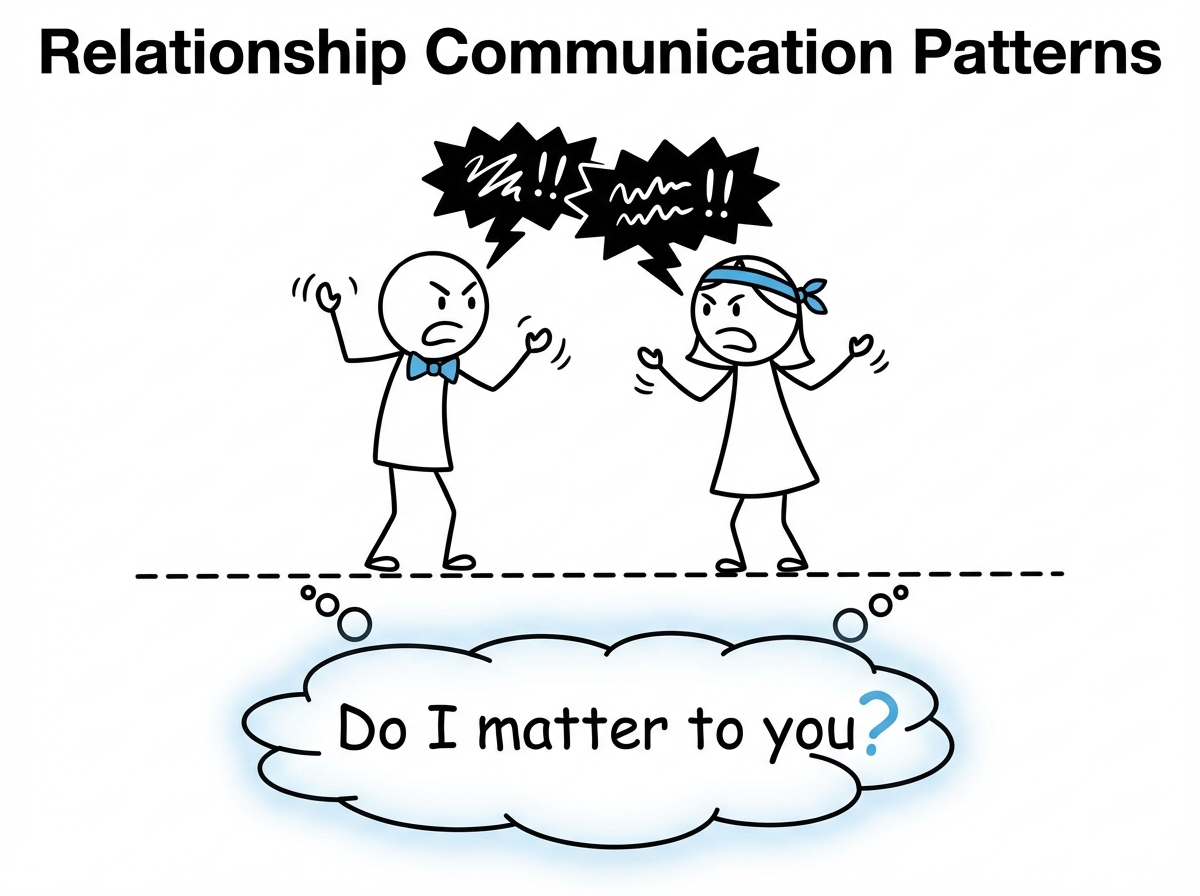
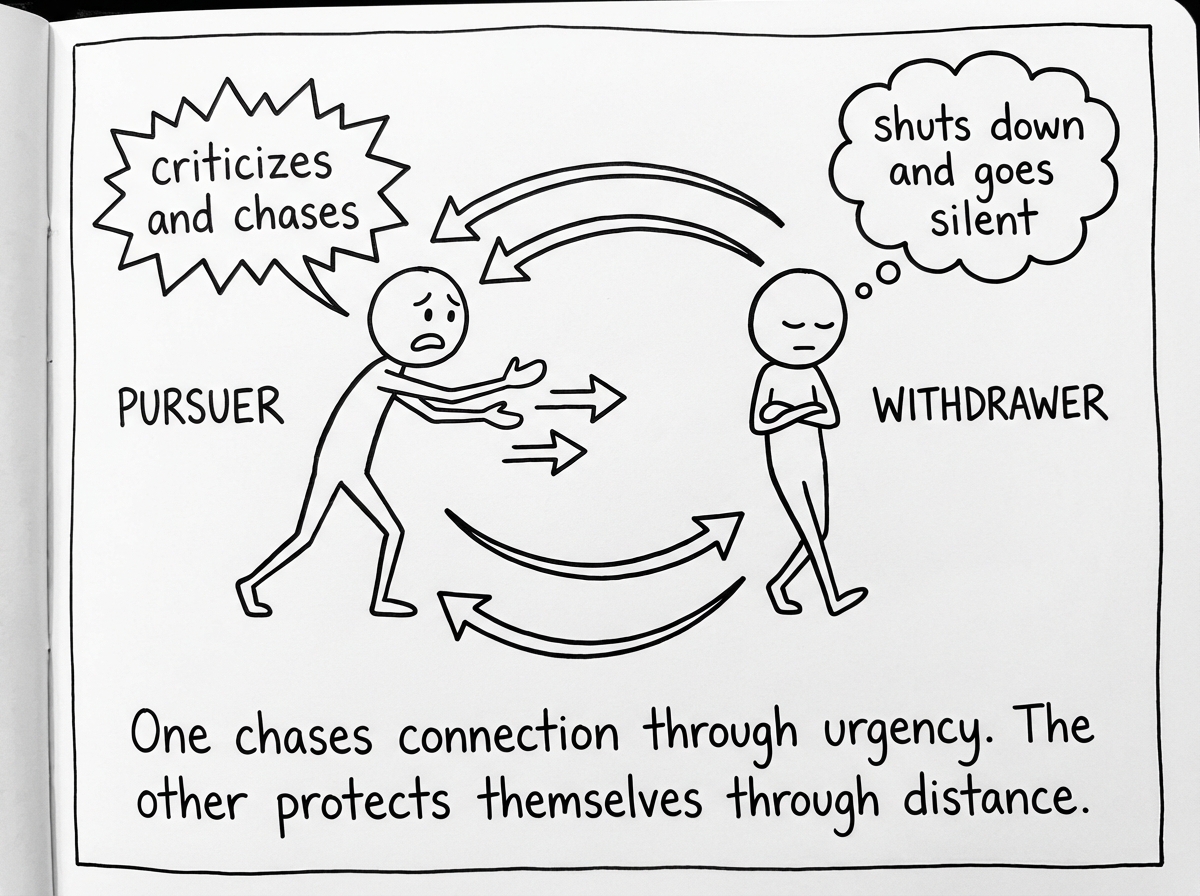
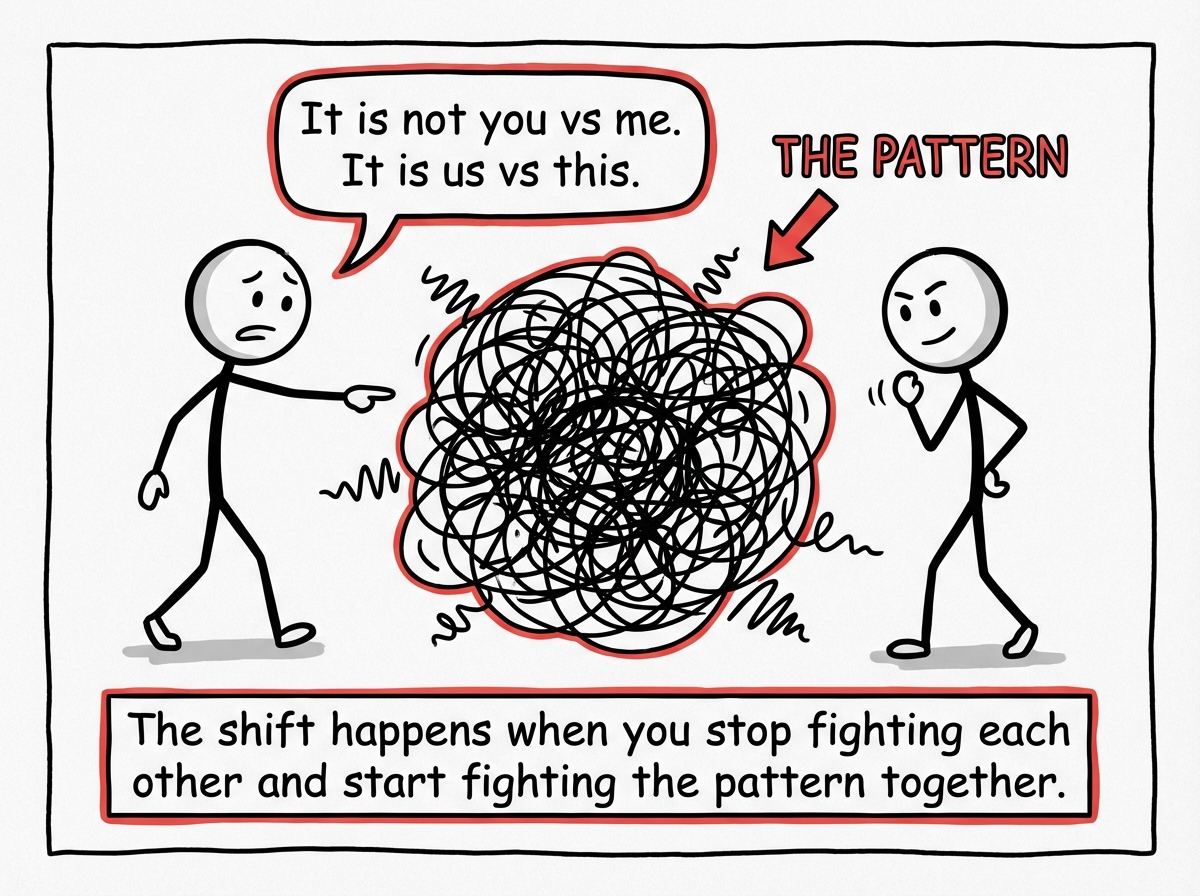
Every couple has a surface-level fight and a deeper fight. The surface fight is about the dishes, the text that was not returned, or who forgot to pick up the groceries. The deeper fight is almost always about one of three things: 'Do you see me? Do I matter to you? Can I count on you?' Emotionally Focused Therapy (EFT), developed by Sue Johnson, identifies these recurring communication cycles as 'negative interaction patterns' -- predictable loops where one partner's move triggers the other's defense, which triggers the first partner's escalation, and around you go. The most common pattern is pursue-withdraw: one partner reaches for connection (often through criticism or urgency), while the other pulls away (through silence, logic, or avoidance). Both are trying to cope with the same fear -- disconnection -- but their strategies make the disconnection worse. John Gottman's research adds that it is not whether couples fight that predicts divorce, but how they fight. Couples who can soften their startup, accept influence, and repair after rupture stay together. Couples who default to the Four Horsemen -- criticism, contempt, defensiveness, and stonewalling -- do not. The good news: communication patterns are learned, which means they can be unlearned. But it requires both people to stop focusing on what the other person is doing wrong and start noticing the pattern itself. You are not fighting each other. You are stuck in a dance, and the dance is the problem.
You are not fighting about the dishes. You are fighting about whether you matter to each other. Once you see the pattern, you can stop blaming the person and start changing the dance.
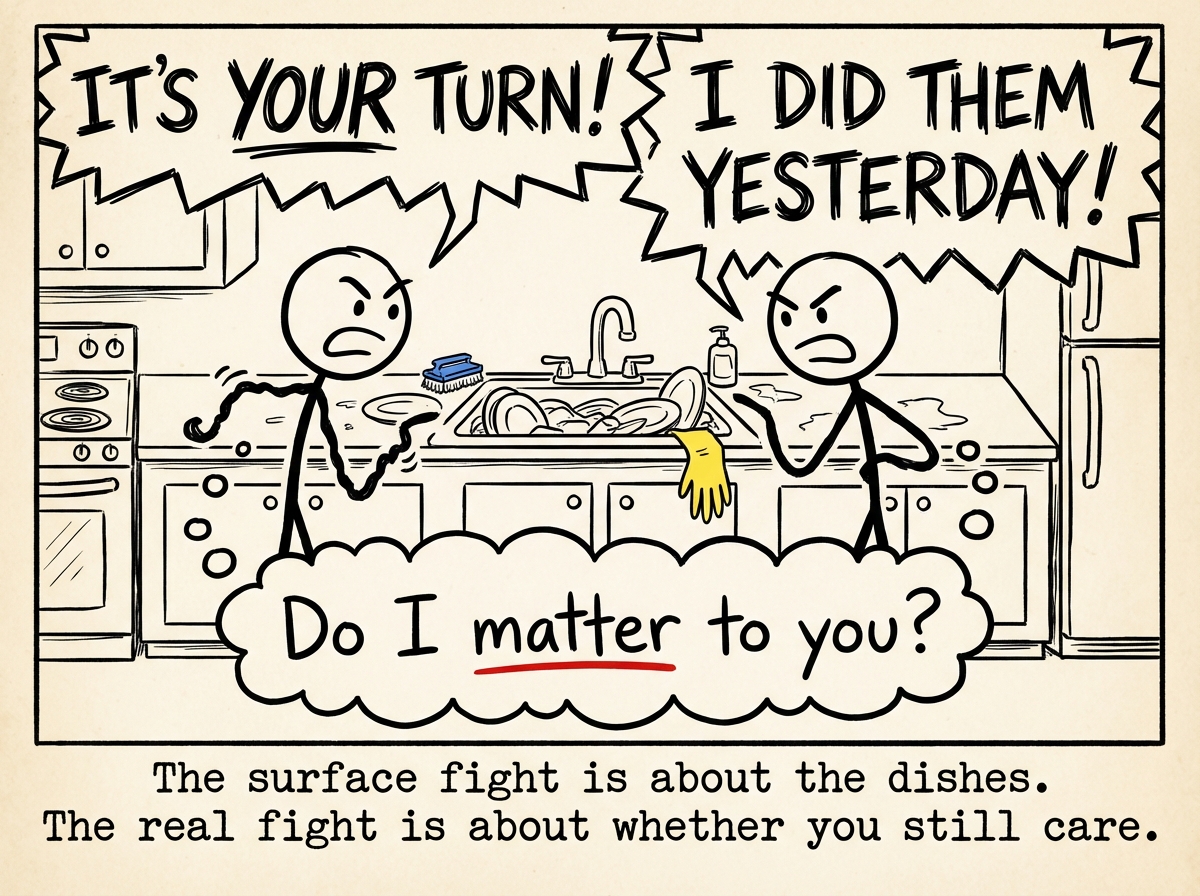
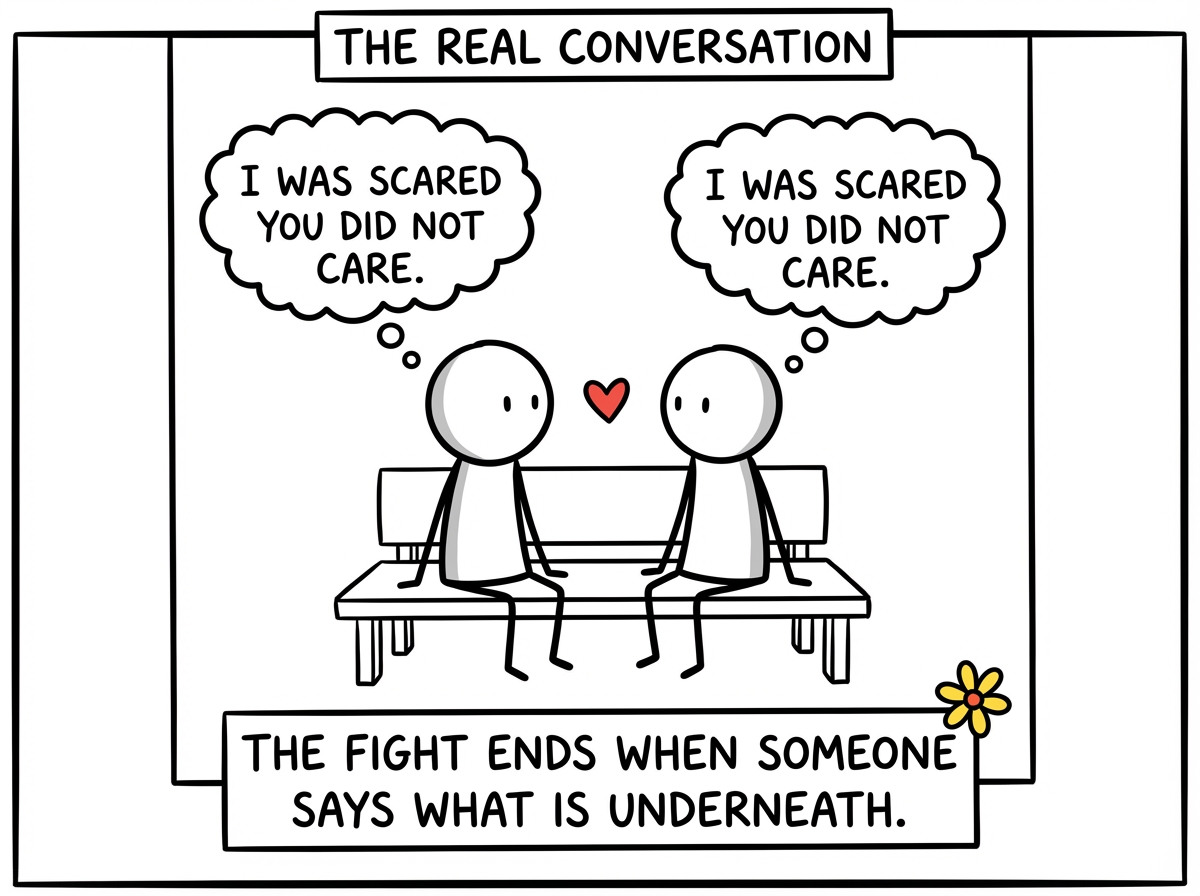
A couple has the same argument three different times about three different topics before realizing that the real fight underneath has nothing to do with dishes, texting, or dinner plans.
Two simple, reasonable statements are run through a partner's nervous system and come out as deeply personal attacks -- illustrating how communication filters distort everything.