The Armor Paradox
A person in emotional armor tries desperately to connect with others, but the very armor that protects them from pain also blocks intimacy -- showing that vulnerability is not weakness but the price of admission to real connection.

Why being emotionally open feels risky, and why it matters for real connection.
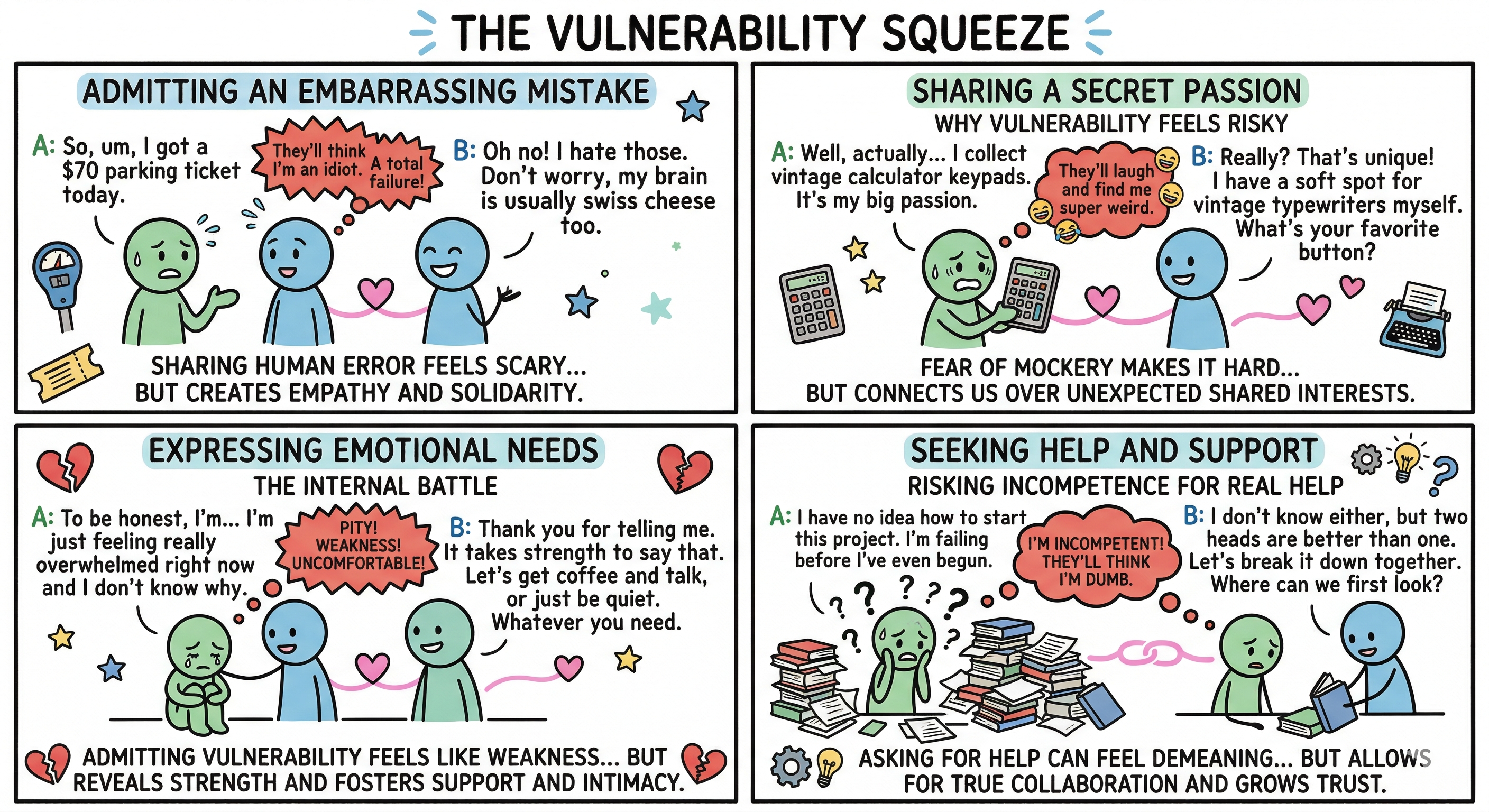
Vulnerability is the willingness to show up emotionally without knowing how the other person will respond. It means expressing your true feelings, admitting mistakes, asking for help, or sharing something personal -- even when it feels uncomfortable. Researcher Brene Brown defines vulnerability as 'uncertainty, risk, and emotional exposure,' and her work shows that it is not weakness but the birthplace of connection, belonging, and love. Most people learn to avoid vulnerability early in life -- through experiences of being mocked, dismissed, or punished for being open. Over time, you build walls: humor deflects, intellectualizing replaces feeling, and independence becomes a shield against needing anyone. The paradox is that the walls you build to protect yourself are the same walls that prevent intimacy. You cannot selectively numb emotions -- if you shut out pain, you also shut out joy. Practicing vulnerability does not mean oversharing with everyone; it means choosing to be honest in relationships where safety and trust exist.
Vulnerability is not removing all your armor at once -- it is taking off one piece with one safe person and seeing what happens.
A stick figure in full emotional armor, noticing that they feel lonely even though they are safe, with a thought bubble: 'Protected but alone'
The figure identifying one safe person and choosing one small honest thing to share: 'I have been struggling lately'
The safe person responding with 'Thank you for telling me' while the figure feels the discomfort of being seen -- and survives it
The figure with one piece of armor removed, standing a little lighter, with a hand extended toward connection