The Productive Escape Artist
A person being applauded for working 80-hour weeks while their emotions, relationships, and body hold up signs begging for attention behind them.

The only addiction that gets you promoted.
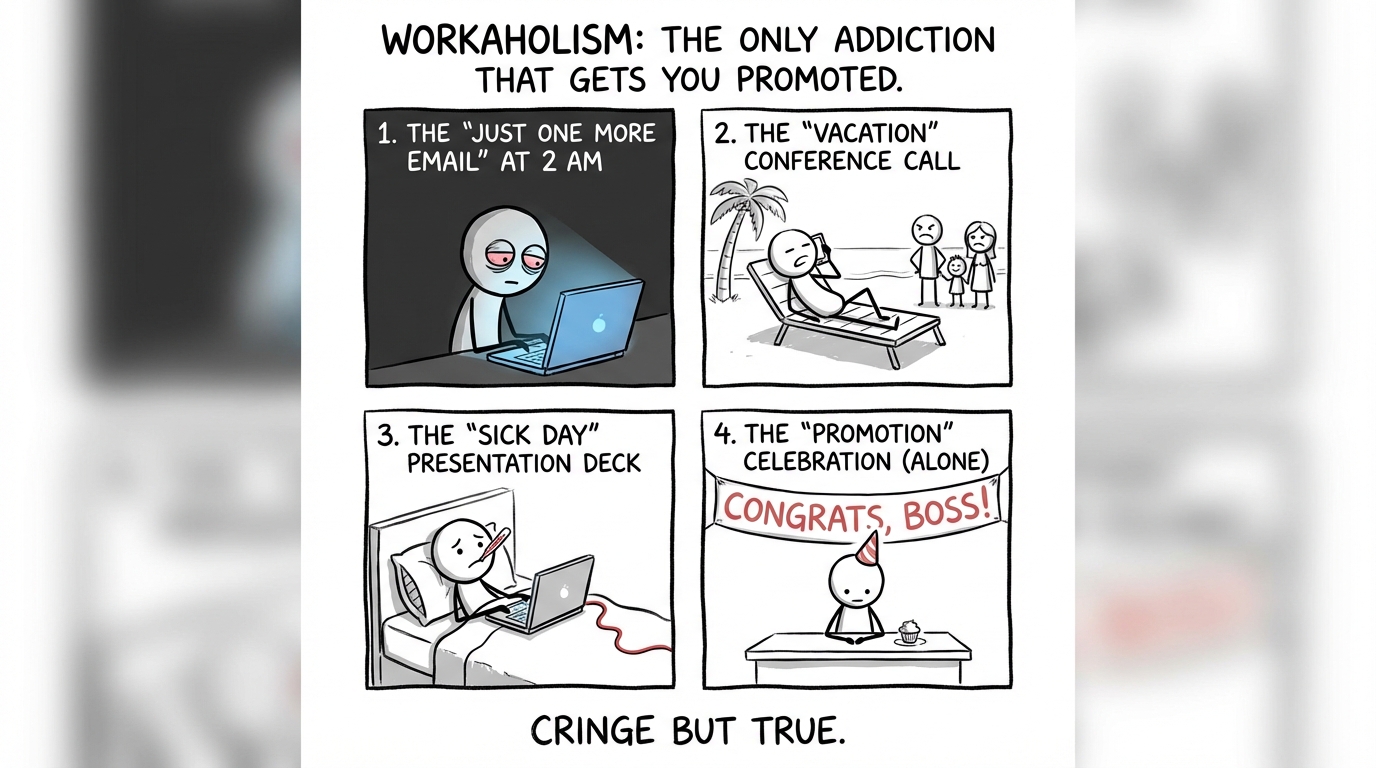
Workaholism is perhaps the most socially rewarded form of avoidance. You get praised for it. You get promoted for it. People call you dedicated, ambitious, driven. But underneath the productivity, workaholism often functions like any other addiction -- it is a way to escape feelings you do not want to sit with. Loneliness, inadequacy, grief, fear of stillness, unresolved trauma -- all of it can be drowned out by the noise of being perpetually busy. Researcher Bryan Robinson, who spent decades studying workaholism, defined it as an obsessive-compulsive relationship with work that continues despite negative consequences to health, relationships, and well-being. Unlike healthy engagement with meaningful work, workaholism is driven not by passion but by compulsion -- the inability to stop, even when you want to. The key distinction is this: healthy workers work to live; workaholics live to avoid. When you peel back the layers, workaholism often reveals a deep belief that your worth is entirely conditional on your output. Rest feels dangerous because it means confronting who you are when you are not producing. And in a culture that celebrates hustle and demonizes rest, this belief is constantly reinforced. Recovery from workaholism does not mean becoming lazy or unambitious. It means learning to tolerate stillness, to find your worth outside of what you do, and to recognize that your busyness -- however impressive it looks from the outside -- may be the very thing keeping you from the life you actually want.
Recovery from workaholism starts with the terrifying act of doing nothing -- and discovering you are still someone even when you are not producing.
A stick figure closing their laptop at 6pm, hands trembling, the urge to keep working screaming in their chest, but choosing to stop anyway
The stick figure sitting on a couch doing nothing, feeling waves of guilt and restlessness, but staying still instead of reaching for a task
The stick figure doing something purposeless and enjoyable -- playing with a pet, cooking slowly, watching a sunset -- no output, no metric, no audience
The stick figure resting peacefully, realizing their worth did not disappear when the productivity stopped, a gentle expression of surprise