Cart Therapy
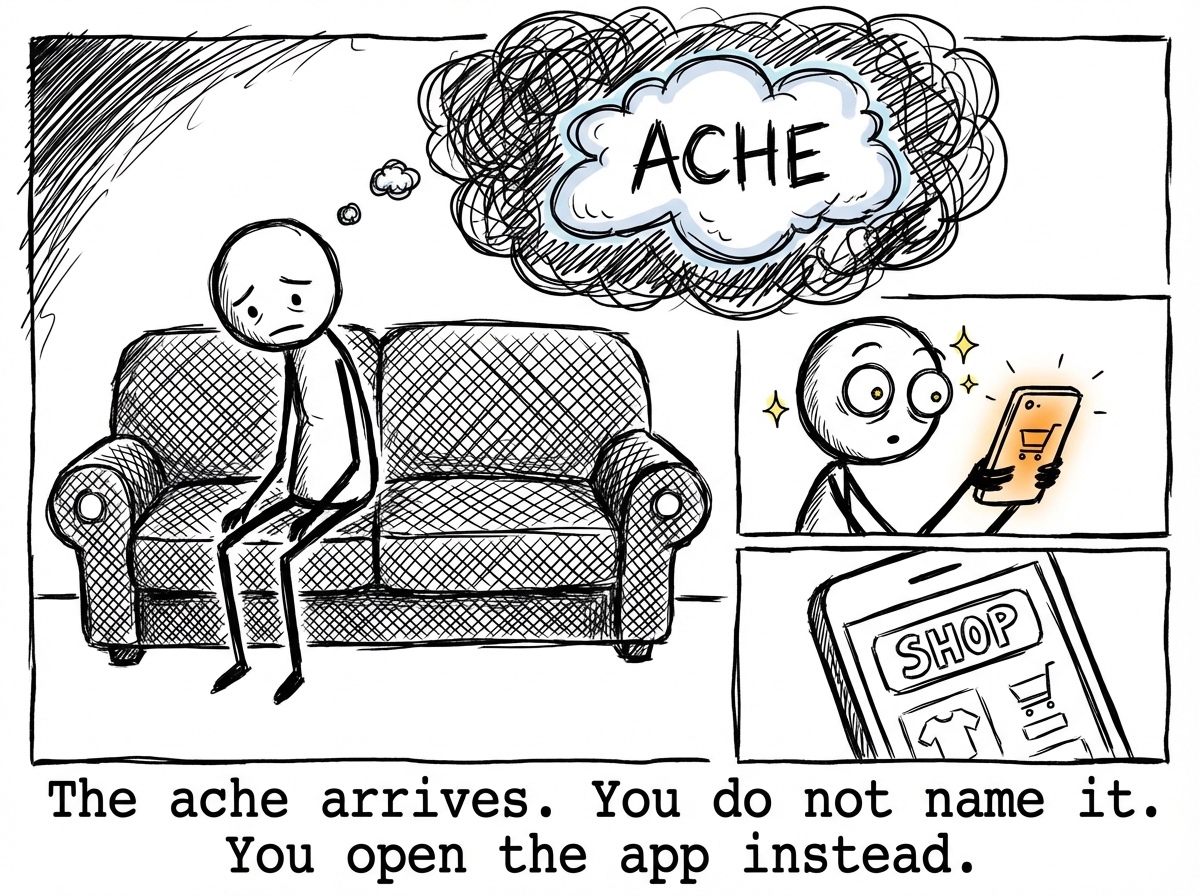
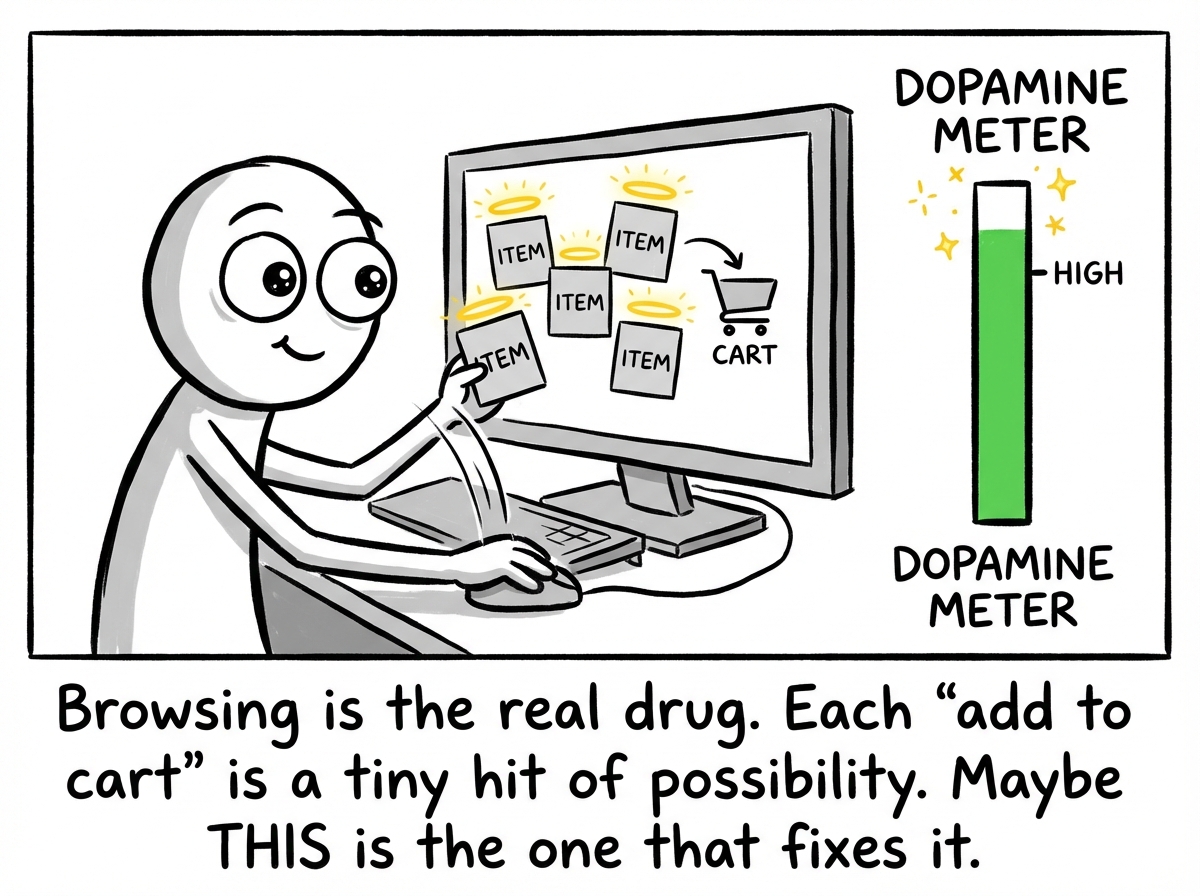
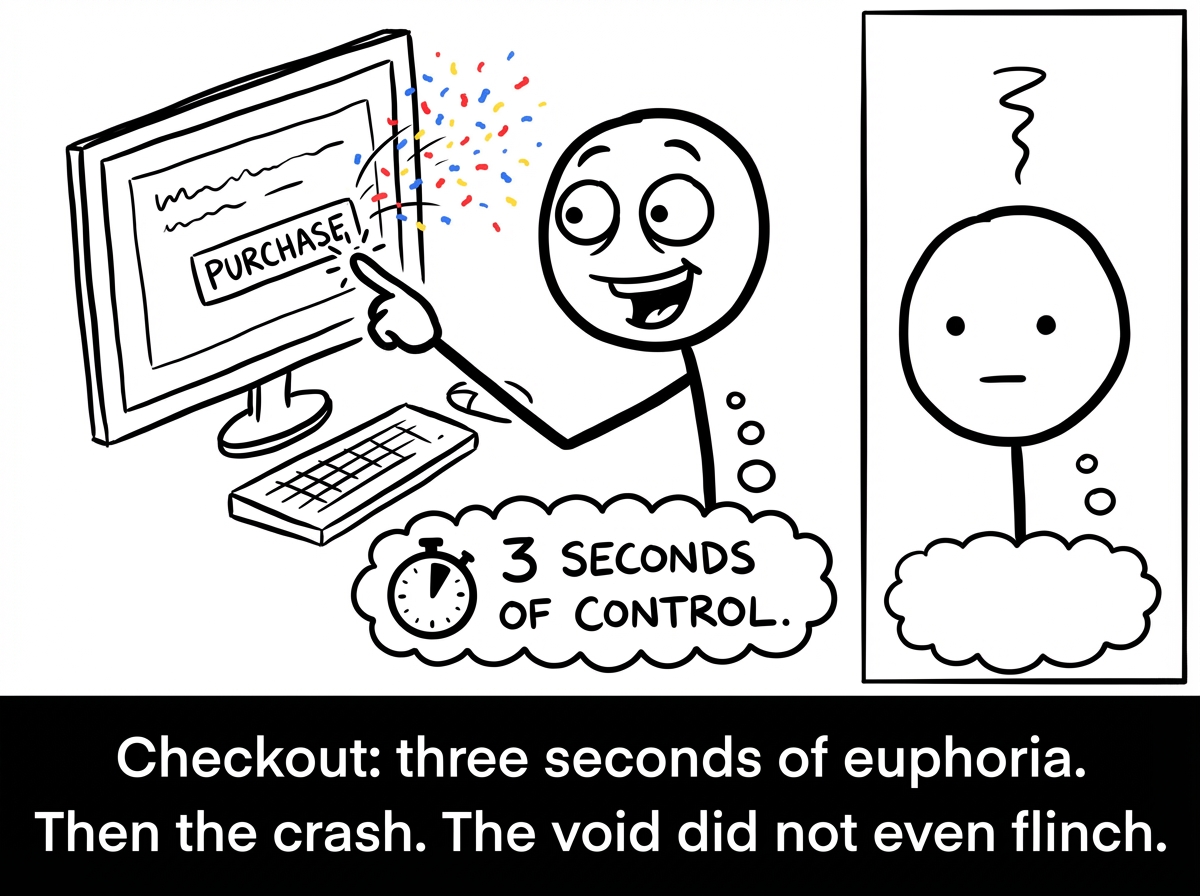
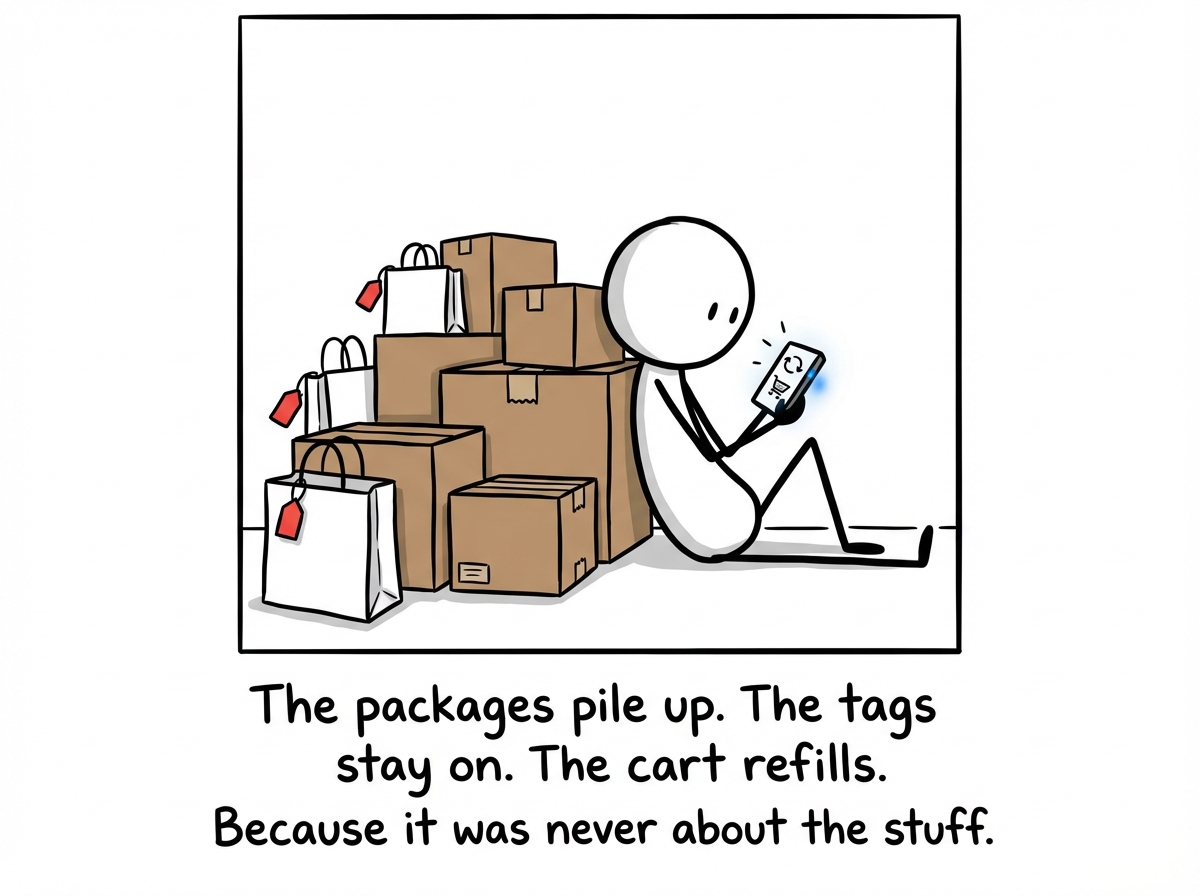
A person fills online shopping carts to feel alive, experiences a brief euphoria at checkout, then crashes into guilt -- surrounded by unopened packages and emptiness.
Explanation
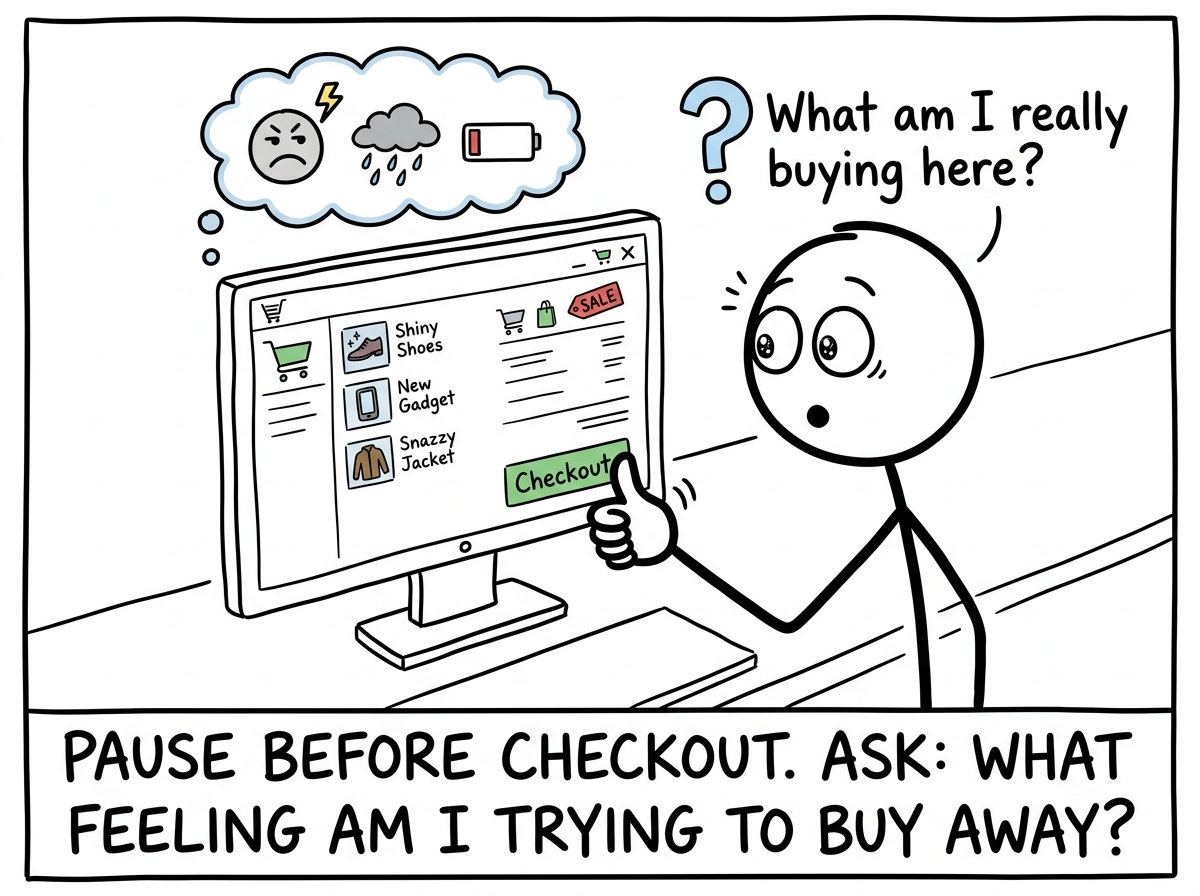
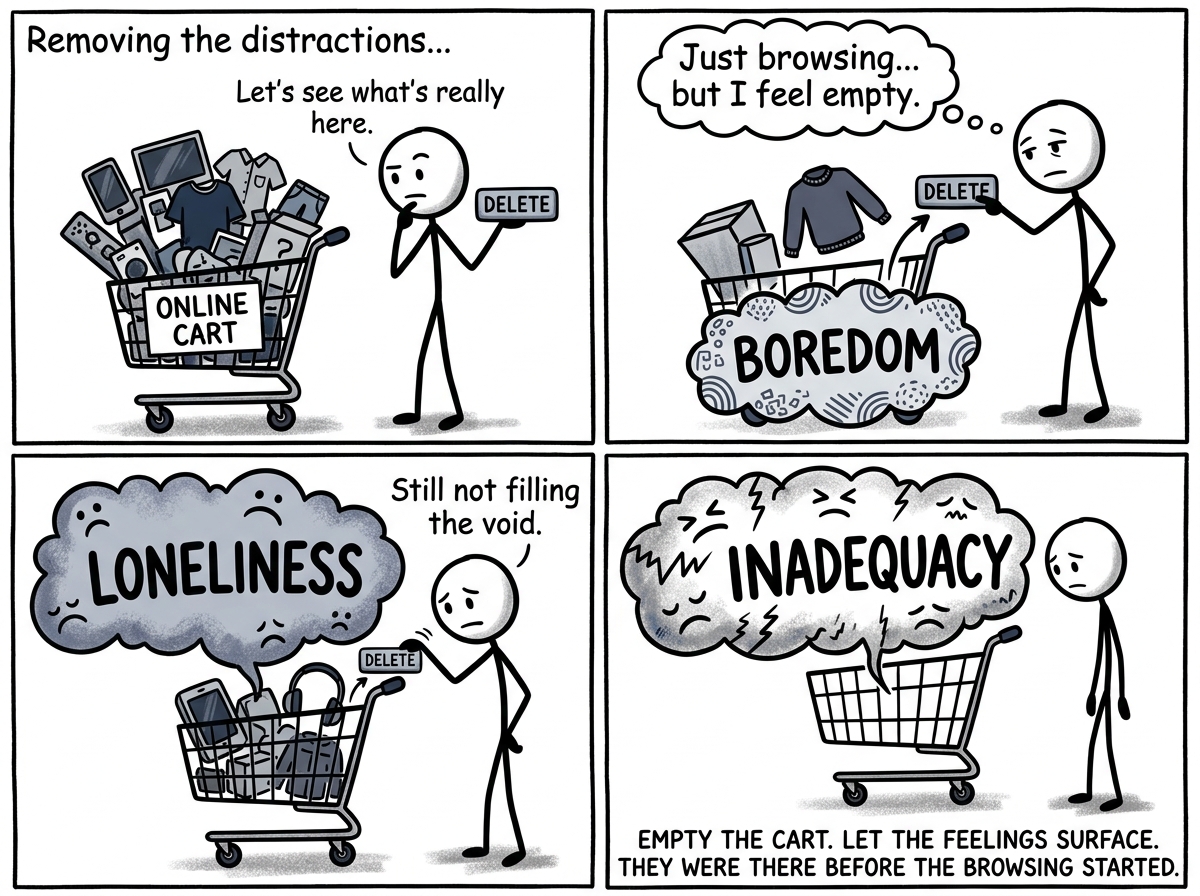
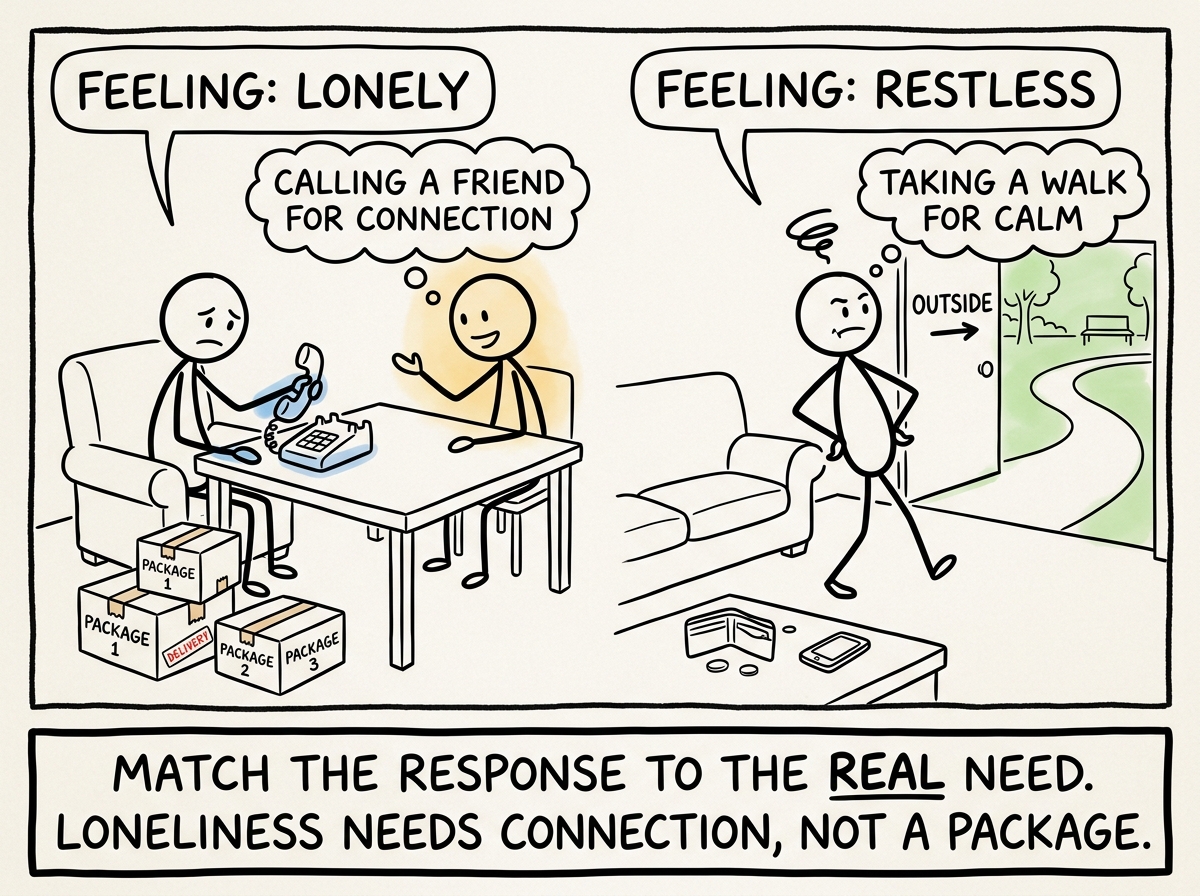
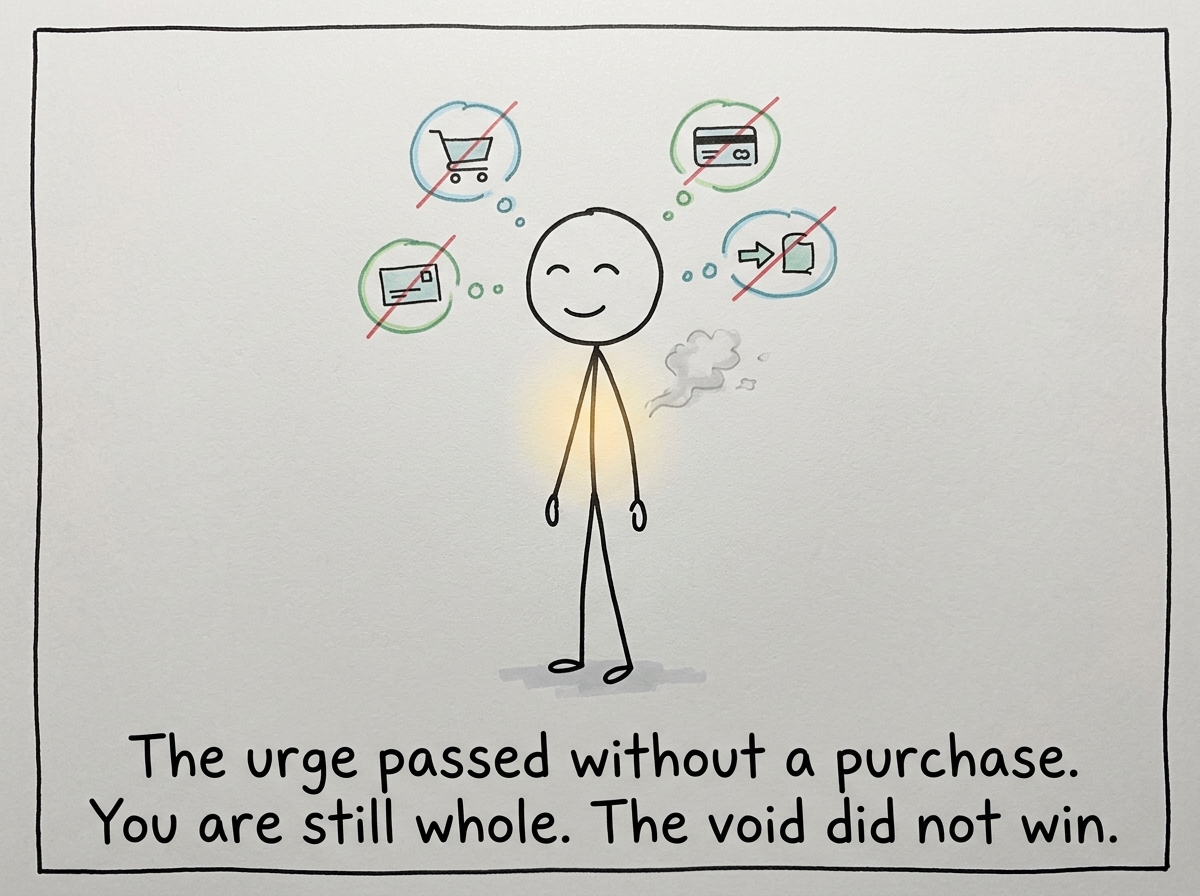
The feeling starts before you even buy anything. It is the browsing, the comparing, the adding to cart. Each item represents a tiny promise: this sweater will make you feel put-together, this gadget will make you feel capable, this purchase will fill the unnamed void that has been following you around all week. For thirty glorious seconds after clicking 'buy,' you feel alive. In control. Like something has been solved. Then the confirmation email arrives, and so does the familiar crash -- guilt, shame, and the slow realization that the void is exactly the same size it was before, just now with a tracking number. Compulsive buying disorder operates on the same dopamine-anticipation loop as other behavioral addictions. Lorrin Koran's research at Stanford found that the strongest emotional spike occurs not during the purchase itself but during the anticipation phase -- the searching, the imagining, the fantasy of who you will be once you own this thing. The actual acquisition is often anticlimactic, which is why so many compulsive buyers have closets full of items with tags still on and packages they never opened. The purchase was never about the object. It was about the thirty seconds of relief from an emotional state you could not tolerate. Recovery from shopping addiction requires looking beneath the cart. What were you feeling five minutes before you opened the browser? Boredom, loneliness, inadequacy, anxiety -- the cart is not a shopping list, it is an emotional prescription. Learning to read it that way is the beginning of buying less and feeling more.
Key Takeaway
The cart is not full of things you want -- it is full of feelings you are trying not to have.