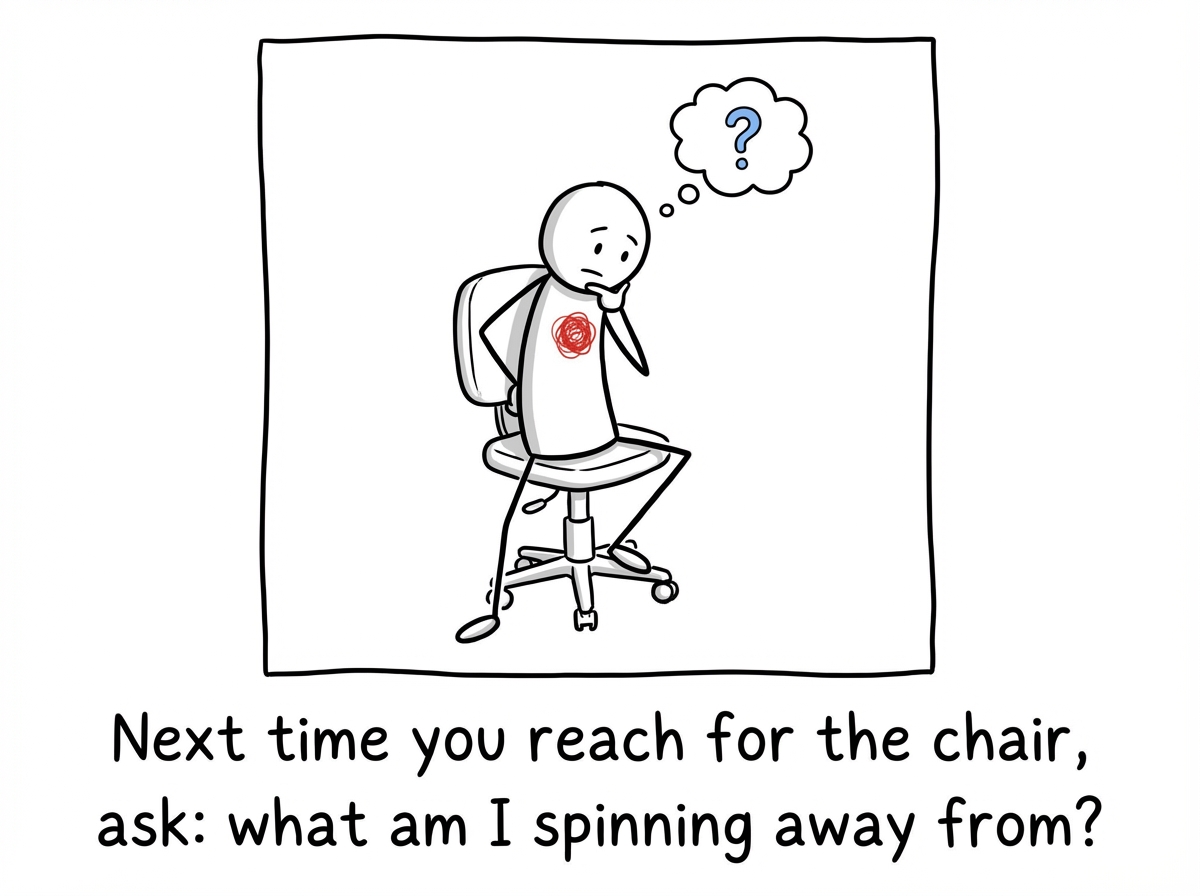
The Spinning Chair of Doom
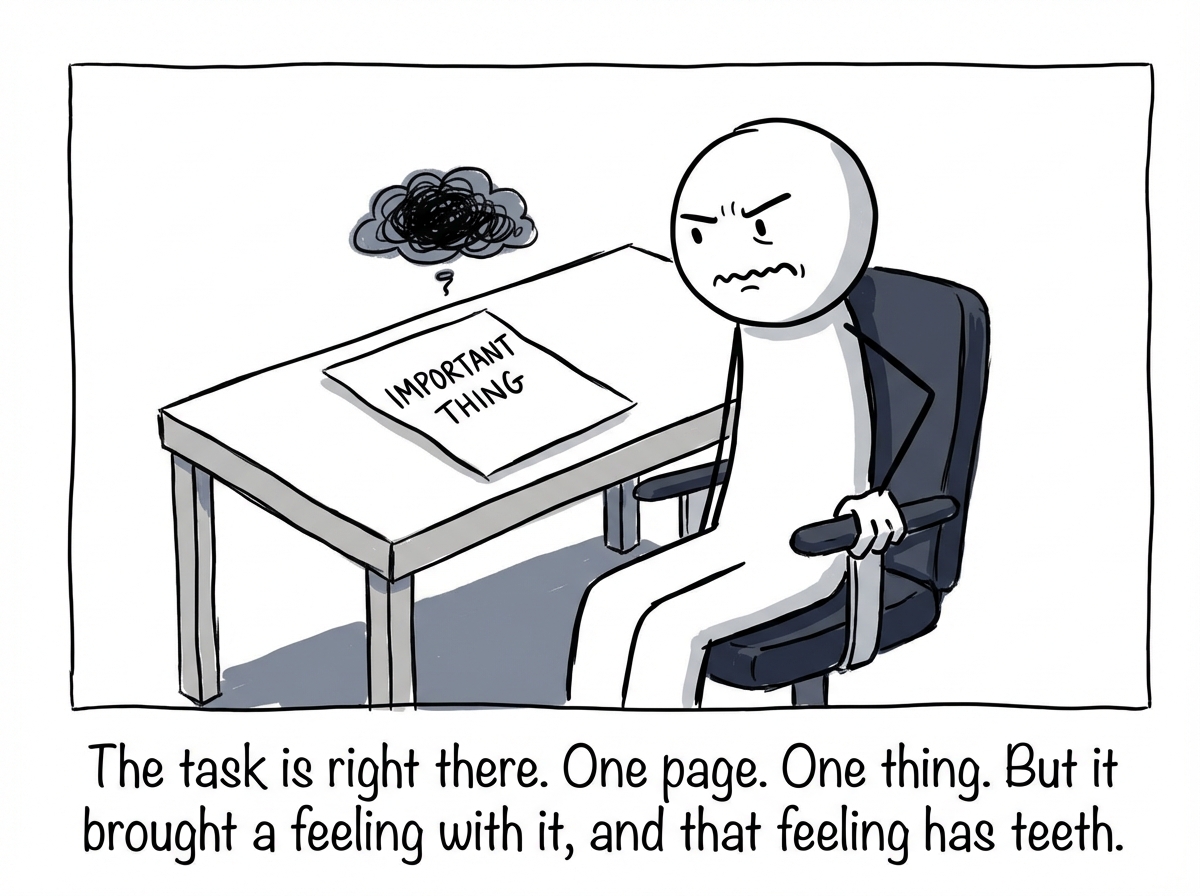
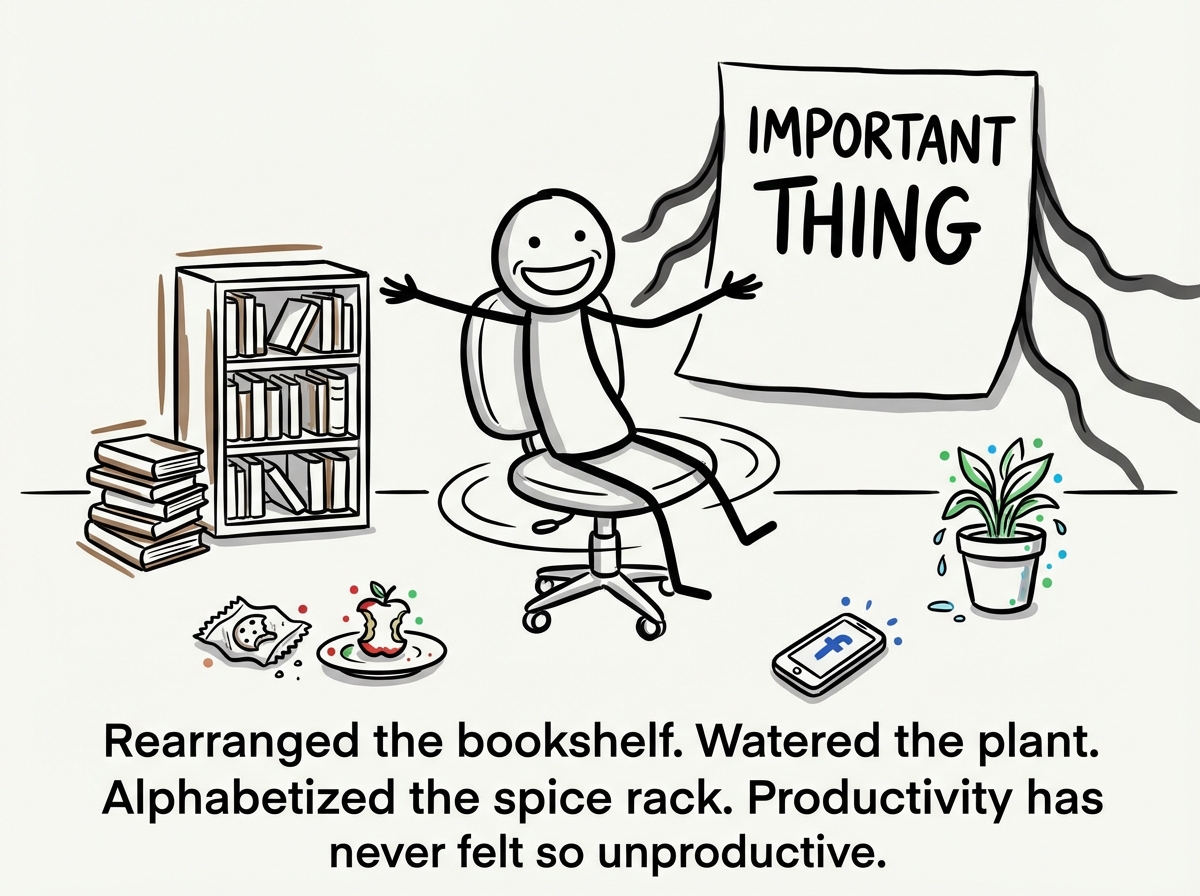
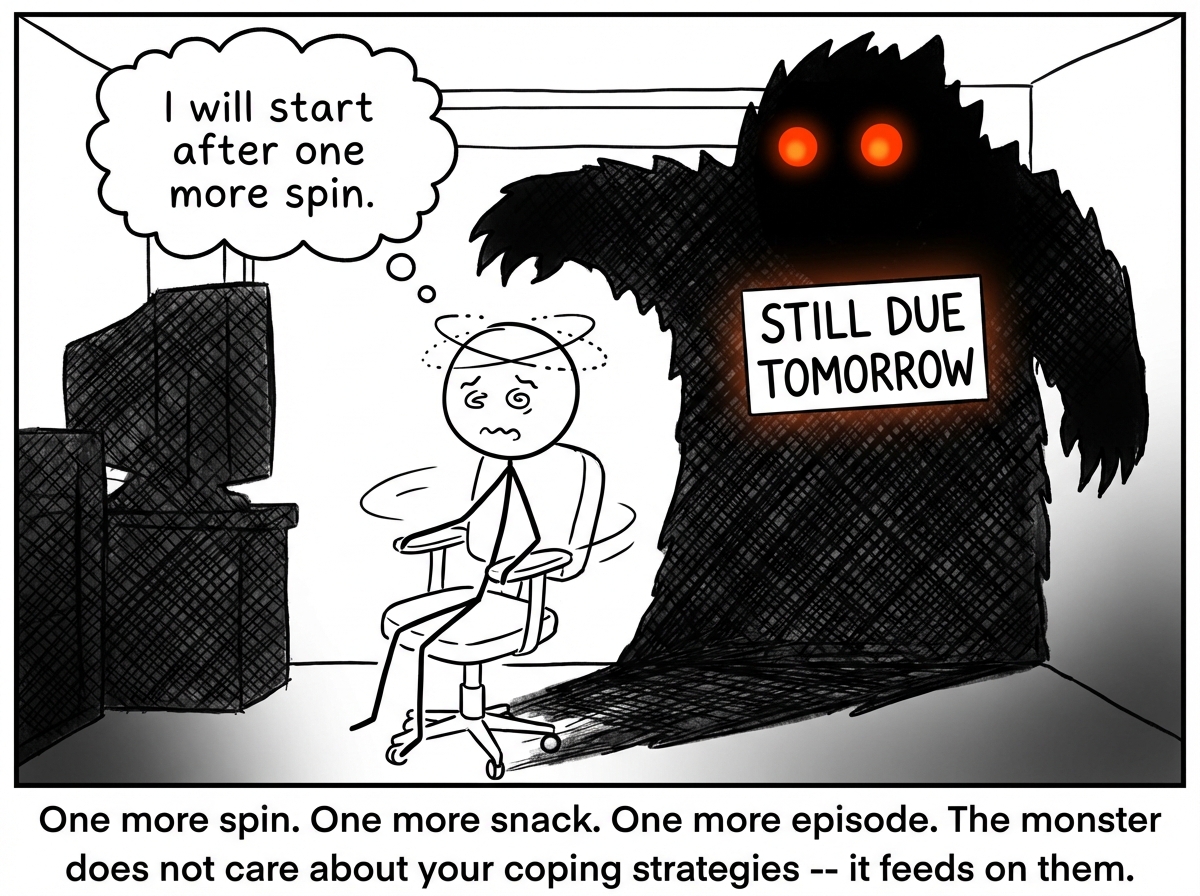
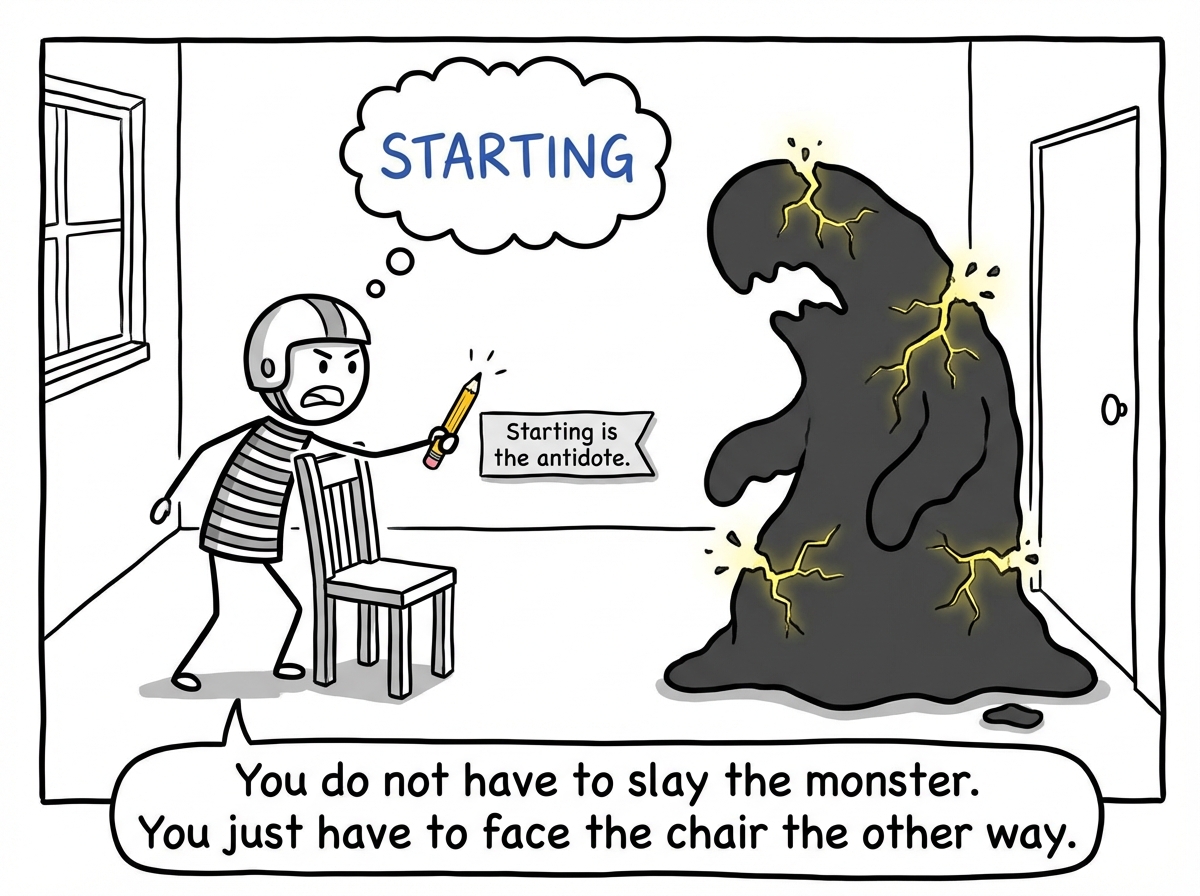
A person spins in their desk chair doing literally anything except the one task that matters, while the task grows into a monster behind them.
Explanation
Procrastination is not a character flaw -- it is a misguided emotional regulation strategy. When a task triggers anxiety, frustration, or self-doubt, the brain instinctively reaches for relief. Spinning in a chair, reorganizing a desk, scrolling through memes -- these are not laziness, they are anesthesia. Dr. Tim Pychyl's research at Carleton University demonstrates that procrastinators consistently report high levels of negative emotion before avoidance and temporary relief after it, confirming that the cycle is driven by feeling management, not time management. The tragedy is that the avoided task does not shrink while you spin. It grows. The anxiety compounds, the deadline closes in, and the emotional cost of starting increases with every rotation. The monster behind the chair was never the task itself -- it was the feeling you refused to sit with. Breaking the cycle requires a counterintuitive move: instead of waiting until you feel ready, you start while feeling terrible, and let the momentum of action regulate the emotion that avoidance never could.
Key Takeaway
Every spin of the chair is a vote against your future self -- and the monster only grows while your back is turned.