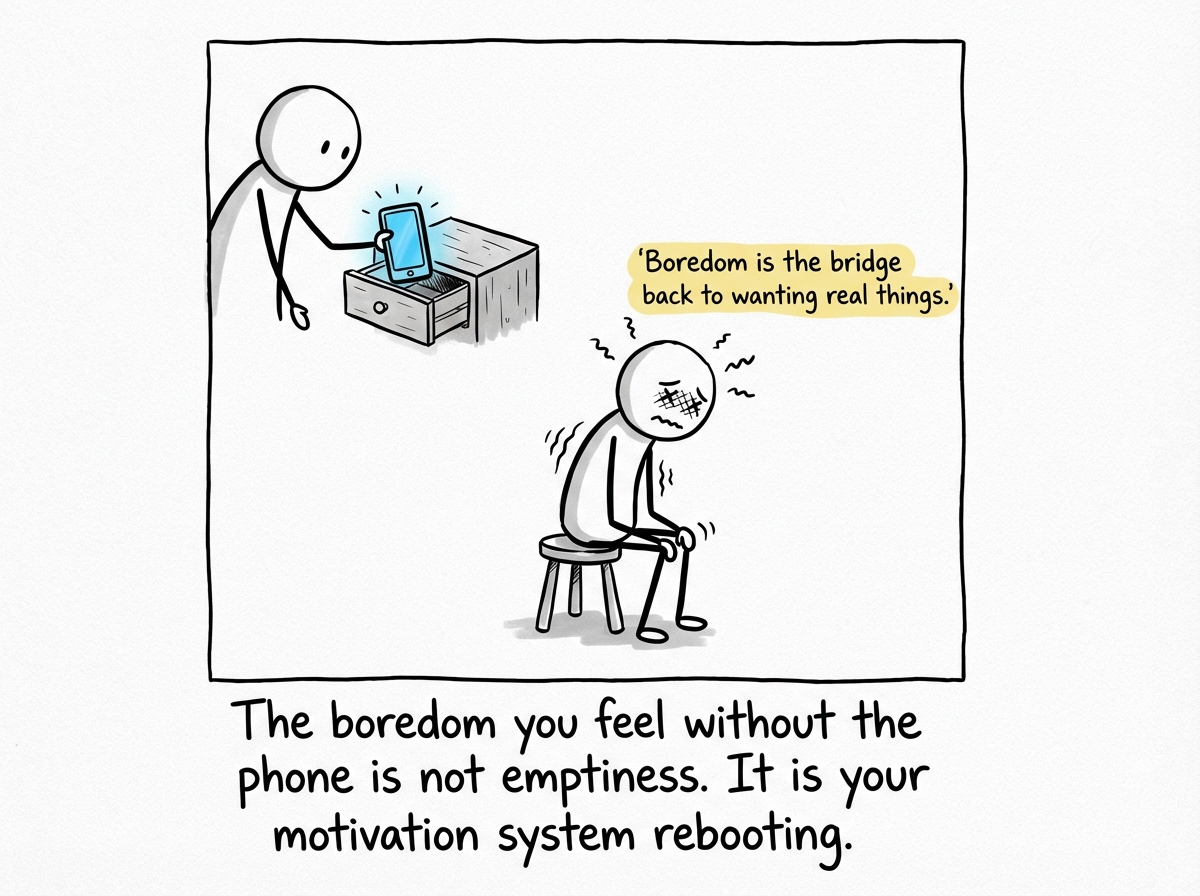
The Scroll That Ate Tomorrow
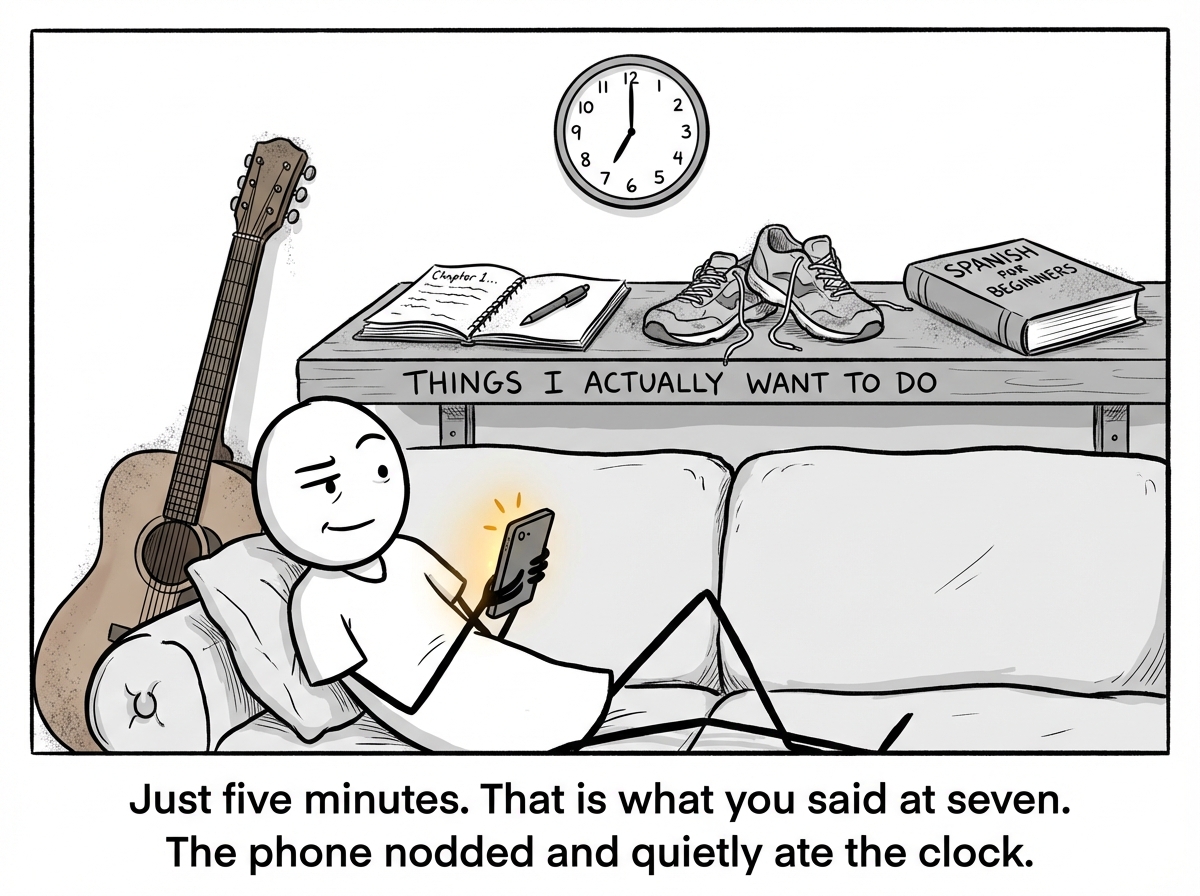
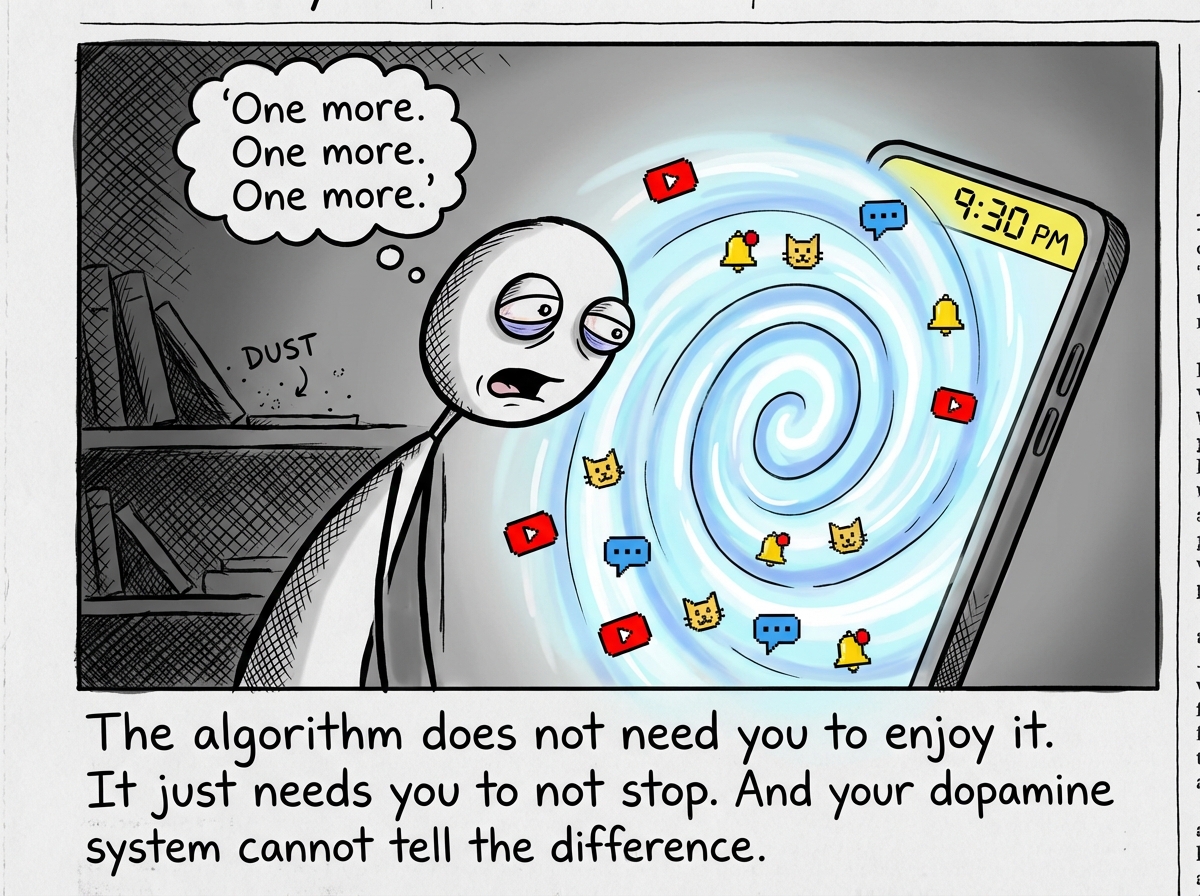
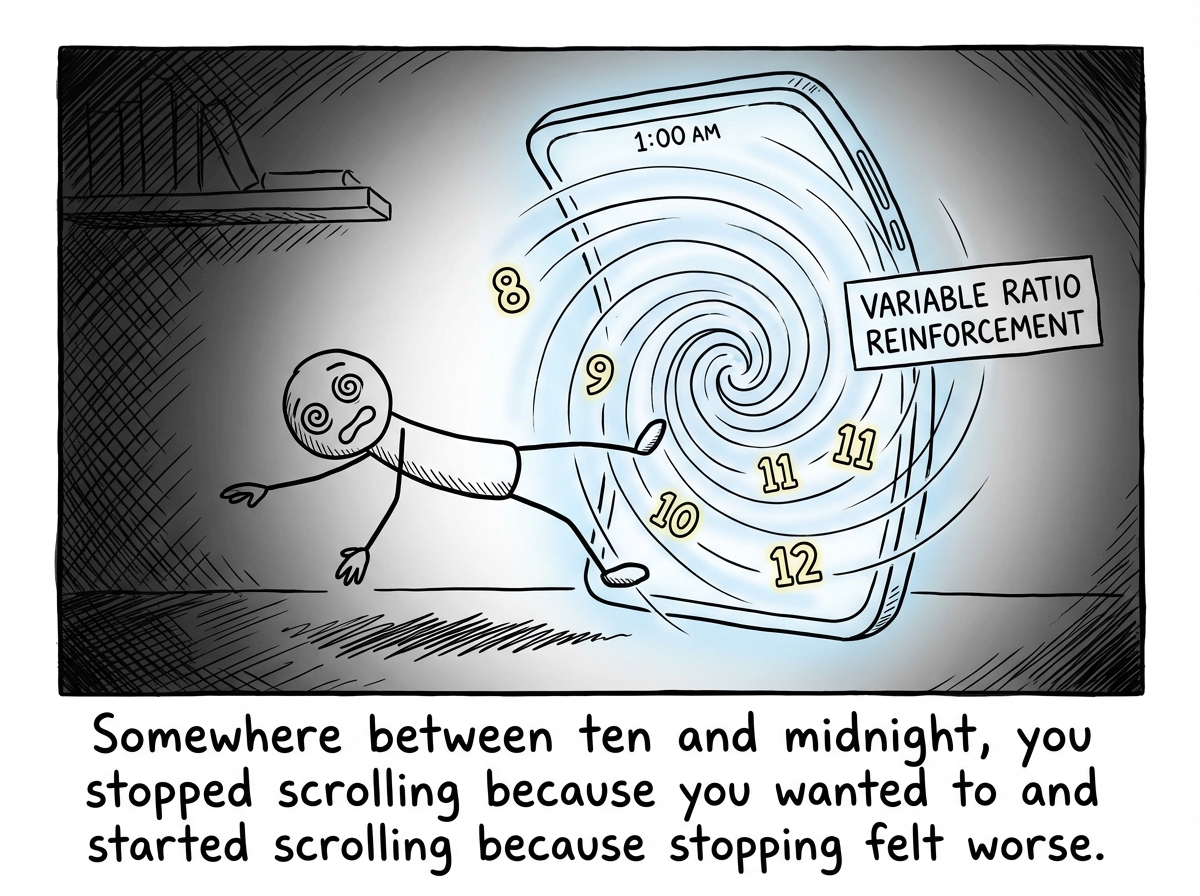
A phone screen grows into a whirlpool consuming hours of a person's day while their real goals sit dusty on a shelf behind them.
Explanation
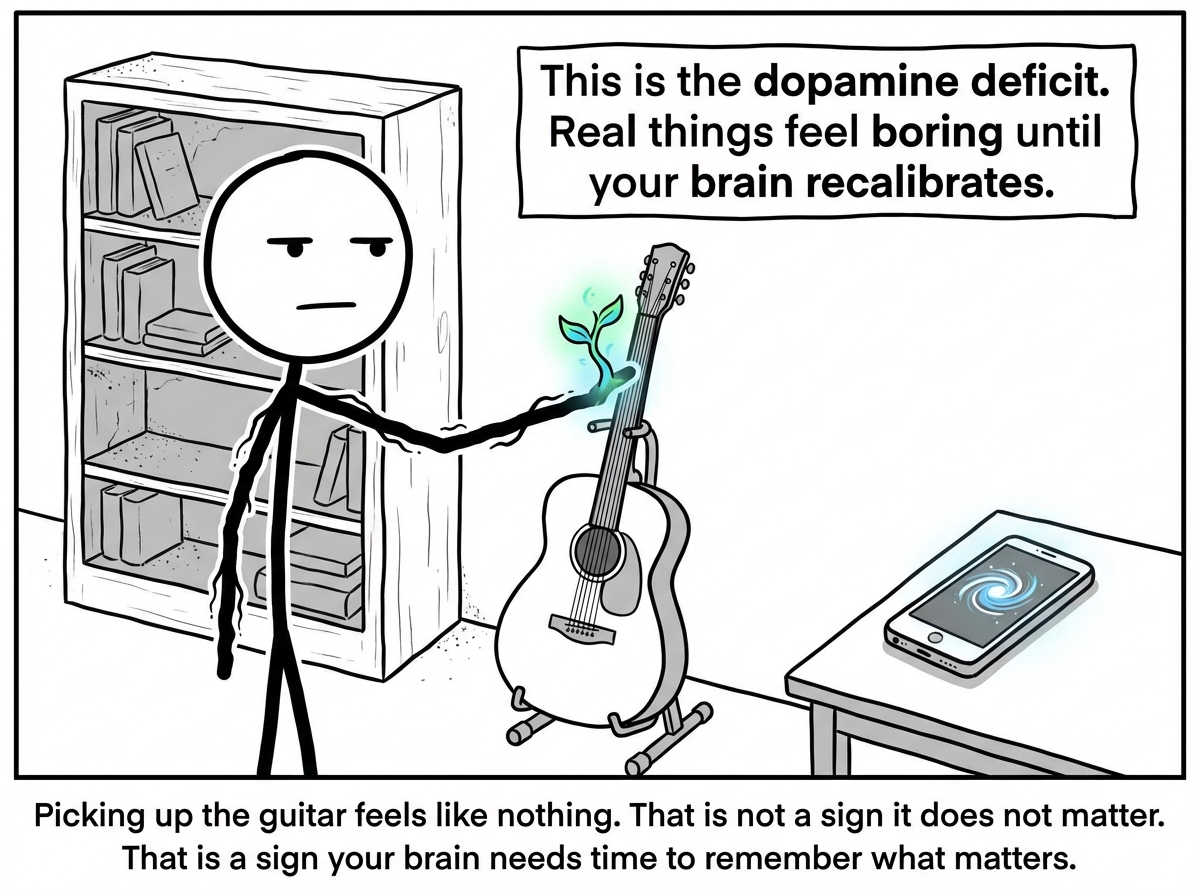
Your phone is not a distraction -- it is a superstimulus. Engineered by teams of behavioral psychologists and UX designers, social media feeds deliver variable-ratio reinforcement: the same reward schedule that makes slot machines addictive. Each scroll might yield something amazing, so your dopamine system stays locked in anticipation mode, releasing just enough neurochemical fuel to keep you scrolling but never enough to feel satisfied. Meanwhile, your brain's baseline dopamine drops. Dr. Anna Lembke, author of 'Dopamine Nation,' explains that chronic exposure to high-dopamine stimuli causes the brain to downregulate its receptors, creating a 'dopamine deficit state' where natural rewards -- the satisfaction of finishing a chapter, the quiet pleasure of a walk, the pride of completing meaningful work -- feel dull and inadequate. The goals on the shelf are not less important than they were. They just cannot compete with a device that delivers novelty every three seconds. The scroll does not just steal your time. It rewires what feels rewarding, making the very goals you care about feel neurologically boring.
Key Takeaway
The scroll did not steal your time -- it stole your ability to want anything that takes longer than three seconds to deliver.