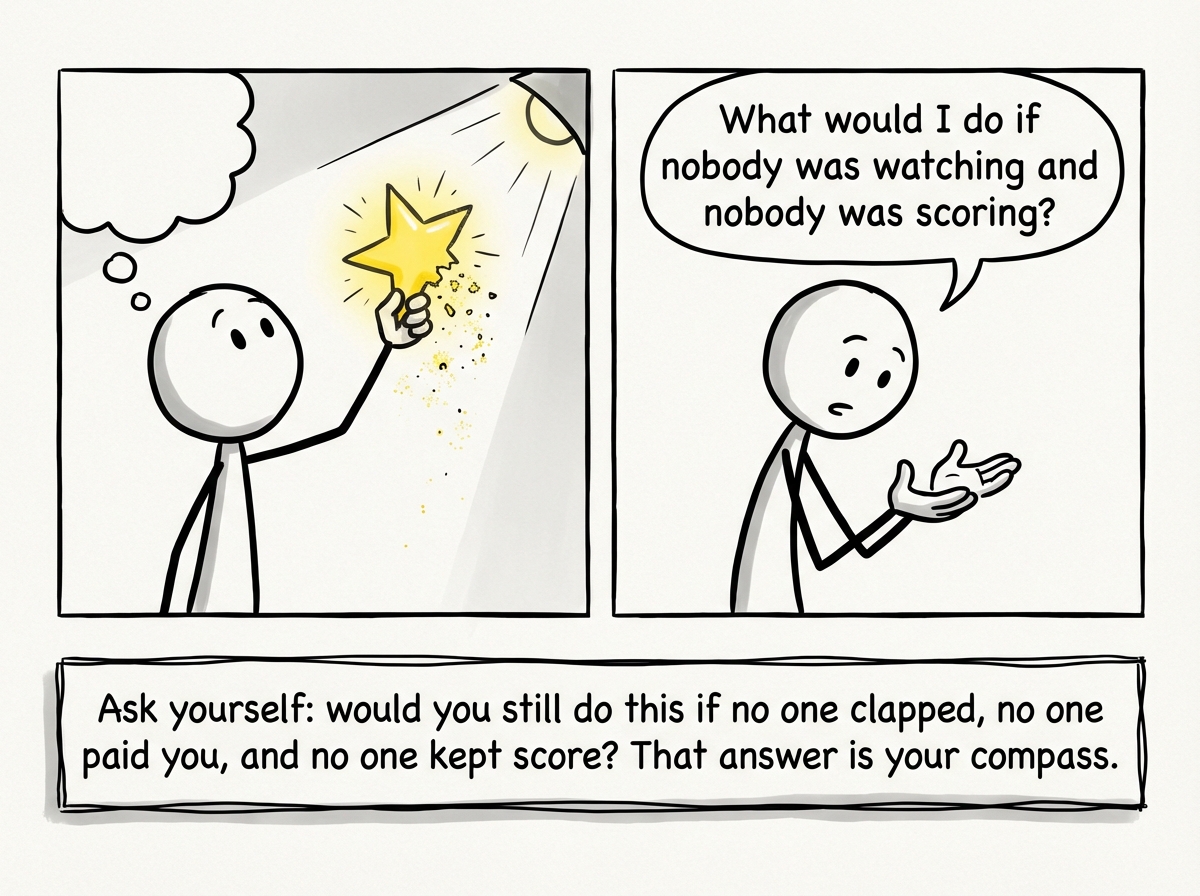
The Gold Star Treadmill
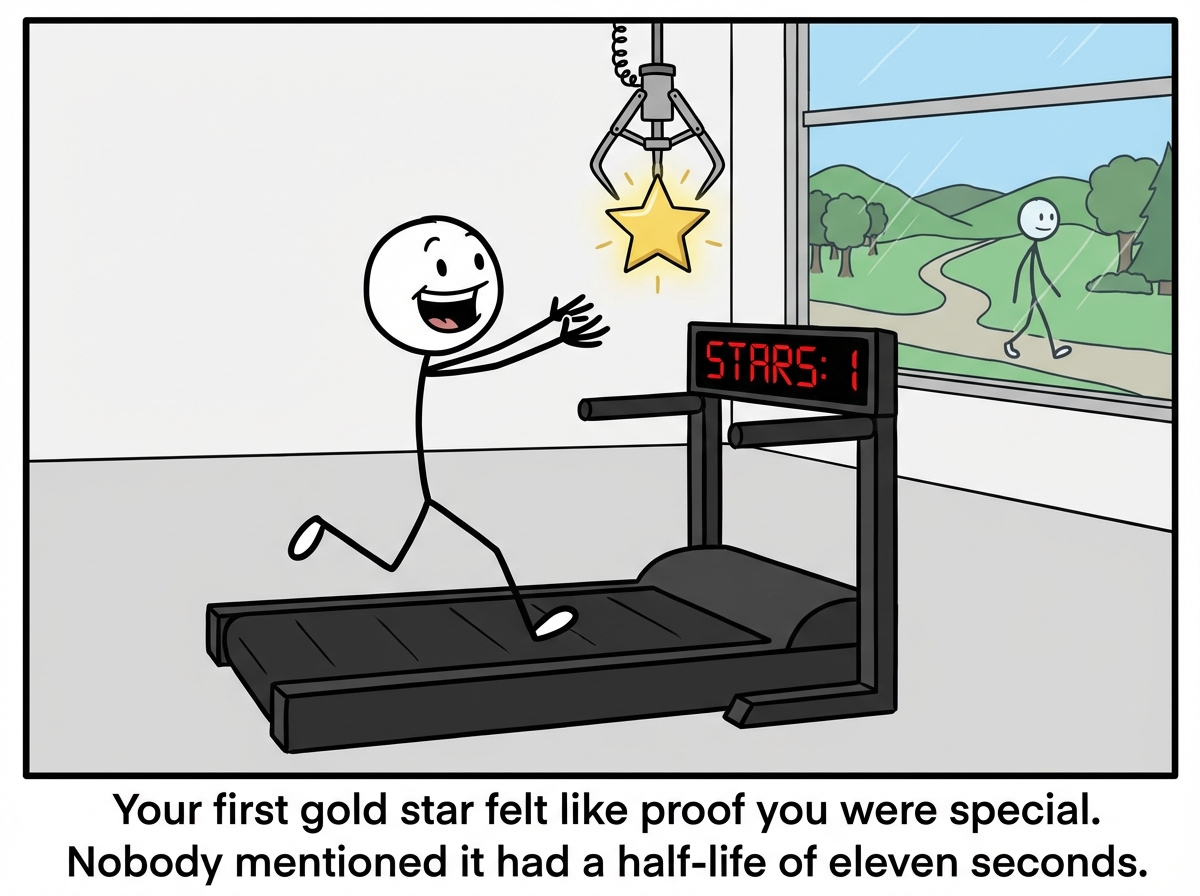
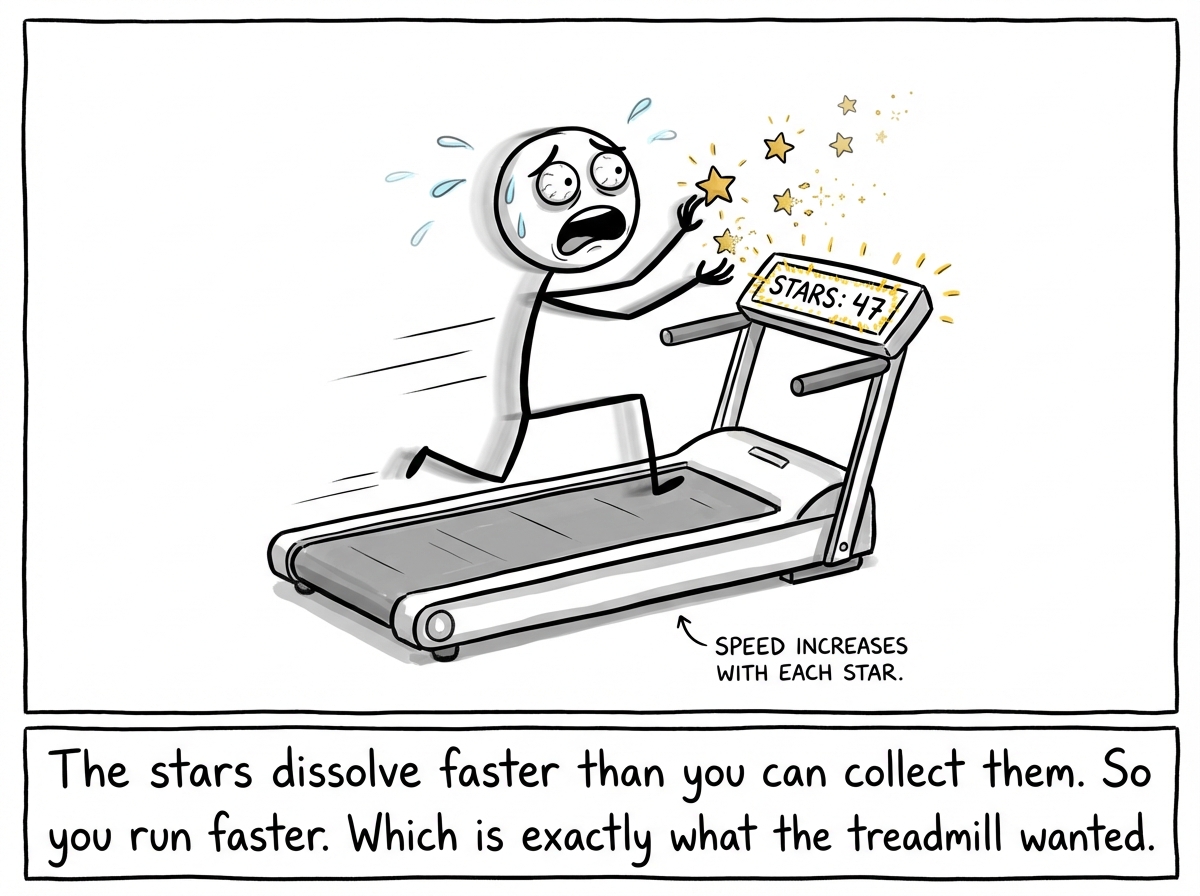
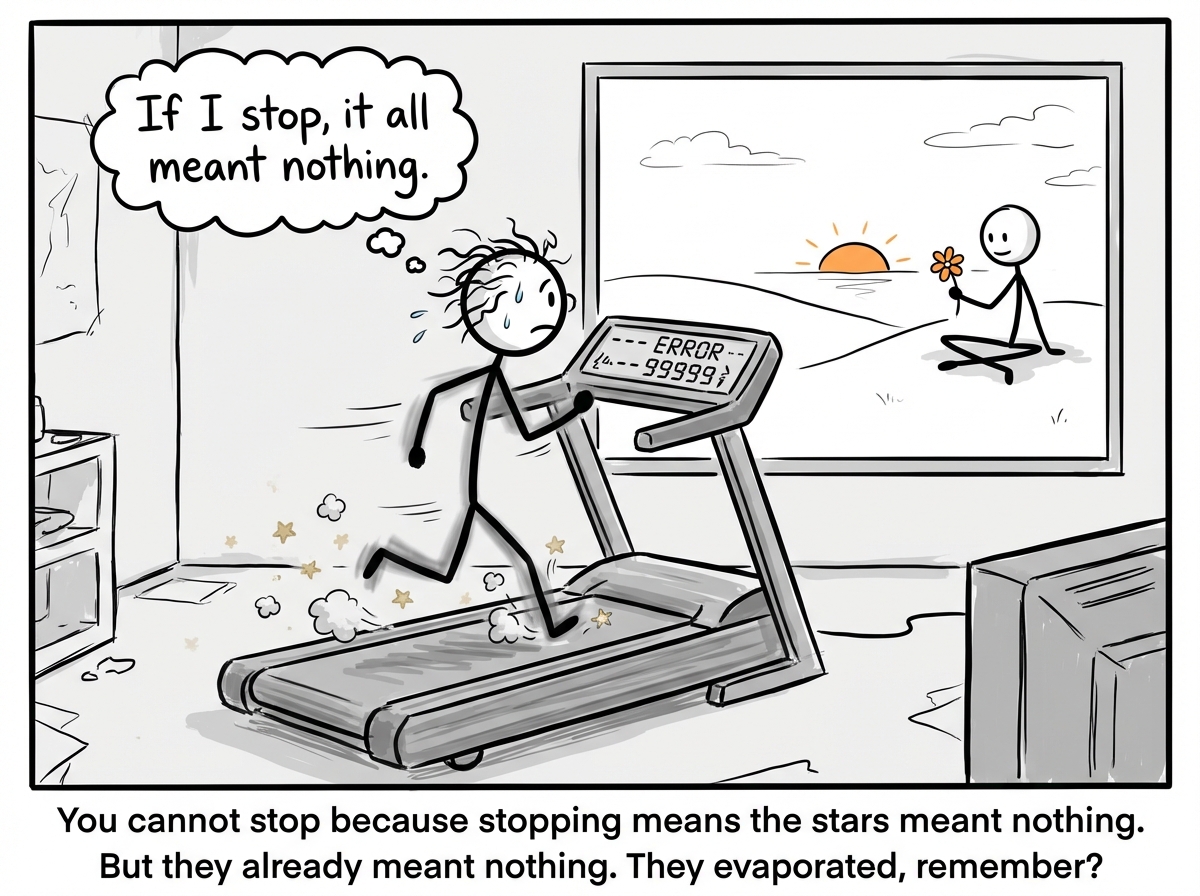
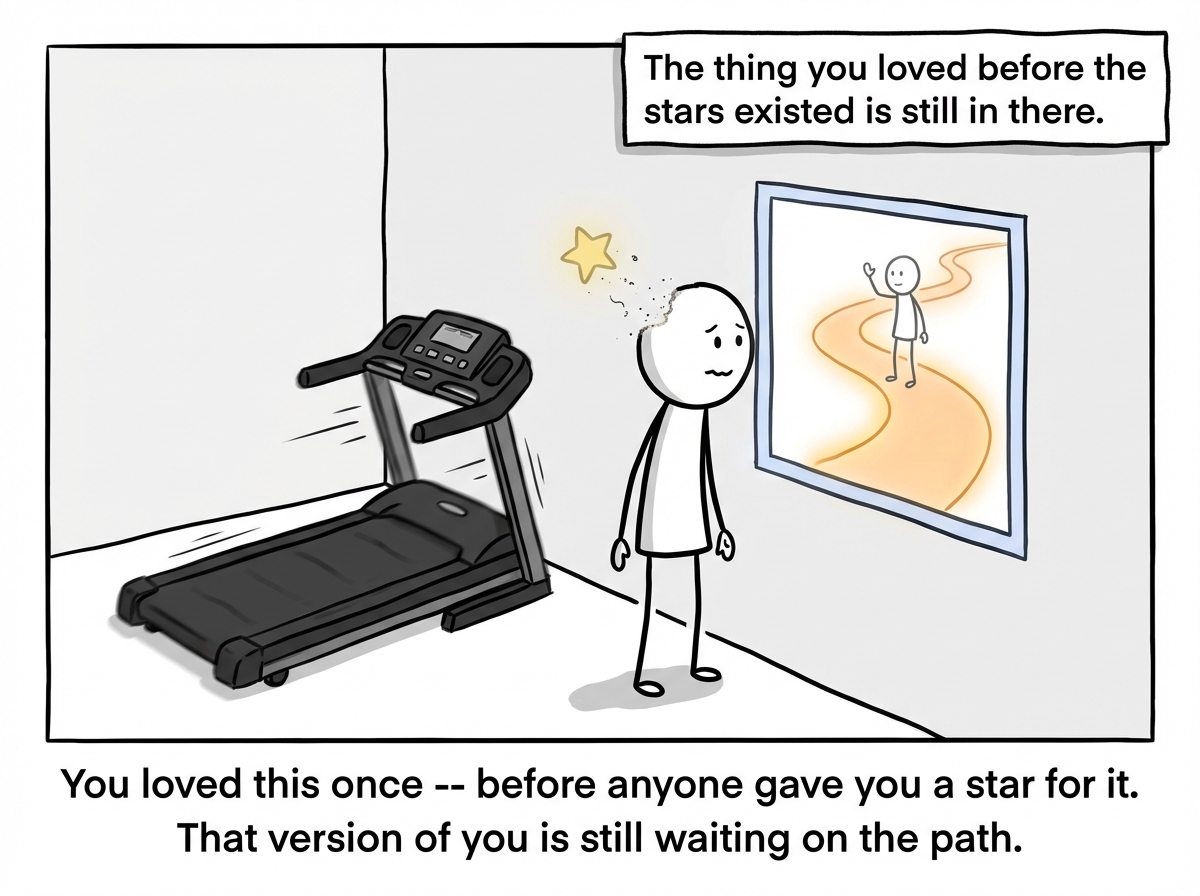
A person runs on a treadmill collecting gold stars that evaporate immediately, while another person walks slowly enjoying the scenery and discovering lasting fulfillment.
Explanation
Edward Deci's 1971 puzzle experiment revealed something that still unsettles managers, teachers, and parents: when you pay people to do something they already enjoy, they enjoy it less. The external reward does not add to the internal motivation -- it replaces it. This is the overjustification effect, and it is the engine behind the gold star treadmill. The person running on the treadmill is not lazy or broken. They are responding rationally to a reward structure that has trained them to value the star, not the run. Each gold star delivers a brief dopamine hit that evaporates almost immediately, creating a craving for the next one. The speed increases. The enjoyment disappears. Meanwhile, the person walking slowly is not more disciplined -- they are differently motivated. Their reward comes from the activity itself: the scenery, the movement, the quiet satisfaction of engagement. Self-determination theory identifies three nutrients that sustain intrinsic motivation: autonomy (I choose this), competence (I am growing at this), and relatedness (this connects me to something meaningful). Gold stars feed none of these. They just feed the hunger for more gold stars.
Key Takeaway
The treadmill gets faster every time you collect a star -- but the person walking slowly actually gets somewhere.