The Spinning Chair of Doom
A person spins in their desk chair doing literally anything except the one task that matters, while the task grows into a monster behind them.

You are not lazy -- you are avoiding a feeling that the task will force you to confront.
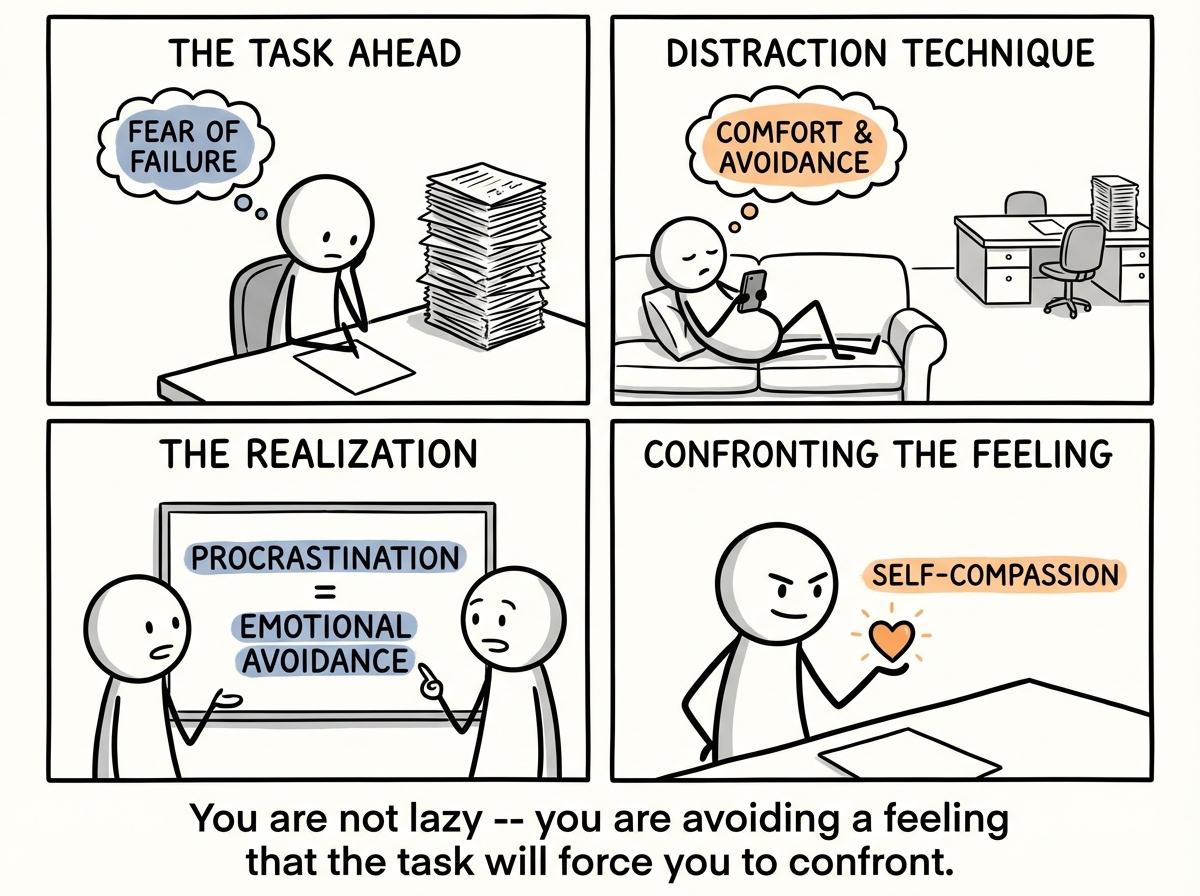
Procrastination is almost never about time management. Research by Dr. Tim Pychyl and Dr. Fuschia Sirois has consistently shown that procrastination is fundamentally a problem of emotion regulation, not productivity. When you avoid a task, you are not avoiding the work itself -- you are avoiding the negative emotions the task triggers: anxiety about failing, frustration at complexity, resentment at being told what to do, or the existential dread of confronting something that matters enough to be done badly. Your brain runs a rapid cost-benefit analysis and decides that the short-term relief of avoidance outweighs the long-term cost of delay. This is called 'giving in to feel good,' and it works beautifully -- for about five minutes. Then guilt arrives, which is itself an unpleasant emotion, which triggers more avoidance, which creates more guilt. The cycle is self-reinforcing and accelerating. Understanding procrastination as emotional avoidance changes the intervention entirely. Instead of buying another planner or setting another alarm, the real work is learning to tolerate the discomfort of starting -- to feel the anxiety and begin anyway, knowing the feeling will pass faster than the deadline.
You are not avoiding the task -- you are avoiding the feeling the task brings up. Name the feeling, and the task gets smaller.