The Comment Section Mirror
A person posts something personal and lets the comment section become their mirror -- mood soaring with praise and crashing with criticism -- until they reclaim their own self-image.

The gap between who you perform and who you are.
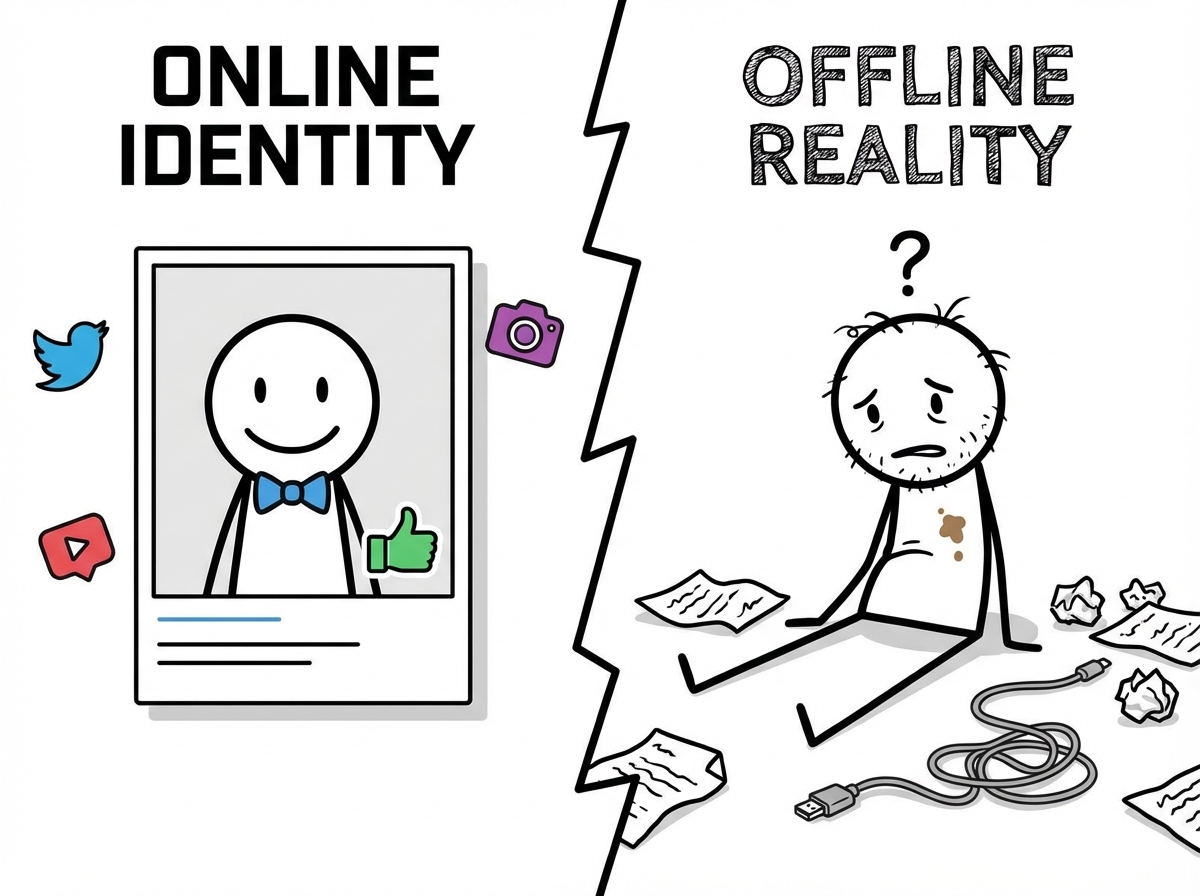
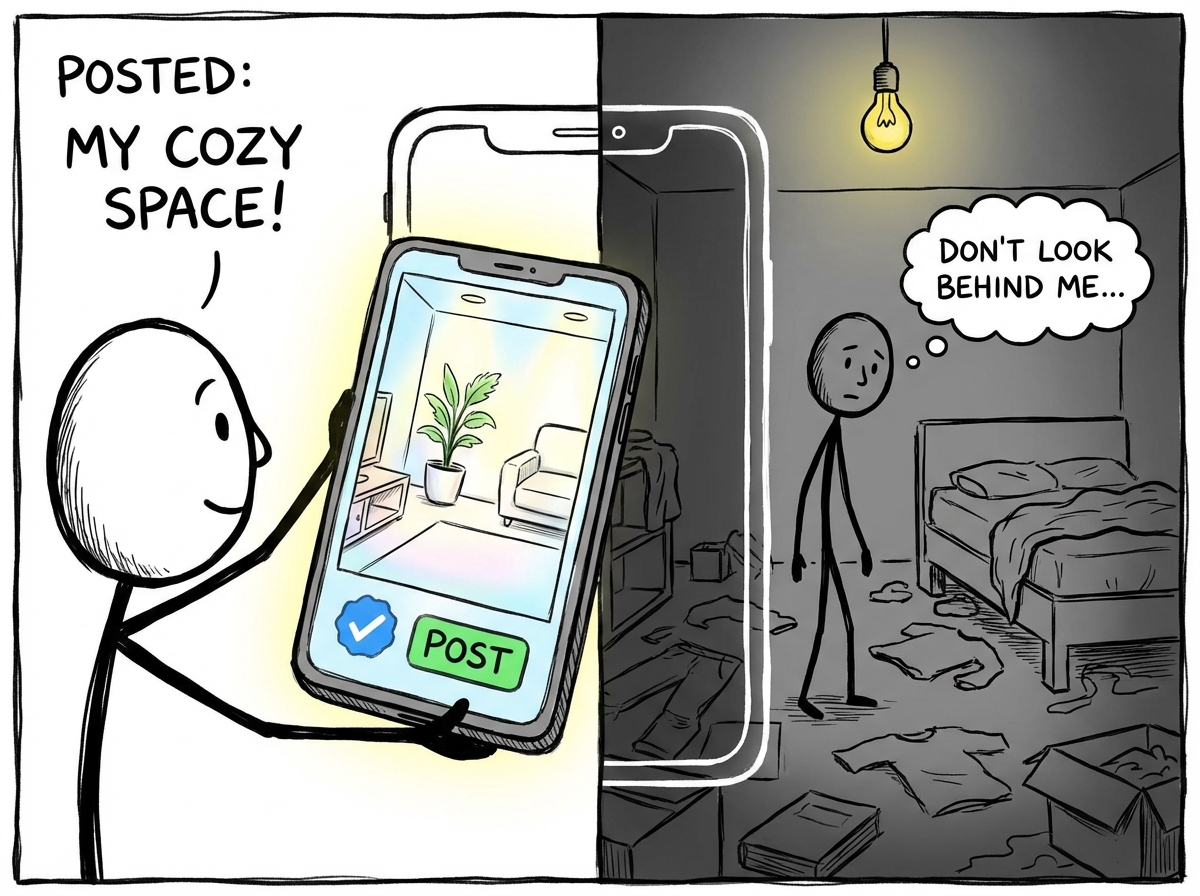
There has always been a difference between who you are in private and who you present in public -- Erving Goffman described this as the distinction between front stage and back stage behavior back in 1959. But social media has stretched that gap into something new and more precarious. Online, you do not just adjust your presentation -- you curate an entire identity. You choose which thoughts to publish, which photos to post, which struggles to disclose, and which version of your life to make visible. Over time, the curated version can start to feel more real than the private one -- or worse, the private one starts to feel like the draft version of the person you are supposed to be. Identity performance theory suggests that the personas we construct are not just masks -- they actively reshape how we see ourselves. When your online self receives validation through likes, comments, and followers, your brain registers that feedback as social approval of that particular version of you. The unpolished, uncertain, offline version receives no such reinforcement. The result is a slow drift where you begin optimizing for the performed self and neglecting the felt self. Performative authenticity -- the trend of sharing carefully staged vulnerability to appear relatable -- makes the problem even harder to see. You can post about your struggles and still be performing. You can share your flaws and still be curating. The question is not whether you are being honest online. The question is whether you still know which version of you is the real one -- and whether the person who exists when no one is watching still feels like someone worth being. The gap between your profiles and your private experience is not vanity. It is a crisis of selfhood that deserves your attention.
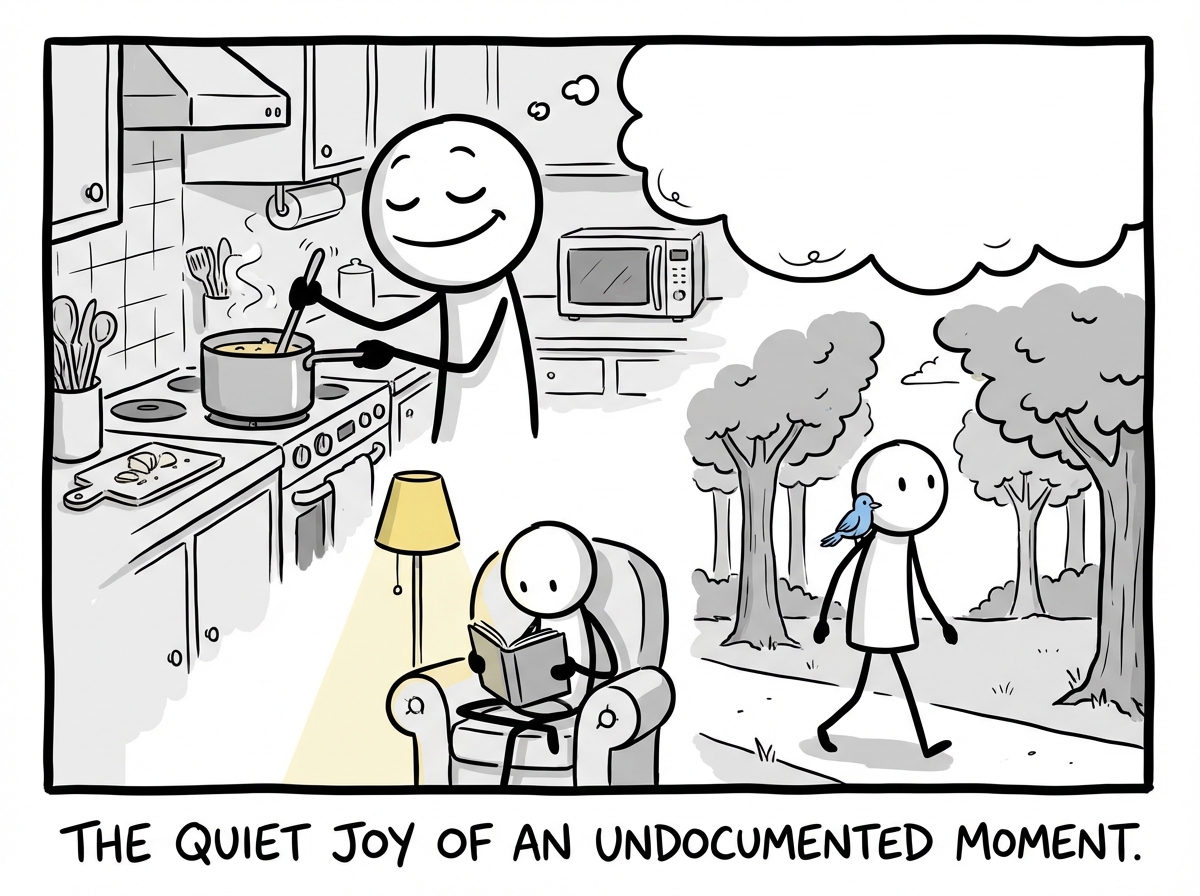
If the version of you that exists when no one is watching feels like a lesser draft, the curation has gone too far.
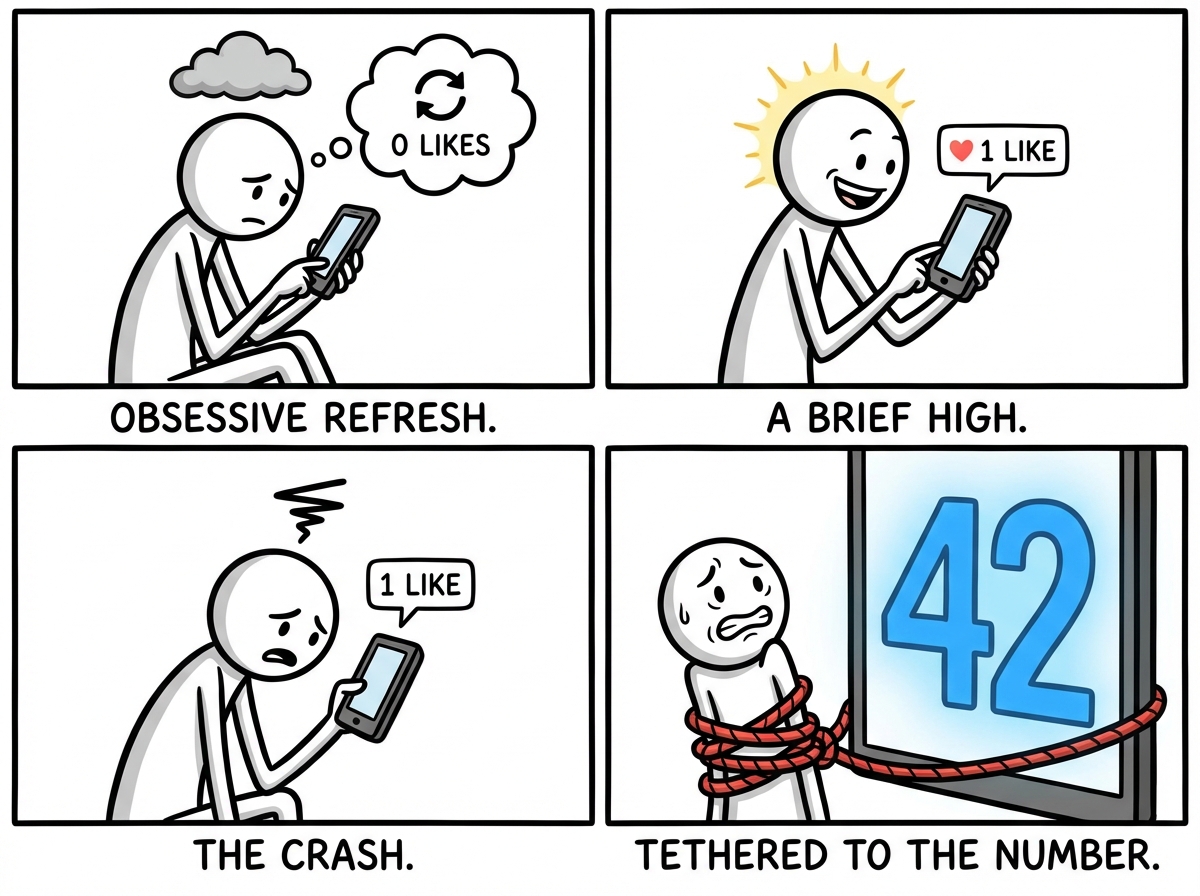
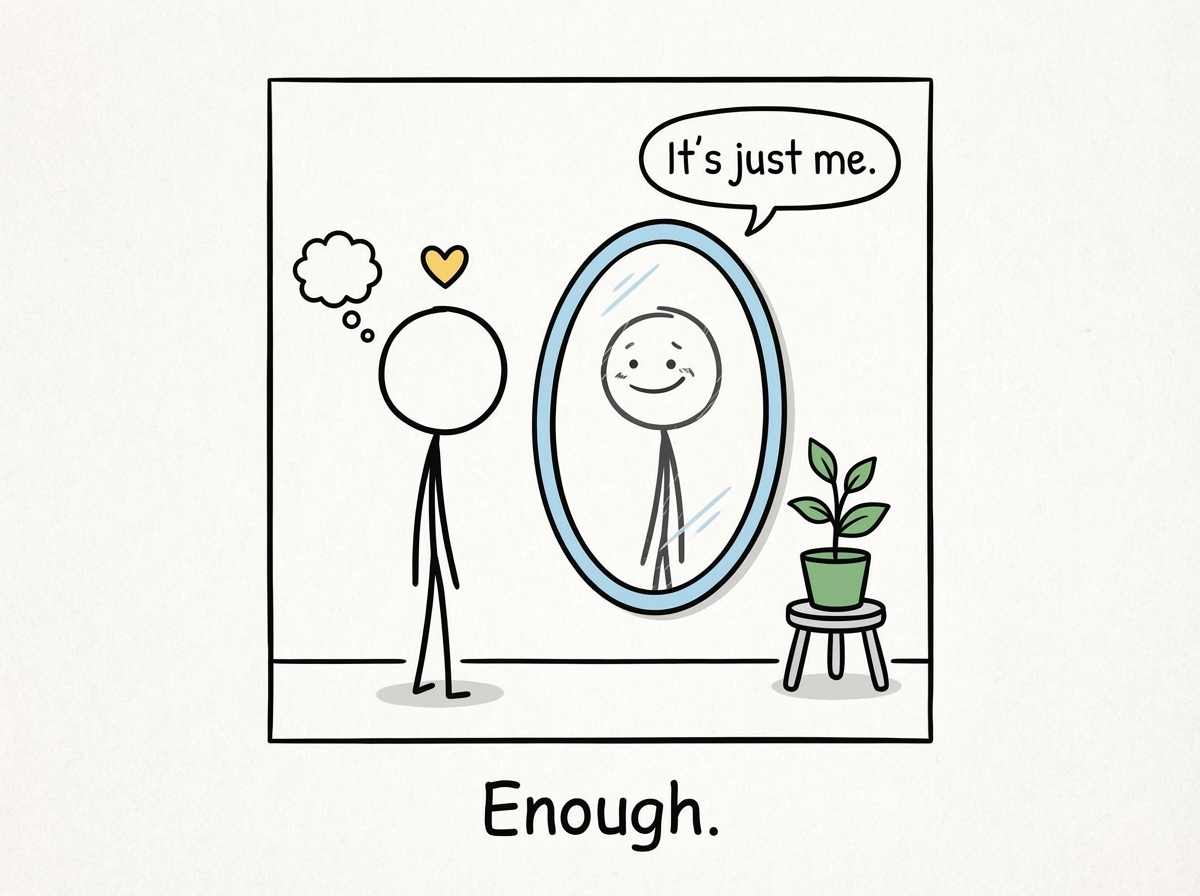
A person posts something personal and lets the comment section become their mirror -- mood soaring with praise and crashing with criticism -- until they reclaim their own self-image.
A person maintains two versions of themselves -- the polished online persona and the messy real human -- until the gap becomes so wide that the real self starts feeling like the fake one.