The Royal Treatment Scorecard
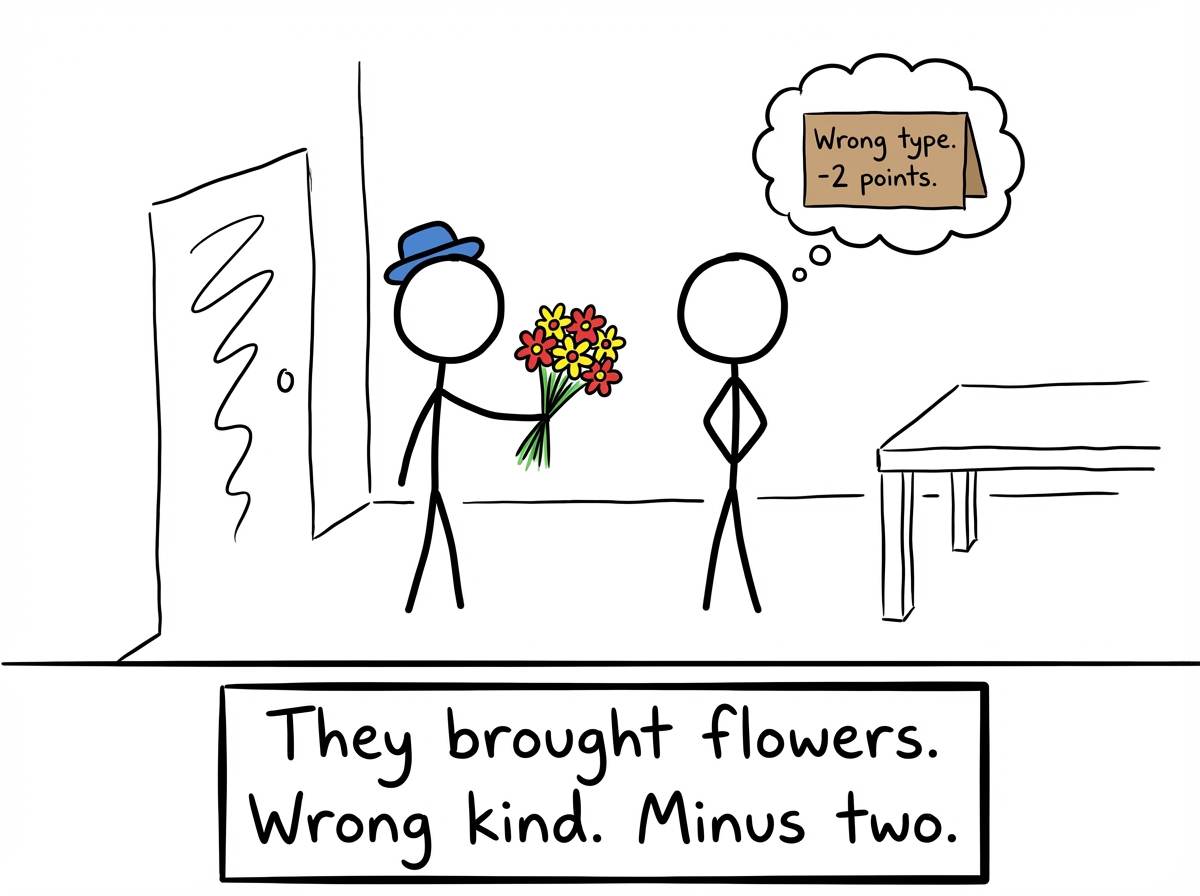
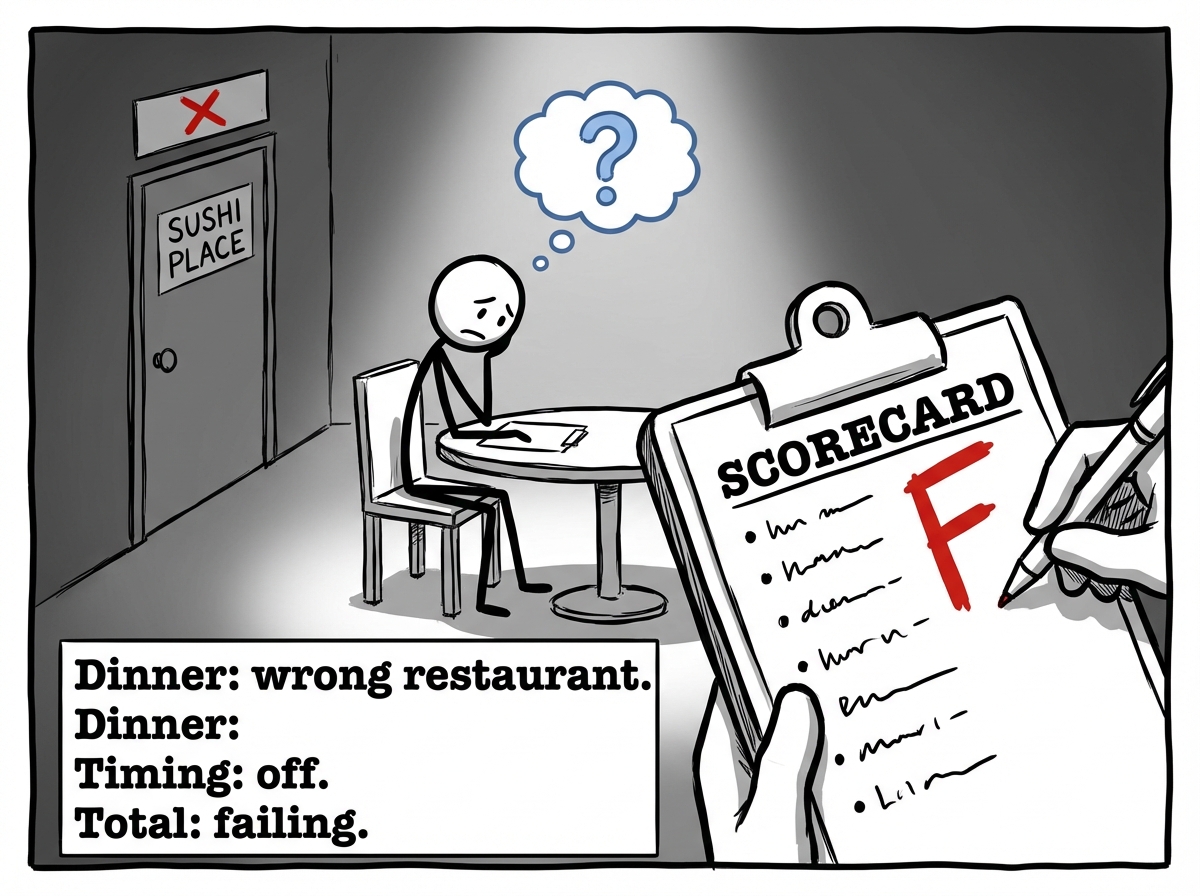
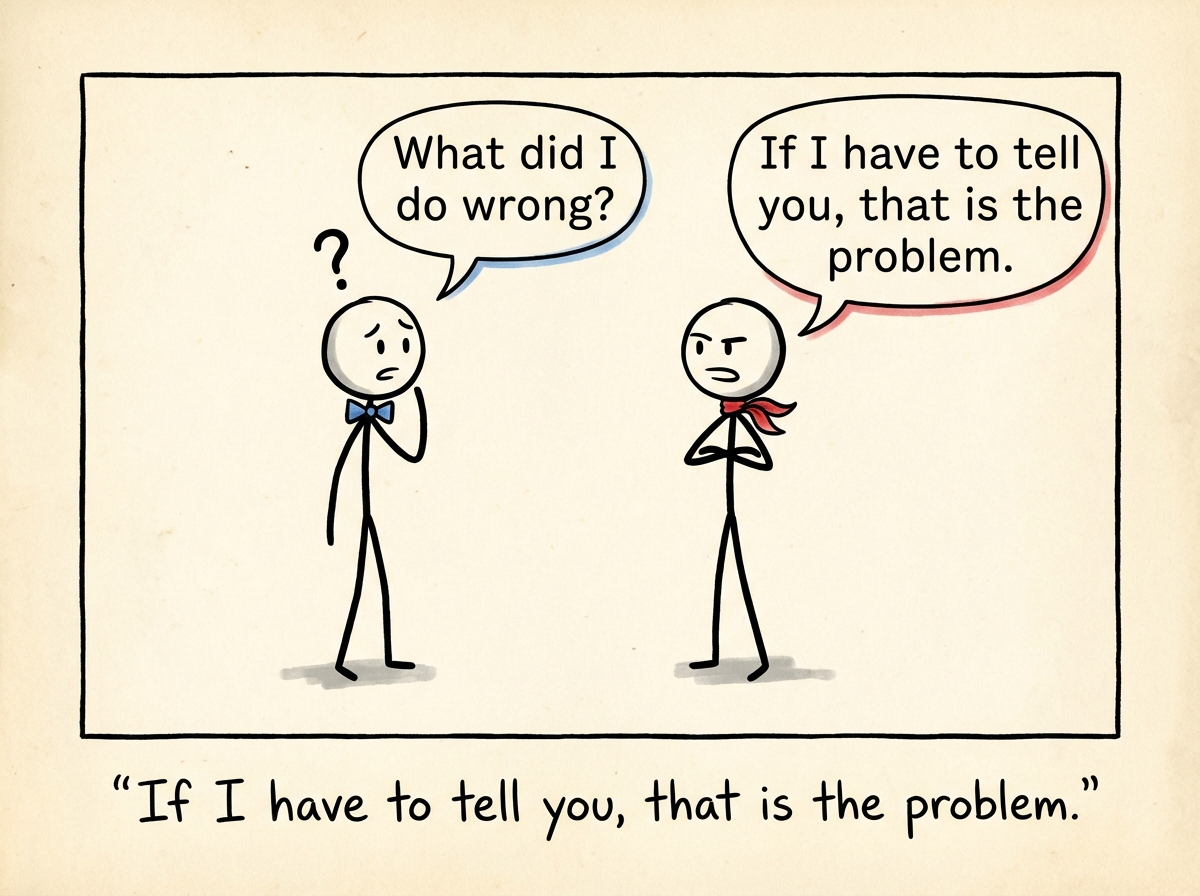
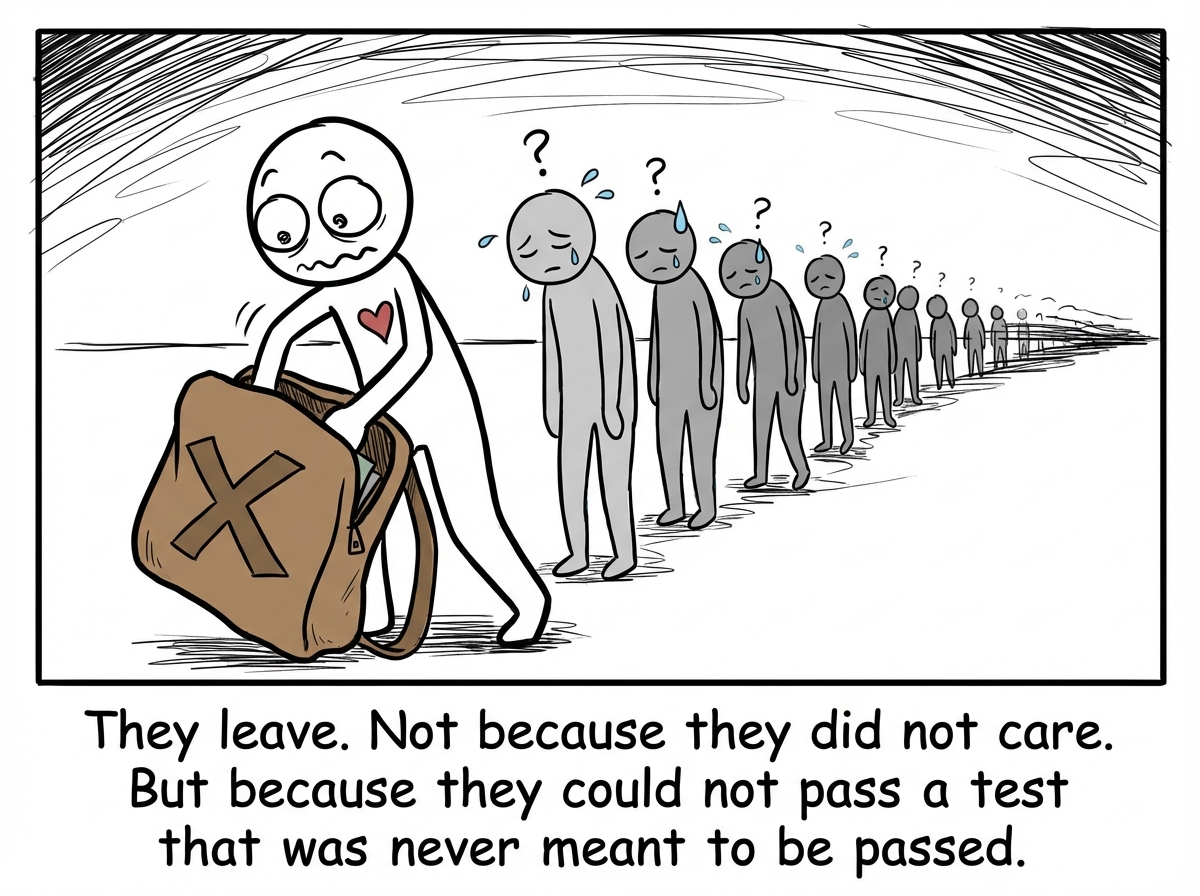
A person grades their partner's devotion on an impossible rubric -- deducting points for unread minds, missed gestures, and the crime of being an ordinary human.
Explanation
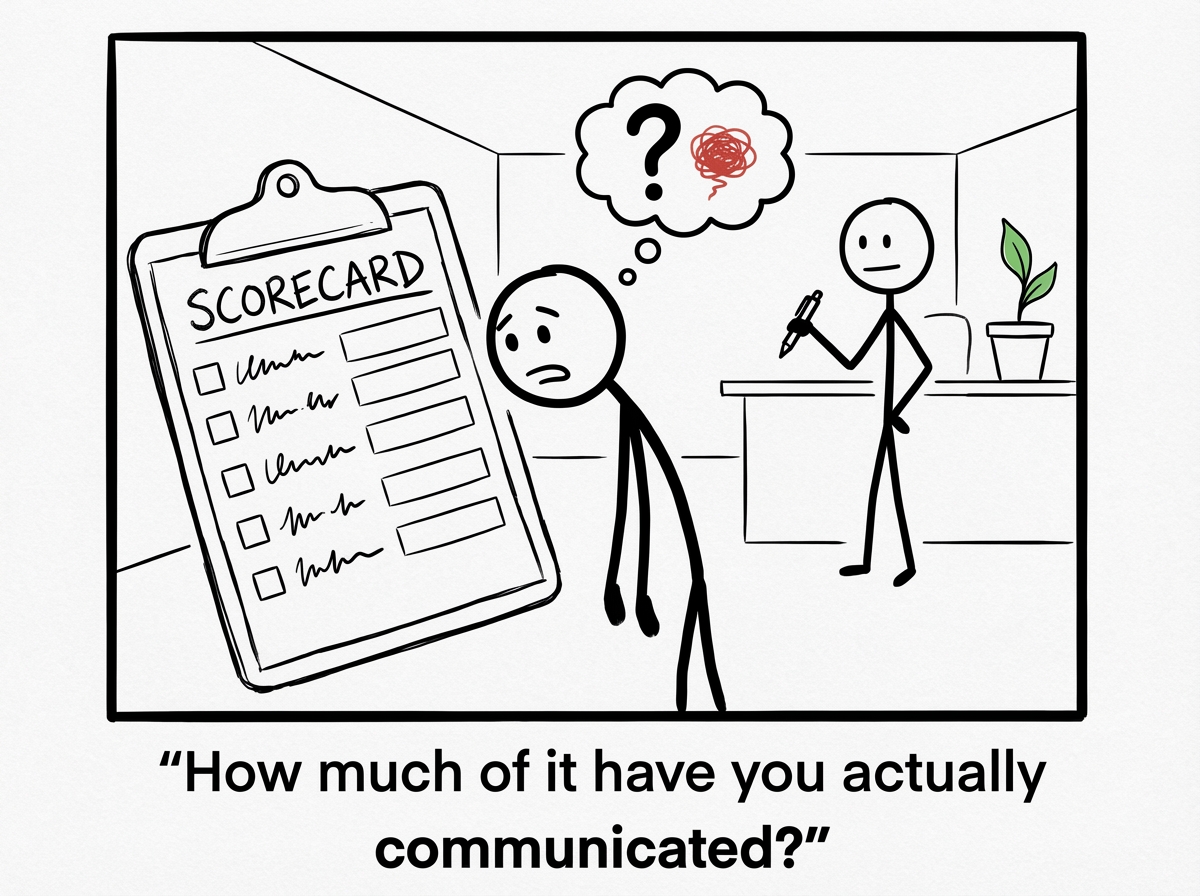
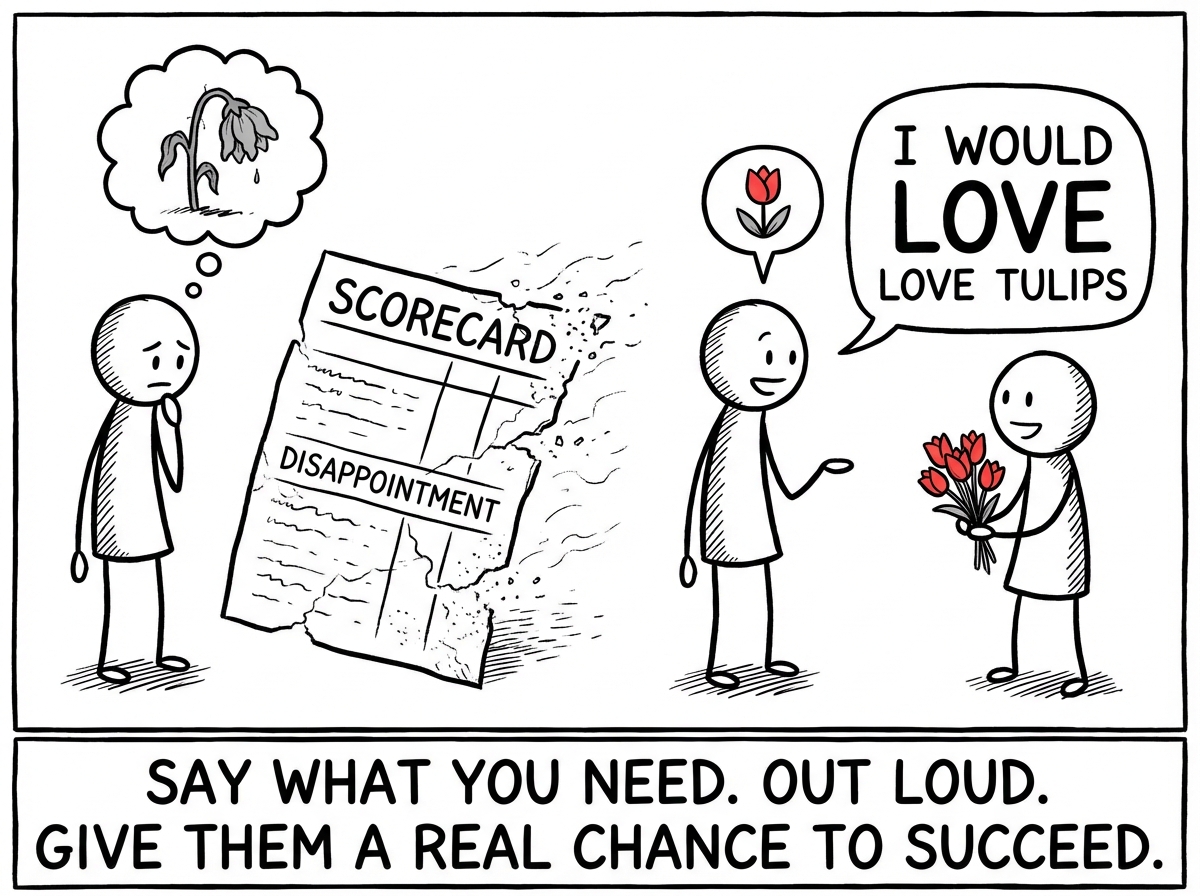
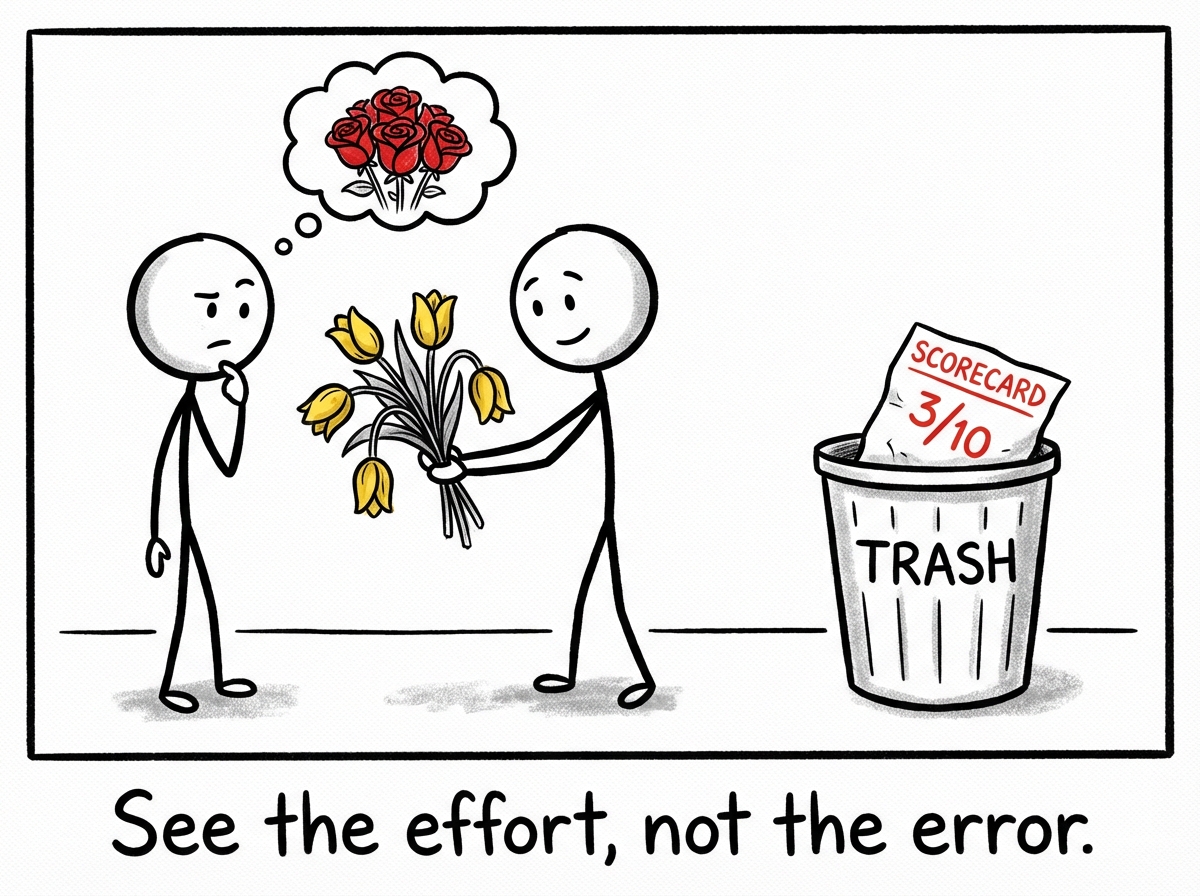
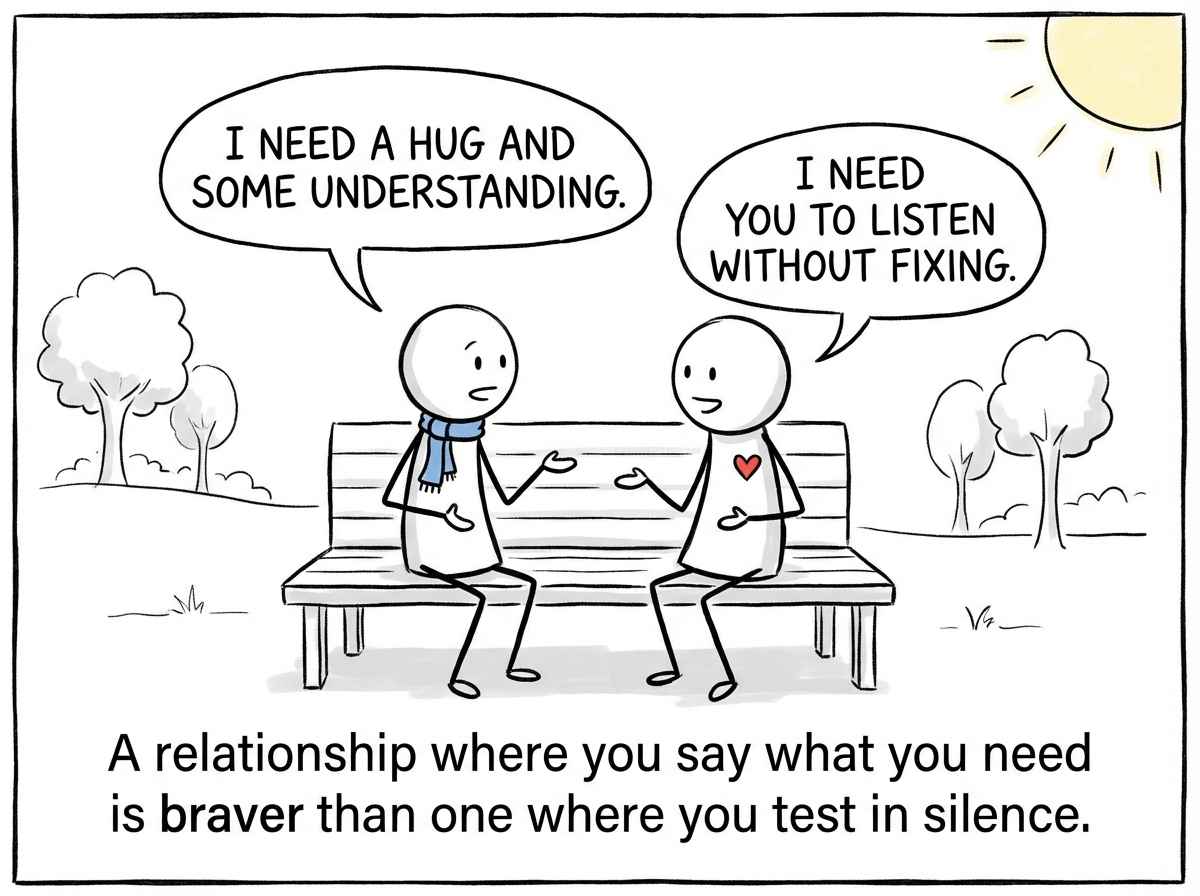
Your partner brought you flowers. But they were not the right flowers. They planned dinner. But they did not pick the restaurant you were thinking of. They said 'I love you.' But they did not say it at the exact right moment in the exact right tone. Each attempt at love gets graded on a scorecard that no one can see, and the grades are always disappointing -- not because your partner is not trying, but because the rubric was designed for failure. The royal treatment scorecard is what happens when fairy-tale expectations meet daily relationship life. It is the internal grading system that measures a partner's devotion by impossible metrics: mind-reading ability, spontaneous grand gestures, flawless emotional attunement, and a sixth sense for exactly what you need at all times. Research on demand-withdraw patterns by Christensen and Heavey shows that when one partner holds unspoken expectations and then withdraws or punishes when those expectations are not met, it creates a cycle of increasing frustration and decreasing intimacy. The scorecard is rarely conscious. Most people who use it do not think of themselves as demanding or entitled. They think of themselves as having standards. But there is a difference between standards (clear, communicated expectations that allow a partner to succeed) and a scorecard (unspoken, shifting criteria that guarantee failure). The scorecard keeps you in control by keeping your partner in debt. The first step toward dismantling the scorecard is devastatingly simple: tell your partner what you actually need. Out loud. In words. And then give them a real chance to show up for the request you actually made instead of the one they were supposed to telepathically detect.
Key Takeaway
If your partner cannot win no matter what they do, the problem is not their effort. It is the scorecard you never showed them.