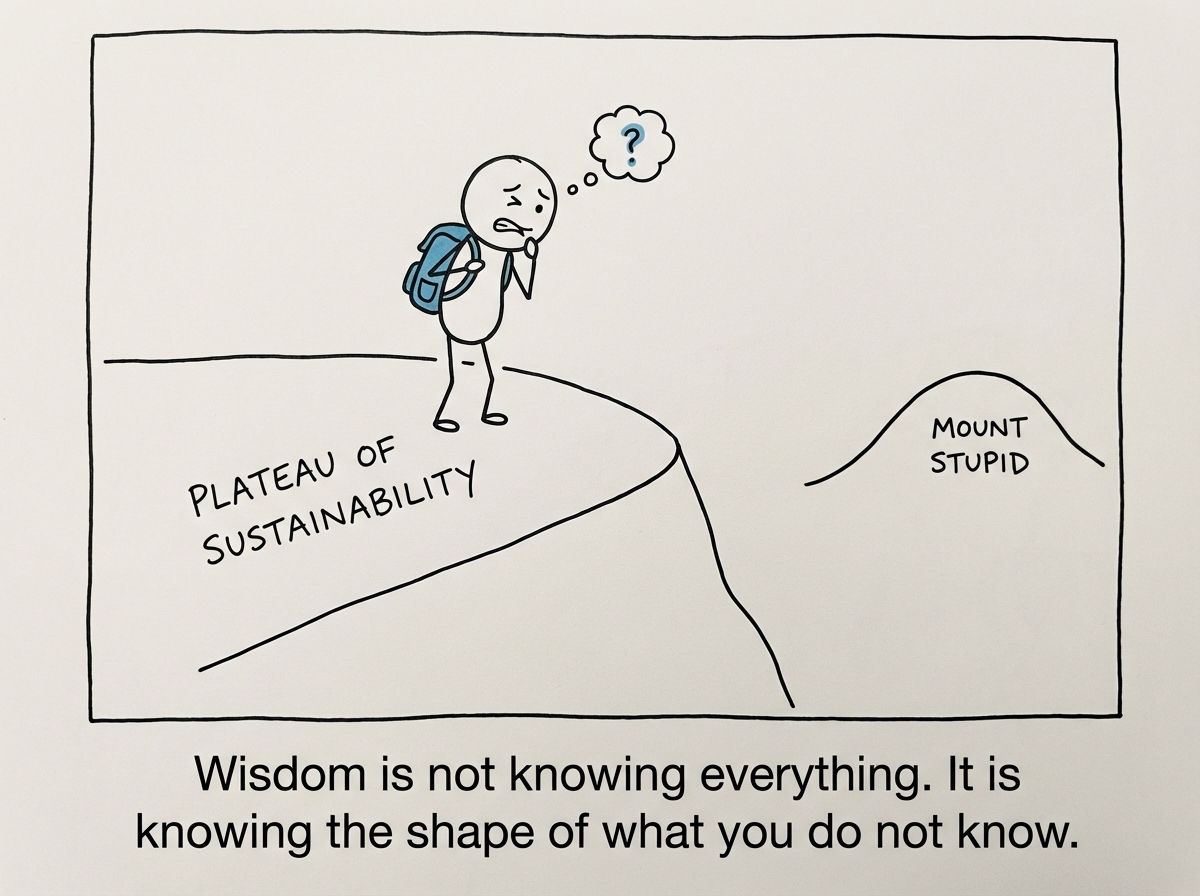
Mount Stupid
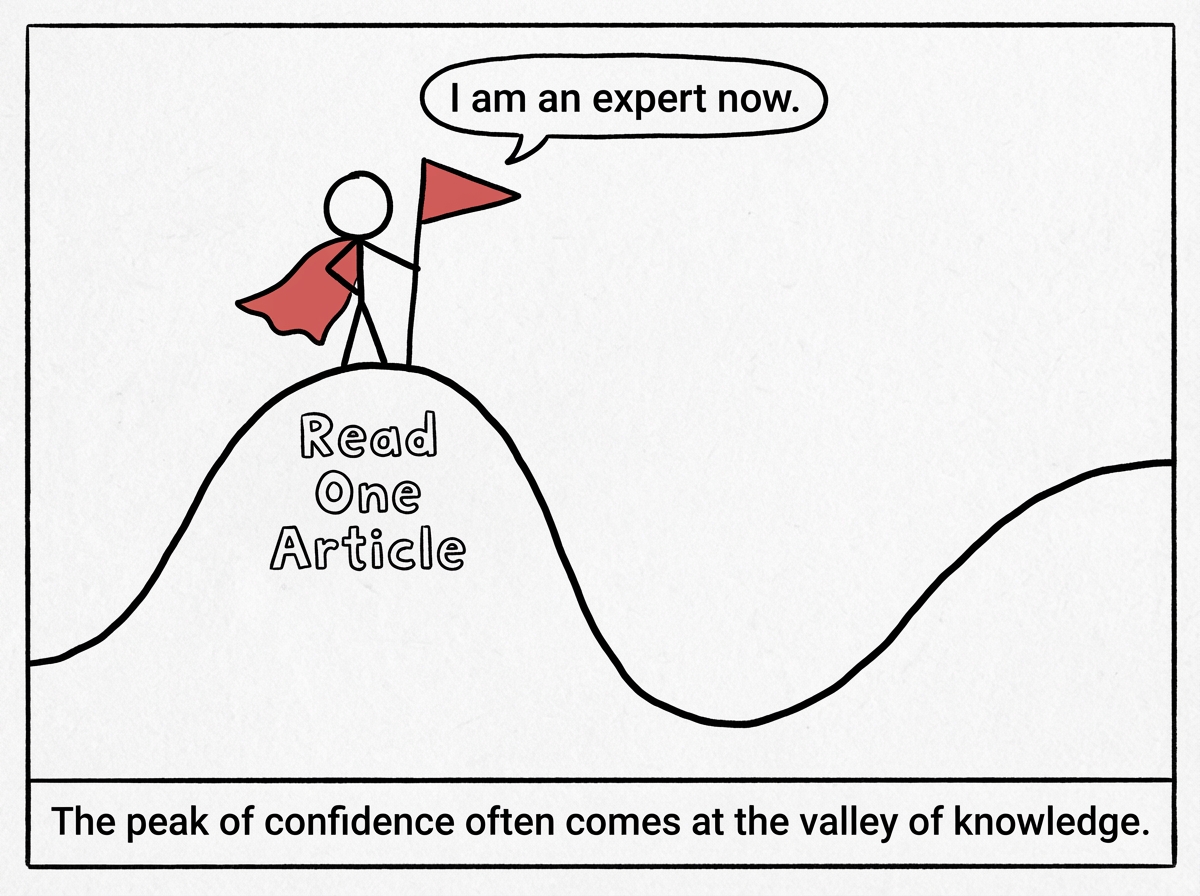
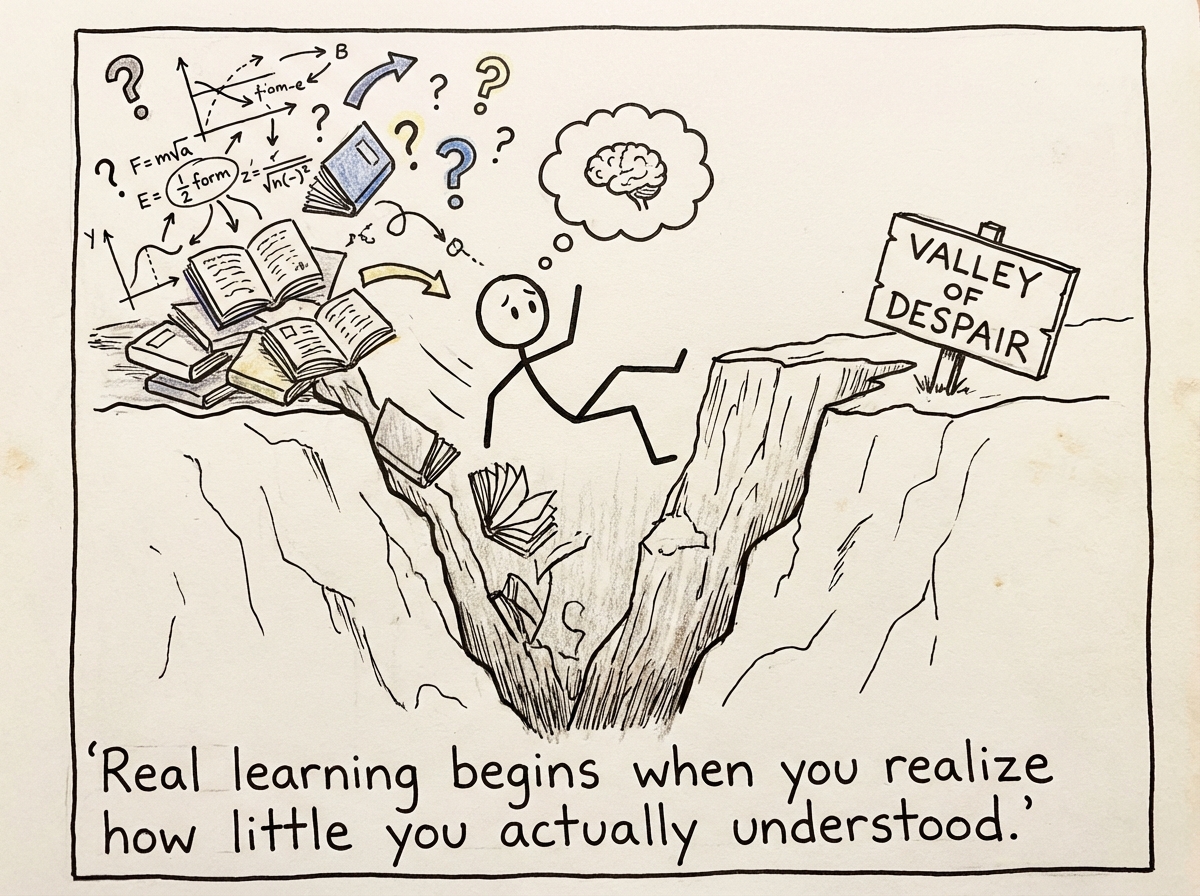
A person reads one article about a topic and immediately declares themselves an expert -- then slowly discovers how much they did not know they did not know.

When your brain convinces you that you know more than you do -- and the damage that follows.
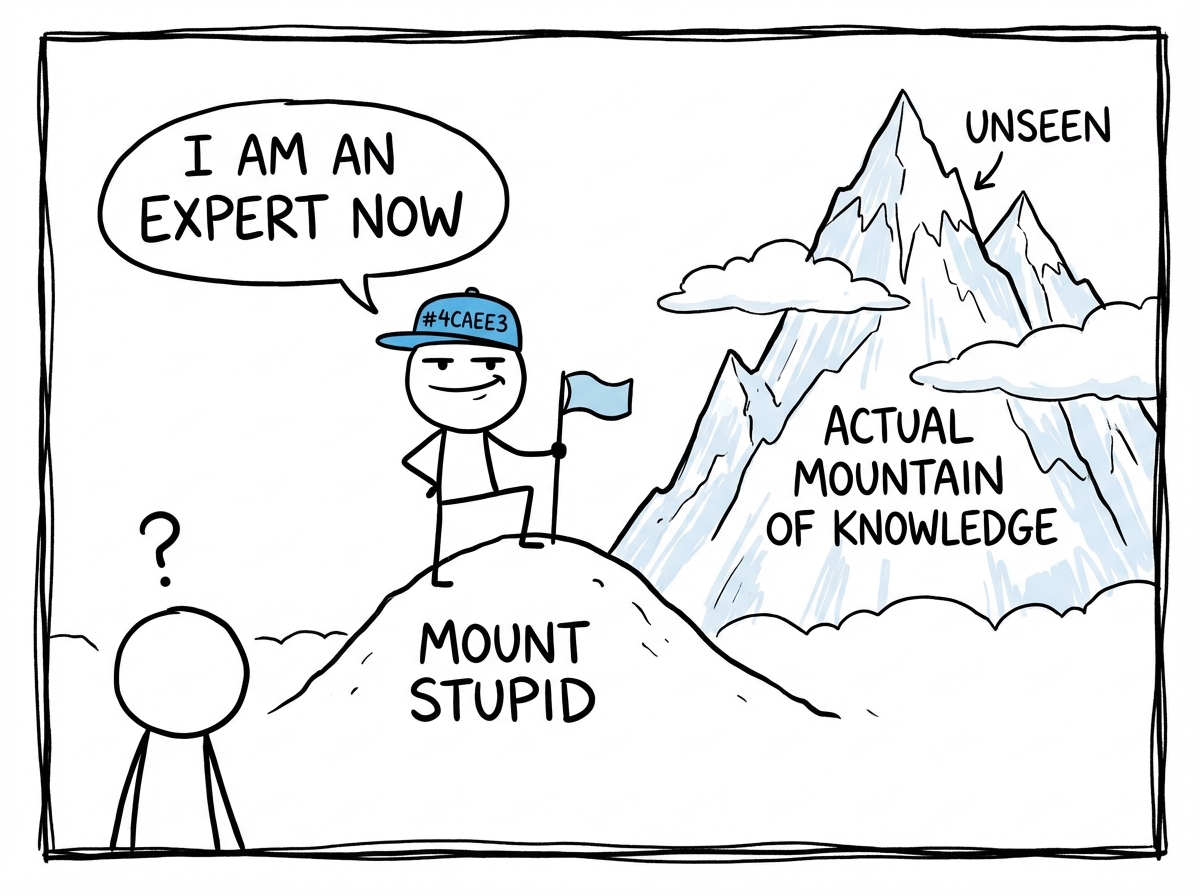
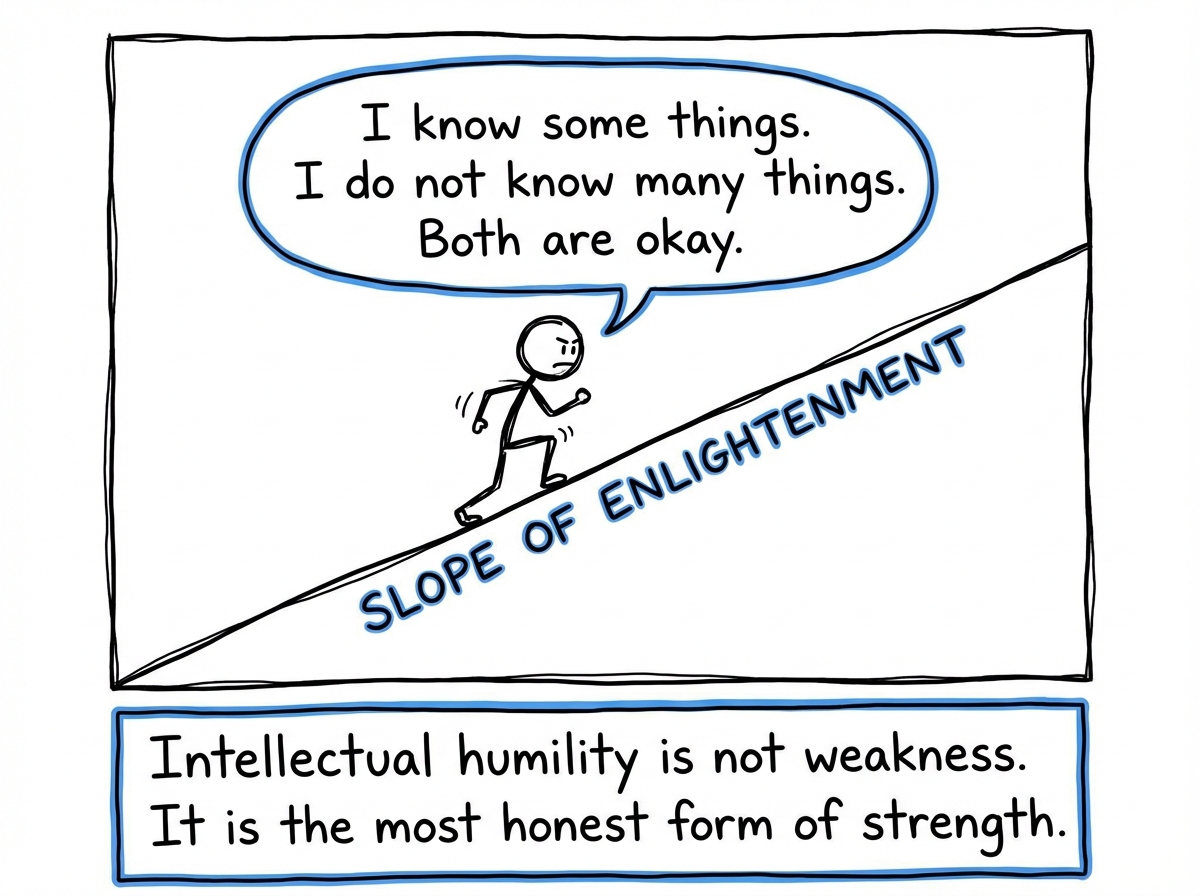
Overconfidence bias is one of the most well-documented and dangerous cognitive distortions. It is the tendency to overestimate your knowledge, abilities, or the precision of your beliefs. And unlike most biases, it gets worse the less you know. This is the Dunning-Kruger effect in action: people with limited knowledge in a domain tend to dramatically overestimate their competence, while experts tend to underestimate theirs. The beginner thinks they have mastered the subject after reading one article. The expert who has spent decades in the field says 'it is more complicated than that.' Overconfidence bias shows up in high-stakes decisions everywhere. It drives investors to bet big on gut feelings. It makes leaders dismiss dissenting voices. It makes people certain about political opinions formed from headlines. It is the engine behind 'I do not need directions,' 'I do not need to study,' and 'I do not need a therapist.' The danger is not confidence itself. The danger is confidence disconnected from evidence. Healthy confidence says 'I have prepared and I trust my preparation.' Overconfidence says 'I do not need to prepare because I already know.' The antidote is intellectual humility -- the willingness to say 'I might be wrong' and mean it. Not as false modesty, but as an accurate reflection of the limits of any single perspective, including your own.
The most dangerous confidence is the kind that has never been tested. Real confidence includes the words 'I might be wrong.'