The Overqualified Doubter
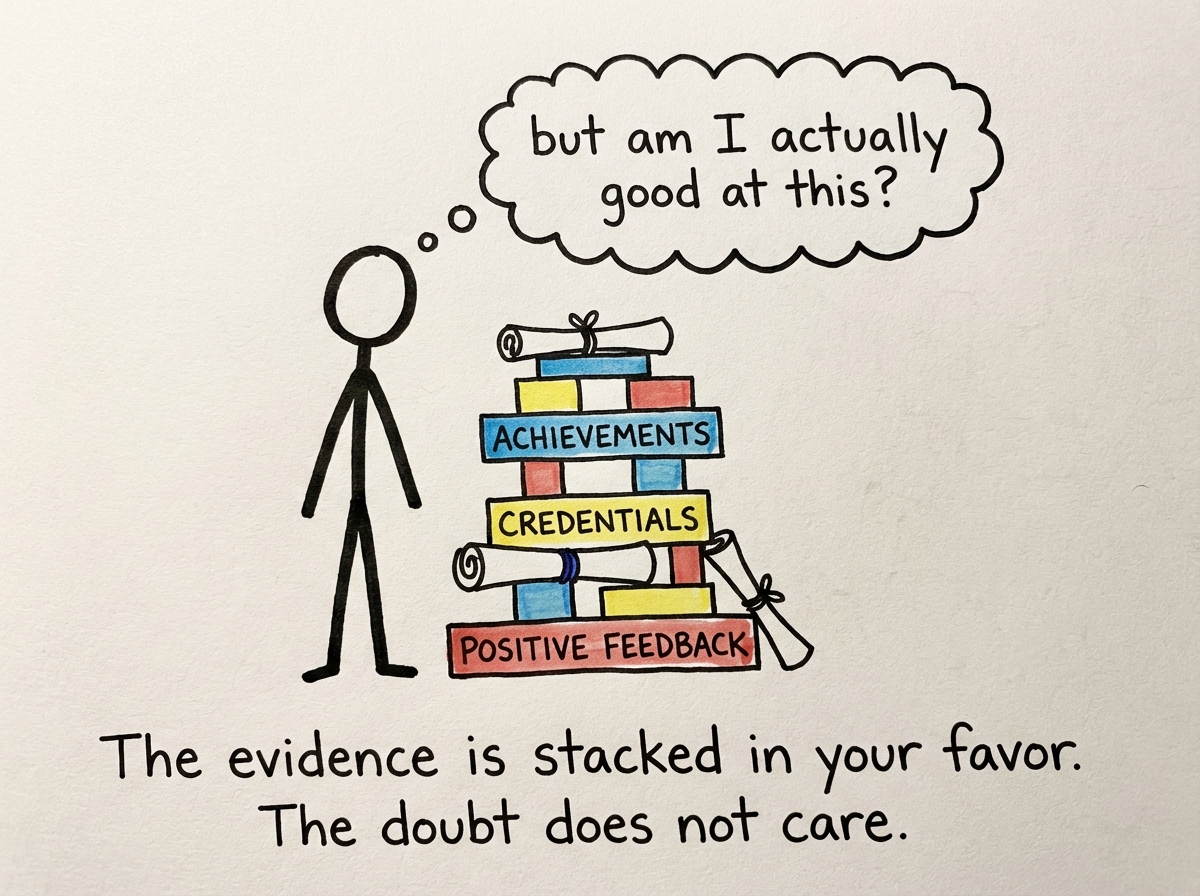
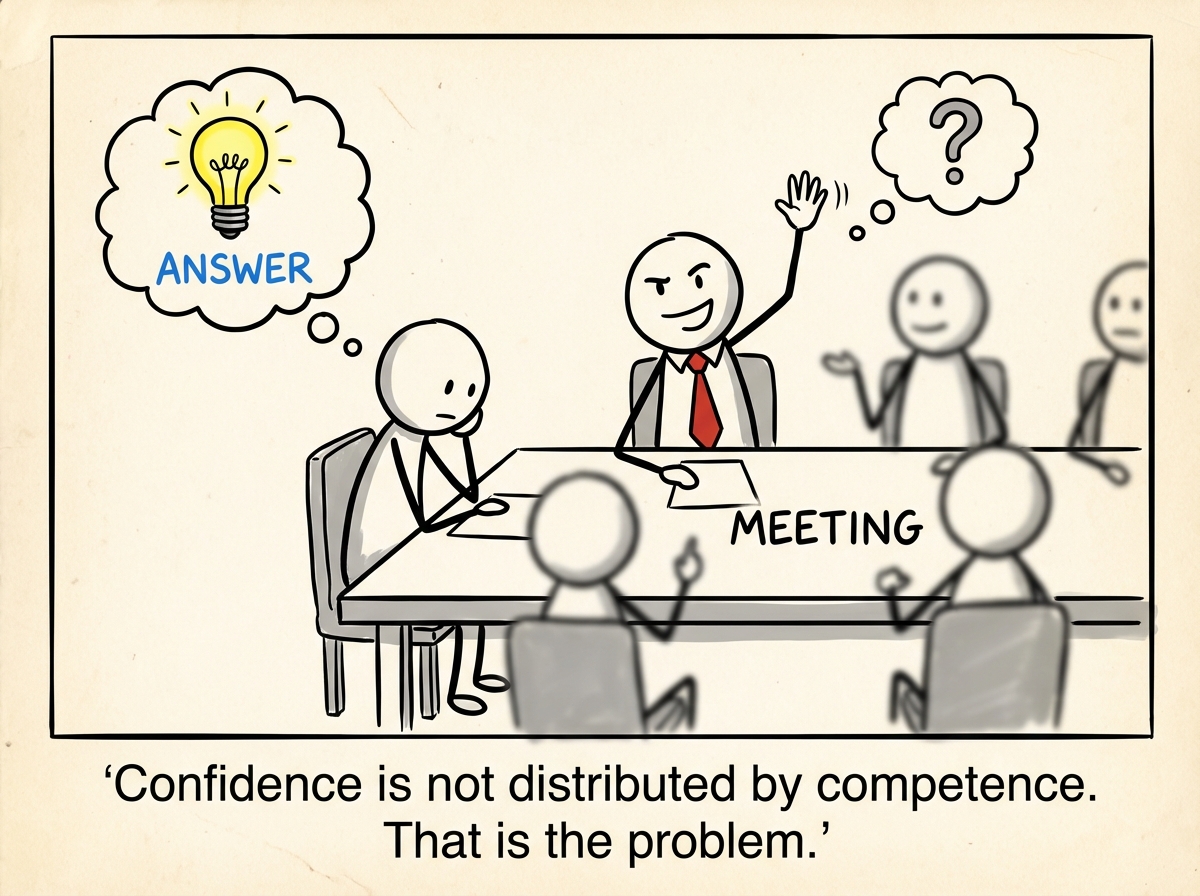
A person with stacks of credentials, experience, and achievements still cannot raise their hand in a meeting -- while someone with a fraction of the qualifications volunteers without hesitation.

Why the most capable people are often the least sure of themselves.
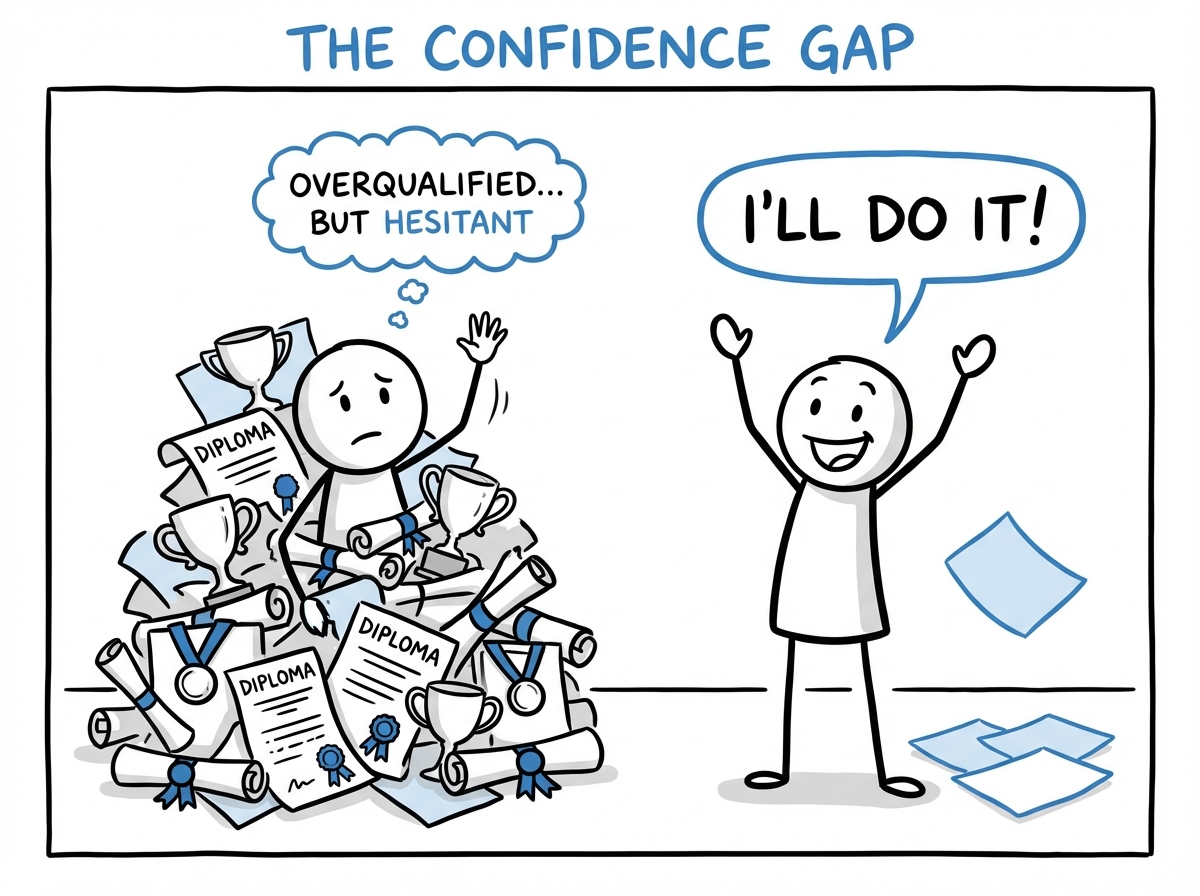
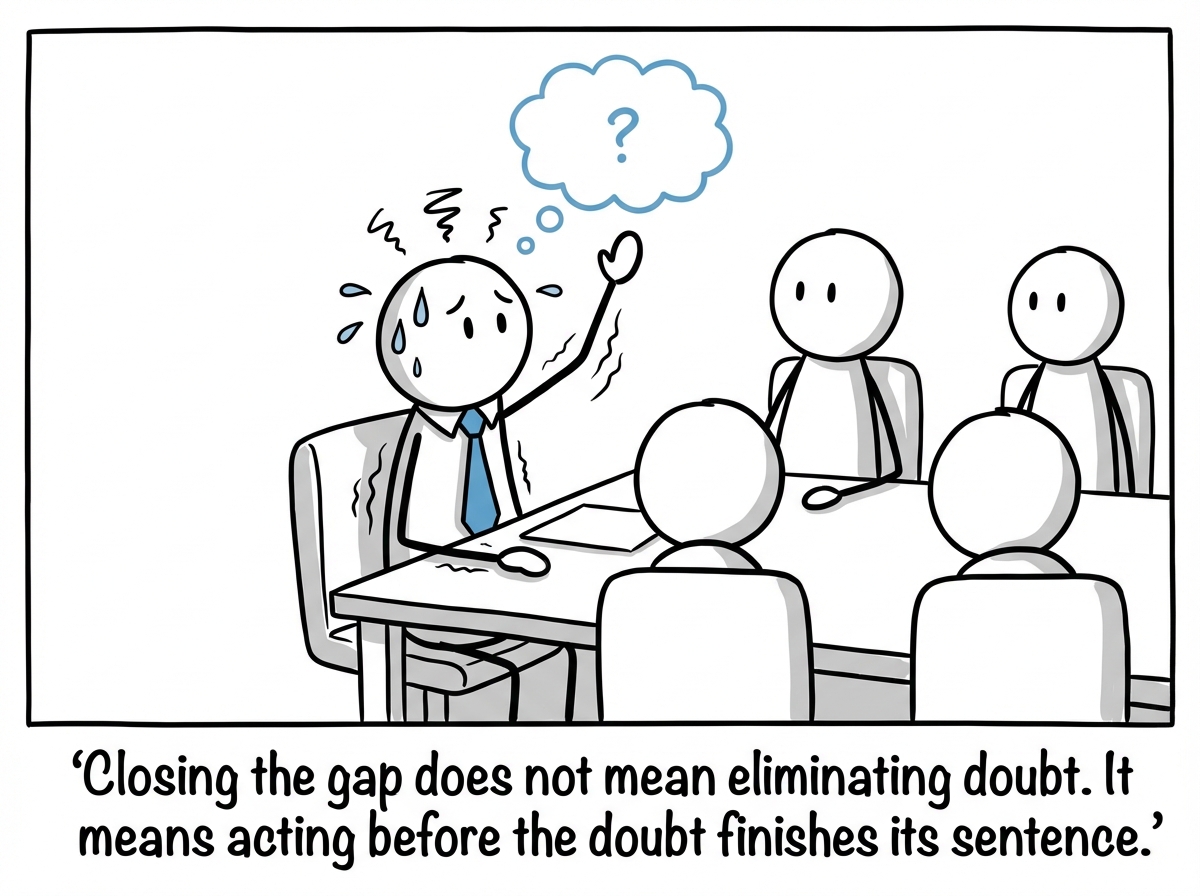
There is a painful irony in the psychology of confidence: the people who have the most reason to feel confident are often the ones who feel it least. Researchers call this the confidence gap -- the space between what you can actually do and what you believe you can do. It shows up everywhere. The surgeon who still second-guesses herself after ten thousand successful operations. The writer who has published four books and still feels like a beginner. The employee who exceeds every target but cannot shake the feeling that they are about to be found out. The confidence gap is driven by several psychological forces. First, competent people know enough to see what they do not know. Expertise makes you aware of complexity, which breeds humility that can tip into chronic self-doubt. Second, people who grew up in environments where their abilities were minimized, dismissed, or treated as ordinary internalized the belief that their capabilities are nothing special. Third, structural factors matter -- research consistently shows that women, people of color, and other marginalized groups face systemic feedback patterns that erode confidence independently of ability. The confidence gap is not just uncomfortable. It is costly. It keeps people from applying for jobs they are qualified for, asking for raises they have earned, sharing ideas that could matter, and stepping into roles they are ready for. Closing the gap does not mean becoming arrogant. It means letting your self-assessment catch up to reality.
The confidence gap means your self-doubt is not evidence of your limits -- it is often evidence of your awareness.